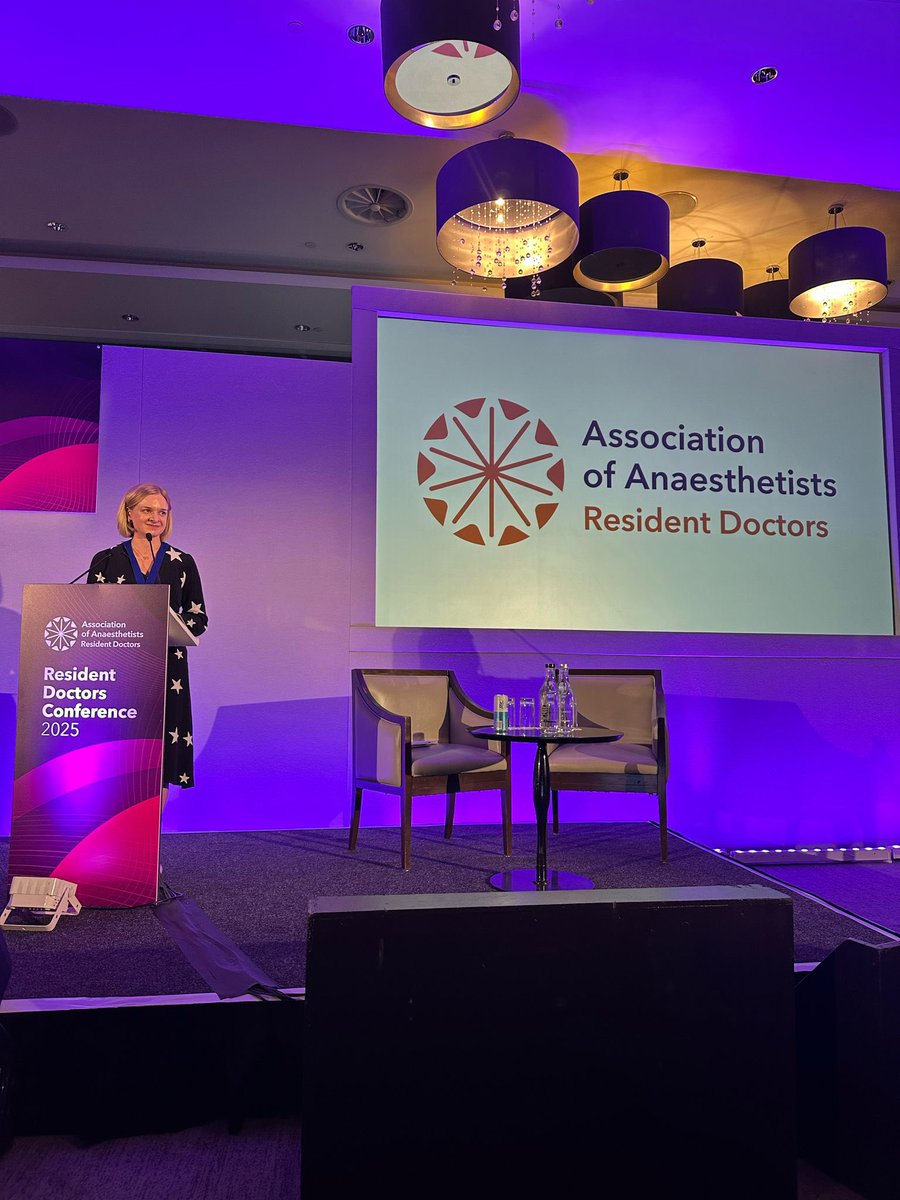
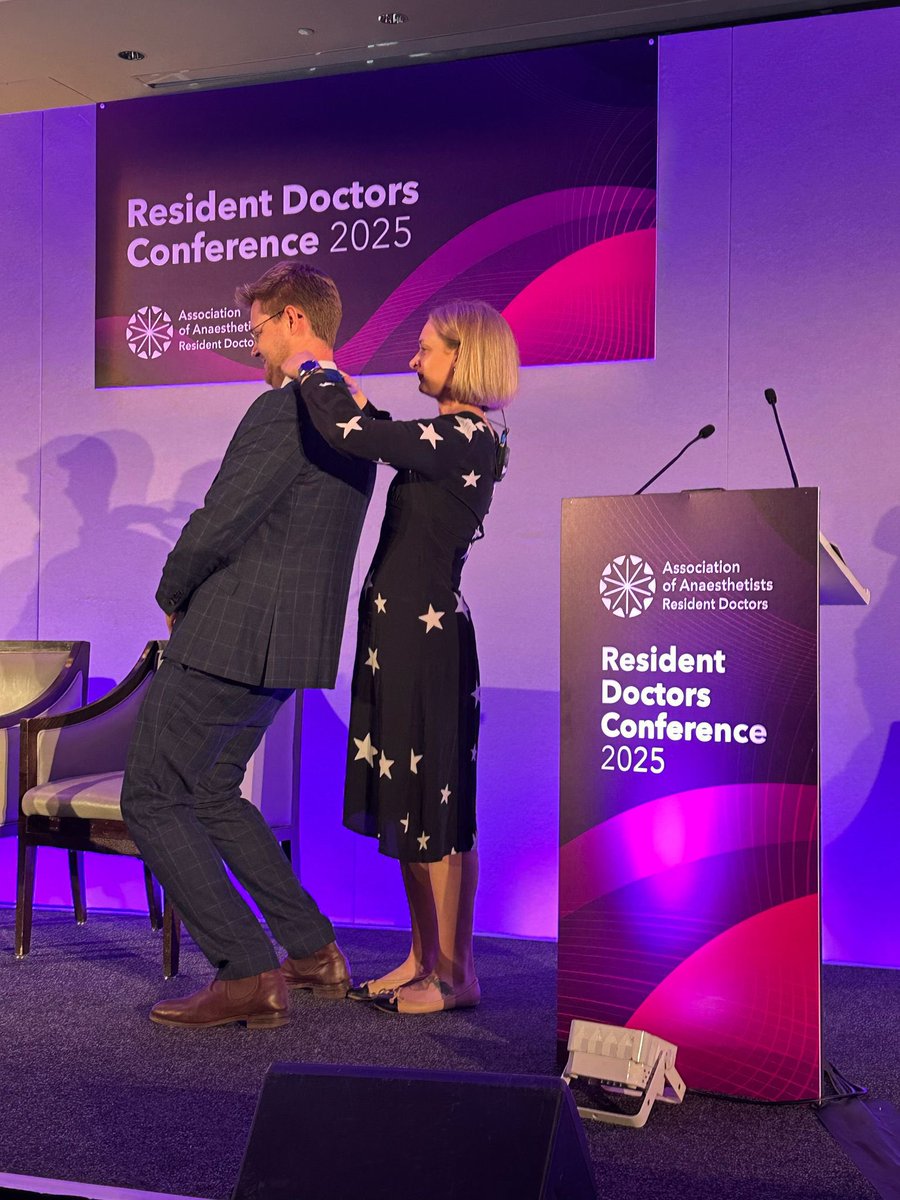
And with that, after a spectacular @Anaes_Residents conference and year as Chair, it’s time to hand over the reins to @Jamesbrooks90. I am so proud of everything the committee have achieved and grateful for their support. Over and out from the chair who never planned to be! 🎤⬇️
@Shr_Nottingham I feel like there’s been a big shift for the better over my time as a trainee to proactively running a pressor being a normal thing and I am here for it! It’s especially given me confidence (neuro block helped a lot) to crack on with TIVA a lot more.
The biggest problem with the NHS is how political it is
HMG have huge bills to pay but expecting healthcare staff to keep the wheels on b/c vOcAtiOn is totally unreasonable
It’s time politicians stopped gaslighting about the standards they sell vs what can actually be delivered
Genuinely, & without my normal agenda entailed, I think this should be used as a case study of the detriment of culture over common sense
Irrespective of sustainability, there was never any sensible reason to gown for routine SAB’s
🙏 @doctorhelgi et al for putting the work in
Ron gets It!
Except UK docs are striking not to live in the best neighbourhood. But a decent one. And the possibility of clearing the mountain of student debt.
UK medical graduates have some of the most high quality university training in the world and are sought the world over. They also showed themselves to be extraordinarily versatile and resilient during the pandemic. We should be reliant on them. They are the heartbeat of the NHS.
✍️ Unknown.
One thing about anaesthetists you should know:
“Most of the time we’re usually ice-cold.
Alarms blaring? Whatever.
BP dropping? Fixable.
Surgeon wants paralysis again? Sure.
But if you see us stand up really fast… that’s when everyone in the room should worry!”
I’d like to propose two things.
1. We have to openly acknowledge that being a healthcare practitioner is hazardous to your health.
2. We have to actually want to reduce that hazard, and not wear it as a badge of honour.
Delivering bad news as an ICU doctor is one of the harder parts of the job.
Here are some lessons I've learned along the way👇
1. Always sit down
2. Don't just jump into it. Spend the first couple of minutes with introductions to yourself, your team (if present), but more importantly who all is in the room (patient, family etc.)
3. If you will be needing consent for something (procedure, palliation etc.) as part of the discussion, ensure you know who the decision maker(s) are.
4. Preface the bad news "I have to share something that might be hard to hear"
5. Clearly in <30 seconds deliver the bad news then STOP TALKING.
The biggest mistake I see is people give the news and keep going. It takes time to process what may be the worst news they've ever received. Silence is the solution here. They will talk or ask questions when they are ready... it could be 10 seconds, 1 minute, or 10minutes. Give them the time they need before you proceed.
6. Ask if they have any questions about what you have delivered.
7. Be prepared to answer 'what comes next' ..
8. Ask about spirtual / religious beliefs when appropriate and offer support if that is available.
9. Let them know you or someone from your team will be available to answer questions that might come to mind... often in the moment, questions slip people's mind but come to them minutes after you leave. Make sure they know how they can have them clarified.
Just some thoughts here... any others?
Bonus: Don't construe family members becoming angry as them being angry at you or the team. Anger when faced with this news is common, normalize it and realize it likely isn't directed at you!
8️⃣ ASA 1 or 4, a good anaesthetic alters physiology as little as possible
9️⃣ People go crazy around exams, choose who you listen to wisely
🔟 Ignore radiotherapy to the neck at your peril
And last and most importantly
🚨Never be told to go home twice🚨
4️⃣ If you can’t explain why you’re doing it, it probably doesn’t need doing
5️⃣ 20mcg of adrenaline can get you out of a lot of pickles
6️⃣ All things being equal, the best post op fluid is a cup of tea
7️⃣ The best way of fixing a problem is by avoiding it in the first place
I’ve been an anaesthetist for 17 years
These are the 10 most important things I’ve learnt!
1️⃣ Just because you can, it doesn’t mean you should
2️⃣ There is such a thing as a silly question, but it’s always better to just ask anyway
3️⃣ Safety fast, don’t faff
@oli_m_sims@Resuspiece Already is bud. I have many criticisms of RCoA and recruitment, but senior residents and SAS doctors already interview for core/ACCS.
The UK is desperate for medically-trained anaesthetics. Without them, many services cannot run
There has been an inexplicable & deliberate attempt by successive govts, quangos, health ‘leaders’, GMC with passive complicity by the AoMRC & RCoA to throttle specialty training
@oli_m_sims@dieracg Solid numbers Oli, well done!
Obstetrics isn’t something to be feared. Good communication and keeping up to date and involved will serve you well. A lot of ‘surprises’ in obstetrics are predictable if you keep your eye on the ball.
@isitsleepytime I think the little tactile creak of a Tuohy just before the epidural space is very satisfying.
I also enjoy a well-executed block and the difference it makes to the patient, especially if for rescue analgesia.