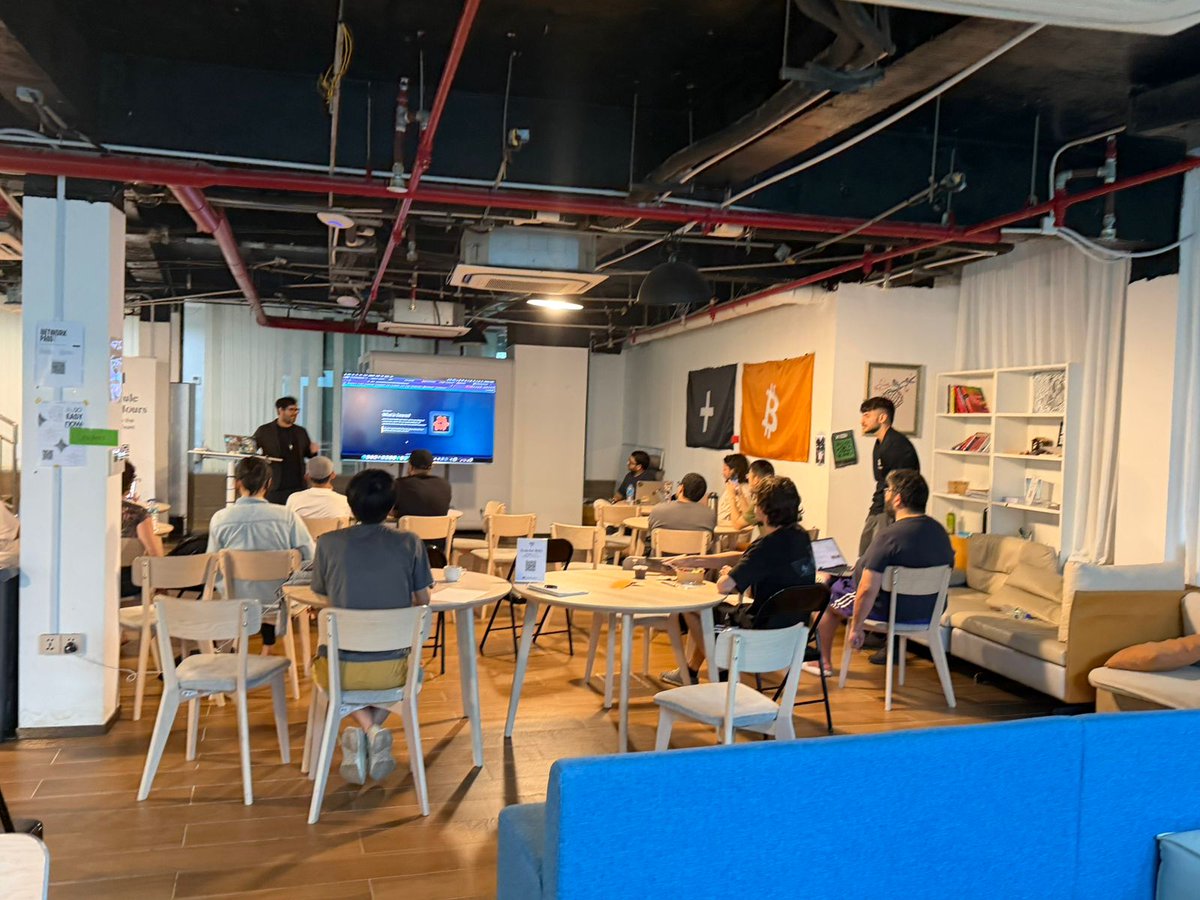
Thank you for helping us keep knowledge open, accessible, and free for all.
Our events are free to attend—not by magic, but thanks to the support of our sponsors and the hard work that goes into fundraising behind the scenes.
@ethswarm + @Zcash + @Logos_network + @BeldexCoin
@VitalikButerin@eth_limo That’s not IPFS directly - just yet another gateway waiting to get compromised. 😅
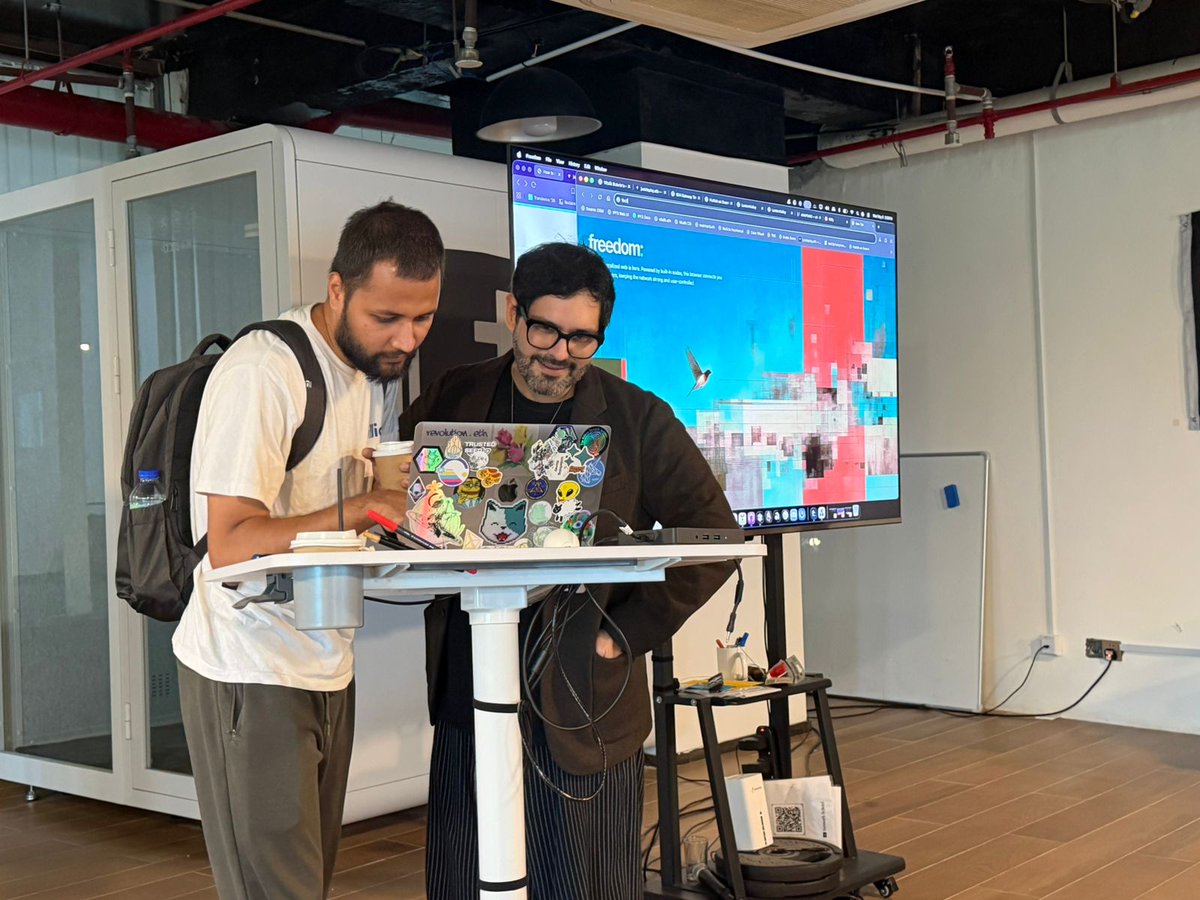
Browser with actual built in IPFS/swarm/ENS: https://t.co/QTiQUSdy73
I built x402 enabled short-term storage powered by @ethswarm for https://t.co/gDRAZY0LGw! You drop some files, pay a little USDC on @base and hit upload. The API (hosted on @akashnet) handles everything, you or your agent just gets a sharable link to the content.
A few weeks ago @meinharrd reached out to me with an exciting idea: a new browser built specifically for the decentralized web, with local nodes for @IPFS and @ethswarm
I immediately requested access to the codebase to start contributing 👩🏻🍳
Today we release Freedom Browser 👇🏻
Swarm Foundation has published its Strategic Focus Framework for 2026, outlining how the project is approaching the year ahead in terms of direction and priorities.
Full post👇
https://t.co/o8b7u4wZjI
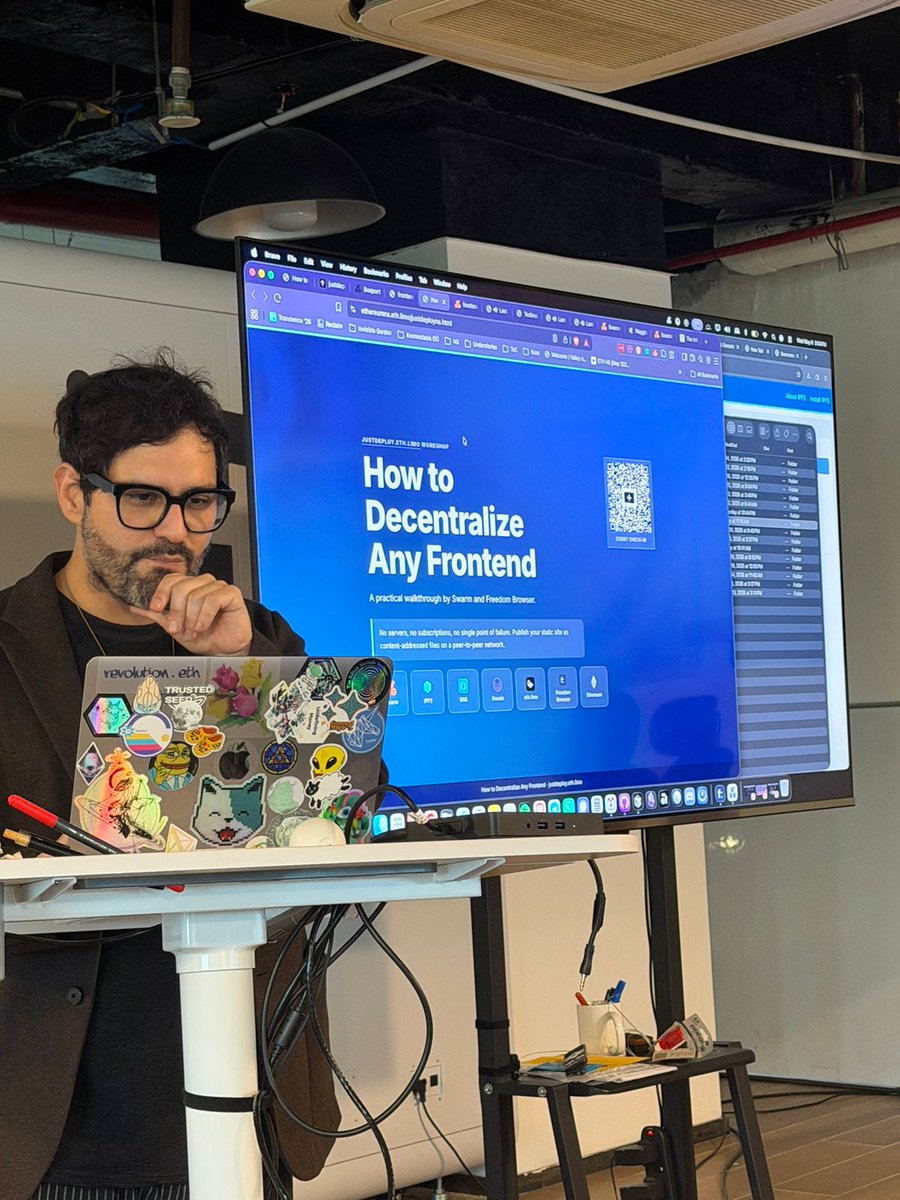
@gregskril https://t.co/ecQv3oRBxT might be interesting for you — upload a website to @ethswarm decentralised storage, buy or connect an existing ENS domain, and access your webpage via @eth_limo.
All in a simple UI in under 2 minutes.
Demo 👇
https://t.co/IyvawXuyeR
Beeport explained 👇
🔸 Buy storage with any token from any EVM chain
🔸 Upload your data to swarm
🔸 Link it to your @ensdomains
…all in your browser.
Try it now → https://t.co/1a2fRt30Oo
⚖️Why This Matters 🧵7/8
DISC turns storage into shared public infrastructure:
•No servers to seize or shut down
•No single company controlling your data
•No single point of failure
It’s the foundation that allows @ethswarm to power decentralized websites, apps, messaging, streaming, and even AI systems — directly at the protocol level.
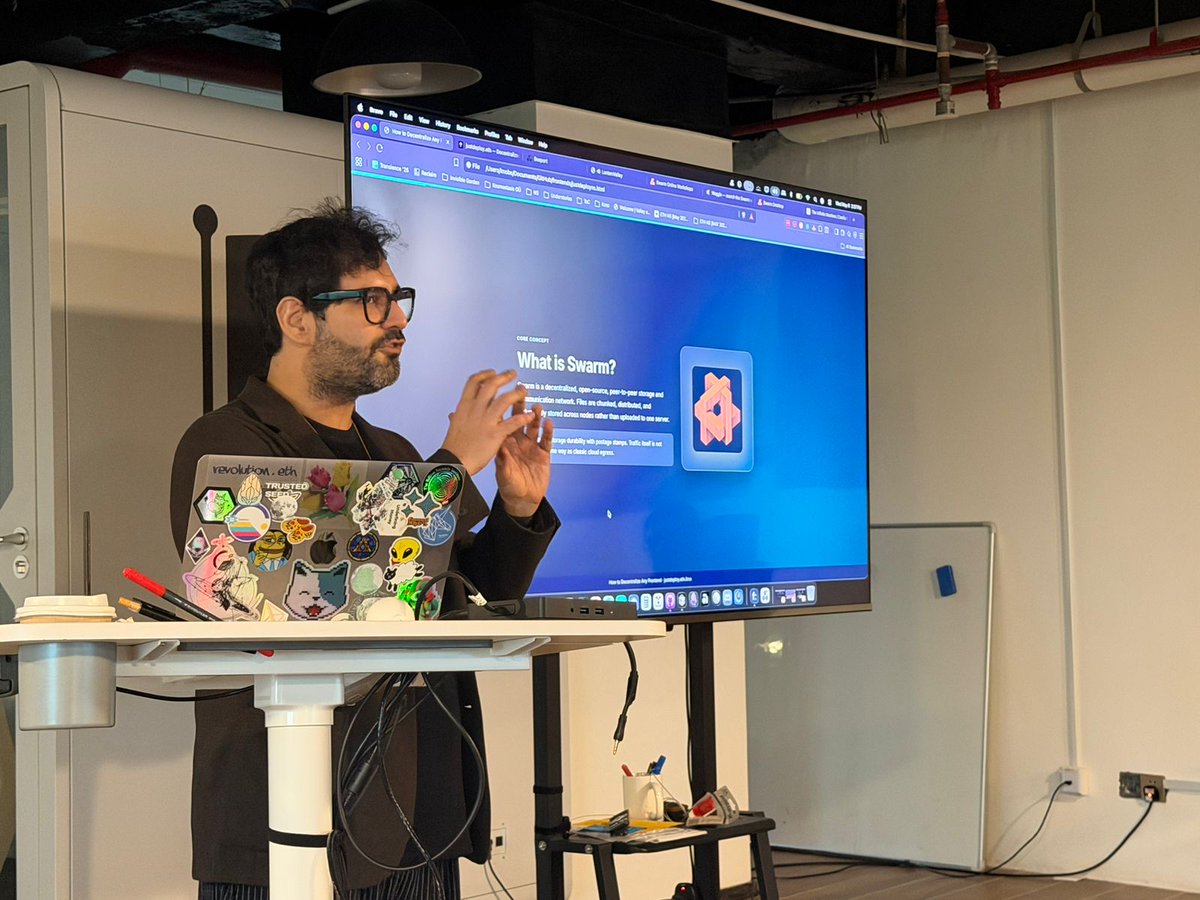
How @ethswarm Stores Data? 🧵1/7
Swarm stores data in a fundamentally different way from traditional cloud services. Instead of relying on centralized servers owned by a single company, it distributes data across a decentralized peer-to-peer network — making it resilient, censorship-resistant, and always available.
This architecture is called DISC: the Distributed Immutable Store of Chunks.
🧱Fully Decentralized Storage 🧵6/7
Together, these mechanisms form the DISC (Distributed Immutable Store of Chunks), enabling:
•Decentralized storage
•Censorship resistance
•Robust fault tolerance
•Strong data integrity
All without centralized servers or trusted intermediaries.