Sooo apparently… the taxman is already inside your wallet.
Indian Income Tax has started sending Section 133(6) notices for AY 2024–25 and the scary part is they’re listing your crypto income upfront and asking you to explain it.
That means:
• they already have exchange data
• PAN is matched with AIS/TIS
• trades, winnings, VDA receipts; everything
If you traded and didn’t report, expect questions, penalties, maybe interest. With 30% tax, no loss setoff, and 1% TDS, India basically made frequent trading mid.
Privacy? Yeah… that line was crossed a while ago.
Hello
@WEEX_Official
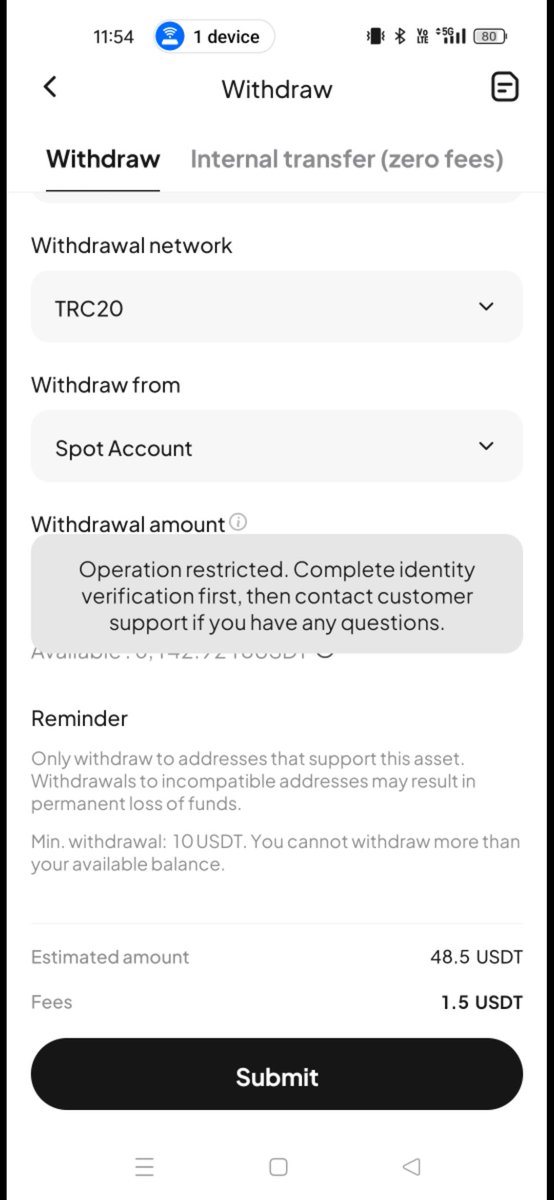
I’m a student, and my entire savings are stuck because my WEEX account has been frozen without any reason. It keeps showing “Operation restricted.”
UID 7186619875
Give me my money back
@OverTradess@globalrashid007@Digvijay_Crypto
📢 We’re currently in the Extreme Fear zone so what should you do?
First, understand the Fear and Greed Index.
The Fear and Greed Index is a tool that measures the overall mood of crypto investors.
It tells you whether the market is feeling fearful or greedy on a scale from 0 to 100.
How it works:
It looks at different data points like:
• Price volatility
• Market momentum
• Trading volume
• Social media sentiment
• Dominance of major coins
• Google search trends
In short:
Fear means people are selling.
Greed means people are buying.
The index helps you understand the market mood so you can make smarter decisions.
-
Now that you understand the Fear and Greed Index, here’s how you can use it to your advantage.
First, remember that this index is not something you can rely on 100%. It’s just a tool that shows the current market sentiment and most of the time, you can sense that sentiment yourself.
If you look at historical data, you’ll notice that markets often bounce after periods of extreme fear because that’s when most people panic sell. This doesn’t mean it will always happen it’s simply a pattern we’ve seen in the past, not a guaranteed outcome.
Prices can still drop further, but extreme fear is often a better time to accumulate strong, long-term tokens than buying during greedy market conditions. The key is to buy in small amounts and avoid putting all your money in at once.
Use DCA (dollar-cost averaging) buy small amounts over time.
If the market dips further, you can buy again. If it recovers, you’re already positioned. That’s how smart accumulation works.
A note for beginners:
Crypto is extremely volatile, so avoid investing money you can’t afford to lose. Don’t buy random tokens just because they’re cheap. Not every token will recover in fact, many won’t. Focus on quality assets and manage your risk properly.
If you already hold good tokens, there’s no need to panic. At this point, it’s simply a test of how long you can stay patient. No one becomes wealthy overnight it’s a process that requires time, discipline, and the ability to hold through tough market conditions. Keep your emotions in check and trust the quality of what you’re holding.
Just sharing what I’m doing. I’ve been in this market since 2018, seen multiple bull and bear cycles, and lived through many crashes. My portfolio has been hit several times, and that’s how I learned to manage things better. I’m sharing my experience to help, but you shouldn’t rely on me for everything you need to learn on your own too.
Good Luck
Leveled up in the Great Gas Reckoning with ETHGas! 💪
Baby Jack status: 0.0224 ETH gas spent, 4 Beans earned—supporting the Gasless Future!
Claim your Gas ID at https://t.co/8e950JjmQ1
Coinglass accused Binance of underreporting liquidations during the $19B market crash.
Saying their API shows only 1 liquidation per second!
True numbers could be much higher. Data transparency matters. 👀
@cz_binance@BNBCHAIN#BNB