Since Punch has renewed global empathy for baby monkeys:
Indonesia has an industry where people pay to watch baby monkeys get tortured online. Not even tortured to dance or perform. But painfully tortured to death out of sadism.
The footage too gruesome to show. Indonesians pay millions each year to watch baby monkeys drown or be cut open alive online. Some have their hands tied with ants poured on their eyes.
The Indonesian government does not enforce any laws against these torturers. This is despite the macaques monkeys being protected animals under the CITES convention.
Like Punch, all the tortured monkeys are young macaques.
I don't usually post this stuff, I usually post about history and culture. I like showing people the beautiful parts of our world. But I don't feel like I will have another chance to let people know about this, so I will post this knowing that I have a clean conscience.
I hope an effort can be made to put pressure on the Indonesian government and people to enforce CITES and international law protecting endangered animals.
Hyperliquid’s fully onchain liquidations cannot be compared with underreported CEX liquidations
Hyperliquid is a blockchain where every order, trade, and liquidation happens onchain. Anyone can permissionlessly verify the chain’s execution, including all liquidations and their fair execution for all users. Furthermore, anyone can verify the solvency of the entire system in real time. Transparency and neutrality are key reasons that fully onchain defi is the ideal infrastructure for global finance.
Some CEXs publicly document that they dramatically underreport user liquidations. For example on Binance, even if there are thousands of liquidation orders in the same second, only one is reported. Because liquidations happen in bursts, this could easily be 100x under-reporting under some conditions. Source below.
Hopefully the industry will see transparency and neutrality as important features of the new financial system, and others will follow.
🚨 There’s a large-scale supply chain attack in progress: the NPM account of a reputable developer has been compromised. The affected packages have already been downloaded over 1 billion times, meaning the entire JavaScript ecosystem may be at risk.
The malicious payload works by silently swapping crypto addresses on the fly to steal funds.
If you use a hardware wallet, pay attention to every transaction before signing and you're safe.
If you don’t use a hardware wallet, refrain from making any on-chain transactions for now.
It’s still unclear whether the attacker is also stealing seeds from software wallets directly at this stage.
Excellent report here: https://t.co/5CtiZJHYsN
WHEN THE OPPORTUNITY PRESENTS ITSELF
GROW BALLS AND BID FOR YOUR BLOODLINE!
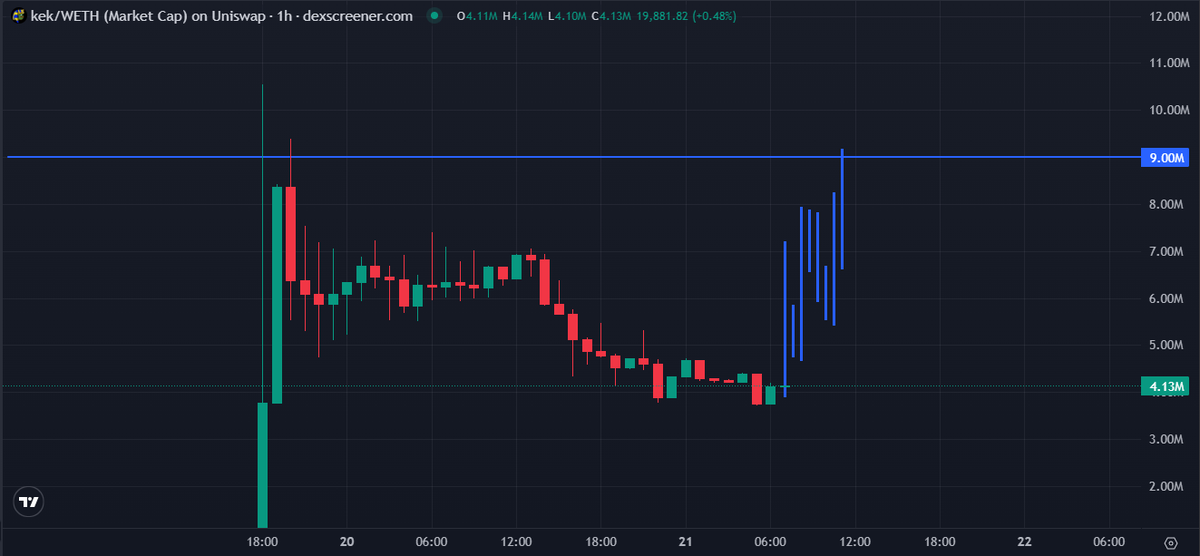
THIS $KEK REVERSAL WILL BE BIBLICAL!
CA: 0x7Beb8F36650E9327d8C52735e3b3c9D1521576E3
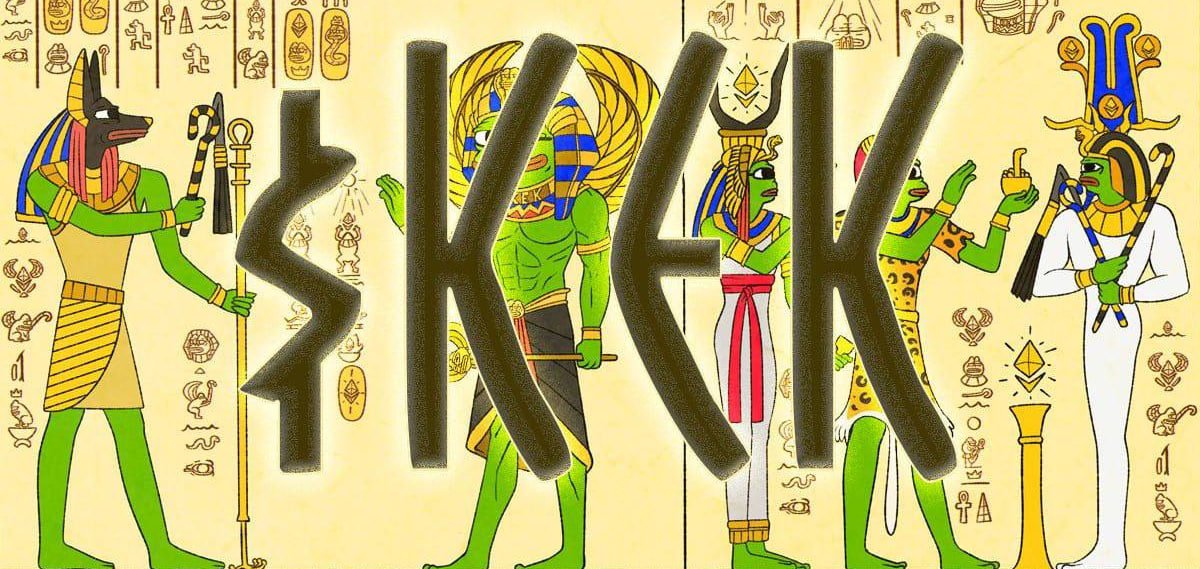
Who is Kek?
In ancient Egyptian mythology, Kek was the primordial god of darkness and chaos, depicted as a frog-headed deity.
For Egyptians, frogs represented fertility and change. Kek embodied the power of what’s unseen yet inevitable.
Now the modern day God of Memes.