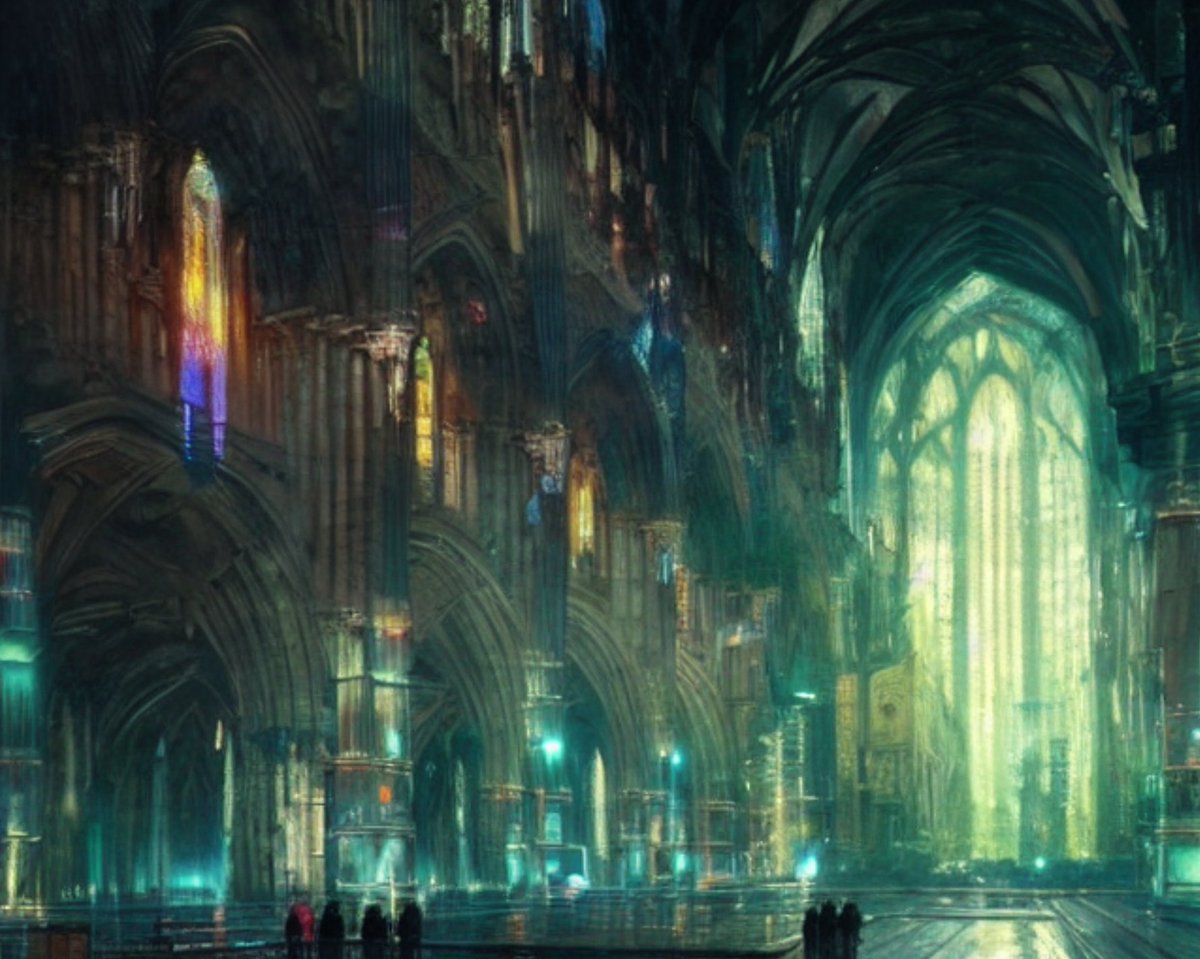
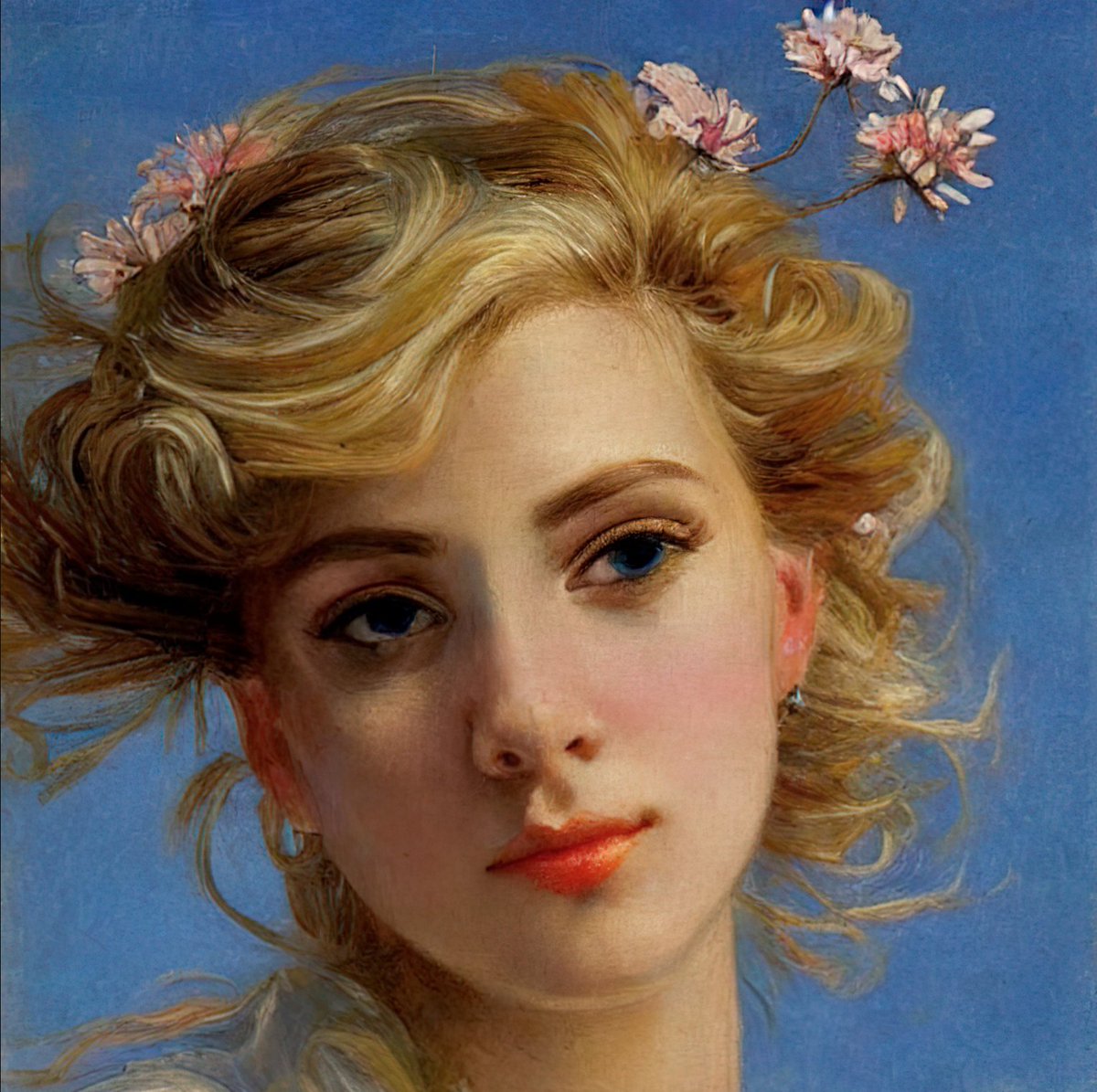
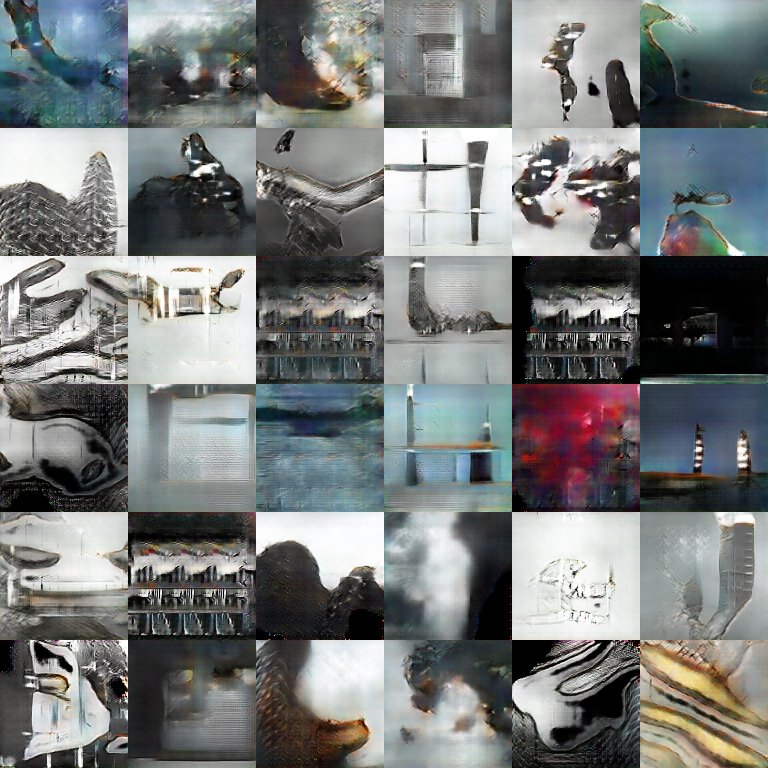
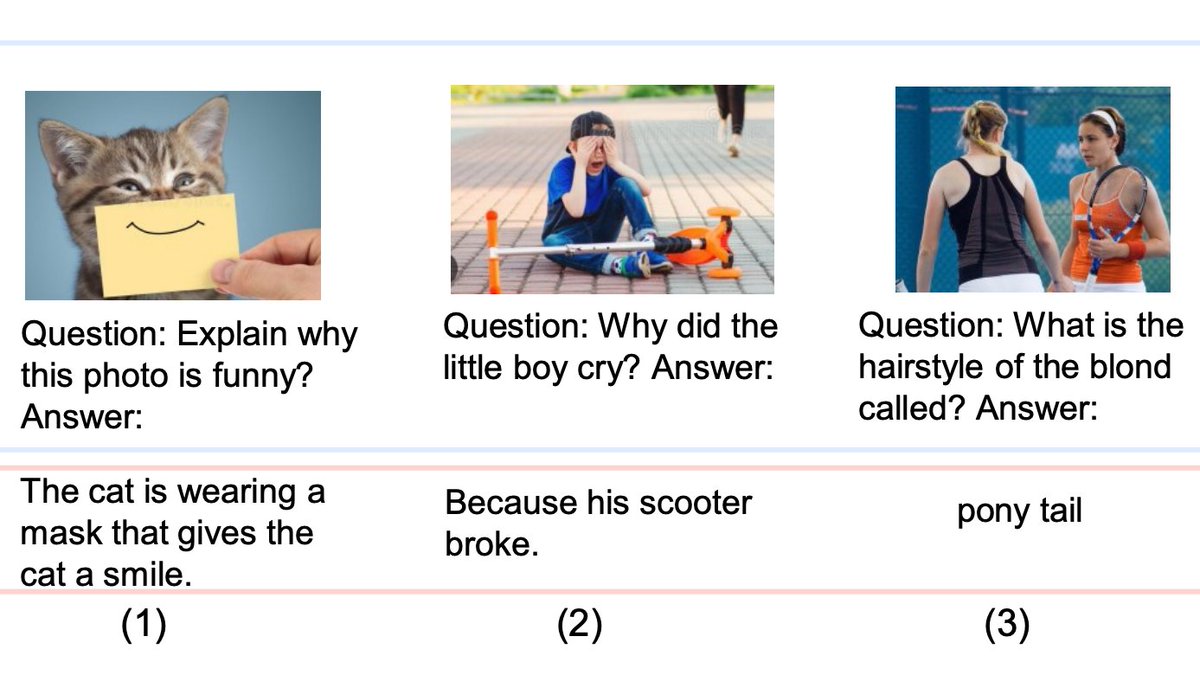
The quote in my bio was generated through an AI trained on @_harukimurakami novels, and my profile picture as well as banner are the result of training a DCGAN algorithm on a style coherent set of images. Here is another example.
What if we could run Transformer models without worrying about context length?
With our new work Unlimiformer, you can jailbreak your current models to use unlimited length inputs!
Preprint: https://t.co/HZuXeChltj
Thread 🧵 (1/6)
Accepted by #CVPR2023! X-Decoder is the FIRST generalist decoder that supports all segmentation tasks (ins/sem/pano/ref) in OPEN VOCABULARY, both inter- AND intra-image VL tasks, and even helps instruct image inpainting/editing! New demo below and more at https://t.co/FUat2ytKzE!
Microsoft's new Kosmos-1 is incredible.
It's a new Multimodal Large Language Model (MLLM).
Their model can understand images, text, images with text, OCR, image captioning, visual QA.
It can even solve IQ tests.
Paper: https://t.co/HE9TMrWg9j
Code: https://t.co/6hIskcpYMW
OpenAI Whisper blew everyone's mind with its translation and transcription. But 1-thing was missing "Speaker Diarization"
Thanks to @dwarkesh_sp code, we have it right infront as a @Gradio app on @huggingface Spaces.
⚙️ - https://t.co/KRDuQo9IzH
🎥 - https://t.co/WBODjrs4Ps
💾 Collecting, processing and annotating video data at scale can be difficult, and raises both privacy and fairness concerns. Synthetic data can address some of these issues.
👇🏻@GoogleAI recently released a new synthetic dataset generator (using #PyBullet and @BlenderDev):
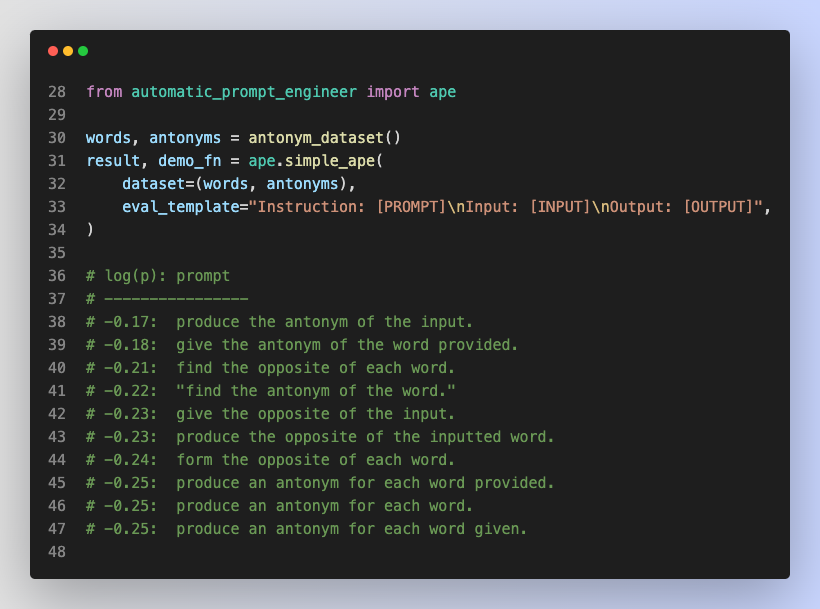
Searching for the right prompt? APE makes it easy to find a prompt that works for your language modeling task. Try our official release:
Colab: https://t.co/4ienqh1uu5
GUI: https://t.co/OlGFenTLWU
GitHub: https://t.co/1XSBWCRJqb
Diffusion models are another type of generative models, besides GAN, VAE, and flow models. The idea is quite smart and clean. It is flexible enough to model any complex distribution while remains tractable to evaluate the distribution.
https://t.co/3eaekDiUOU
The decision to release the weights of #stablediffusion is already bearing fruits, less than 24 hours after it was done. The future of AI generated Art is very bright, and going so much faster than (I) anticipated.
“Giant squid assembling IKEA furniture”
These weird images are generated by combining *both* #DalleMini🖍️ and #StableDiffusion🦑 models‼️
🧵 I’ll explain how to do it in this thread 👇
// Stable Diffusion, Explained //
You've seen the Stable Diffusion AI art all over Twitter.
But how does Stable Diffusion _work_?
A thread explaining diffusion models, latent space representations, and context injection:
1/15
🎯 Goal: Accelerate BERT-Large on GPU
✏️ Content: Learn how to use DeepSpeed-Inference for optimizing BERT
✅ Result: 2.9x improved latency
📔Blog: https://t.co/8b7SUU8gLi
https://t.co/8b7SUU8gLi
I release laion-aesthetic. A 120M sample subset of laion5B that has been filtered to keep only the most aesthetic samples. Thanks to @RiversHaveWings and @jd_pressman for providing the aesthetic predictor 1/9
Overfitting sucks.
But you knew that already.
What you probably don't know is what to do when your model doesn't work on your test set despite doing great on the train set.
I'll show you a clever technique to deal with this:
1 of 13
Excited to finally share our latest work!🥳We show that you can find new pseudo-words in the embedding space of frozen text-to-image models, that represent new visual concepts (e.g. your favorite toy / a child's drawing). You can then just use these words "as is" in new prompts!
Do models like DALL-E 2 get basic relations (in/on/etc)?
Colin (Coco) Conwell and I set out to investigate. The result is now on arXiv:
“Testing Relational Understanding in Text-Guided Image Generation”
https://t.co/0yZGMWjjOT
The illustration of images generated by different Parti model sizes is an excellent visual proof that large models tend to work better when supplied with a large dataset.