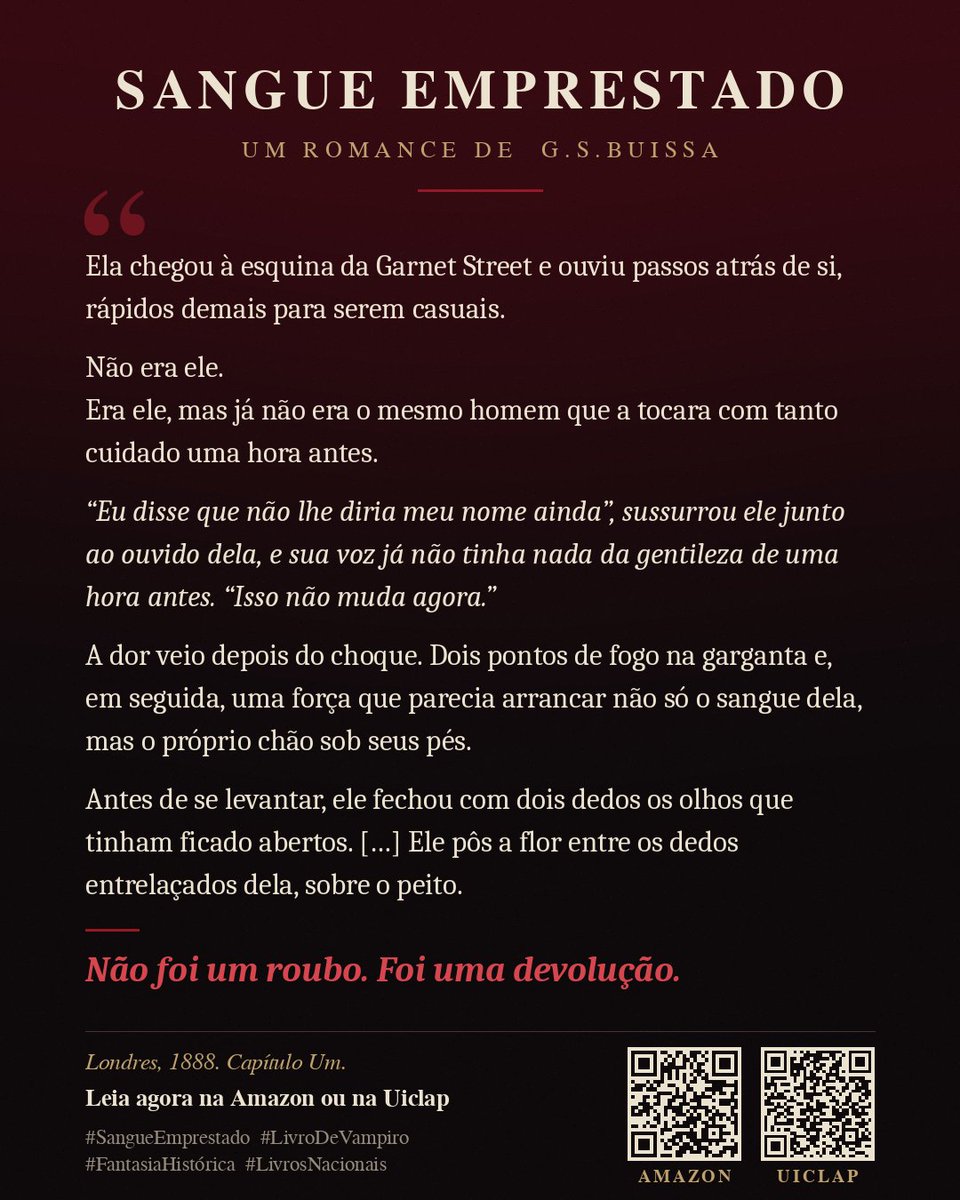
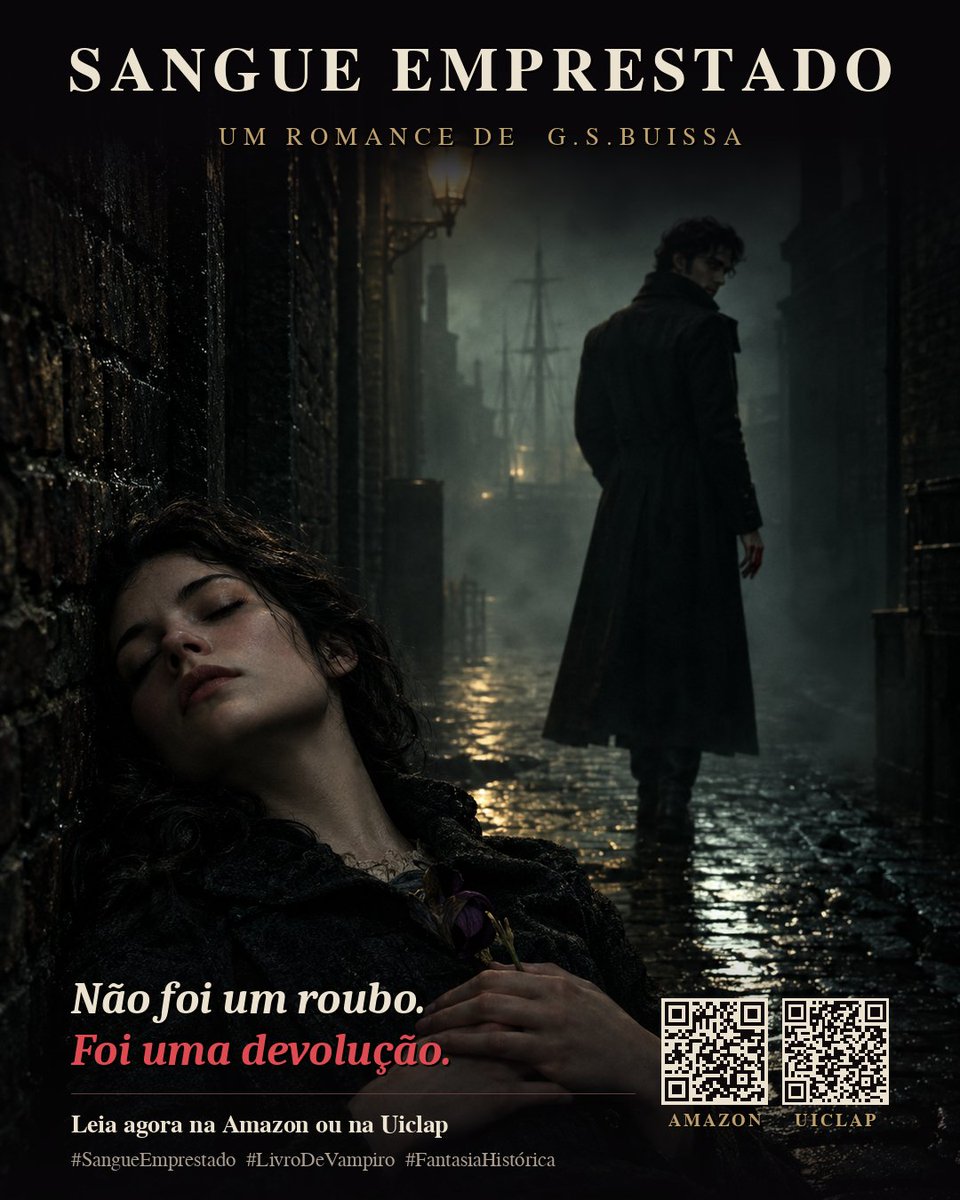
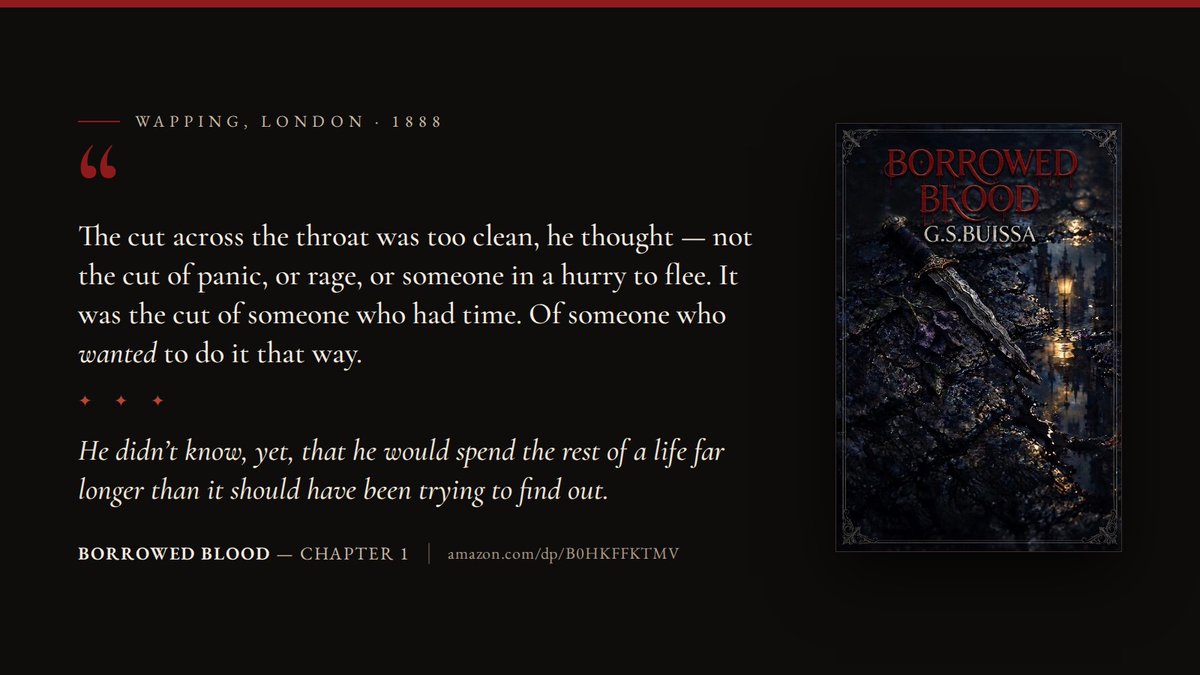
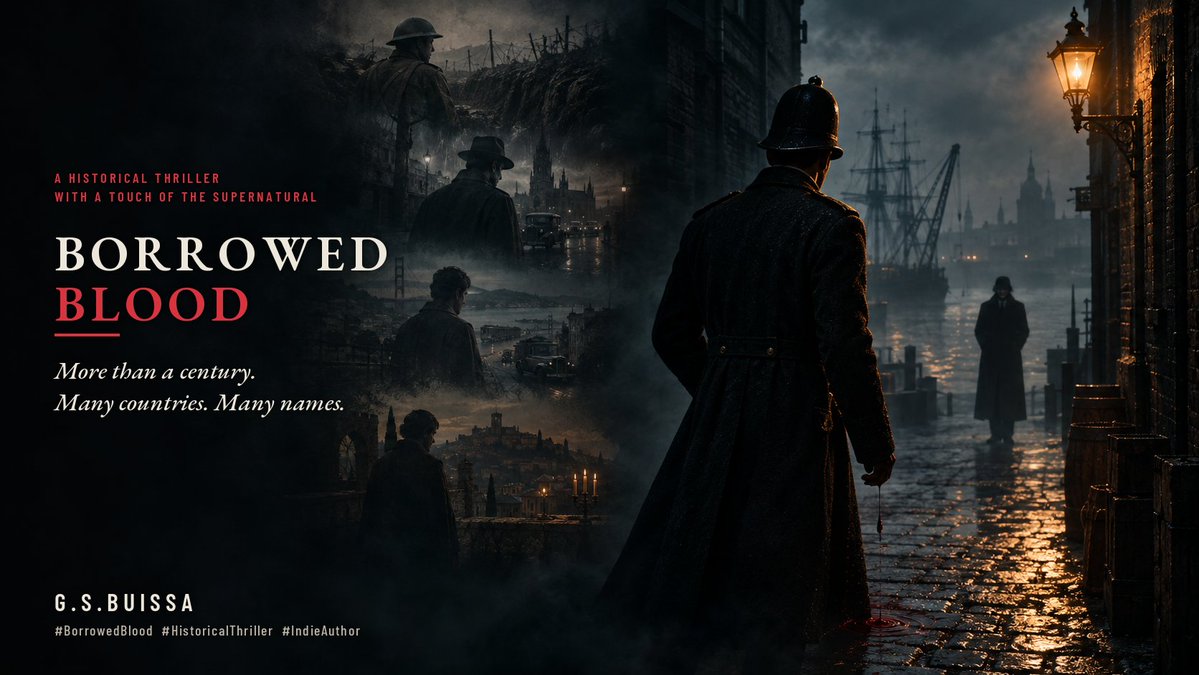
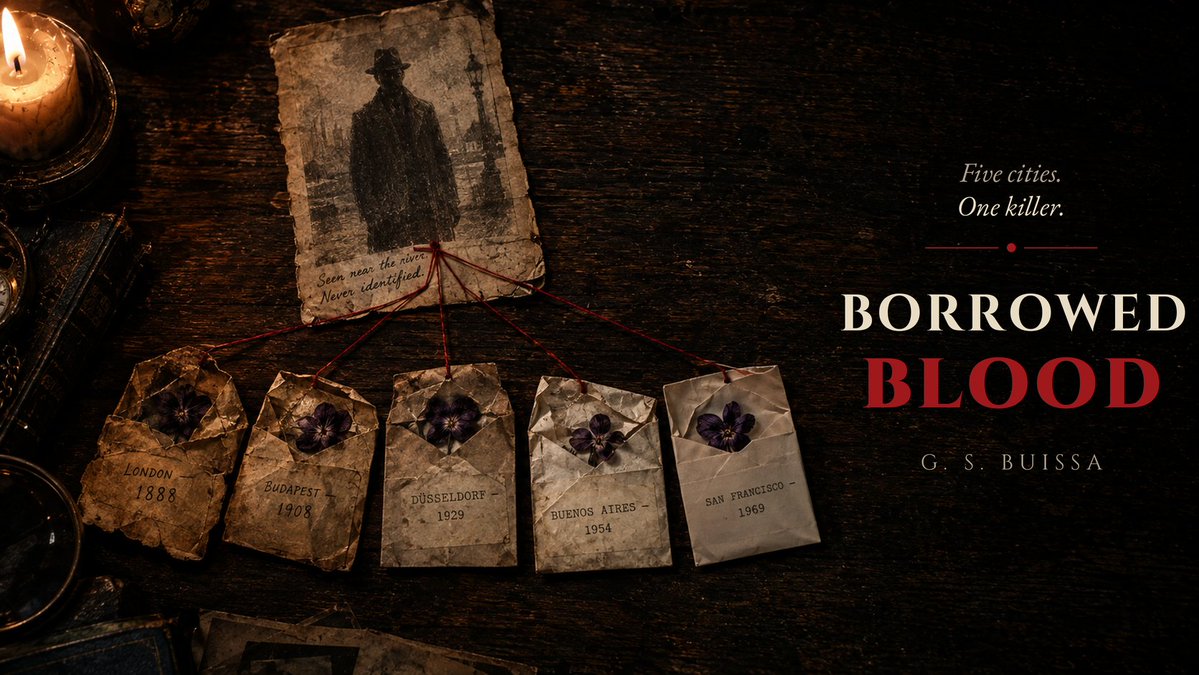
London, 1888. A constable hunts a killer in the fog of Wapping, and dies in an alley. Then he wakes up.
Borrowed Blood follows one man across more than a century. https://t.co/BNPxAbv0n6
#BorrowedBlood#HistoricalThriller#IndieAuthor
Flanders, 1916.
A patrol of seven men, torn apart in the night.
Six were left where they fell. One was laid out with care, facing the water, his own pipe placed in his hand.
Edmund Vale had seen that tenderness before. In London. Twenty-eight years earlier.
@luiza_thron Great question, thank you for asking! I can't say too much without spoiling it, but what Edmund witnessed in London is the thread that ties everything together, and it won't stay buried for long. The answer unfolds as the story goes on. I hope you'll keep reading!
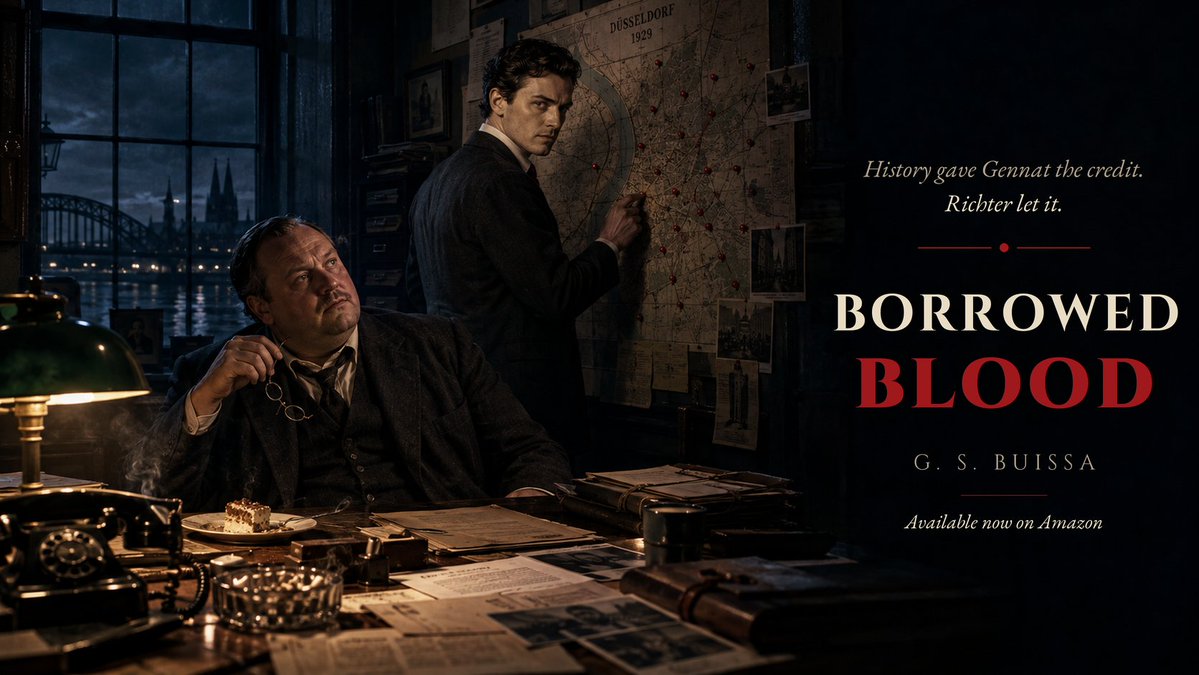
Berlin, 1920s. Detective Ernst Gennat is credited with coining the word "Serienmörder." Serial killer.
In Borrowed Blood, the idea came from his quietest detective. A man who had been hunting one since 1888.
He let Gennat keep the credit. He always did.
🩸 Borrowed Blood
Düsseldorf, 1929. The papers called him the Vampire.
Peter Kürten confessed. He was executed in 1931.
But three of those women weren't his. Only one detective knew, because he'd seen that signature before, in London, forty-one years earlier.
🩸 Borrowed Blood: #BorrowedBlood
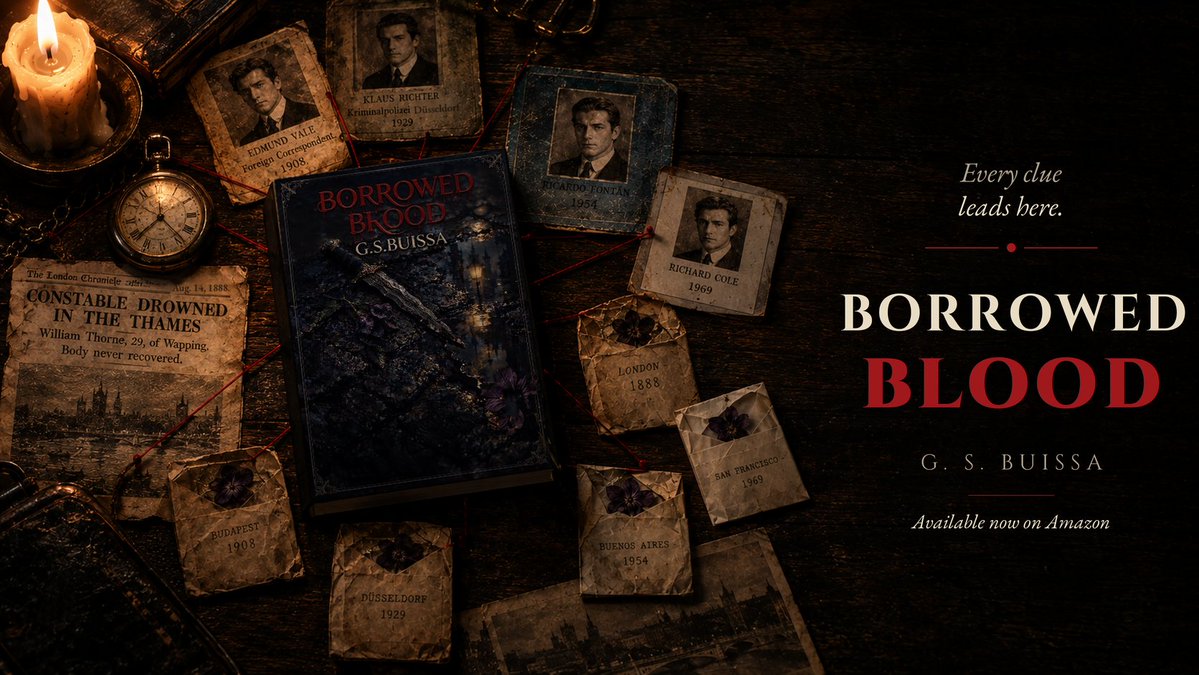
Every clue leads here.
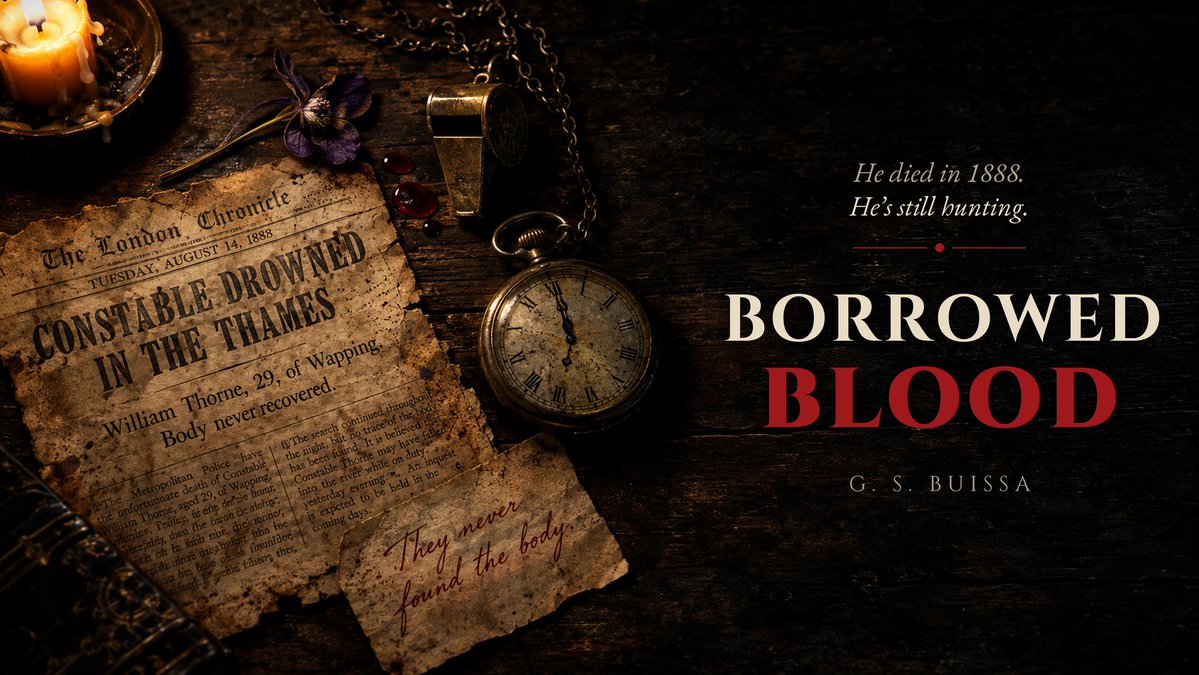
A constable who died in 1888.
A killer who signs with violets.
A hunt that crosses a century.
🩸 Borrowed Blood, available now: https://t.co/qUHmCkFEoN
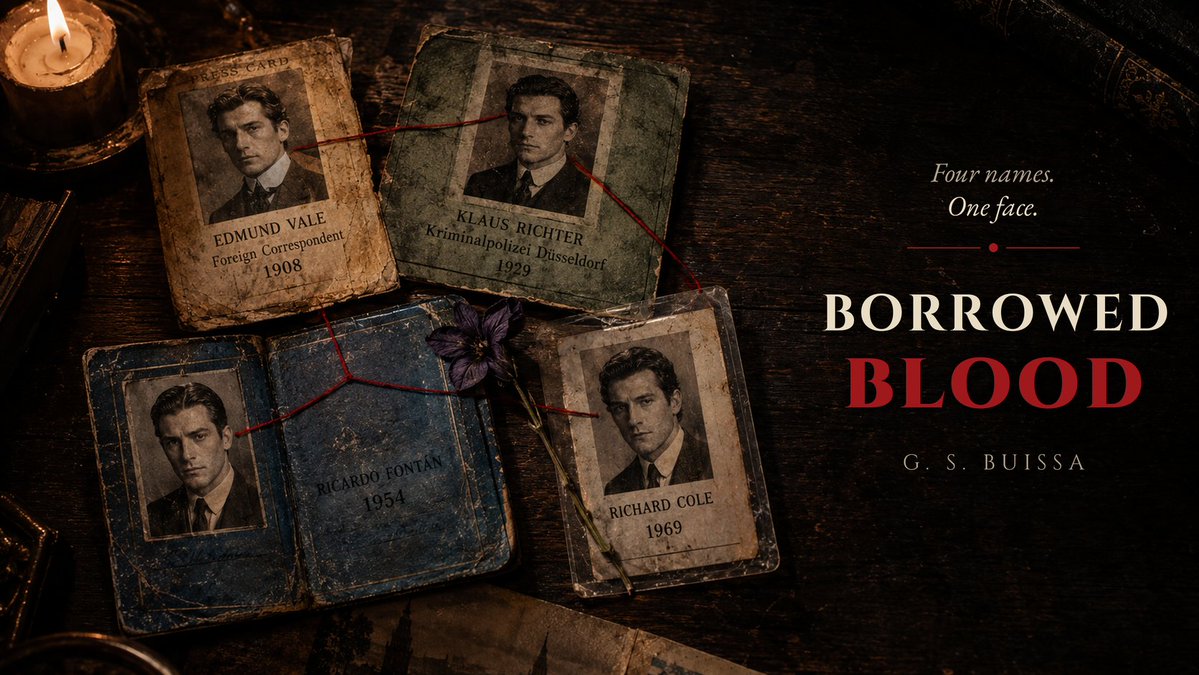
He changed his name every decade.
The killer never changed his signature.
A single violet. Left with every victim. For over a century.
🩸 Borrowed Blood: https://t.co/BNPxAbusxy
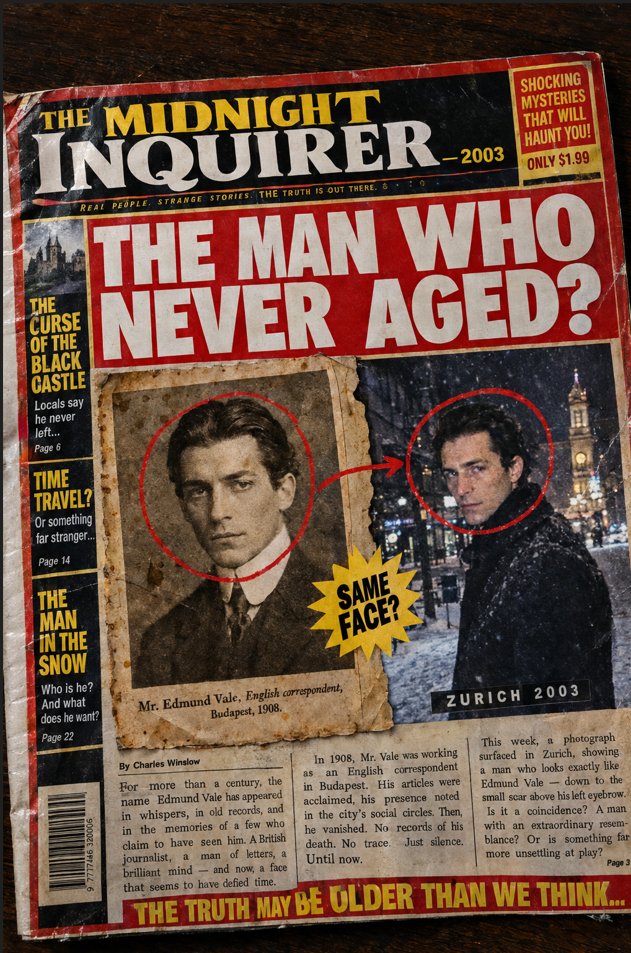
The tabloid got one thing wrong.
His name wasn't Edmund Vale.
London, 1888. Constable William Thorne drowned in the Thames. Body never recovered.
He didn't drown. He stopped being human.
🩸 Borrowed Blood: https://t.co/BNPxAbusxy