An agent with wallet access and good intentions is still one convincing message away from sending your money to the wrong place.
That's the problem @DeanTribble addressed on stage: why the usual fixes (auditing, rules, supervisor agents, custody) don't hold up, and what actually does.
Watch now before it happens to you:
https://t.co/s7w9ahuASp
Going into the weekend let's check our One Sig v Manual experiment.
Manual side: ~4 min, 4 signatures, 2 platforms, bridge fees skimmed off the top.
Ymax: one signature, gas covered, under 30 seconds.
Next episode is live 👇
https://t.co/g5oP4DWlbQ
Most DeFi yield conversations are about finding the best APY. Almost none are about what it costs you to actually go get it.
Withdraw. Bridge. Approve. Deposit. Re-approve when it moves. Every step is time, gas, and another chance to fumble something.
The opportunity was never the hard part. Acting on it is
Act better: https://t.co/vTtYebADRp
USDC on Arbitrum → yield from anywhere with Ymax 😌
Find us over on the @arbitrum project portal to try Early Access today and feel the relief of portfolio orchestration.
https://t.co/db1dnE9nEY
ICYMI: New in Ymax: instrument status visibility.
Pools now show their exact status — At Capacity, Paused, Deprecated, or Low Liquidity.
Try it out: https://t.co/D9A13iMOog
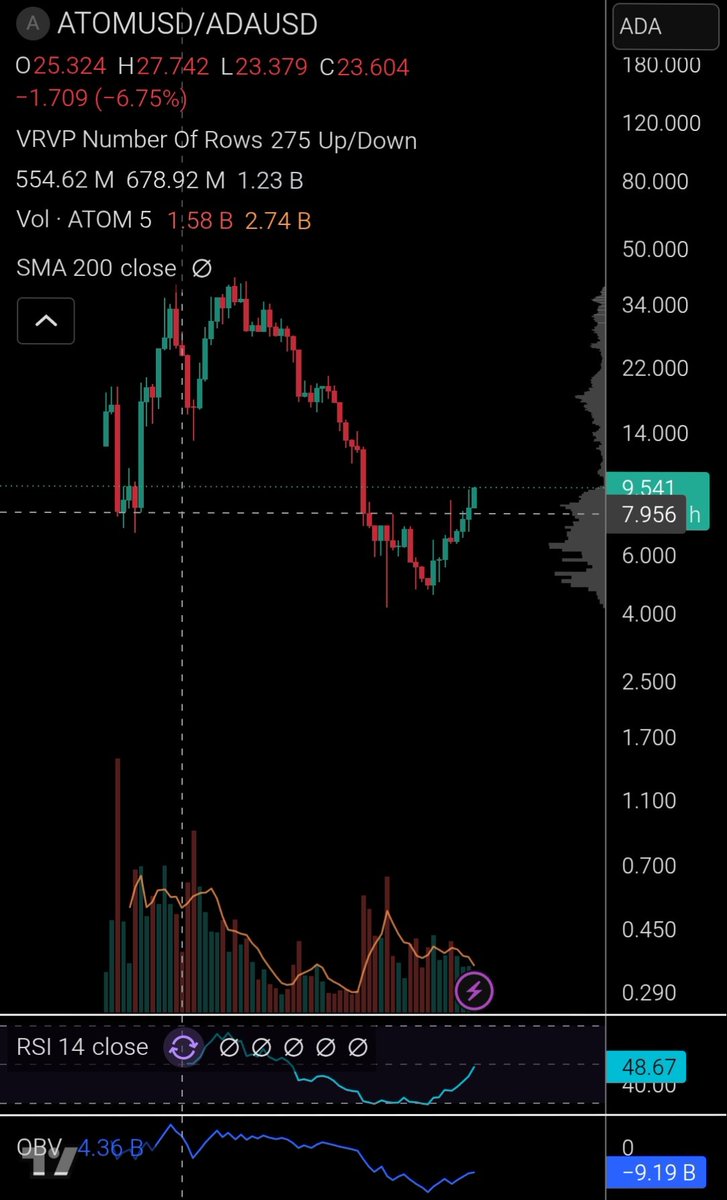
Given the recent developments in both Cardano and Cosmos camps,
probably not a bad idea rotating your remaining $ADA to $ATOM if you are a dino coins enjoyooor
https://t.co/Rkk85ouCRy
Robinhood's AI agent trading launch is a real milestone. It's also highlights something the industry often gets wrong.
The question isn't "should agents manage capital?" They should. It's "what authority model they operate under?"
Giving an agent keys or broad wallet permissions is the wrong answer. You can only explain misbehavior rather than prevent it.
What financial agents actually need:
→ Constrained execution: an agent only act within an explicitly defined scope. Not "we trust it won't" but "it architecturally cannot"
→ Revocation: the user can pull authority at any time, without needing the agent's cooperation
→ Auditability: every action is visible and attributable before and after it happens, not reconstructed from logs after something goes wrong
This must live at the authority layer, in the smart contract, not in a compliance dashboard on top of unconstrained execution.
The agent might move your capital into a low-yield fund. That's fine, that's what you authorized. But it should be architecturally impossible for it to send funds to an unapproved address, bridge to an unapproved destination, or act outside the scope you set.
Agents need contracts, not keys.
ICYMI — we'll be at EthConf NYC next week.
Come find us if you want to talk cross-chain execution, onchain capital management, or why one signature beats fifteen.
Drop a reply or DM if you'll be around. 👇
More information on your positions is now available in the Ymax UI.
Non-custodial doesn't just mean you own the assets, it means you have total visibility.
Try ymax: https://t.co/LLCpP8ifTv
Our CEO @DeanTribble is speaking at @ethconf NYC next week!
He'll be talking about enforceable guardrails for agentic finance.
If you're building at the intersection of AI and onchain capital, you don't want to miss this one.
📍 NYC | [ Jun 8, 12:40 - 1:00 PM ]
Manual cross-chain rebalancing: 15 transactions. 11 minutes. Multiple bridges, approvals, and signatures just to move capital where it needs to go.
Ymax: 2 transactions. Under 2 minutes.
Same outcome. One signature. That's what orchestration actually looks like.
Episode 0 ↓
https://t.co/1k6oALxGtb
We just dropped something new.
Capturing Yield: Ymax OneSig vs. The Hard Way. A real-money series where we run the same multichain yield strategies two ways: manually and with Ymax.
Episode 0 is live now!
🎥: https://t.co/A6sCNT0fhM
No single chain consistently offers the best USDC lending yield.
We backtested 26 months across Ethereum, Base, and Arbitrum:
→ Ethereum only: 9.23% annualized
→ Arbitrum only: 12.86%
→ Cross-chain, rebalancing weekly: 12.69% — after bridge costs
The alpha isn't a secret. It's an execution problem.
One signature. Every chain. That's Ymax.
https://t.co/QrkE4wYuuO
37% of institutional decision-makers see cybersecurity and data security as the #1 decision factor when they choose a DLT solution. For Cosmos, shipping a new release into a network that 150+ businesses rely on to secure over $50B in tokenized assets is not a routine software update. The stakes demand a different standard of security.
Here’s a walk through Cosmos security program:
🔐 An internal Red Hat model developed over the past few years to proactively identify vulnerabilities before code ships
🔐 Continuous investment in the bug bounty program, which has been in operation since 2018, and ongoing engagement with independent researchers and security firms
🔐 Rigorous internal review processes designed specifically for high-stakes production environments where the cost of a vulnerability is measured in real financial exposure
Watch our VP of Operations Matthew Matuszak and Cosmos Stack Engineering Manager Alex Johnson Cosmos security program in more detail: