“Blessed are those afflictions which subdue our affections, which wean us from self-sufficiency, which educate us into Christian manliness, which teach us to love God not merely when he comforts us, but even when he tries us.”
Charles Spurgeon
College doesn’t make women wise or kind. It doesn’t teach them to be good wives, mothers, and homemakers. College is worthless for women since it doesn’t teach them anything of lasting value. All it teaches them is to be feminist career women.
@honorablesaint No such thing as Christian feminism.
Feminism by its nature, is a revolt against God’s design for the sexes. Carried out in the name of equality, it deliberately blurs & ultimately seeks to erase the complementary d/ce between men & women that God intentionally established
@Slick_Sage7 I do have issue with the premise:it argument overrates Arsenal. One final appearance and a semi the year before doesn’t make beating them the test for “best of the decade.”
PSG already won consecutive Champions Leagues in 2025/26. That’s the actual achievement.
KNIFE'S EDGE: The U.S. Embassy in Ethiopia is warning Americans of "long-range attacks" on military installations in and around Addis Ababa, as analysts say the Horn of Africa is barreling toward a regional war that could drag in multiple nations and disrupt global shipping.
Ethiopia and Eritrea are at the center of the crisis. Reports of drone strikes on Ethiopia's capital — potentially backed by a foreign state — have rattled the region. A rebel coalition claimed responsibility for using drones, but a regional conflict analyst told Fox News Digital the weapons used exceed what domestic insurgent groups can field. Meanwhile, Eritrean troops have allegedly crossed into Ethiopian territory, and a coalition of Egypt, Sudan, Somalia, and Eritrea has formed what former CIA analyst Cameron Hudson calls "a veiled threat" against Ethiopia's ambitions in the Red Sea and on the Nile.
The State Department is urging both sides to stand down, but Hudson warns the Trump administration needs to act now to prevent a miscalculation that could spiral into a full-blown regional conflagration — one that would be felt far beyond Africa.
Full story here https://t.co/Bhu8RLxfqr
When a woman goes from wanting a specific man’s attention to enjoying male attention in general, something special is lost about her. You see, for all a woman’s talk of monogamy, purity and exclusivity, the cultivation of a field of male attention is a type of emotional promiscuity, for where there was a purity of yearning for a specific man, there is now the vanity of desiring male attention in general, and spiritually using them to gratify herself.
This is not clean.
The female equivalent of sleeping around is to cultivate and bask in the attention of many men she knows desire her and retain a plausible deniability about it all, rather than keep herself unavailable and imperceptible to all but the man she has chosen. A woman who emotionally feeds on various men to bolster her own felt sense of self-importance is spiritually impure. It is absolutely not the kind of behaviour you engage in to prepare yourself for a husband, and is a dishonour to whatever man may eventually fulfil that role.
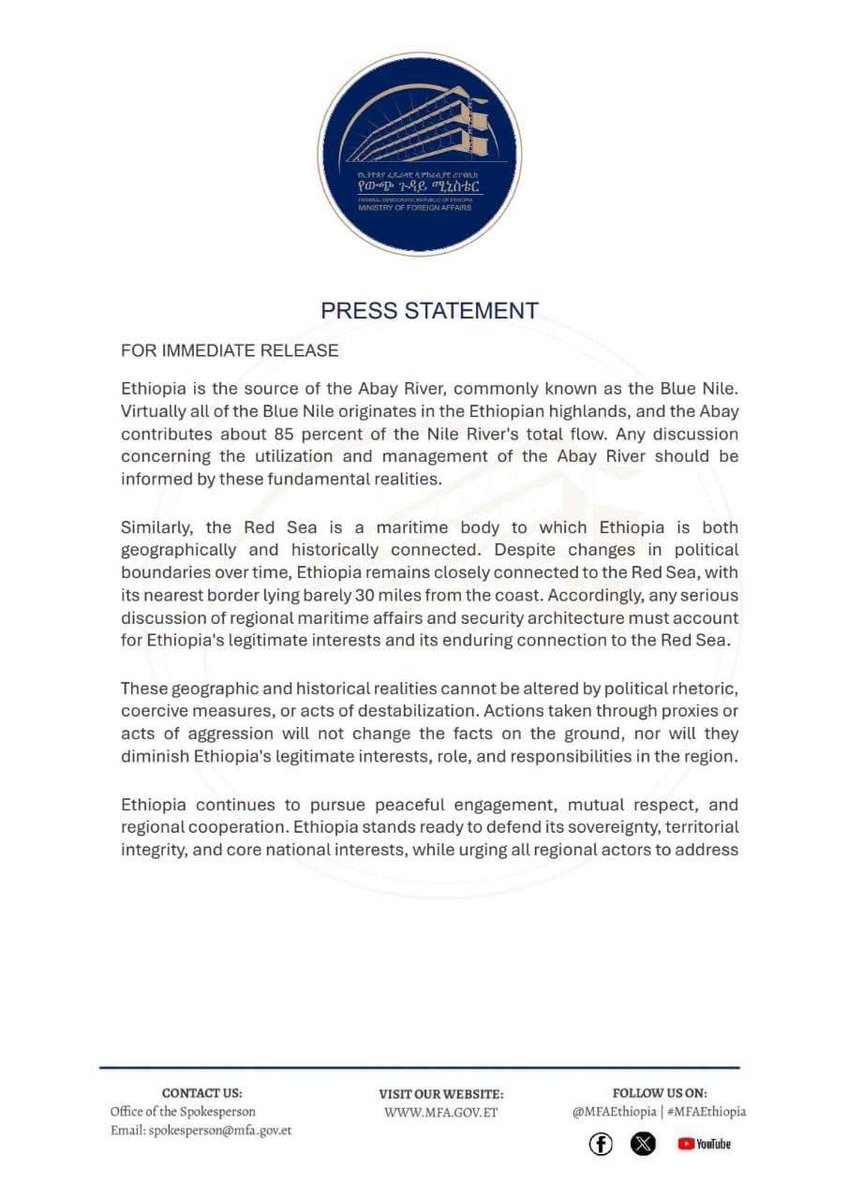
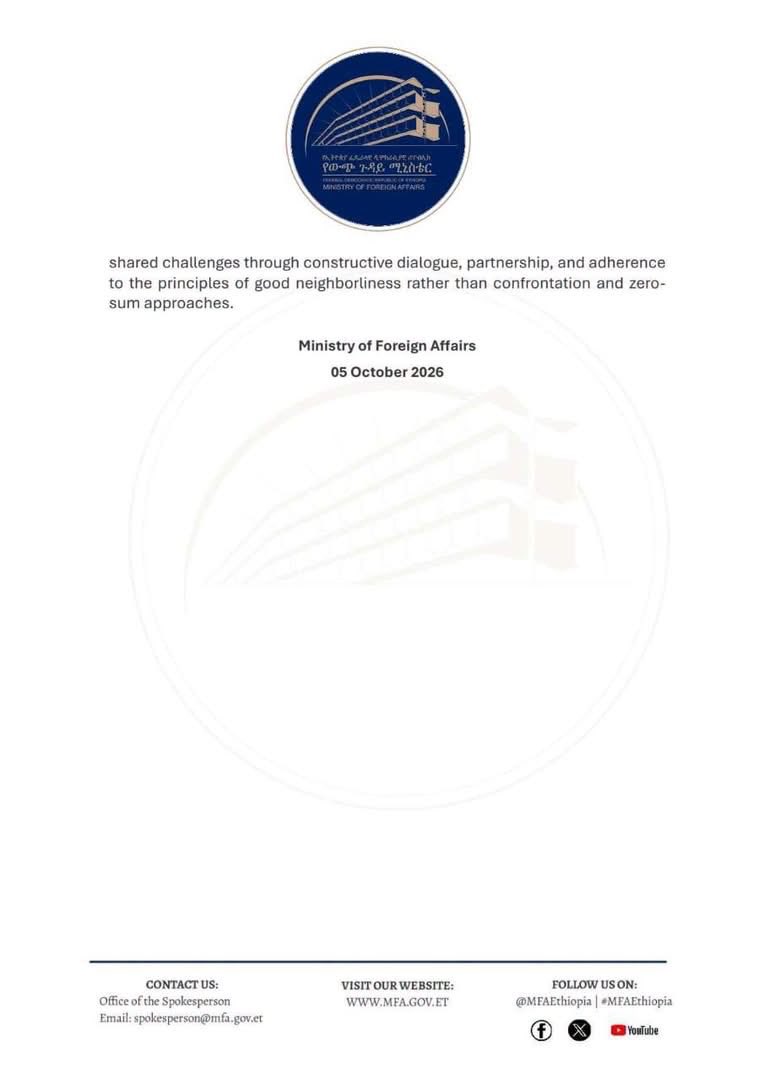
Eritrea has ceded the high ground to Ethiopia, literally and figuratively. Irrespective of what Abiy may have done to provoke the Tigrayans, and even the Eritreans, in recent months, moving mechanized battalions into a neighboring country is an act of war.https://t.co/Dh8pgeQdUq
#Ethiopia,
Internet service is back in Mekelle, and messages are flowing again. That is encouraging. But reconnection must now be followed by political and security stabilization.
If there is one condition the people of Tigray are almost as exhausted by as war itself, it is being left in limbo. One instability must not simply produce another.
Tigray cannot remain without a functioning political structure. An interim administration should be considered immediately, bringing together meaningful political parties and credible representatives, whether they are currently in #Tigray or Addis Ababa.
My message to the major Tigrayan opposition parties is equally direct.
This is not the moment for political correctness, rigid positioning or waiting for ideal conditions before engaging. There has long been a tendency among parts of the opposition to avoid working pragmatically with stakeholders they distrust or do not consider natural allies. That may preserve political purity for a moment. It may also prolong the suffering of the people.
Leadership now requires engagement with the political reality as it exists, not as anyone wishes it to be.
There will be serious disagreements over legitimacy, participation and the shape of any interim arrangement. Those disagreements are unavoidable. But they should be resolved through genuine representation, negotiation and clear safeguards against domination by any single faction.
The people of Tigray should not be forced to choose between war and political vacuum.
The immediate responsibility is to restore basic governance, stabilize the region and create enough political space for competing visions of Tigray to be pursued through politics rather than arms.
Can the TPLF Sustain Another Insurgency?
Having encountered a much more formidable ENDF force than it appears to have anticipated, the TPLF has pulled back rapidly, while federal and allied forces have advanced deep into Tigray and toward Mekelle. Battlefield sources indicate that, although the TPLF suffered significant casualties and weapons losses, its forces did not experience the nightmare of organisational collapse. They appear to have retreated largely with their command structure intact. This suggests that the TPLF may have concluded that confronting the federal army in conventional warfare was a mistake and quickly decided to change course.
But what course?
Will it retreat fully into Eritrea and attempt to wage a joint campaign? Or will it shift toward a prolonged insurgency inside Tigray, supported from bases across the Eritrean and Sudanese borders? Given that Eritrea and Sudan may be reluctant to enter an open interstate war with Ethiopia, the latter may be the more plausible option. An insurgency inside Tigray, supported by external bases and supplies. The sharp deterioration in relations between Addis Ababa and Asmara, including the severing of diplomatic relations, makes the question of external sanctuary particularly important, although Eritrea denies Ethiopian accusations that it is supporting the rebel alliance.
The more difficult question, in my view, is whether a successful insurgency is feasible in Tigray under current conditions. The TPLF has already demonstrated that losing Mekelle and conventional control of Tigray does not necessarily mean the destruction of its military organisation. After federal forces captured Mekelle in November 2020, its leadership retreated, regrouped and eventually rebuilt a resistance capable of retaking the city. But many of the political and military conditions that made that recovery possible have changed.
1. External support and sanctuary
The existence of external actors willing and able to support an insurgency is perhaps the most important enabling factor. Eritrea views the Ethiopian government as a potential threat to the survival of the Isaias regime. It also possesses significant stocks of weapons and ammunition and could potentially provide the TPLF with training, command bases, weapons, food and logistical support. But having an interest in weakening Addis Ababa does not necessarily mean being prepared to sustain an insurgency. Political support, sanctuary, logistical facilitation, weapons supply and direct participation in war are very different levels of involvement.
Eritrea’s relationship with Egypt could provide additional political and material support. Egypt, given its longstanding dispute with Addis Ababa over the Nile, has an interest in limiting Ethiopia’s regional power. Addis Ababa has accused both Eritrea and Egypt of supporting the current opposition alliance, allegations both governments deny. The diplomatic confrontation nevertheless demonstrates how the Tigray conflict is becoming connected to wider regional rivalries.
Sudan is another potential factor. The deterioration in relations between Addis Ababa and the Sudanese Armed Forces, alongside Ethiopian allegations concerning the RSF, creates a regional environment in which support for Ethiopian armed opponents cannot be excluded. TPLF-linked Army 70 has previously been reported operating from Sudan, although its current strength, command structure, and operational role remain unclear. During the previous war, the TPLF developed a powerful domestic resistance while becoming increasingly isolated from external supply. A future insurgency could face almost the reverse. Greater opportunities for external sanctuary and supply, but a much weaker domestic mobilisation environment.
Other regional actors also have interests that intersect with the conflict, particularly through the wider competition around Sudan, the Nile and the Red Sea. But strategic interest should not automatically be interpreted as willingness to support a TPLF insurgency. For these actors, weakening or distracting Ethiopia could serve different strategic objectives. Containing its regional influence, protecting their interests in Somalia and Sudan, shaping Red Sea politics, or counterbalancing the influence of their rivals. Any external support would also have to reach forces operating inside Tigray. Access through western and northern Tigray and the viability of corridors toward Sudan and Eritrea could therefore matter as much as what outside actors are willing to provide.
2. Leadership survival
The current TPLF leadership is fighting not only for political influence but potentially for its own survival. Senior leaders face accusations of serious wrongdoing and could face prosecution or political retribution from the federal government. They have also accumulated powerful enemies within Tigray.
For leaders who believe that defeat could mean imprisonment, prosecution, or revenge, insurgency could become more than a political strategy. It could become a survival strategy. That motivation could keep the leadership fighting even under very difficult conditions, but it cannot compensate indefinitely for declining recruitment, weakened political support, or the loss of capable commanders.
3. An overstretched federal state
The Ethiopian state under Abiy Ahmed is already dealing with multiple armed conflicts, economic pressures and significant security commitments. With major insurgencies continuing in Oromia and Amhara, the federal government may struggle to concentrate all its military and security resources on Tigray. That could create space for an insurgency to survive, particularly during its early stages.
The challenge for the federal government would not necessarily be capturing major towns. The present counteroffensive demonstrates that it can still concentrate considerable military power. Holding and administering territory over time while containing insurgencies elsewhere, securing supply routes and maintaining local intelligence would be a different challenge.
Tigray’s mountainous terrain would continue to favour dispersed armed groups, although geography no longer provides the same advantage it did during the TPLF’s original insurgency. The federal government now enters the conflict with substantially greater drone, surveillance and precision-strike capability, making large formations, fixed bases and exposed supply lines much more vulnerable.
4. The problem of popular support
The TPLF has dominated Tigray’s political and social life for nearly half a century. Resentment toward the party has been building for years, particularly since the death of its intellectual and strategic leader, Meles Zenawi. The party has suffered a series of political and military setbacks while failing, in the eyes of many of its critics, to acknowledge or correct its shortcomings.
Its relationship with sections of the Tigrayan intelligentsia has also deteriorated. Many have turned against the party, while others have distanced themselves from it. The TPLF also enters this conflict without the unusually broad mobilisation that developed during the 2020–22 war. The TDF that emerged during that conflict became broader than the TPLF itself, attracting volunteers who perceived the war as an existential struggle. Before the present war, reports of forced recruitment, defections and widespread war fatigue suggested a much less favourable mobilisation environment.
A significant segment of the population blames the leadership for the current war and Tigray’s continuing suffering. Without a compelling popular cause, sustaining an insurgency becomes much harder. Declining support for the TPLF, however, does not automatically translate into support for the federal government. A Tigrayan can oppose another TPLF-led war while simultaneously distrusting Addis Ababa and opposing outside interference in Tigray. What happens within this political space could become more important than simply measuring support for either side.
5. Can the leadership regenerate itself?
Age itself may not be the most important problem confronting the TPLF. The deeper question is whether an ageing and politically exhausted leadership can regenerate itself and produce a new generation of commanders and political organisers capable of mobilising Tigrayan youth. The current TPLF leadership is considerably older, with many senior figures now in their 60s and beyond. More importantly, it enters this conflict after years of internal division. Former senior political and military figures have broken with the organisation, while former TDF fighters have formed the Tigray Peace Force and other political networks opposed to the current TPLF leadership.
In 2020–22, the TPLF regenerated its military strength as much of Tigrayan society came to perceive the conflict as an existential struggle and rallied behind the resistance. That political environment no longer exists to the same extent. Sections of the Tigrayan political and intellectual elite have distanced themselves from the TPLF, while some former political and military figures have aligned themselves against its current leadership. Recreating the broad-based mobilisation of 2020–22 would therefore be considerably more difficult.
6. The internal Tigrayan factor
One important difference from 2020 is the emergence of organised Tigrayan actors actively opposed to the TPLF leadership. Former TDF commanders and fighters potentially provide the federal side with local knowledge, language, intelligence networks, familiarity with the terrain and an understanding of TPLF military structures that federal forces largely lacked during the previous war. This could make organising and sustaining an insurgency considerably more difficult.
Their conduct and the political arrangements that follow the fighting could cut in either direction. Association with revenge, abuse, exclusion or local political score-settling could deepen intra-Tigrayan divisions and generate grievances that the TPLF could exploit. If these forces instead gain local acceptance, their knowledge of Tigray and of the TPLF itself could become a serious obstacle to an insurgency.
7. War fatigue and the problem of replacing fighters
Tigrayans supported the TPLF through its 17-year armed struggle and again bore enormous costs during the 2020–22 war. In both cases, many felt that they ultimately paid a disproportionate price for political objectives pursued by the leadership.
After the 1991 victory, the leadership moved to Addis Ababa and consolidated federal power. After the 2022 Pretoria Agreement, the leadership again faced criticism for failing to adequately account for the enormous sacrifices the population made. Today, the movement is deeply divided, with no clear and coherent strategy.
There appears to be little appetite among the population for another prolonged war. Pre-war reporting already pointed to widespread war fatigue and difficulties relying on voluntary mobilisation. Resistance to mobilisation and conscription, along with reports of soldiers abandoning positions or surrendering to federal forces, could be early indications of this war fatigue.
Battlefield surrender alone, however, cannot tell us whether political exhaustion is the cause. Soldiers can abandon positions because of military pressure, ammunition shortages, tactical decisions or breakdowns in command. Over a prolonged insurgency, the more consequential question would be whether the TPLF can continue recruiting and replacing its losses. It may begin with thousands of experienced fighters and still gradually contract if another generation is unwilling to join them.
8. What did the federal government learn from 2020?
The federal government made major mistakes after capturing Mekelle in 2020. The appointment of unpopular or ineffective local administrations, premature declarations of victory, failure to anticipate a renewed insurgency, and the absence of an effective counterinsurgency strategy allowed the TPLF leadership to survive, regroup and eventually launch a successful campaign to retake Mekelle and threaten Addis Ababa. The presence and conduct of Eritrean and other allied forces, civilian suffering and widespread anger also contributed to an environment in which resistance expanded beyond the organisational core of the TPLF.
This time, however, the federal government appears to be approaching the political dimension differently, although it is still too early to know whether this represents a coherent strategy or will be sustained. The experience of fighting insurgencies in Oromia and Amhara may also have contributed to a more sophisticated approach.
The involvement of commanders and soldiers who previously fought alongside the TPLF could also give the federal side access to local knowledge and networks it largely lacked in 2020. The avoidance of overtly hostile rhetoric is another notable difference. The real test, however, will come after territorial control is established. Current TPLF unpopularity cannot simply be assumed to remain permanent. How civilians are treated, whether their property is protected, whether looting and revenge are prevented, how former fighters are handled, whether communications, banking, hospitals and other basic services are restored, and whether credible local administration emerges could determine whether the TPLF remains politically isolated or finds a new constituency for resistance.
These conditions could deprive a potential TPLF insurgency of one of its most important sources of mobilisation. The perception that Tigray is once again facing an existential threat. Their failure could produce the opposite effect and recreate some of the political conditions that helped transform the TPLF’s military defeat in November 2020 into a much broader Tigrayan resistance.
9. What would people be fighting for?
The TPLF may still have the organisational capacity to wage an insurgency, but organisational capacity is not the same as political capacity. An insurgency needs more than weapons, external sanctuaries and experienced commanders. It needs recruits, intelligence networks, logistics, local legitimacy and, above all, a population willing to absorb the enormous cost of another war.
It also needs a political objective that people understand. Would another insurgency be fought for the survival of the TPLF, control of Tigray, implementation of the Pretoria Agreement, removal of the federal government, or the broader political objectives of the new opposition alliance? Mobilising people for a prolonged war becomes much harder when the political end state itself is unclear.
I think this is where the TPLF faces its biggest challenge. In 2020, it lost Mekelle but subsequently found a political and social environment in which its military organisation could regenerate. In 2026, it may enter the next phase with better possibilities for external sanctuary but a substantially weaker domestic mobilisation environment. The decisive question may therefore not be whether the TPLF can launch an insurgency, but whether it can generate enough popular support to sustain one.
The question is not simply whether the TPLF can go underground, but whether enough of Tigray is willing to go underground with it.
Some of the people who once helped lead Tigray’s war effort are now giving Abiy a significant advantage against the TPLF. The defection of military commanders and intelligence officers to the federal government is one of the clearest differences between the renewed confrontation and the 2020–2022 war.
During the previous war, much of the Tigrayan military and intelligence leadership rallied behind the TPLF, effectively denying the federal government reliable access to information from inside those networks. Abiy was, in many respects, fighting blind. This time, he has access to seasoned Tigrayan military and intelligence figures who possess intimate knowledge of the TPLF’s structures, personnel, networks, and operational methods. Their expertise and connections are providing the federal government with valuable insider intelligence that it simply did not have during the previous war.
The impact of these defections goes well beyond the information individual officers bring with them. Every senior defection undermines trust within the organization. Commanders must increasingly question the loyalty of colleagues, subordinates, and even those entrusted with sensitive operational information. The result is a double advantage for Abiy: greater access to insider intelligence on one side and growing suspicion and weakened cohesion within the TPLF on the other.
The reported destruction of a major ammunition convoy near Shire few months back, the loss of TPLF-held positions in Shererina, and the reported surrender of hundreds of Tigrayan fighters last week are consistent with this changing intelligence environment. They cannot be explained by battlefield pressure alone. Improved intelligence access, insider networks, surveillance capabilities, and weakening internal cohesion are all likely contributing factors.
The fundamental difference between the two wars is therefore becoming increasingly clear: in 2020–2022, the TPLF largely controlled the information environment inside Tigray. Today, the federal government has people inside that environment who understand its military structures, know its personnel, and can provide Abiy with information from within. That is a strategic advantage the federal government did not possess during the previous war.
It is rather heartbreaking to learn that despite efforts by many including the international community to avoid yet another round of war in Tigray, the TPLF leadership early in the morning today launched an all out offensive against government positions in Afar and Amhara. It has taken over federal controlled airports in Tigray leading to the suspension of flights to and from Tigray. The TPLF politico- military leadership has obviously taken irresponsibility to new heights.
Major escalation is underway in Ethiopia’s Tigray region. Reports suggest that TPLF forces have encroached on all three regional airports, while major engagements are underway on the Raya and Afar fronts. Transport and other infrastructure disruptions look inevitable. What’s happening is another terrible and deadly miscalculation unfortunately!
The loudest voices stoking fears about AI dangers have made tremendous headway in the past two weeks. AI technology has not taken some unexpected, dangerous turn, but the hype around it — propelled by what appears to be a well orchestrated PR campaign — has drummed up considerable fear. I worry that it represents a setback for our field.
I have written frequently that fears of AI are overhyped. AI’s capabilities can be uncannily human-like and unpredictable, and it’s rational to worry when people who are directly involved express concerns. But I see the problems as a sign of the engineering work that ahead, rather than insurmountable barriers or the sky falling. AI technology continues to advance — which is a good thing! — but technical advances, poorly understood by the public, give those who seek to generate hype repeated opportunities to do so.
First, I don’t see any step up in the risk of human extinction from AI compared to a few months ago. The theories about this remain the same fantastical, science fiction scenarios as a few months ago. The biggest change in AI risk is its cybersecurity capabilities — a topic which we should take seriously — but this, too, will not lead to the end of the world.
The most notable recent event leading to increased fear was when an OpenAI team deployed an agent swarm that hacked into Hugging Face. Much of the popular press contained significant hype. For example, some publications reported that a swarm of 1,200 agents carried out the attack. While this was technically accurate, as I write this, I have about 1,300 processes running on my laptop. Yes, the ability to get large swarms of agents to work in parallel on a task is a significant technical advance, And, in computing, many processes run at the same time. So this shouldn’t be seen as some magical capability.
Additionally, OpenAI’s buggy sandboxing and monitoring processes were key to enabling this incident. Fixing these bugs and putting in place improved monitoring would be appropriate fixes, not pausing AI. There are many well known ways to attack software systems. The main advantage of AI agents is that they are relentless. They will tirelessly try many tactics — and have the patience to chain vulnerabilities together — that previously would have taken an infeasible amount of human effort. But in the long term, I believe the advantage will lie with defenders (because they have more information with which to identify bugs, which they can fix), but the cyber-threat landscape has changed significantly. There are still bottlenecks to identifying and exploiting a vulnerability. AI agents still have to try a lot of things to see what works, and taking these actions takes time and might be detected by defenders. This is why, even though it is now easy to obtain versions of leading open weight models that have had their guardrails removed or weakened, so they will not refuse to try to execute cyber attacks, the world has not ended.
I am also concerned about the anthropomorphization of AI in a lot of reporting, where LLMs and agents are unnecessarily treated as if they were people. If I wield a hammer, miss a nail, and accidentally dent the wall, it’s not the fault of the hammer. The problem lies in how I used the hammer. Similarly, if I prompt an agent and it hacks into someone else’s system, the responsibility lies with me, not the agent.
Of course, we want to build systems that are as safe and predictable as possible. (For example, an unsafe hammer would be one whose head randomly flies off under normal use.) Today’s agentic systems are not predictable, but I see no reason why, by applying sound engineering practices, we won’t be able to make them extremely safe to use. One new element in the forecasts of AI-enabled doom is AI companies disclaiming responsibility for their own products. “I didn’t do it; my out-of-control agent did!” There’s a balance to be struck between the responsibility of the tool maker and the tool user, but when something goes wrong, let’s hold the people building and/or using the hammer responsible, rather than the hammer. (By the way, if you’re worried about AI bioweapon risk, David Bellamy has a great post on why this, too, is overhyped. Briefly, the bottleneck in building a bioweapon is not intelligence, but lab work and manufacturing.)
Pausing AI progress will create much more harm than benefit. First, our adversaries will certainly not slow down. Second, engineering requires discovering problems empirically so we can fix them. If we pause AI by a decade, we will also delay finding and implementing safety engineering fixes by about the same duration.
Of course, the incentive to stoke fears — for regulatory capture, to garner attention, or to make one’s technology seem more powerful — remains the same as before. Disclaiming responsibility is a new one. Taking a hard technical look at the actual risks however, I see little factual basis for the degree of fear that’s been stoked up. We still have hard research and engineering work ahead to improve AI safety, but the beneficial applications continue to vastly outweigh the risks, and we should keep building.
[Original text (with links): https://t.co/jni2tWazAH ]