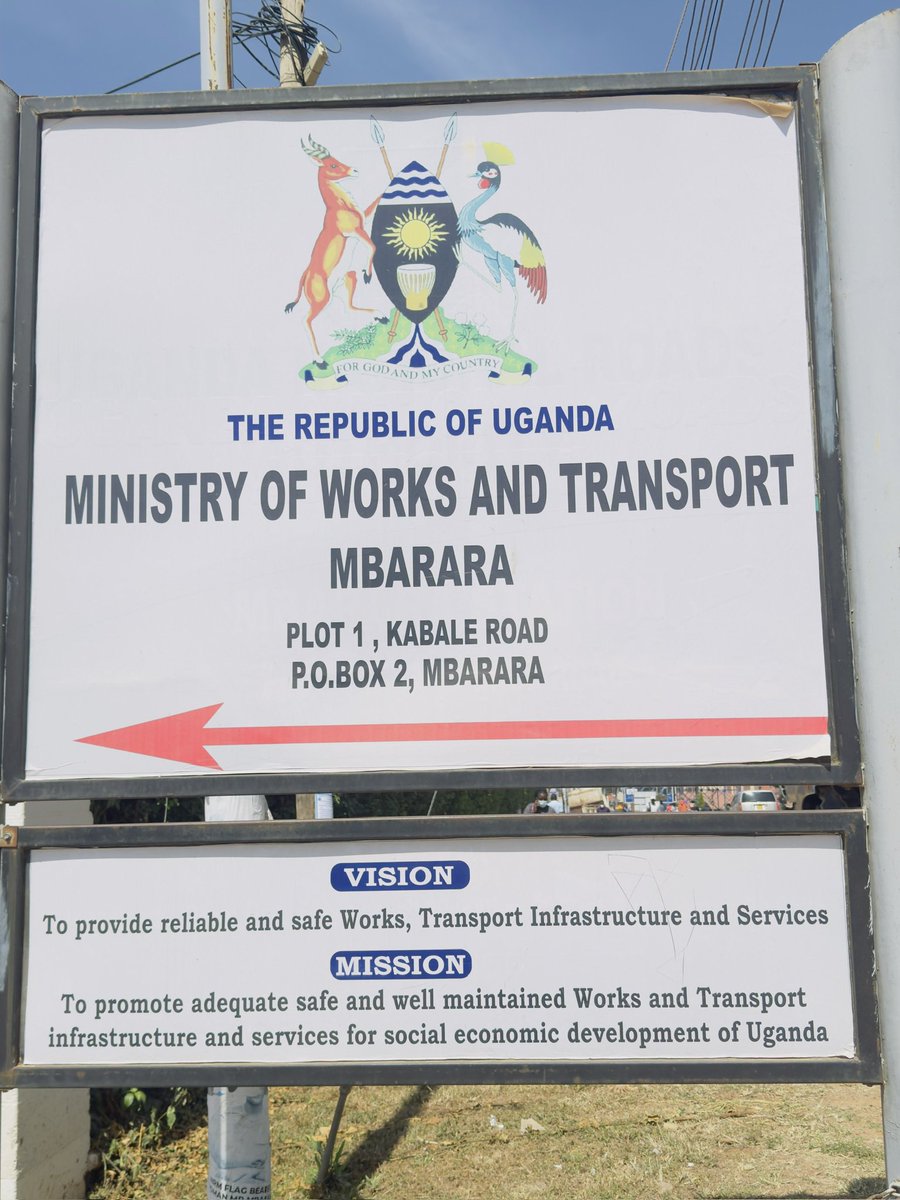
Just visited this place to process my driving permit and I have this to say.
This has to be the most organized government office I’ve ever visited. Professional, efficient, and I was served in less than 10 minutes!
If only all government agencies operated like this 🌞
Highlights of the various awards presented during the 1st East African Physiology Quiz
___
The highlight of the various awards was presented by Prof. Abdullateef @Alagbonsi, the President of the @EASPS_Official.
VIDEO LINK: https://t.co/GRHFpJ062g
The reason Uganda continues to defeat Ebola?
Dr Misaki Wayengera
Dr Henry Kyobe Bosa
Prof Bruce Kirenga
Prof Pauline Byakika
Prof Pontiano Kaleebu
Prof Rhoda Wanyenze
Prof Vinard Nantulya
Prof Moses Joloba
Prof Sewankambo
And many other dedicated patriots you never hear about.
Innovating on therapeutics each day, developing local diagnostics etc..
We honour you.
Semi-Final Result of the East African Physiology Quiz
__
Here is the result of the SEMI-FINAL Round of the Quiz, which had ten written open questions to test students' competencies as a collaborative team.
The team from all Universities responded to the same questions.
Final Result
__
Here is the ranking of Universities in the FINAL stage of the East African Physiology Quiz, which had four oral questions selected by ballot by each contestant from each university without collaboration with other team members.
Questions differ for each student
Meet the Team of MUST, Uganda
__
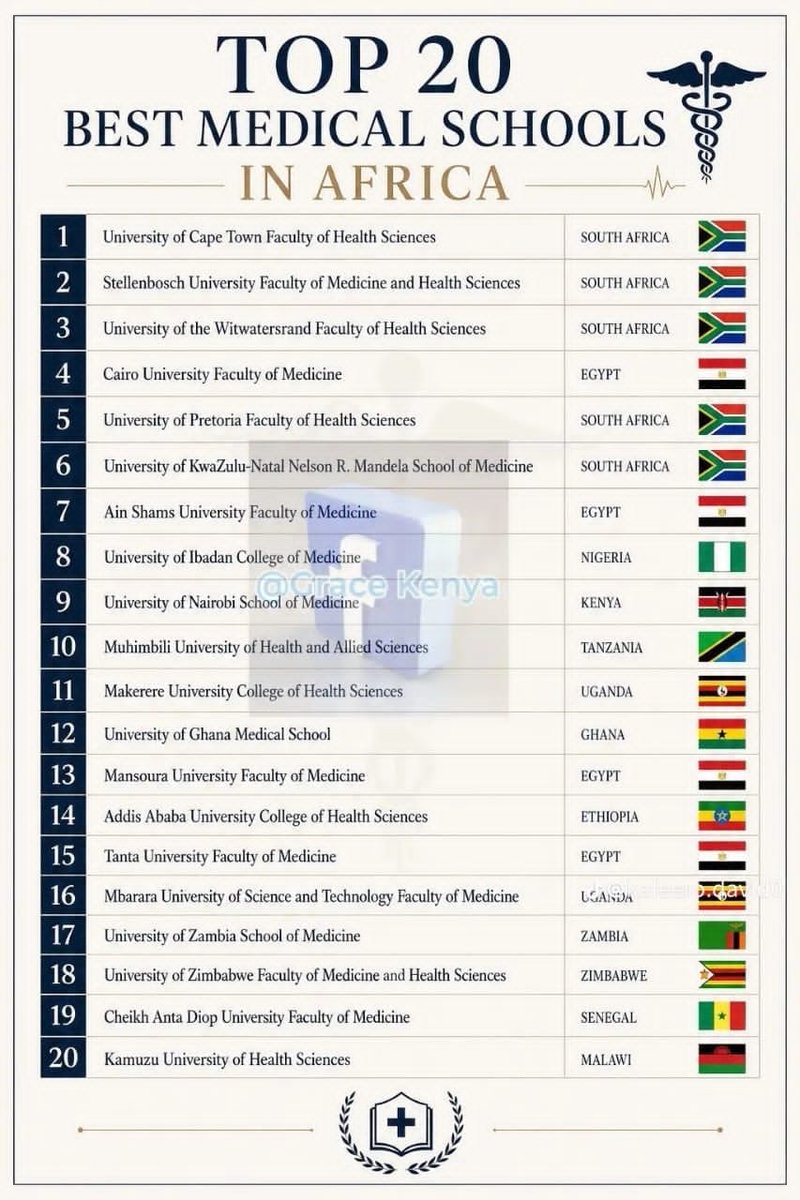
@MbararaUST - Uganda is represented in the 1st East African Physiology Quiz by Talyambiri Aaron, Samantha Magdalene Mukama, and Joshua Akena.
They are all students in the MBBS program.
Dr. Ronald Ouma Omolo is accompanying them.
Ok, let’s talk about RHESUS (Rh) INCOMPATIBILITY.
Rh incompatibility is a condition which develops when there is a difference in Rh blood type between that of the pregnant mother (Rh negative) and that of the fetus (Rh positive)
Now let me explain what Rhesus is.
Rhesus factor is an inheritable protein found on red blood cells. Some people have it and others don’t. Those who have it are said to have blood group Rhesus positive (+).
And those who do not have this protein are said to be blood group Rhesus negative.
This is where you find that some people are blood group O+ or O-, A+ or A-, AB+ or AB-, B+ or B-…..
Back to the discussion:👇
A person's Rh type is generally very relevant with respect to pregnancies. Let me explain.
• If the pregnant women and her husband are Rh negative, there is no reason to worry about Rh incompatibility
But!
o If she is Rh negative and her husband is Rh positive, the baby will inherit the father's blood type, creating incompatibility between mother and her fetus.
Now that we know what Rhesus incompatibility is, let talk about how this can affect Pregnancy.
📌📌 Usually the placenta acts as barrier that prevents the mixing of the mother’s blood and the fetus/baby’s blood. The fetus’ blood and the mother’s never mix under normal circumstances.
However, sometimes during pregnancy or birth, fetomaternal haemorrhage can occur. What do I mean by that? Fetomaternal hemorrhage is when some of the baby's blood mixes with the mother's blood during pregnancy or childbirth. It's like a tiny leak between their blood systems that causes the blood of the fetus to mix with that of the mother.
When this happens, The women's immune system reacts by producing anti D antibodies that causes sensitization.
Now let me explain what an antibody is.
👉 An antibody is like a special protein that your body's defense system (immune system) makes to fight off bad guys like germs (bacteries, viruses, foreign bodies etc). It's like a superhero that recognizes and attacks the invaders to keep you healthy 😊.
So when the fetus is Rhesus positive, meaning it has that Rhesus protein, and the mother is Rhesus negative (Does not have that protein). If this fetus’ blood crosses to the mother’s circulation, the mother’s defense system responds by producing antibodies to fight off the Rhesus protein that crossed from the baby. In short the mothers body sees it as a foreign body and is sensitized to destroy it.
WHAT ARE THE RISK FACTORS?
These are conditions that increase chances of fetomaternal hemorrhage. They include: 👇
• An earlier pregnancy
• An ectopic pregnancy, or miscarriage.
• A mismatched blood transfusion.
• An injection or puncture with a needle or other object containing Rh positive blood. And etc
What happens after the mother has formed the antibodies?!
Types of Antibodies-
Note that Two types of antibodies are formed: IgM and IgG
• IgM- This type of antibody is the first to appear in the maternal circulation. IgM antibodies are larger molecules that cannot pass through the placental barrier and therefore is not harmful to the fetus.
• IgG- It is a small molecule, It can cross the placental barrier and cause damage to the fetus. Althouh It appears at a later period than the IgM antibody.
For this reason, first pregnancy is not affected in Rh-negative females.
But subsquet pregnancies are at risk. The antibodies from the mother cross to the fetus, destroy its red blood cells, cause anemia of the fetus and sometimes even death (yes the baby can die in the womb) because of this. And this can contineu in all the subsquent pregnancies.
Is there a way to prevent this condition.
Yes if a Rhesus negative mother gets married to a Rhesus Positive man and gets pregnant(carries a Rhesus positive fetus), A drug called Anti D can be given to her to prevent senstization if she is identified early before the sensitization occurs.