If you were asked to paint this picture, how would you do it? (1/n)
Most humans would not paint every pixel at once.
This simple intuition inspired our ECCV 2026 paper: Trajectory Forcing.
Project page: https://t.co/PbKMY5XTBP
#ECCV2026
If you were asked to paint this picture, how would you do it? (1/n)
Most humans would not paint every pixel at once.
This simple intuition inspired our ECCV 2026 paper: Trajectory Forcing.
Project page: https://t.co/PbKMY5XTBP
#ECCV2026
I’ve been thinking about this discussion for a while.
Human creation is not just fixed-schedule denoising: you can change your mind halfway through a drawing.
In Trajectory Forcing, we explore a related direction:
can generative models become more trajectory-aware, revisable, and controllable?
https://t.co/PbKMY5XTBP
also i don't believe either FM or DDPM formulations teach a generative model to "do some random scribbles, squint until it looks like something & finish it". the process is comparatively very reflexive and formulaic, quite the opposite of the creative process of an artist. i think artists hold some sort of dynamic energy function that allows them to iteratively judge the "wrongness" of an image, and then progressively move to more "feels right" images. even when completely out-of-disitrbution.
Thanks a lot! This is exactly the direction we are excited about. The hope is that intermediate states can become interaction points, where users can pause, revise, and steer the generation process. Still an early step, but controllable digital art tools are definitely one of the motivations.
@mrvkocabas@bschoelkopf@kesai_labs (8/n)
For more results, visualizations, and details, check out the project page:
https://t.co/9o4HRNkqfc
More updates coming soon!
#ECCV2026
If you were asked to paint this picture, how would you do it? (1/n)
Most humans would not paint every pixel at once.
This simple intuition inspired our ECCV 2026 paper: Trajectory Forcing.
Project page: https://t.co/PbKMY5XTBP
#ECCV2026
(7/n)
Trajectory Forcing has been accepted to ECCV 2026! 🎉🎉🎉
Huge thanks to my collaborators Merve Kocabas @mrvkocabas and advisors Bernhard Schölkopf @bschoelkopf and Andreas Geiger @kesai_labs.
@mrvkocabas@bschoelkopf@kesai_labs (8/n)
For more results, visualizations, and details, check out the project page:
https://t.co/qaSJEjivTb
More updates coming soon!
#ECCV2026
This is a great clarification. If the hierarchy is learned rather than frequency-based, then the objective defines what the coarse level preserves. One direction I find exciting is object-preserving coarse memory: constructing the hierarchy around entities, rather than only through compressed spatial latents.
This connects to our Trajectory Forcing work, where we explore object-centric visual hierarchies from semantic feature spaces. Still single-image for now, but I think this is a useful representation question for long-video memory. Project page: https://t.co/PbKMY5XTBP
We have released the code for our work, CaRL: Learning Scalable Planning Policies with Simple Rewards.
The repository contains the first public code base for training RL agents with the CARLA leaderboard 2.0 and nuPlan.
https://t.co/oV3Qi9OVZo
If you are a student or academic researcher and want to make progress towards human-level AI:
>>>DO NOT WORK ON LLMs<<<
LLMs are an off ramp.
Thousands of engineers are working on LLMs with enormous computing resources.
The only way you could possibly contribute is by analyzing existing LLMs and showing their power and limitations.
But it's more fun and impactful to come up with new ideas and new architectures and show that they might work, even on small problems.
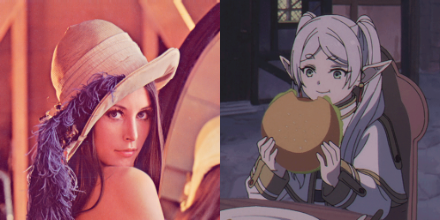
On behalf of arXiv CV dataset and evaluation committee, I'd like to announce that we will ask authors to discontinue the use of the Lena Forsén image.
Instead, we encourage the use of the image of Frieren eating a gigantic hamburger.
Thank you for your understanding.
The new video for GraphDreamer is here! It gives a brief introduction of how GraphDreamer achieves compositional 3D synthesis. The key idea is very simple -- decomposing a scene graph into multiple text prompts that are fed to the SDS optimization. #CVPR2024