Committed to advancing the understanding of genetically triggered thoracic aortic diseases & their treatment. Powered by @MarfanFdn. #aortaed#aorticdissection
Share information about emergency preparedness, the signs and symptoms of dissection, and how to mitigate risk. Visit our new aortic disease awareness page https://t.co/mPnxscmkw4
#aorticdiseaseawarenessweek#aortaed#themarfanfoundation
Register to join the GenTAC Alliance Basic and Translational Science Working Group for a free webinar, “Accessing GenTAC Data and Biospecimens Using BioLINCC,” on June 27 at 12:00 p.m. Eastern. To register, visit https://t.co/HIDccFgVup.
Join the GenTAC Alliance Basic and Translational Science Working Group for a free webinar, “Accessing GenTAC Data and Biospecimens Using BioLINCC,” on June 27 at 12:00 p.m. Eastern. To register, visit https://t.co/HIDccFgVup.
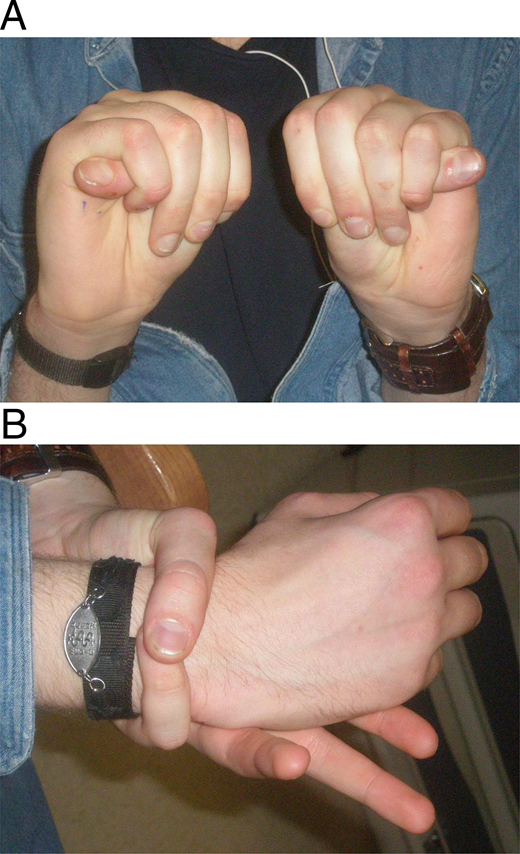
A new report published by the American Academy of Pediatrics, @AmAcadPeds, aims to help pediatricians recognize the features of #Marfan syndrome as well as care to maximize health and quality of life in those with the condition. https://t.co/g8KsbUap9F
#MarfanSyndrome
Join us on April 12, 1 pm Eastern, for a special webinar from the GenTAC Alliance on Genetic Testing: Perspectives from the US and Europe. Register here: https://t.co/Y8D5rwwKeQ
@uzgent@OHSUNews
Soccer journalist Grant Wahl died due to an undetected ascending aortic aneurysm while covering #WorldcupQatar2022.
@umichCVC has experts available who can speak in-depth about the condition-how it occurs, prognosis, treatment, etc. Contact @NoahFromson
https://t.co/zByQ9nrus5
The Foundation is saddened to learn that journalist Grant Wahl has died due to complications of an ascending thoracic aortic aneurysm. Diagnosed, this condition can be treated if the risks are known. Please help us share these warning signs with others. https://t.co/0WqZiUAMs4
STILL TIME TO REGISTER: On December 1 at 11:00 a.m. ET, the GenTAC Alliance will host a webinar titled “Transcriptional and Epigenetic Factors in the Generation of Thoracic Aortic Disease.” To view the speakers and register to attend, visit https://t.co/iSwbrFjgWW. #AortaEd
On December 1 at 11:00 a.m. ET, the GenTAC Alliance will host a webinar titled “Transcriptional and Epigenetic Factors in the Generation of Thoracic Aortic Disease.” To view the speakers and register to attend, visit https://t.co/JrivhexH61. #AortaEd
Because outcomes for patients w/ #aorticdisease are enhanced at programs w/ ⬆️ volumes, experienced practitioners & extensive management capabilities, Multidisciplinary Aortic Team care is considered in determining the appropriate⏰of intervention.
Shared Decision-Making (SDM) is encouraged to determine the optimal medical, endovascular & open surgical therapies. In pregnant patients w/ #aorticdisease SDM is🔑when considering CV risks of pregnancy, diameter thresholds for prophylactic aortic #cvSurg & mode of delivery.
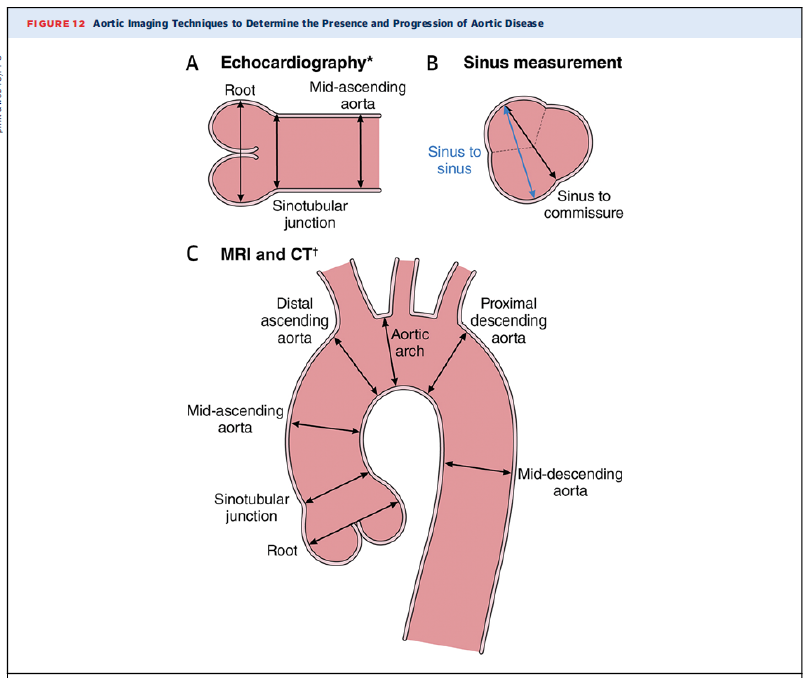
CT, MRI & echocardiographic imaging of patients w/ #aorticdisease should follow recommended approaches for image acquisition, measurement & reporting of relevant aortic dimensions & frequency of surveillance before/after intervention.
At centers w/ Multidisciplinary Aortic Teams & experienced surgeons, the threshold for surgical intervention for sporadic aortic root & ascending aortic aneurysms has been ↘️ from 5.5 to 5.0 cm & ↘️ in scenarios among patients w/ heritable thoracic aortic aneurysms.
In patients significantly smaller or taller than avg, surgical thresholds may incorporate indexing of the aortic root or ascending aortic diameter to patient body surface area or height, or aortic cross-sectional area to patient height.
Rapid aortic root growth or ascending aortic aneurysm growth is defined as ≥0.5 cm in 1 year or ≥0.3 cm per year in 2 consecutive years for those w/ sporadic aneurysms & ≥0.3 cm in 1 year for those w/ heritable thoracic #aorticdisease or bicuspid aortic valve.
In patients undergoing aortic root replacement surgery, valve-sparing aortic root replacement is reasonable if the valve is suitable for repair & performed by experienced surgeons in a Multidisciplinary Aortic Team.
Patients w/ acute type A aortic dissection should be considered for transfer to a high-volume aortic center to improve survival. The operative repair of type A aortic dissection should entail at least an open distal anastomosis rather than a supracoronary interposition graft.