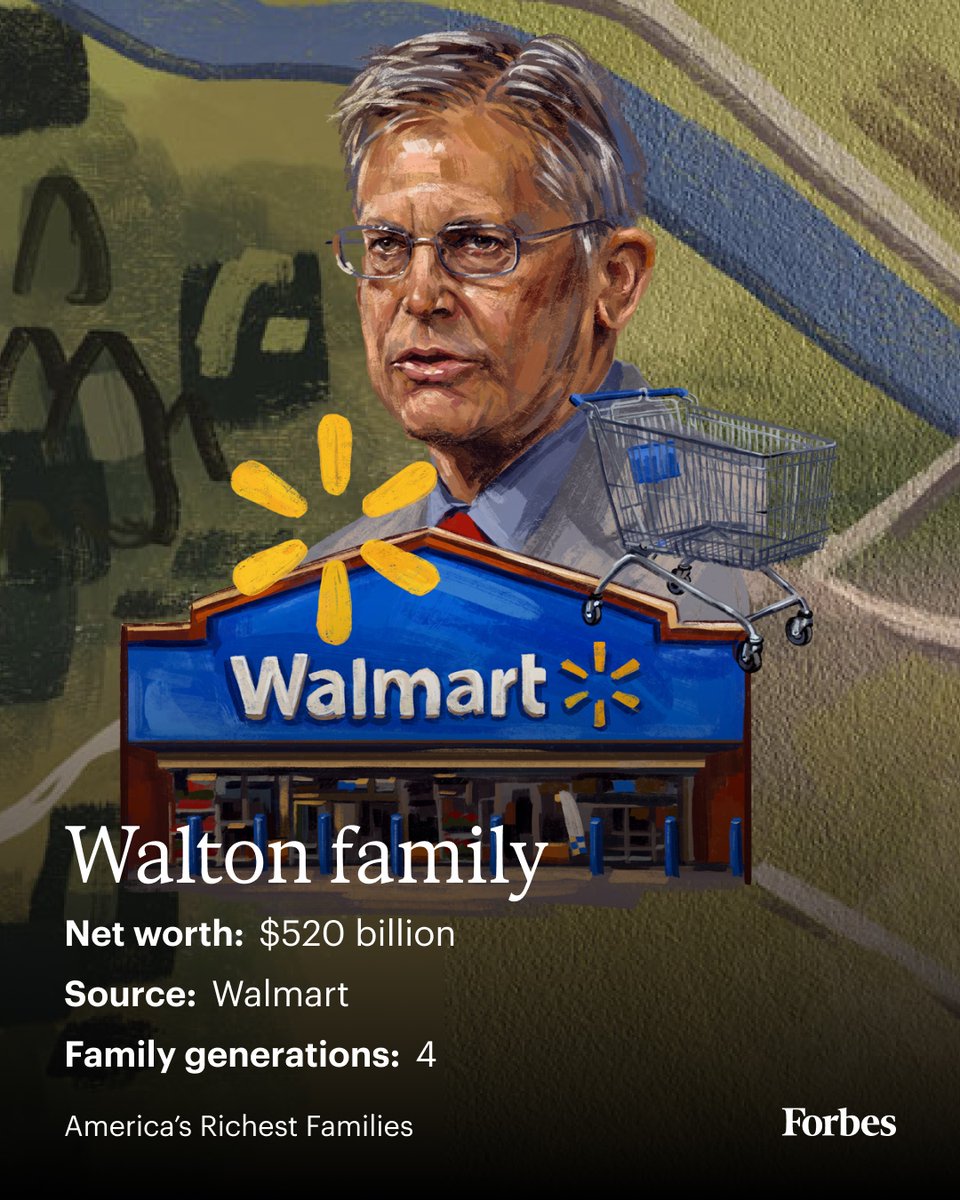
Forbes ranked the wealthiest families in the U.S. and found a record 54 multi-generational clans worth at least $10 billion.
Still no family comes close to Walmart’s Waltons; already the richest family, they were also the biggest gainers by far, nearly doubling their fortune in two years to more than a half-trillion dollars.
Read more about America's richest families: https://t.co/iZyDi3N8sz
Illustration: Robert Bruno for Forbes
#ForbesDecabillionaires
Power vs Skills.
Norway vs Brazil.
Haaland vs Vinicius.
The Vikings vs A Seleção.
Underdogs vs Heavyweights.
LADIES AND GENTLEMAN TODAY IS THE DAY!🇧🇻🇧🇷🔥
Gospel Star Kholeka Dubula Denies Involvement In R25 Million NLC Olympic Funding Scandal
Gospel music star Kholeka Dubula has distanced herself from the theft of R24.98 million.
The National Lottery Commission (NLC) originally allocated this money to fund the Sascoc Rio 2016 Olympic tour.
A report by the Special Investigating Unit (SIU) reveals that Kholeka received R30,000 from this stolen fund.
The SIU demands that she return every cent of this money. In her defence, the artist claims she is being falsely accused of a crime she did not commit.
"Our names are being dragged through the mud," said Kholeka, famously known for her hit song Ewe Siyakuvuma. She explained that she received the money as payment for performing at an event held in Gqeberha (Port Elizabeth).
"I went there, performed, and got paid. Therefore, we should be asking event organizers where they get their funding from," Kholeka argued.
According to reports investigations, the NLC paid R24.98 million to Sascoc. Sascoc kept R150,000 and transferred R24.83 million to the Mshandukani Foundation.
The foundations bank account had only R500 before this massive sum arrived.
Mashudu Shandukani’s foundation then distributed the money to various individuals and companies:R15.35 million: Ironbridge Travel Agency (linked to former NLC COO Philemon Letwaba),R7.2 million: Mshandukani Holdings (owned by Shandukani), R3 million: Mosokodi Business Trust (linked to Letwaba), R2 million: Ndzhuku Trading (owned by Malwandla Solly Siweka), R600,000: Tsietsi Maselwa (former NLC legal executive), R450,000: Philemon Letwaba (former NLC COO), R85,000: Benza Consulting (owned by Raphael Benza), R85,000: Mbizo Events, R50,000: Minnie Dlamini (Durban-born media personality) and R30,000: Kholeka Dubula-Sosibo (Gospel singer).
Minnie Dlamini and Mbizo Events have already paid back the money they received. Minnie clarified that her payment was for hosting the event in Port Elizabeth.
The remaining beneficiaries on the list still owe their respective amounts.
Your tattoo isn’t just decorative ink: it’s a permanent trigger that keeps your immune system locked in a lifelong cycle of chronic inflammation.
As soon as the ink is injected into your skin, your body recognizes the pigment particles as foreign invaders. Immune cells called macrophages immediately swarm the area and attempt to swallow them up. But because they can’t actually break down the ink, the macrophages eventually die, releasing the pigment back into the surrounding tissue — only for a new wave of macrophages to arrive and repeat the process.
This endless cycle is what keeps the tattoo permanently visible, while also maintaining a state of ongoing, low-level inflammation in the skin.
Over time, some of these ink particles migrate through the lymphatic system and accumulate in the lymph nodes, placing constant stress on the body’s defense mechanisms. Emerging research suggests this internal ink buildup may interfere with normal immune function, potentially reducing the effectiveness of certain vaccines, including mRNA types. Additionally, many tattoo inks contain heavy metals like nickel and cobalt. Combined with the chronic inflammation, this has been linked to a modestly elevated risk of lymphoma and skin cancer.
While tattoos remain a powerful form of self-expression, they represent a complex, decades-long biological conflict between your immune system and foreign substances embedded in your skin.
[Nielsen, C., Jerkeman, M., & Jöud, A. S. (2024). Tattoos as a risk factor for systemic lymphoma: A population-based case-control study. eClinicalMedicine]
Veteran actor Sello Maake kaNcube condemns false claims about Seputla Sebogodi
Veteran South African actor Sello Maake kaNcube has hit out at the spread of misleading social media posts that falsely portrayed fellow actor Seputla Sebogodi as facing financial hardship.
The controversy erupted after a photograph of Sebogodi, best known for his iconic role as Kenneth Mashaba in the long-running soapie Generations, was shared online without proper context. The image was actually taken during promotional work for the theatre production Black Moon at the National Arts Festival in Makhanda.
In a strongly worded statement, Maake kaNcube expressed disappointment over how quickly the image was turned into content for clicks and engagement.
"As artists, we already face enough challenges without having our work repackaged as propaganda for engagement," he wrote.
He emphasised that the photo reflected professional activities and did not represent anyone's personal circumstances, accusing some users of deliberately misleading the public and exploiting the dignity of a respected colleague.
"There is a difference between raising awareness and misleading the public. The truth matters. Respect matters. Our industry deserves better," Maake kaNcube added.
Seputla Sebogodi has not publicly commented on the matter at the time of publishing.
Before the world learned his name he was driving buses and fixing electrical wires.
Cape Verde goalkeeper Vozinha whose full name is João Mamadu Silva did not follow a conventional path to professional football. For many years he balanced jobs as a bus driver and electrician while playing on local fields. While most athletes reach their peak early in life his major breakthrough arrived later demonstrating that success can come at any age.
At 40 years old Vozinha stepped onto the worlds biggest football stage and faced his childhood hero Lionel Messi.
For him the moment meant far more than just a game. It symbolized that dreams do not have expiration dates hard work always matters and the longest journeys can lead to the most memorable experiences.
From repairing wires to confronting Messi Vozinha reminds us all that it is never too late to become the person you always hoped to be.
The compass was invented before the clock because direction was more important than how long it took to get there.
So don't worry about why you don't have the things that you want yet. Just know if you're going in that right direction, everything will work out for you just fine.
▪️ Kylian Mbappé after leaving PSG:
❌ 2025: Champions League quarter-finals.
❌ 2026: Champions League quarter-finals.
▪️ PSG after Mbappé left:
✅ 2025: Champions League winners.
✅ 2026: Champions League winners.
▪️ Real Madrid before Mbappé:
✅ 2022: Champions League winners
✅ 2024: Champions League winners






![Rainmaker1973's tweet photo. Your tattoo isn’t just decorative ink: it’s a permanent trigger that keeps your immune system locked in a lifelong cycle of chronic inflammation.
As soon as the ink is injected into your skin, your body recognizes the pigment particles as foreign invaders. Immune cells called macrophages immediately swarm the area and attempt to swallow them up. But because they can’t actually break down the ink, the macrophages eventually die, releasing the pigment back into the surrounding tissue — only for a new wave of macrophages to arrive and repeat the process.
This endless cycle is what keeps the tattoo permanently visible, while also maintaining a state of ongoing, low-level inflammation in the skin.
Over time, some of these ink particles migrate through the lymphatic system and accumulate in the lymph nodes, placing constant stress on the body’s defense mechanisms. Emerging research suggests this internal ink buildup may interfere with normal immune function, potentially reducing the effectiveness of certain vaccines, including mRNA types. Additionally, many tattoo inks contain heavy metals like nickel and cobalt. Combined with the chronic inflammation, this has been linked to a modestly elevated risk of lymphoma and skin cancer.
While tattoos remain a powerful form of self-expression, they represent a complex, decades-long biological conflict between your immune system and foreign substances embedded in your skin.
[Nielsen, C., Jerkeman, M., & Jöud, A. S. (2024). Tattoos as a risk factor for systemic lymphoma: A population-based case-control study. eClinicalMedicine]](https://pbs.twimg.com/media/HMcwu39WYAASLfq.jpg)