Have you ever considered genetic testing in pts with early-onset AF (<45 years) as an EP? Probably not, maybe you should.
In our recent state-of-the-art review @ehj_ed we discuss implementation of genetic testing in AF clincial care. #EPeeps#CardioTwitter.
A thread🧵
Proud to be part of this brilliant review on genetic testing in young people with atrial fibrillation! Thanks @ShinoKany and @JurgensSean for taking the lead! More work to be done on the topic for us afib researchers 💪 https://t.co/mc7uNSjy99
Surprisingly, young men have more primary care visits then women - the opposite is true for most other diagnoses in the national database for primary healthcare. The reason is unclear - do women have less symptoms, misinterpreted symptoms or other?
New results from the GENAF Norway study. Nation-wide primary care data shows that 3 in 1000 young Norwegians have atrial fibrillation. https://t.co/z9vsLbI51N
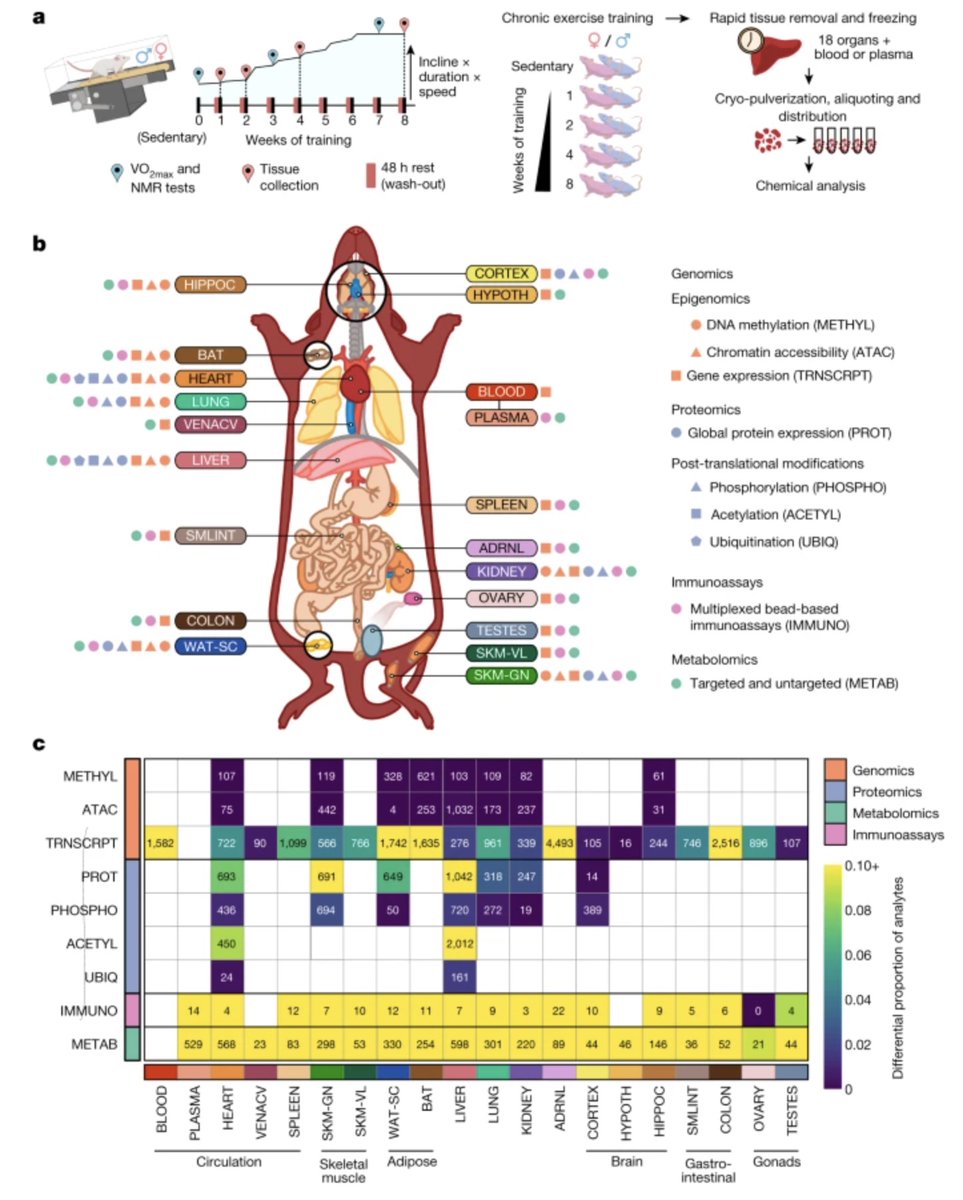
Exercise may be the single most potent medical intervention ever known. Its benefits in prevention outstrip any known drugs: 50% reduction in the risk of cardiovascular disease, 50% reduction in the risk of many cancers, positive effects on mental health, pulmonary health, GI health, bone health, muscle function. You name it. Exercise helps. In fact, the ability to exercise over long distances was likely key to our evolution as a species because the availability of densely caloric foods due to persistence hunting allowed our energy-avid brains to enlarge. And yet, we have had very little insight into the molecular basis of these magical effects...until now!
Published in yesterday's Nature and featured on the cover was work from our consortium that represents the culmination of a couple of decades of pitching ideas to the NIH, forming a consortium, planning experiments, executing those experiments, and analyzing data at unprecedented scale, all aimed at enhancing our understanding of the molecular transducers of exercise.
It was a major effort from so many in our consortium (playfully named MoTrPAC) and is the first landmark paper of many more to come. This first paper focused on the multi-tissue, multi-omics of treadmill exercise in rats. Specifically, we report the effects of eight weeks of treadmill running on the transcriptome, the epigenome, the proteome, the metabolome, the lipidome and the immunome of a broad range of tissues (in fact, 9,466 assays across 19 tissues, 25 molecular platforms, and 4 training time points).
The result is the most comprehensive molecular map of exercise ever created. At Stanford, my colleague @MWheelerMD and I co-lead the bioinformatics center and it was our team's duty and privilege to ingest the data, QC the data, help analyze the data, and make the data available to the world. Various tools available at our data hub allow you to explore the data, visualize it, and download it for your own use.
Have fun! And stay tuned for human data that will be coming.
So many people to thank who made this possible (see the paper for details). Special shout out to the primary analysts and authors: David Amar, Nicole Gay, & Pierre Jean Baltran.
Paper: https://t.co/0nhXdfhxx0
Data hub: https://t.co/NxTHsVdfRp
We had a great time on April 18, talking afib research the whole evening with researchers from https://t.co/d8W0ygBSsi. Thanks to everyone for coming and making great discussions!
https://t.co/1zg9z5fZ7V
The defense was the highlight of a short but fun visit to Groningen w my 16yo. It was great to see @cbezzina1, @Gene_Doctor_, Michiel & Joylene in a beautiful city with a leading academic medical center.
Already looking forward to returning.
NOW: Proud to present the results of @MariamAnjumMD and our AFNOR study in @ESC_Journals. Should AF patients at intermediate stroke risk (CHA2DS2-VASc score 1) be treated with OAC? https://t.co/NbrSfBsZTi
Out now: Should AF patients at intermediate stroke risk (CHA2DS2-VASc score 1) be treated with OAC?
⬇️53% lower stroke risk with OAC
⬆️2,5x higher stroke risk in non-OAC users compared to individuals without AF
@MariamAnjumMD@trygve_berge@ESC_Journals
https://t.co/lwd6qN04xc
Out now: Should AF patients at intermediate stroke risk (CHA2DS2-VASc score 1) be treated with OAC?
⬇️53% lower stroke risk with OAC
⬆️2,5x higher stroke risk in non-OAC users compared to individuals without AF
@MariamAnjumMD@trygve_berge@ESC_Journals
https://t.co/lwd6qN04xc
Proud of @mortenmattings2 presenting WGS data from the GENAF study at #AHA23 today! Deleterious TTN variants is associated with AF, has impact on the structure of mouse atria & regulation of genes related to myocardial stress. @AfibNo@IdaGLunde
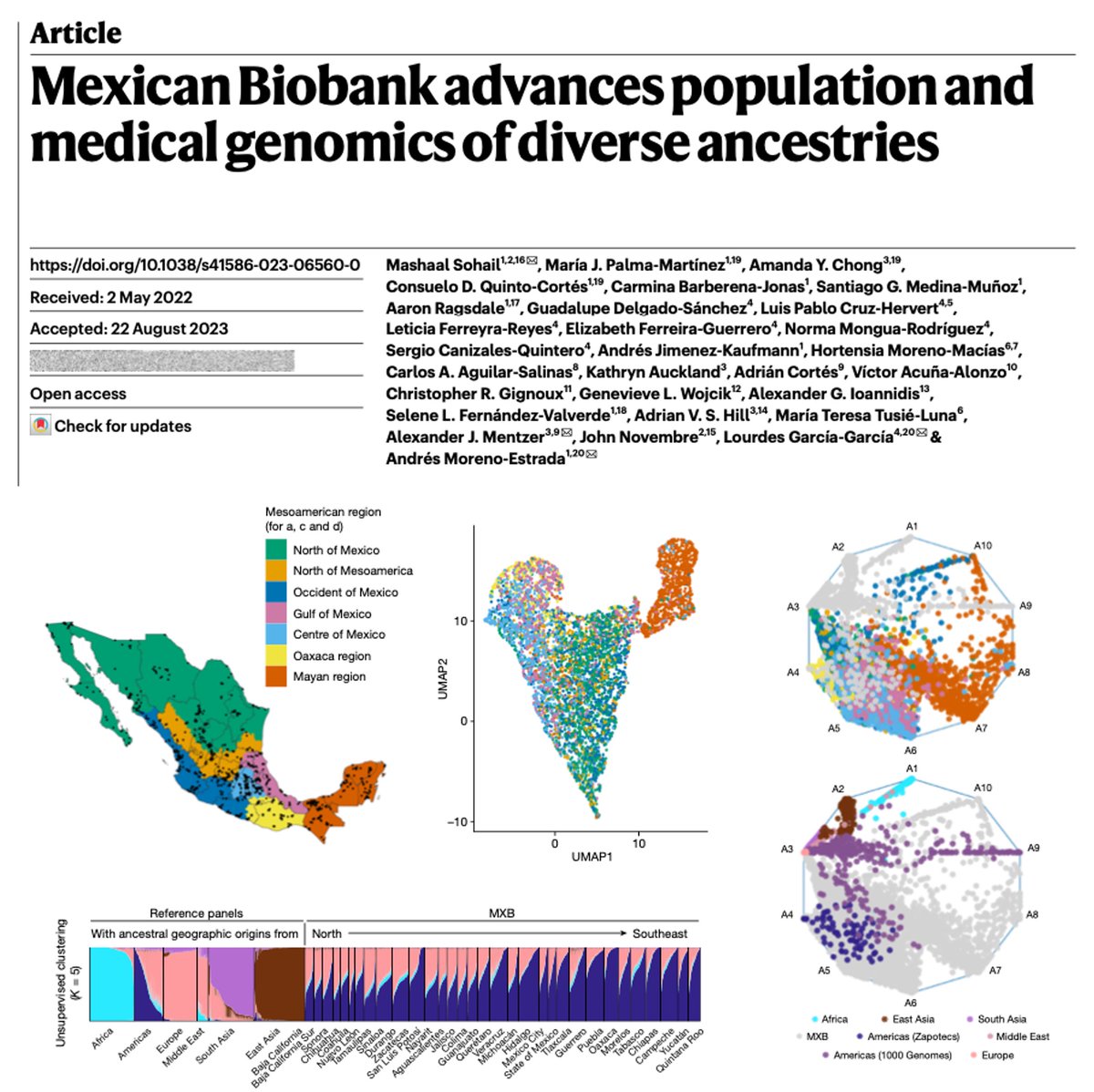
The MX Biobank paper is out today in @Nature! This is the first national-scale genomic database in Mexico and the largest independent project led by my lab @cinvestav since I returned to my home country to help building local capacity. https://t.co/uXt4xhYkhT
Thanks again for the wonderful https://t.co/d8W0ygBSsi 7th annual meeting at Lysebu in Oslo, Norway. The organizers (dr. Arnljot Tveit,@KFolkenborg & @Gene_Doctor_) are grateful for the contributions of our members and invited speakers! Recap from the inspiring sessions below 👇