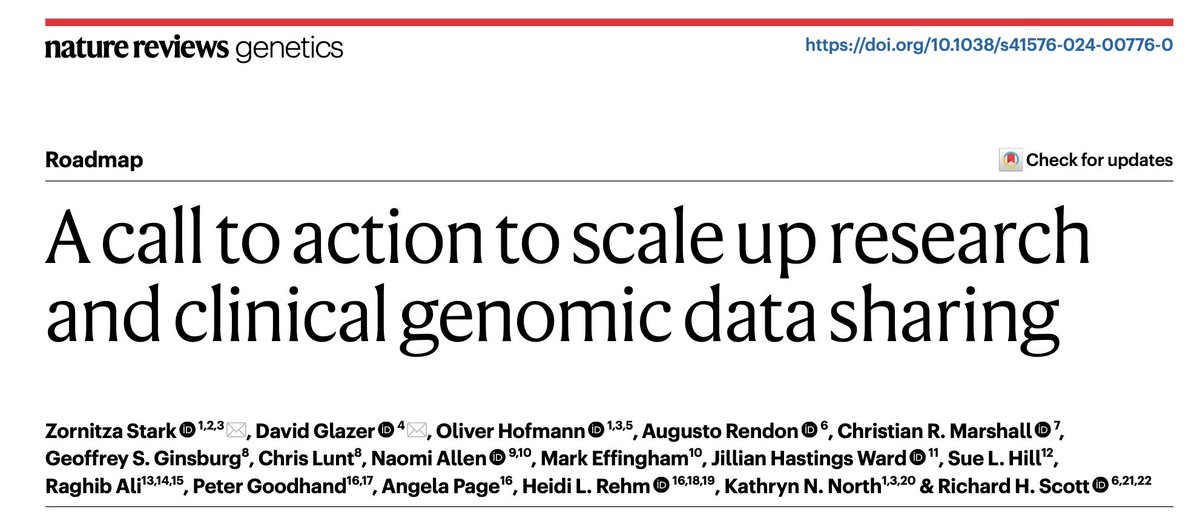
This 👇👇👇!!! I think data sharing is an absolute must, and can be done in a way that ensures privacy and patient autonomy while providing huge benefits to individuals, research and society. Even a small start is a start, let’s break down the silos. Please do!
Congrats to #MCRI's A/Prof Sebastian Lunke who has received a Victorian Medical Research Acceleration Fund grant to develop a faster technique to screen for rare #genetic disorders. | #MCRIresearch#Grants#RareDisease#Genetics
➡️https://t.co/Npp5I1YRh2
The most exciting part for me will be seeing how this work will improve the lives of those suffering from hard to diagnose neurological and neuromuscular genetic disorders.
@ZornitzaS@TeamVCGS@MCRI_for_kids Stoked that we get to extend our already hyper-productive work together in a whole bunch of fun new directions, and help so many more patients! (Here’s a Thor-themed fist bump to celebrate 🥳)
Exited to be part of this new initiative! The promises of AI are many fold, this project will help us harness them the right way to help more people with rare genetic diseases.
The diagnosis of rare genetic disorders is one of the places where AI will have the earliest and largest clinical impact. Delighted to be leading a new consortium to help make this happen, along with an awesome team of Australian and global partners: https://t.co/Ldr2ixirrP
The diagnosis of rare genetic disorders is one of the places where AI will have the earliest and largest clinical impact. Delighted to be leading a new consortium to help make this happen, along with an awesome team of Australian and global partners: https://t.co/Ldr2ixirrP
On now in A3, the new gene 🧬 discovery of the year: RNU4-2 is a frequent cause of DD/ID. A fantastic, whirlwind collaboration to have been part of 🤩 @quenchentin@nickywhiffin@dgmacarthur@AnneOtation and many more 👏👏👏