Save the date for the next geoscience webinar @esrfsynchrotron by Olivier Witasse @esa
"Solar system exploration with the European Space Agency missions"
To join the webinar by Zoom: https://t.co/olOgMWBqIF
more info :https://t.co/0ylwCVb6Sg
@EuroGeosciences
Asteroid Benny’s samples investigated at @esrfsynchrotron
Looking towards new insight about the beginning of the Solar System and the origin of life.
https://t.co/8oeevfA8Vb
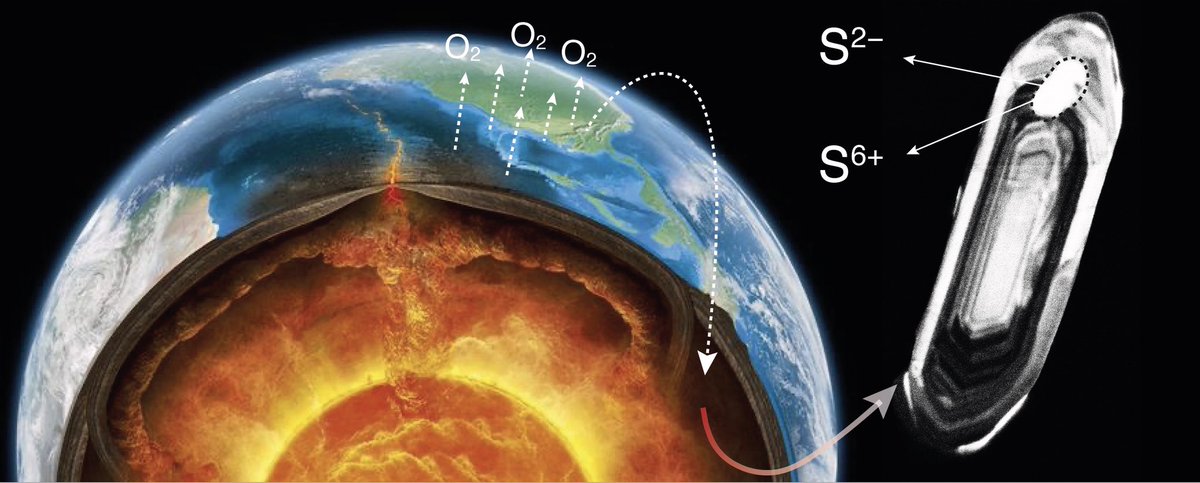
New research reveals Earth's ancient ‘breath’
Using synchrotron techniques at @esrfsynchrotron scientists have unveiled important information on The Great Oxidation Event by studying apatite inclusions in zircon crystals from old magmas.
@NatureGeosci
https://t.co/Ub0P4Po69N
My supervisor, Prof. François Renard from @NjordUiO is giving a talk at @esrfsynchrotron@Geo_ESRF about the 2023 earthquake sequence in Turkey and how synchrotron imaging can help unravelling earthquake processes.
Join our next geoscience webinar tomorrow at 2 pm!
THE 2023 EARTHQUAKE SEQUENCE IN TURKEY AND HOW SYNCHROTRON IMAGING CAN HELP UNRAVELLING EARTHQUAKE PROCESSES
Prof. François RENARD @esrfsynchrotron
https://t.co/ZMvnyoJ0Ws
@AGU_MRP@SEDI_AGU@EuroGeosciences@WWU_HighPress
So happy to see the new laser-heating DAC system at ID24-DCM @esrfsynchrotron@MEx_ESRF working and ready for users!
We coupled nano-XAS, XRF and XRD. The first experiment on trace element speciation in #deepsilicate#melts finished successfully.
@SEDI_AGU@WWU_HighPress
Join the next ESRF webinar tomorrow 2 pm!
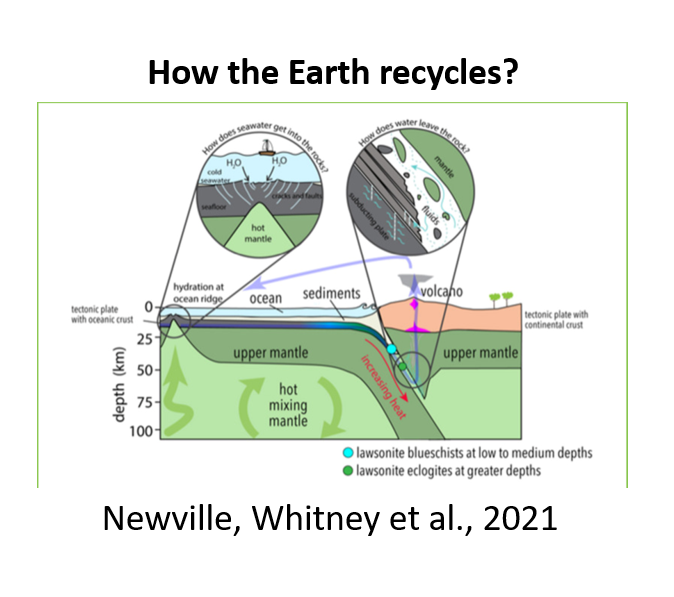
Fluid-rock interaction in #subduction zones: #lawsonite composition as a tracer of fluid sources
Prof. Donna Whitney @UMNEarthScience@unipotsdam@esrfsynchrotron
Zoom:
https://t.co/4kB4xdSkxl…
More info:
https://t.co/ePgxHMRcM4
Scientists can now reproduce the eruption of a volcano 🌋live at the ESRF to gain insight into its mechanism.
The experiment is a proof-of-concept and users in the field are welcome to apply for beamtime.
▶️https://t.co/qWJBjaDt70
@Geo_ESRF@ESRF_Streamline@lightsources
Carbonates in amorphous materials, such as viscous silicate melts, become stable at extreme depths of the Earth🌍, scientists have found using 3 beamlines at ESRF.
The results can shed light on hotspot volcanism.🌋
They are published in @CommsEarth .
▶️https://t.co/JeqvKtpZNP
A pressure-induced change in hybridization of carbon from sp2 to sp3 occurs between 40 GPa and 112 GPa, which could increase the potential for storage of carbon in lower mantle silicate melts.
@CerantolaV@unimib@EuropeanXFEL@esrfsynchrotron@deepcarb
https://t.co/krrFWNKXQh
Rare Earth Elements and trace metals are abundant on the seafloor, but their enrichment process is unknown.
Meet Alain Manceau, @ERC_Research grantee, who will use the ESRF-EBS to find the geochemical processes take place on the seafloor.
▶️https://t.co/9L4MLGaoRR
@ESFRI_eu
The core of the🌍is mainly composed of iron and nickel, along with 5-10% of unknown lighter elements.
Meet Ilya Kupenko @ERC_LECOR , @ERC_Research grantee trying to identify these elements using high pressure and temperature at the ESRF.
▶️https://t.co/e6sG0PKIu0
@EUScienceInnov
Check out the new opportunities for Earth Science at the Extremely Brilliant Source @esrfsynchrotron at the refurbished and upgraded beamlines ID18 (future ID14) , ID24-DCM, ID24-HPLF and ID27.
https://t.co/6lcM7bjlsp
@WWU_HighPress@EuroGeosciences@SEDI_AGU