The “Georgian Dream,” long infiltrated by Russian influence, revealed its moral and political bankruptcy once again today by appointing yet another odious figure, Tamar Taliashvili, as Georgia’s Ambassador to the United States. Ordinarily, I would not dignify her with comment were it not for the fact that this appointment directly concerns the country I now call my second homeland, America.
Taliashvili’s appointment is not merely controversial; it is a glaring emblem of the regime’s growing disconnect from the will of the Georgian people and the core interests of the Georgian state. What makes this move especially cynical is that Taliashvili built her career within the very ecosystem of Western-backed development programs, including USAID—while aligning herself with a government that has systematically dismantled democratic institutions and civil society. Even more disturbing are reports that she maintained personal assets in Russian banks—at first glance, an incomprehensible decision, given that Russian occupation forces continue to redraw Georgia’s borders and detain its citizens.
Her tenure as head of Georgia’s delegation to the Parliamentary Assembly of the Council of Europe (PACE) marked a low point in the country’s diplomatic record. Under her watch, Georgia lost its voting rights due to procedural incompetence and political arrogance. Rather than defending Georgia’s voice in Europe, she contributed to silencing it. Worse still, she consistently displays a lack of clarity, depth, and diplomatic judgment in public forums. At a time when Georgia needs articulate, principled advocates for its sovereignty, Taliashvili struggles to deliver even a coherent message.
Her appointment comes as U.S.-Georgia relations have reached their lowest point in decades. The strategic partnership is all but dead. Sending a figure so politically compromised to Washington only confirms what many already fear: that the current government has abandoned its Western orientation entirely.
This is not diplomacy—it is sabotage masquerading as statecraft.
Georgia deserves better. The Georgian people deserve better. And the United States deserves a credible partner, not a mouthpiece for a regime adrift from its democratic promises.
@StateDept@SecRubio@SenatorShaheen@SenateGOP@SenateDems@SenRischID #Georgia
On May 22, Georgian Dream’s founder Bidzina Ivanishvili rejected a formal meeting with U.S. Ambassador Robin Dunnigan, an extraordinary snub even amid attempts by the Trump-appointed diplomatic corps to maintain bilateral dialogue. Just days earlier, PM Irakli Kobakhidze accused the U.S. State Department of being aligned with the “deep state,” claiming only a second Trump administration could “reset” U.S.-Georgia relations.
This is the rhetoric of an emboldened autocratic regime attempting to delegitimize Western partners while consolidating unchecked power at home.
Georgian Dream's embrace of Russian-style "foreign agents" legislation, its anti-EU stance, and its rejection of foundational transatlantic partnerships expose the hollowness of its self-proclaimed "conservatism." In reality, Georgian Dream is neither conservative nor sovereign. It is an oligarch-controlled proxy of Russian influence, increasingly aligned with the authoritarian agendas of both Moscow and Beijing, and actively working to undermine Georgia’s aspirations for European integration.
Georgia’s people remain overwhelmingly pro-EU and pro-NATO. But their government has chosen isolation over integration, and disinformation over diplomacy.
@StateDept@marcorubio @JDVance1 @realDonaldTrump
#Georgia #GeorgianDream #Democracy #ForeignAgentsLaw #USGeorgiaRelations
@Sec_Noem Once global beacons of academic excellence, Western universities are now experiencing a profound crisis of meritocracy. https://t.co/fAGe5nCoSY
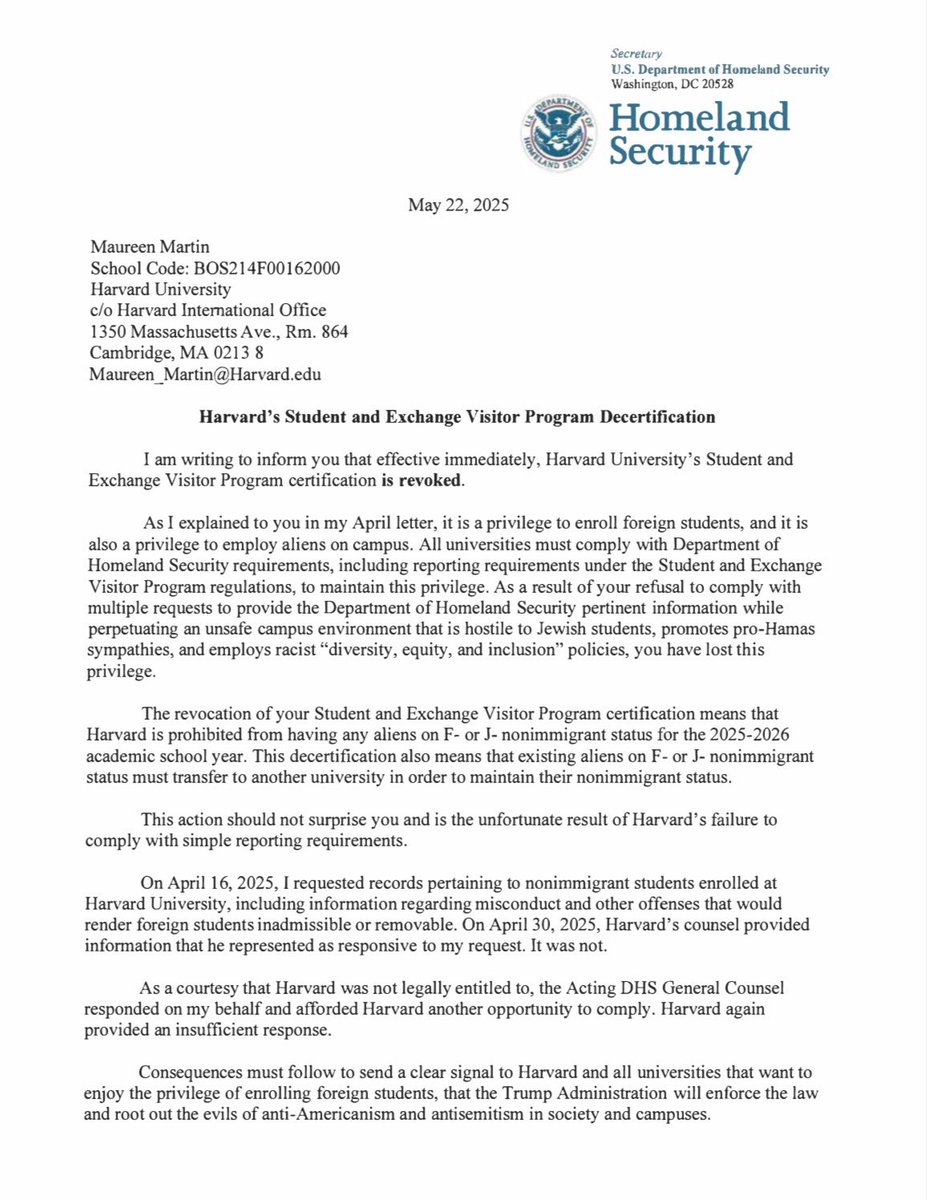
This administration is holding Harvard accountable for fostering violence, antisemitism, and coordinating with the Chinese Communist Party on its campus.
It is a privilege, not a right, for universities to enroll foreign students and benefit from their higher tuition payments to help pad their multibillion-dollar endowments.
Harvard had plenty of opportunity to do the right thing. It refused.
They have lost their Student and Exchange Visitor Program certification as a result of their failure to adhere to the law.
Let this serve as a warning to all universities and academic institutions across the country.
This is a powerful observation that holds true in a variety of fields, including politics and academia. Once founded on the principles of justice, reason, and individual liberty, the progressive project appears to have become a dogmatic orthodoxy. The increasing disenchantment, particularly among younger generations, points to a thorough reassessment of the cultural presumptions that have been in place since the 1960s, in addition to simply being tired. Now, the question is whether this "post-progressive" era can promote a renewed dedication to merit, pluralism, and true intellectual openness, or if it will only give way to a new kind of dogma.
From Excellence to Mediocrity: A Crisis of Merit in Western Universities
This article argues that Western universities—once global paragons of academic excellence—are undergoing a profound decline in meritocracy, driven by ideological conformity, politicized hiring practices, and the dominance of Diversity, Equity, and Inclusion (DEI) bureaucracies. Drawing on studies, real-world examples, and firsthand experience, the author contends that Enlightenment ideals of objective knowledge have been replaced by subjectivity and identity-based frameworks, particularly in the social sciences. The result is the erosion of academic standards, the legitimization of mediocrity, and the appointment of underqualified individuals to elite positions—often due to ideological alignment rather than merit. Using Georgia as a case study, the article illustrates how this global trend has failed to yield meaningful progress and has instead produced a generation ill-equipped for leadership or critical inquiry. With public trust in higher education declining sharply, the author calls for urgent reform to restore intellectual rigor, viewpoint diversity, and merit-based advancement in academia. Se the article
https://t.co/kCmdOxqIc2
In today’s evolving workplace, one skill consistently rises to the top: leadership grounded in purpose, strategy, and adaptability.
Over the past several years, I’ve had the privilege of teaching and mentoring professionals across sectors -from policy institutes to corporate leadership programs. Now, I’m opening access to a CPD-Certified Advanced Leadership & Management course, completely free on Udemy for this week only.
Why free?
Because I know how challenging the early stages of one’s career can be - especially when trying to lead, adapt, or simply gain traction in a competitive job market. Whether you're a recent graduate, an early-career manager, or navigating career transition, this course is designed to equip you with practical leadership tools that make a measurable impact.
Inside the course:
✔️ Strategic and situational leadership models
✔️ Conflict resolution, communication, and team-building frameworks
✔️ An internationally recognized CPD Certificate and exclusive Leadership Badge
✔️ Real-world case applications and a certification pathway
🆓 Use code LEADERBETA25 on Udemy to enroll here:
🔗https://t.co/sDXM4EySR1
This opportunity is open until Friday at 11:59 PM EST.
If you find the course valuable, I’d truly appreciate a brief review - it helps others discover the resource.
Let’s continue investing in capable, ethical, and resilient leadership - wherever it’s most needed.
#LeadershipDevelopment #CPDCertified #CareerGrowth #EmergingLeaders #ProfessionalTraining #StrategicLeadership #OrbelianiConsulting #LearningCommunity
ამ გაუბედურებულ მდგომარეობაში მყოფ საქართველოს რომ ვუყურებ, მგონია, რომ თითქოს მას მტრებმა მიზანმიმართულად შეუსიეს საცდელ ლაბორატორიაში გამოყვანილი მავნებლების ჯიში - მოღალატე მთავრობებისა და ტვინგამორეცხილი ნაც- და ქოც-სექტების სახით - რათა მოხდეს მისი სრული დისკრედიტაცია და სახელმწიფოებრიობის ჩამოშლა. რუსული სპეცსამსახურების მიერ კონტროლირებულმა და სექტანტური იდეოლოგიებით მოწამლულმა ამ უჯიშო მავნებლებმა, რომლებმაც ყველაფერი წაბილწეს, გახრწნეს და გადააგვარეს, ცდილობენ, რომ ბოლო და გადამწყვეტი დარტყმა მიაყენონ ქვეყანას, და 2008 წლის რუსეთ-საქართველოს ომთან დაკავშირებით, ჰააგის მიერ საქართველოს სასარგებლოდ მიღებული გადაწყვეტილება, 180 გრადუსით, მის საწინააღმდეგოდ შემოატრიალონ.
იმის ნაცვლად, რომ მიმდინარეობდეს რეალური გამოძიება სააკაშვილისა და მისი ჩინოვნიკების რუსულ სპეცსამსახურებთან კავშირების დადგენის მიზნით, საქართველოს პარლამენტის დროებითი საგამოძიებო კომისია აშკარად ასრულებს რუსეთის პირდაპირ დავალებას, რომლის მიზანია საქართველოს სახელმწიფოს დადანაშაულება 2008 წლის ომის დაწყებაში, სააკაშვილის და მისი რეჟიმის ბრალეულობის წარმოჩენის გზით.
სააკაშვილის მოღალატე, დანაშაულებრივმა რეჟიმმა უკვე შეასრულა თავისი დესტრუქციული როლი ახალგორისა და კოდორის ხეობის რუსებისთვის დათმობით, 150-ზე მეტი სოფლის დაკარგვით, ქვეყნის სტრატეგიული ობიექტების რუსული კომპანიებისთვის გადაცემით, განათლებისა და მეცნიერების სისტემის მიზანმიმართული ნგრევით, რაც წარმოადგენს კრემლთან მისი შეთანხმებული მოქმედების პირდაპირ მტკიცებულებას. სწორედ ამიტომ არის ის ცოცხალი და საღ-სალამათი დღეს, წამოპლასკარტებული ვივამედის ვიპ პალატაში, მაშინ, როდესაც იმავე პერიოდში, რუსეთთან დაპირისპირებული ლიდერები, მაგალითად, პოლონეთის პრეზიდენტი მთელი მთავრობით, მსოფლიოს თვალწინ გამოასალმეს სიცოხლეს.
ამ საკითხების გამოძიებით არასდროს დაინტერესებულა ივანიშვილი და მისი "ქართული ოცნება". სამაგიეროდ ეს ხიხოკრატიული "მეხუთე კოლონა", თავისი წინამორბედის მსგავსად, პირნათლად შეუდგა კრემლიდან მიღებული ახალი დავალების შესრულებას – 2008 წლის ომის დაწყება უნდა დაბრალდეს საქართველოს! ეს არის იმავე სცენარის გაგრძელება, რომელიც მიზნად ისახავს არა მარტო ისტორიის გაყალბებას, არამედ საქართველოს სახელმწიფოს სრულ დისკრედიტაციას საერთაშორისო ასპარეზზე და, საბოლოოდ, ქვეყნის რუსულ ორბიტაზე დაბრუნებას.
შემთხვევითი არ იყო, როცა კგბ-ს აგენტ ალექსანდრე რონდელის ფრთის ქვეშ გამოზრდილი, სააკაშვილის ხელისუფლების ვირთხა ჩინოვნიკი, სერგი კაპანაძე, გაიძახოდა - ქართველმა სამხედროებმა ცხინვალში კასეტური ბომბები ჩამოყარესო - რაც რუსებმა საქართველოს წინააღმდეგ ერთერთ არგუმენტად გამოიყენეს. ხშირად მითქვამს და დღესაც სრული პასუხისმგებლობით ვაცხადებ, რომ სააკაშვილი და ივანიშვილი, მათ მიერ ხელისუფლებაში მოთრეულ ზნედაცემულ ლაქიებთან ერთად, არიან ერთი დიდი რუსული სტრატეგიის სხვადასხვა ამოცანის შემსრულებლები, რომლებიც უნდა გასამართლდნენ კანონის სრული სიმკაცრით!
I began speaking out and exposing corruption in donor missions many years ago. As a result, my organization was labeled as "conservative" and systematically excluded from all activities and meetings by individuals who claimed to be "extremely tolerant" and "liberal." Despite their professed commitment to inclusivity and open dialogue, they have actively marginalized voices that challenge their narratives, creating an environment where dissent is neither welcomed nor tolerated.
Foreign Aid and the Rent-Seeking Culture: When Free Riders Treat the United States as a 'Cash Cow'
As is well known, President Trump signed an executive order directing USAID to suspend donor support programs in foreign countries for 90 days to assess their alignment with the new U.S. foreign policy course. This decision underscores the urgent need to evaluate whether these programs effectively serve American interests and contribute to meaningful development abroad.
In many countries, donor support has long required reassessment due to rampant corruption and inefficiency within aid missions. Rather than fostering genuine progress, some of these programs have become bureaucratic umbrellas that prioritize personal and organizational interests over the well-being of the host country.
In post-Soviet Georgia, concerns regarding donor support programs are particularly alarming. Allegations suggest that funds intended for development projects are frequently misallocated or absorbed through kickbacks, rather than being used to strengthen institutions or improve economic conditions.
The root of the issue lies in a lack of transparency and accountability within donor-funded initiatives. Over the years, these missions have evolved into large, self-serving bureaucracies, often detached from the realities on the ground. This disconnect results in misguided projects that fail to address pressing local needs and lack alignment with the priorities of the Georgian state and its citizens.
Moreover, corruption thrives in this environment due to weak oversight mechanisms. Certain individuals and organizations manipulate funding processes, divert resources for personal enrichment, and evade accountability. Such practices undermine public trust in international aid efforts and diminish the impact of U.S. assistance in fostering democracy and economic growth.
President Trump’s directive to review donor support programs presents an opportunity to rectify these longstanding inefficiencies. However, the issue extends beyond just inefficiency. Foreign aid has fostered a rent-seeking culture, where corrupt governments and NGOs treat the West as a "cash cow," prioritizing financial gain over democratic and economic development. Instead of building self-sustaining institutions, international assistance has created cycles of dependence, enabling rent-seeking groups to misuse donor funds for personal and political interests rather than implementing real reforms.
At the same time, Georgia’s increasingly pro-Russian and pro-Chinese geopolitical shift poses a direct challenge to U.S. strategic interests in the Caucasus. The country’s authoritarian-leaning government is weakening democratic institutions, suppressing civil liberties, and opening avenues for Russian and Chinese economic and military influence. This realignment threatens to undo decades of strategic cooperation between Georgia and the West, jeopardizing its Euro-Atlantic aspirations.
For years, the U.S. has been a key supporter of Georgia’s development and its pursuit of Euro-Atlantic integration. However, given the current trajectory, it is time to reassess the framework of U.S. assistance. Given the high stakes and the lasting implications Georgia's future course will have on regional stability and U.S. foreign policy interests, a more tough-minded approach is essential.
The presence of Salome Zourabichvili, the former president of Georgia, at the inauguration of the American president raises grave concerns, as she has no legitimate connection to this significant event. This discredited individual and her family have been associated with allegations of Russian influence and the Kremlin secret services. The opportunist Zourabichvili was imposed as president of Georgia in 2018 by the autocrat Bidzina Ivanishvili under directives from Moscow. Recently, she aligned herself with the left-wing, ultra-liberal opposition, which has actively denigrated President Donald Trump and promoted divisive rhetoric intended to weaken Georgia's ties with the West. Adding to these concerns, the CIA previously identified her uncle, Mikheil Kedia—also known as Mikhail Koeller—as a double agent for the Soviet NKVD during World War II. Most egregiously, while operating within Nazi Germany’s Abwehr, he exploited the plight of Jews for financial gain. The Nazi War Crimes Disclosure Act declassified Kedia's wrongdoings, as documented in CIA files.
The presence of Salome Zourabichvili, the former president of Georgia, at the inauguration of the American president raises grave concerns, as she has no legitimate connection to this significant event. This discredited individual and her family have been associated with allegations of Russian influence and the Kremlin secret services. The opportunist Zourabichvili was imposed as president of Georgia in 2018 by the autocrat Bidzina Ivanishvili under directives from Moscow. Recently, she aligned herself with the left-wing, ultra-liberal opposition, which has actively denigrated President Donald Trump and promoted divisive rhetoric intended to weaken Georgia's ties with the West. Adding to these concerns, the CIA previously identified her uncle, Mikheil Kedia—also known as Mikhail Koeller—as a double agent for the Soviet NKVD during World War II. Most egregiously, while operating within Nazi Germany’s Abwehr, he exploited the plight of Jews for financial gain. The Nazi War Crimes Disclosure Act declassified Kedia's wrongdoings, as documented in CIA files.
Addressing Bias in Meta’s Fact-Checking in Georgia: A Call for Reform
Meta’s role in fostering free expression on its platforms has been a cornerstone of its mission. As Mark Zuckerberg once stated, “Meta’s platforms are built to be places where people can express themselves freely. That can be messy. On platforms where billions of people can have a voice, all the good, bad and ugly is on display. But that’s free expression.” However, in Georgia, this ideal is far from reality. The country’s polarized political environment has turned fact-checking into a tool of contention rather than a pillar of impartiality, and Meta’s current partners in Georgia are at the center of the issue.
The fundamental problem lies in the organizations Meta has partnered with for fact-checking: FactCheck Georgia, a project of the Georgian Reforms Association (GRASS), and the Media Development Foundation (MDF), which runs the "Myth Detector" initiative. Both organizations are tied to the former ruling party, the United National Movement (UNM), which has been in opposition since 2012. This connection raises serious concerns about their ability to serve as unbiased arbiters of truth.
The Problem of Political Affiliations
The United National Movement, which continues to wield significant media influence, has been presenting its former officials as independent experts. For example, Tamar Kintsurashvili, now a media expert and director of MDF, was previously the General Director of the Public Broadcaster, Deputy Secretary of the National Security Council under Giga Bokeria, and an advisor to Mikheil Saakashvili. During her tenure, the Public Broadcaster aired the film "November 7," which was commissioned by the Ministry of Internal Affairs and portrayed the November protests as part of a Russian-backed conspiracy. Kintsurashvili later admitted airing the film was a “mistake.”
At that time, Channel One of the Public Broadcaster was a prime example of how a public broadcaster should not operate, serving as a mouthpiece for the ruling party’s criminal actions. Yet, today, Kintsurashvili leads a fact-checking initiative, shaping discussions about media ethics and standards.
Similarly, FactCheck Georgia operates under GRASS, an organization founded and led by former high-ranking UNM officials. Sergi Kapanadze, the chairman of GRASS, was a Deputy Minister of Foreign Affairs during the UNM’s rule and held other prominent positions. Other GRASS founders, including Elene Khoshtaria, Shota Utiashvili, Tina Burjaliani, and Nodar Kharshiladze, also served in key roles under the UNM government. These connections make it difficult to view GRASS as politically neutral.
Meta’s Current Fact-Checking Practices
Both MDF and GRASS became Meta’s fact-checking partners in 2020, tasked with evaluating the accuracy of social media content. When content is flagged as false, #Facebook reduces its visibility in users’ feeds and warns users attempting to share it. While Meta compensates these organizations for their services, it claims to have no influence over their conclusions, granting them full autonomy.
However, the claim of political neutrality and editorial independence by these organizations is deeply questionable. #FactCheck Georgia, for instance, states that these principles are its guiding values, but how can such neutrality exist when its leadership is directly tied to a political party?
The Need for Reform
The situation in Georgia undermines public trust in fact-checking and free expression. In a highly polarized society, fact-checkers with clear political affiliations only deepen divisions. To ensure credibility and neutrality, Meta must address this issue urgently.
If eliminating these fact-checking organizations as partners is not immediately feasible, Meta should introduce new, truly independent organizations to oversee fact-checking. These organizations must be free from any political affiliations or histories that could compromise their impartiality. In a time of crisis, where the government and opposition alike accuse fact-checkers of bias, the need for trusted arbiters of truth is paramount.
Upholding Free Expression
Meta’s mission to foster free expression should extend to ensuring that fact-checking is not weaponized by political factions. In #Georgia, the current system not only contradicts Zuckerberg’s vision of platforms as spaces for free expression but also risks exacerbating societal divisions. It is crucial for Meta to take proactive steps to rebuild trust and demonstrate its commitment to impartiality.
The stakes are high. Without immediate reform, the perception of bias in #factchecking will continue to erode public confidence, further polarizing a society already grappling with deep divisions. Meta has an opportunity—and a responsibility—to lead by example, ensuring that fact-checking serves its true purpose: the pursuit of truth, untainted by political agendas.
@Meta