@cormachayden_ If you haven’t built a house by now, you’re just lazy.
There are no excuses.
You’ve been handed the best tools in history.
Power drills, pre-cut lumber, and AI-powered blueprints.
You can learn construction basics in days.
No prior experience needed.
A lot of people are talking about Agentic AI, here’s a real-world example of how this could be used right now on LinkedIn.
I’ve started experimenting with AI to automate some of the most mundane business tasks. Emails, blogging, admin work, and easy workflows.
My goal is to free up time so I can focus on the bigger picture: networking, partnerships, and connecting with real people.
Here’s what I’ve tested:
• LinkedIn comments: The AI finds relevant posts in my industry and writes a thoughtful comment.
• Automated emails: I can draft and review emails without spending hours answering every single one.
• Simplified workflows: Automate my recurring business tasks so I can focus on growth and strategy.
This tech is already here, and it’s only going to get better.
Eventually, Agentic AI will handle all the repetitive stuff, leaving us to focus on what really matters.
Growing our businesses and building relationships.
COMMENT "PUPPY" and I'll post the walkthrough tutorial so you can prompt your own AI agent to clean up your tasks.
#ai #aiagents #linkedin
✅ Create urgency: offer time-sensitive incentives to push decisions faster.
We implemented this at Wave, and our deal velocity doubled in 60 days. More demos didn’t do that.
Better, faster sales motions did. Speed wins in SaaS sales.
99% of founders think more demos = more revenue.
They’re wrong.
Here’s why SaaS sales is about speed, not volume.
Most teams believe the key to closing more deals is booking more demos.
They push for more outreach, more meetings, more pipeline.
But here’s the truth:
Here's what worked for me. Compressing the sales cycle.
✅ Pre-qualify hard: don’t waste time on bad-fit leads. More unqualified demos are no good.
✅ Cut unnecessary steps: move from demo to proposal in one call. I do NOT waste time here. I run a two-touch sales process.
The worst advice I've ever received was...
"You haven't made it yet, you should stop posting."
Took me a few seconds but ultimately my answer was "nahhhh"
You may not be making $10M in ARR... yet (stay optimistic)
You may feel like you have nothing of value to share...
But you do.
You have experiences and stories that we can all learn from... no matter the size of your company or the place you work.
I've learned that nothing bad can come from sharing your experiences.
You either make new friends or, at worst, you get a few haters that feed the engagement algorithm. 🤷♂️
Here’s how I saved 324 hours of work per year.
There’s a cheat code to working A LOT less and getting MORE done.
DATA 👨💻
I started tracking my every move when getting s*** done on my computer.
The more you understand where you spend your time “working,” the better prepared you are to build systems, delegate tasks, or double down on what works.
Here’s my process:
1/ Track your activity ⏳
First things first, get a tool like Rize to track your productivity – it’s powered by AI and tracks your PC time on autopilot. There’s a bit of tweaking to do at the start, but after that, it’s set it and forget it. There are a lot of other tools out there, like “Hours.”
2/ Understand your metrics 📊
After your first month of tracking your activity, look at where you can optimize, what you can get rid of, and where you can delegate. This is the most crucial part of the whole process as you’re taking in the data and reflecting on how you can improve your day-to-day.
Here’s an example.
I had no idea that I spent 12 hours and 41 minutes a month working on “Operations, product fulfillment, packaging, Amazon cards, etc.” I was spending pretty much hours on day-to-day operations that could be easily managed and delegated to our interns.
I’ve now freed up 12 hours of my month from one simple task - by understanding where I can systemize and delegate.
I also noticed I spend 17 hours on “meetings” and 13 hours a month on emails! So, I reduced meeting times and scheduled times to “check emails” in my calendar to stop the aimless action of opening my emails. Reducing time spent on both these tasks by 50%.
Three tasks with a total time saving of 27 hours/month! That’s 324 hours per year!
I can finally take my dog for a walk…
3/ Take action and build a system ⚙
Once you understand your metrics, it’s time to optimize, you have a few options:
- Systemize: Build a process that makes the task more efficient. There are many ways to do this using automation tools like Make or Zapier. Or build a basic system like the email example above by adding a calendar notification to check emails. You’re accountable for sticking to your systems. Follow it.
- Delegate: Is there a way to pass a task over to someone else? Is this task repetitive? A good way to think of when to delegate is to figure out what your time is worth. For example, if I think my time is worth $200/hour and I’m spending 12 hours on operations, then that task is costing me $2400/month. Can I get an intern to do it? Is it worth that much? Can I spend that 12 hours on other tasks that would generate or benefit the company better?
It all starts with understanding your work habits and where you spend your time. Tracking my time and optimizing has saved me countless hours.
I now do more work in less time.
Hopefully, this helps someone out there save some time and focus on what matters most to you! ✌
#Productivity #ProductivityHacks
I've been thinking... Should we officially launch a bamboo or wood card? 🪵
We can also find a way to give back.
Like a collab with Tree Canada to plant a tree for every card sold. 🌲
What do you think?
#startup#Canada
If you feel like having a fun night at a networking event, ask these questions:
• If you were a superhero, what would your power be?
• Zombie apocalypse: What's your survival strategy?
• If you could be any fictional character for a day, who'd you be?
• What's the weirdest food you've ever tried and liked?
• If you had to sing one song for a karaoke contest, what would it be?
• Aliens land on Earth. What's the first thing you show them?
• You've won a lifetime supply of the last thing you bought. What is it?
• If your life was a movie, what genre would it be and who'd play you?
I've gotten some wild answers, had a laugh, and made some friends along the way. 😂
People want to be entertained.
I stumbled on a game-changing article by @HubSpot that every salesperson should read.
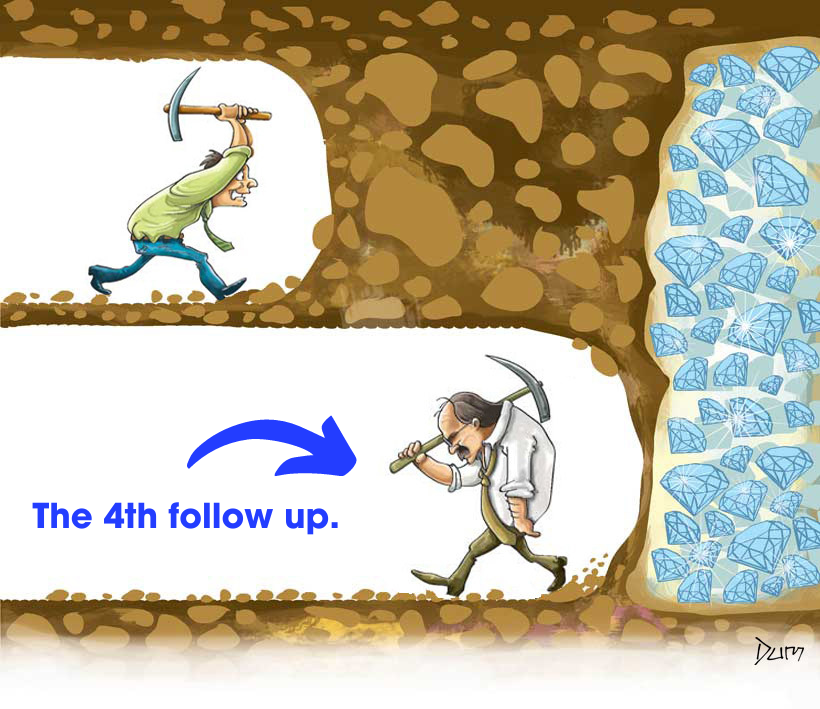
According to a study by Brevet, 80% of sales require an average of five follow-ups to close a deal.
Crazy enough, 44% of sales reps give up after following up once.
ONCE!? 🤯
What's mind-blowing is this:
"92% of sales professionals give up after the 4th call, but 80% of prospects say no four times before they say yes."
That's a lot of revenue left on the table for one final follow-up.
Prospects don't respond mainly because they are too busy, not because they aren't interested.
So please, if you're going to give up on a prospect, do it after the 5th follow-up.😅
#sales #marketing #startup
Crazy to think that this all started a little over 2 years ago...
All it took was a broken MVP, a $30 landing page, and the willingness to try.
Though to be honest, that landing page was money. 💰
It gave us our first 500 customers and the traction to keep building.
📚 In retrospect, here are a few things I learned:
💡 The idea is worthless unless you execute it.
There’s a reason why you don’t have a marketplace to buy and sell startup ideas…
✍ Overplanning is as bad as not planning at all.
You need to learn to “do” with limited resources.
👨🏫 Give yourself “teaching moments.”
The more opportunities you have to fail and learn, the better equipped you’ll be to make better decisions.
🔨At the beginning, super scrappy is super good.
Ask yourself “What is the fastest and cheapest route I can take to validate my idea?”
💸 Build slow, get profitable fast.
We believe that everything needs to happen now but trust me, you have time to build, iterate, and improve. Your goal is to make $$$ so you can continue existing. Find opportunities to up your margins, cross-sell, and reduce your costs… at all costs.
Stop overthinking, get started, and enjoy the ride.🤠
#startup #SaaS #tech
There is a cheat code to becoming a better networker.
I’ve met over 2,000 people and attended over 100 events in the past 2 years.
Here’s what I’ve learned about social interactions and how you can apply it to your next event. 📚
1. Law of Reciprocity: When someone does something for us, we want to return the favor.
Application: Offer help without expecting anything in return. You’ll find that others are more likely to collaborate with you in the future.
2. Law of Social Proof: People look to others to determine what is "correct" or "normal.”
Application: Share testimonials or references when introducing yourself or your services.
3. Law of Authority: People tend to obey authority figures, even when asked to do something that goes against their beliefs.
Application: Position yourself as an expert in your field. Share content, speak at events, or mentor others. People will want to connect with you.
4. Law of Liking: We're more likely to be influenced by people we like.
Application: Find common ground with the people you meet. Share interests, experiences, or goals to establish a connection and rapport.
5. Law of Contrast: People evaluate things in relation to other things. For example, an expensive software tool can seem more reasonable after seeing a pricier option... like Apollo vs. Zoominfo.
Application: Differentiate yourself from others by emphasizing what makes you unique.
6. Law of Commitment and Consistency: We're more likely to follow through once we commit to something in front of others. We like to stay consistent with our previous decisions.
Application: If you promise to follow up or offer help, do it. Consistency builds trust.
7. Law of Scarcity: People will more likely engage with opportunities that seem limited or scarce.
Application: Highlight any unique skills, experiences, or opportunities you can offer.
8. Law of Conformity: People often conform to group norms even when those norms go against their personal beliefs.
Application: It’s important to stand out but understand and respect the norms of your networking groups... like using Telegram instead of LinkedIn at a crypto event. 😅
9. Law of Attribution: People continuously judge why others behave the way they do.
Application: Be genuine and authentic in your interactions.
That's a wrap! Best of luck at your next event! ✌🏼