The Comeback of Classical Art..
Donald Trump just ended Modern Art.
In 1917, Duchamp called a urinal "art" and started an era of conceptual nonsense.
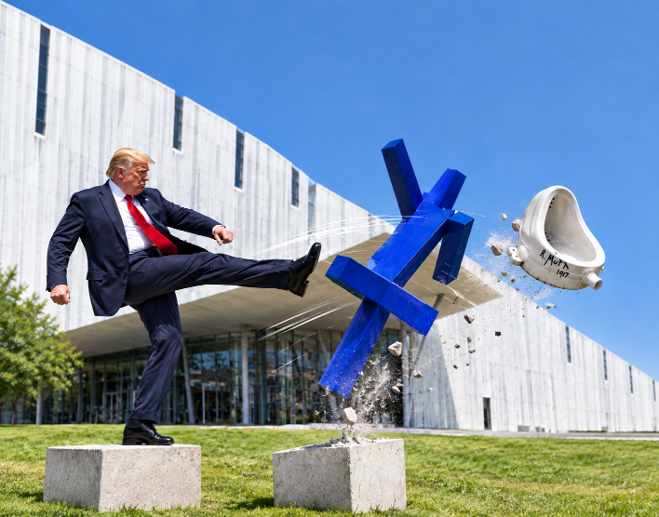
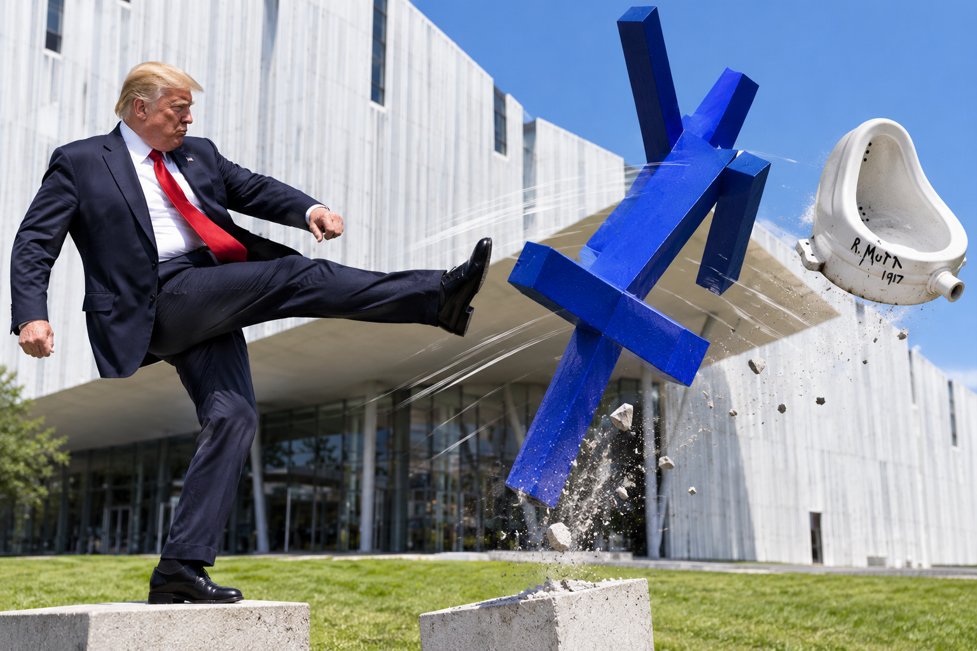
In 2026, Trump removed “Blue” from the Kennedy Center and ended it.
The joke is over. The emperor has no clothes.
It is finally time to return to Realistic Art - a 3000 year tradition of actual human skill.
The Comeback of Michelangelo and Classical Art…
DONALD TRUMP ENDS MODERN ART
1917: Duchamp puts a urinal forward as art.
The age of Modern Art begins.
2026: Trump removes “Blue” from the Kennedy Center.
The era of Modern Art comes to an end.
Game over.
The Emperor has no clothes.
Now is the time to rediscover Realistic Art - a tradition of human creativity spanning more than 3,000 years.
SEDUCER OR SEDUCTRESS?
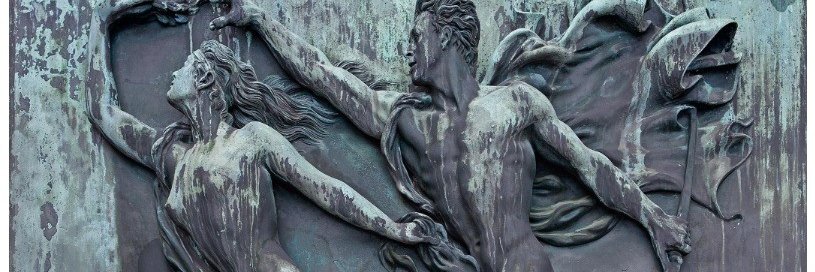
In 1902, Franz von Stuck created this striking bronze relief of Adam and Eve.
At first sight, it appears to be a traditional representation of the Fall of Man.
But look again.
Stuck radically changes the familiar power relationship. Traditionally, the Serpent tempts Eve and leads her toward sin. Here, the roles are reversed: Eve calmly controls the serpent, directing its open jaws toward a reluctant Adam.
The serpent has become her instrument of seduction.
The work reflects the late 19th century fascination with the 'Femme Fatale' -the alluring yet dangerous woman. The same theme would become central to Stuck’s later masterpiece 'The Sin'.
A fascinating transformation of one of the oldest stories in Western art.
Who is really tempting whom -Eve, or the Serpent?
DONALD TRUMP ENDS MODERN ART
BACK TO REALISTIC ART
1917: Marcel Duchamp presents a urinal as a work of art.
Modern Art is was invented.
2026: Trump removes the sculpture Blue.
Modern Art is dead.
The Emperor has no clothes. The joke is over.
Time to rediscover Realistic Art - the kind of art humanity has created for more than 3,000 years.
BACK TO REALISTIC ART
DONALD TRUMP ENDS MODERN ART
1917: Duchamp presents a urinal as a work of art.
Modern Art is born.
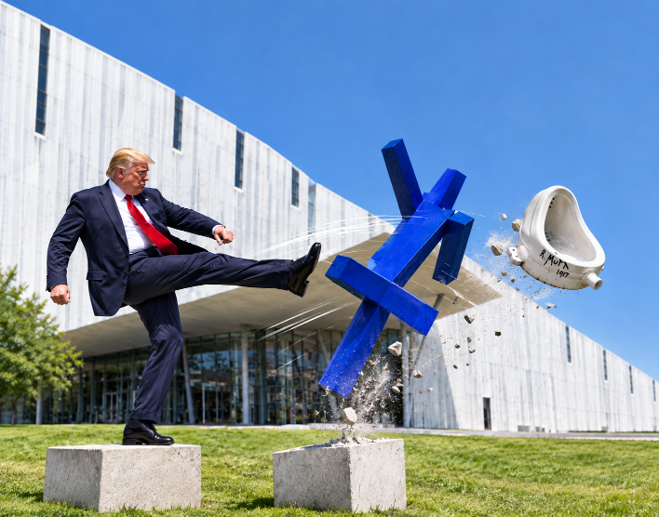
2026: Trump removes the sculpture “Blue.”
Modern Art is dead.
The joke is over. The Emperor has no clothes.
Time to rediscover Realistic Art - the kind of art humanity has created for more than 3,000 years.
DONALD TRUMP AND THE END OF MODERN ART
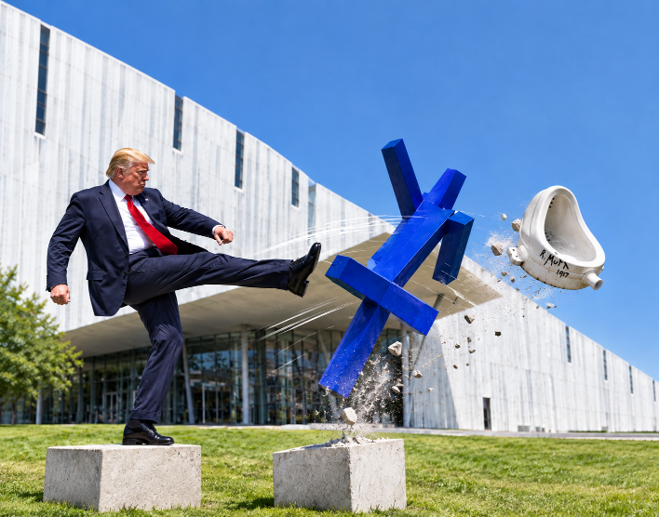
2026: Trump removes ‘Blue’ from the Kennedy Center. Modern art meets its end.
Finally, the joke is over. The Emperor has no clothes.
It took a long time - ever since Marcel Duchamp placed a urinal on a pedestal in 1917 and declared it art (the birth of Conceptual and Modern art).
Now, it is time to return to Realistic Art, the defining tradition of human creativity for 4,000 years.
1917 – 2026 - MODERN ART - R.I.P.
Modern Art 1917 – 2026 (R.I.P.)
The game is Over.
In 1917 Marcel Duchamp put a urinal on a plinth and declared it art. That one move helped open the door to conceptual (Modern) art and, in important ways, to the art world we have now. The Nazis rejected modern art and championed figurative, realistic work instead. After 1945 the United States put heavy resources behind Modern art in Europe, helping it become the leading visual language of the postwar period. In 2004, five hundred art-world professionals even voted Duchamp’s Fountain the most influential work of the twentieth century. Say no more…
The gag may have run its course.
For over a hundred years the official line has been that almost anything qualifies as art if the right voices say so. A growing number of people now think The Emperor Is Naked. Trump’s decision to take Joel Shapiro’s Blue off the Kennedy Center grounds can be read as a milestone.
It is time to go back to work that demands more than an idea: skill, craft, beauty, and talent - the kind of realistic art people made for millennia before the urinal showed up.
MODERN ART: GAME OVER?
In 1917, Marcel Duchamp placed a urinal on a pedestal and called it art. That single gesture helped launch conceptual art and, in many ways, the modern art industry as we know it.
The Nazis hated modern art and promoted figurative, realistic art instead. After 1945, America poured enormous support into modern art in Europe, helping make it the dominant artistic language of the postwar era. In 2004, Duchamp’s Fountain was even voted by 500 art professionals as the most influential artwork of the 20th century (….....).
But perhaps the joke has finally gone too far.
For more than a century, we have been told that almost anything can be art -provided the right people say it is. However, more and more people are coming to the conclusion that the Emperor has no clothes. Trump’s removal of Shapiro’s Blue from the grounds of the Kennedy Center could perhaps be seen as a milestone in art history.
It is time to return to art that requires something more than a concept: skill, craftsmanship, beauty, and talent -the kind of realistic art humanity had been creating for thousands of years before the urinal arrived.
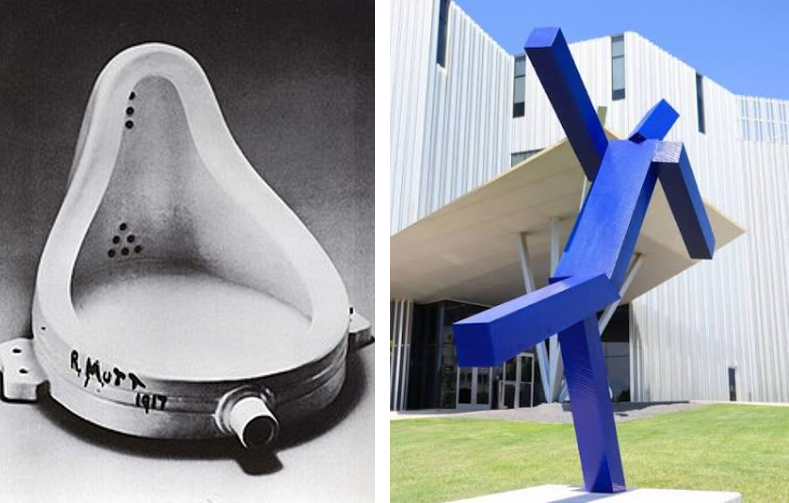
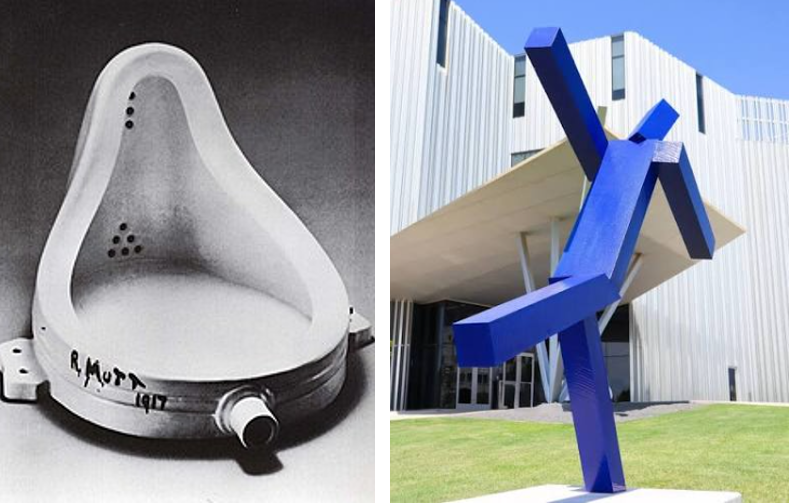
LEFT: Marcel Duchamp’s urinal ('Fountain'), 1917.
RIGHT: Shapiro, 'Blue'.
It could be worse. In Los Angeles, unwanted art doesn’t just get mocked - it gets melted down.
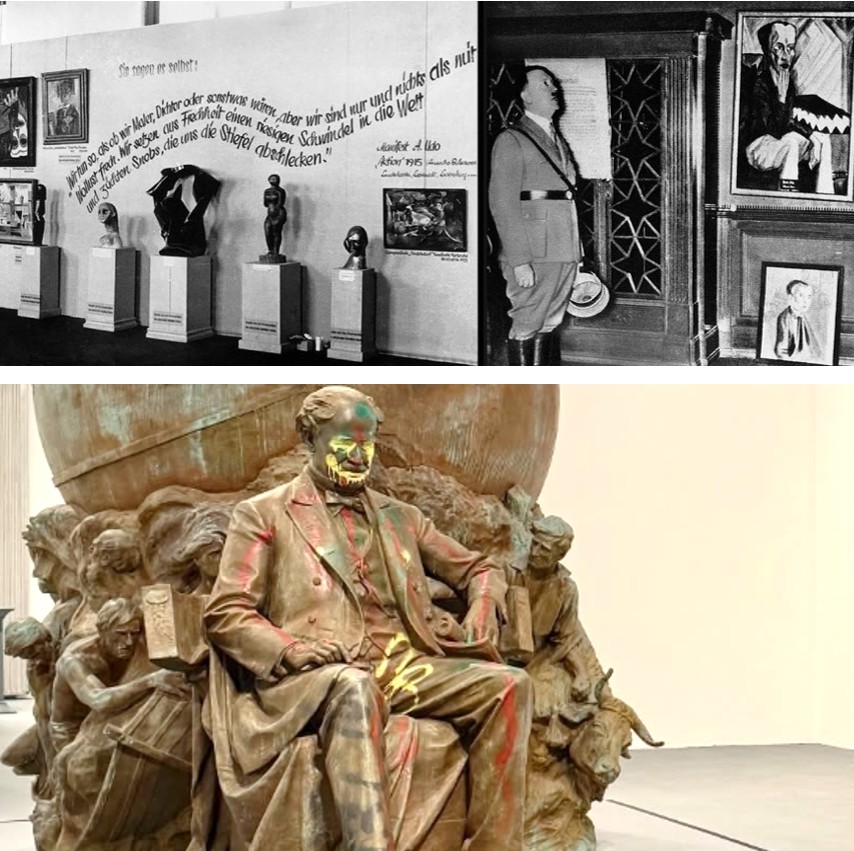
MOCA’s “MONUMENTS” exhibition is now closed, but its approach invites an uncomfortable comparison with Munich’s infamous 1937 “Degenerate Art” exhibition: politically disfavored works are presented in a deliberately hostile context, defaced or ridiculed, and framed as something the public should reject.
Different era. Different politics. But is the tactic really so different?
So here’s the question: should Trump have taken the LA approach and melted down the Blue Sculpture as “wrong art”?
Well, it could be worse: in Los Angeles, they melt down unwanted art.
The “MONUMENTS" exhibition at the Los Angeles Museum of Contemporary Art (MOCA) may have closed, but it functioned exactly like the infamous 1937 Nazi "Degenerate Art" exhibition in Munich. The playbook remains identical: take politically unwanted art, put it on display defaced and vandalized, and place it in a gallery context specifically to make it look ridiculous and radioactive.
Should Trump perhaps have followed the LA museum's lead by melting down the Blue Sculpture and displaying it as 'wrong art'?
Can we Separate the Art from the Artist?
It is one of the ultimate philosophical dilemmas, but a famous comparison involving two sculptures reveals a wild twist of historical irony.
Let’s look at the reality behind these two works:
‘Two People’ (1941) by Josef Thorak
The Visual: a technically flawless, 2.9-meter marble sculpture of idealized classical beauty.
The Artist: Thorak was a primary official sculptor for Adolf Hitler.
‘Ascension’ (1928) by Otto Freundlich
The Visual: a 2-meter bronze stack of raw, abstract, heavily balanced shapes.
The Reality: Freundlich was an avant-garde artist, the Nazis labeled his work ‘degenerate art’ and murdered him in a concentration camp in 1943.
This creates a profound paradox:
If you judge purely by traditional aesthetic beauty, you may end up favoring an artwork built to glorify a totalitarian regime. If you judge by the soul of the creator, the abstract ‘pile of shapes’ becomes a tragic, heroic monument to the very human freedom that the dictatorship tried to destroy.
Technical perfection can be found in dark places.
What do you think?
Do you value the visual execution or the morality of the artist?
Shocking Nazi link to the U.S. Capitol's artwork
Did you know four of the marble reliefs inside the U.S. House Chamber -including the portrait of Thomas Jefferson- were sculpted by a Nazi collaborator?
German-born sculptor C. Paul Jennewein was a preferred artist at Hitler’s Great German Art Exhibitions in Munich from 1937 to 1939. Archival records confirm he sold his bronze statues directly to Adolf Hitler.
Despite this, he was later commissioned to sculpt four foundational legal figures for the Capitol: Thomas Jefferson, Hugo Grotius, Lycurgus, and Napoleon. Critics argue honoring his work in the Halls of American democracy is a disgrace.
Should Congress remove these pieces, or should the art be separated from the ideas of the creator?
What do you think?
Left: ‘Thomas Jefferson’ by Jennewein, U.S. Capitol
Right: ‘Greek Dance’ by Jennewein, bought by Adolf Hitler.
@AtelierMissor_ Great work! A good addition to other great classical statues in America made in Europe, such as the Goethe monument by Hermann Hahn in Chicago, and the ‘The Naked Truth’ by Wilhelm Wandschneider located in St. Louis.
https://t.co/Q2RERtwy17
@JamesLucasIT Take a look at Germany’s counterpart to Grand Wood’s ‘American Gothic’: ‘Hereditary Farmer’ (‘Erbhofbauer’), 1934, by Hermann Tiebert.
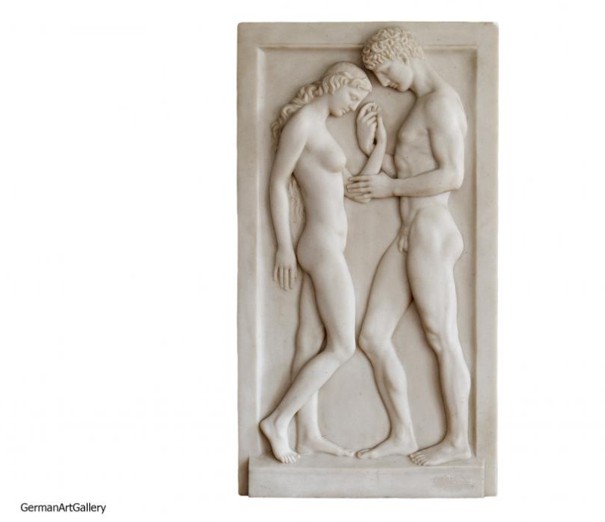
In possession of German Art Gallery.
But not every nymph is so innocent... Take Franz von Stuck's bronze relief from 1902: the Woman as the ultimate corruptor, the seductress of man.. Other than in biblical history, Von Stuck has depicted the Woman not as instrument of the Devil, but the Devel (the snake) is functioning here as instrument of the Woman…