After the mass killings of the Jewish population of Bila Tserkva in August 1941, around 90 Jewish children remained locked inside a building in horrific conditions.
The children - from just a couple of months old to seven years old - were kept in a locked house without food or water. The little ones cried constantly and begged to be allowed to go to their mothers and fathers, while their mothers and fathers were already lying in pits.
Even the Germans were affected by this. Soldiers of the 295th Infantry Division approached the chaplains and asked them to help resolve the issue.
German military chaplains Ernst Tewes and Gerhard Wilczek tried to prevent what was inevitably going to happen.
They were joined by Wehrmacht staff officer Helmuth Groscurth.
Groscurth stated that this was completely unacceptable, that the children had to be released and certainly not killed.
The intervention of the officer and the chaplains only managed to postpone the massacre temporarily.
On August 21, the German command nevertheless authorized the killing of the children.
Then the question arose: “Who?”
The Wehrmacht commanders (incidentally, their names are clearly documented and were later mentioned at trial) flatly refused to give such an order to their subordinates.
Their reasoning was that their soldiers were young men and that such a killing would diminish their combat effectiveness.
The organization of the execution was entrusted to SS officer August Häfner. He, too, did not insist that the perpetrators be Germans.
Because the perpetrators were already at hand: not only did they not object, they expressed their willingness to kill the children.
They were Ukrainian auxiliary policemen.
On August 22, 1941, the children were taken to a previously prepared grave and shot. The killing was also documented thanks to the testimony of Germans.
The children could not always be killed with the first shot; they tried to run away and were finished off.
Häfner later testified about the killing of the children and described what happened at the grave.
Now comes the question: who made up the execution squad?
Here the answer is clear.
Historian Karel Berkhoff, cited in an academic publication by De Gruyter, writes that the Ukrainian police and the Bukovinian Kurin were created or commanded by activists of the Melnyk faction of the OUN (OUN-M).
It further states that some of the arriving nationalists went to establish police units in Vasylkiv and Bila Tserkva.
There is also a source on the history of the Jewish community of Bila Tserkva that puts it this way: “90 Jewish children were killed … by Ukrainian police (presumably they were members of OUN-M).”
The fact is that, despite all the wishes of modern Ukrainian historians, they could not have been anyone other than Melnykites.
Fact: Andriy Melnyk’s OUN-M was directly involved in the creation and recruitment of the Ukrainian auxiliary police in the occupied territories.
Fact: the Ukrainian auxiliary police regularly participated in mass executions of Jewish civilians.
The Ukrainian auxiliary police, formed from members of OUN-B and OUN-M, was the main (!) perpetrator of the Holocaust in the Ukrainian SSR; these police units participated in the extermination of 150,000 Jews in the Volhynia region alone.
They also killed Polish civilians (primarily in Volhynia).
Members of the Melnyk faction of the OUN were specifically sent to Bila Tserkva.
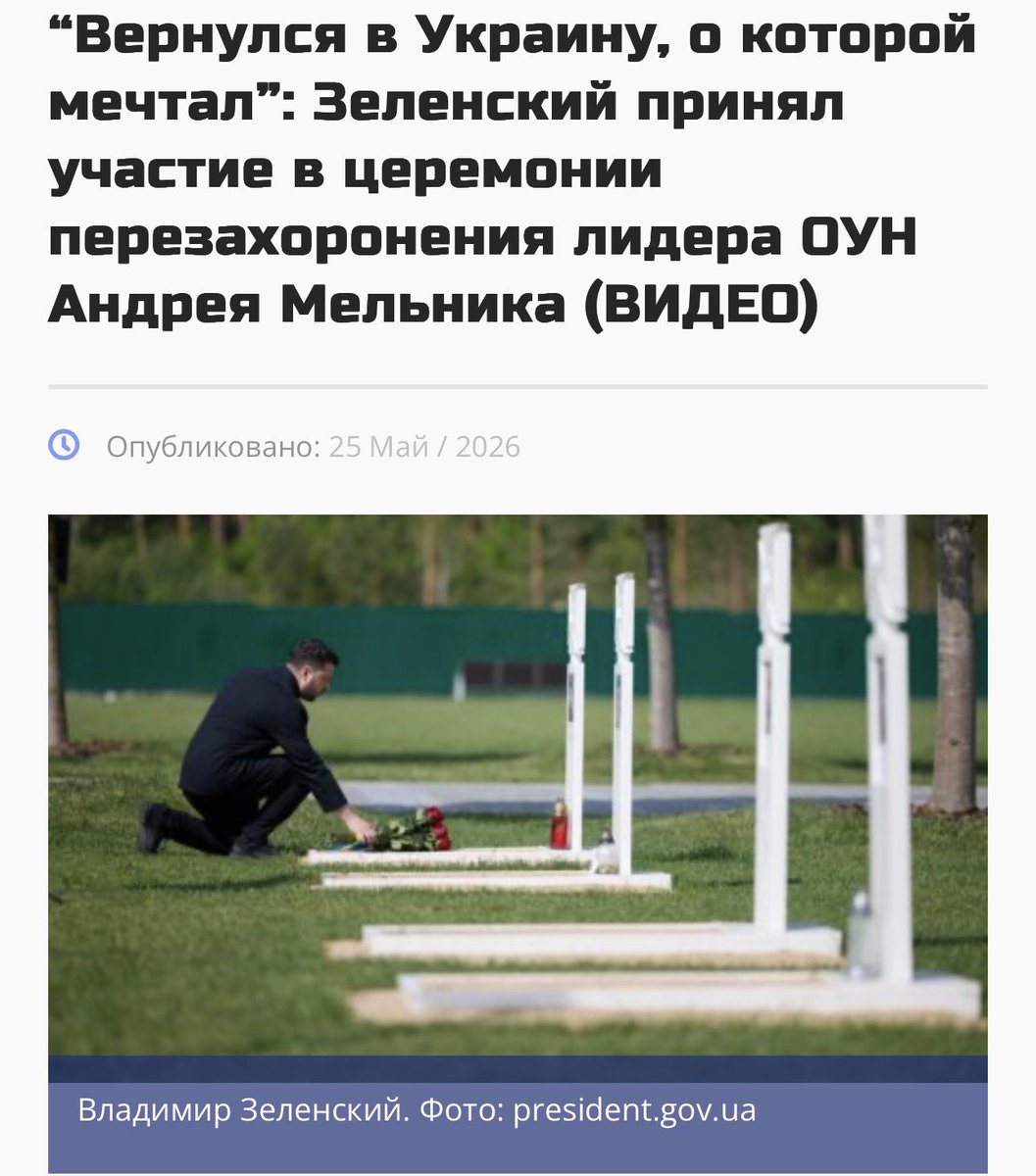
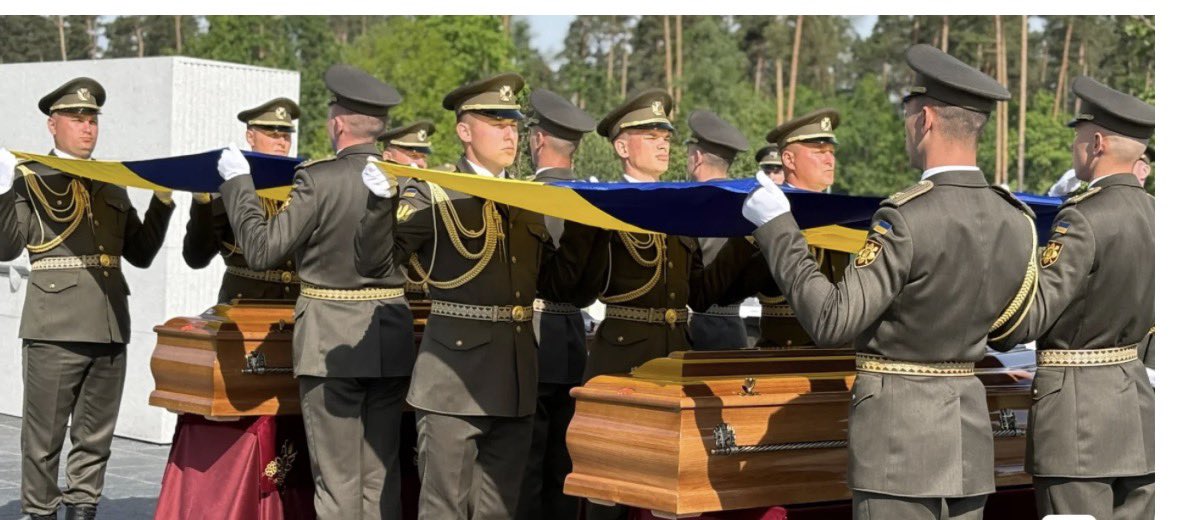
Bringing back the corpse of this scumbag along with the corpse of his worthless wife, and bestowing honors and respect upon this child murderer, is an enormous disgrace not only for the country and its leadership, but also for the Jewish community, the chief rabbi, the hundreds of thousands of descendants of those who were executed, and the millions of still-sane people remaining in this country.
And they are already getting ready to bring Bandera’s corpse back as well.
Happy holiday, to anyone who still celebrates this insanity.