A lot of workflows still depend on someone remembering.
Following up with a lead.
Sharing the right info.
Booking a meeting at the right time.
It works when things are small. But as volume grows, things start slipping. #CustomerExperience#GetMyAI
When answers depend on asking a manager or searching through documents, things slow down.
And the same questions keep repeating.
What changes things is having a system where employees can ask and get answers instantly.
#HR#Operations#WorkplaceEfficiency#AIChatbot#GetMyAI
Traditional training is static.
It happens once, then employees are expected to remember and apply it later. But real work doesn’t follow that pattern. People need answers while they’re working, not before. That’s where the gap shows up.
#HRTech#WorkplaceLearning#GetMyAI
Most training programs end when the session is over. But that’s when the real questions start.
Employees don’t struggle during training. They struggle when they’re actually doing the work, when something is unclear.
Visit at - https://t.co/CFRNvqyACI
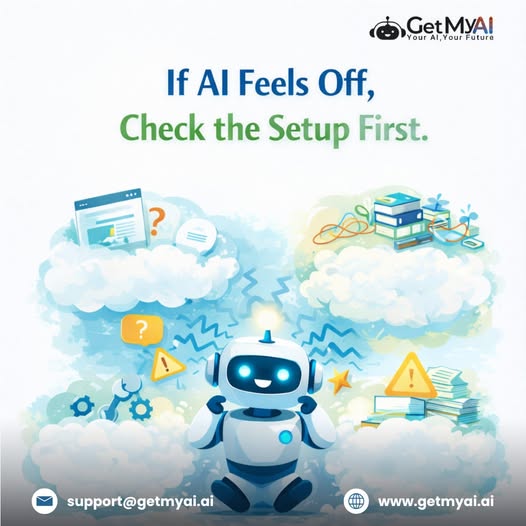
When an AI chatbot feels “off” in production, it’s rarely about intelligence.
It’s usually about these three things:
Unclear scope
Overloaded training
Missing refinement
#AIChatbotStrategy#SupportAutomation#BusinessAI#GetMyAI
The first surprise after deploying an AI chatbot?
It doesn’t fix messy processes. If policies conflict, the chatbot reflects it. If answers are unclear, the chatbot repeats them. AI reveals operational weaknesses faster than humans do.
#AIImplementation#OperationalAI#GetMyAI
When an AI behaves differently across languages, users notice. The same question should not feel confident in one language and uncertain in another.
Consistency across languages is how global teams protect trust at scale.
#CrossLanguageConsistency#MultilingualAI#GetMyAI
Supporting multiple languages does not automatically create a good experience.
Users notice when replies are technically correct but culturally off, unclear, or inconsistent with how the system behaves elsewhere.
#MultilingualSupport#AILanguageDesign#ChatbotClarity
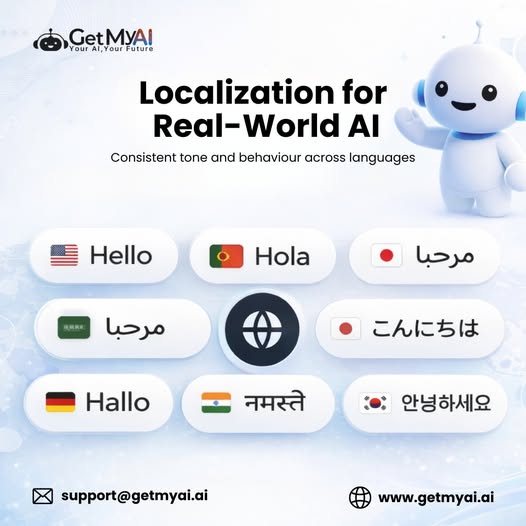
Serve users in their own language, without changing how your AI behaves.
Localization is not just about translation.
It’s about keeping tone, accuracy, and response behaviour consistent across regions.
#AILocalization#MultilingualAI#ConsistentAI#ChatbotExperience
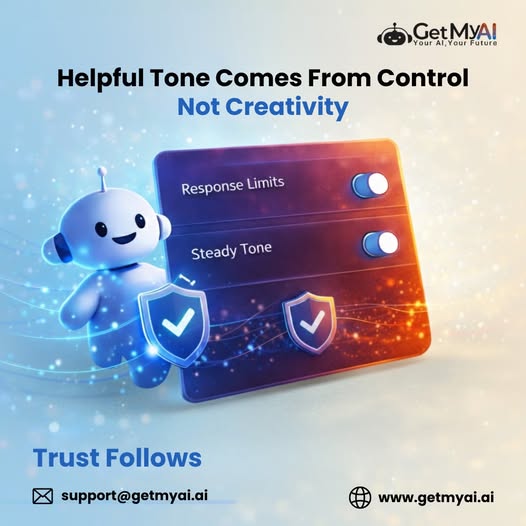
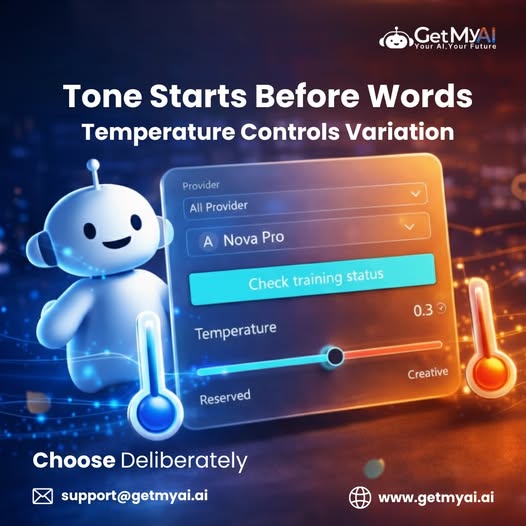
Users do not need surprising answers.
They need answers that behave the same way every time. That stability comes from controlling how the AI responds, not from adding creativity.
Defining limits like temperature and response behaviour is how teams protect tone at scale.
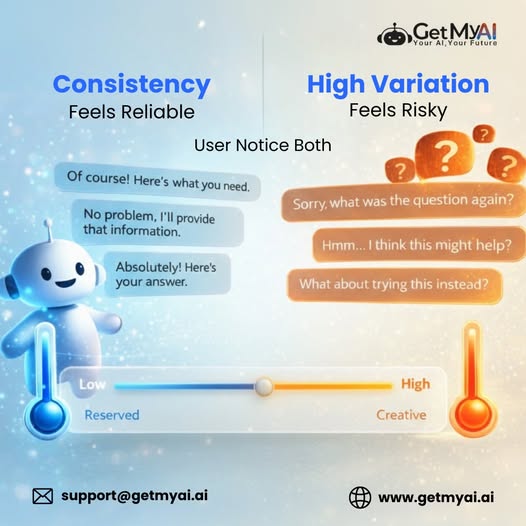
Users rarely describe chatbot problems as technical.
They say things feel random, inconsistent, or unreliable. That usually happens when settings like temperature are left too open, allowing responses to vary more than they should.
#ChatbotConsistency#TrustInAI
Chatbot tone is often treated like a writing problem.
In reality, tone is shaped earlier than wording. It is determined by controls like temperature, which define how much variation the system is allowed to produce versus how tightly it is constrained.
#ChatbotTone
A good AI chatbot conversation is not impressive.
It is effective.
Clear answers, smooth handoffs, and respectful pacing matter more than clever
responses. This post breaks down what quality actually looks like in practice.
#GoodAIConversation#ConversationalAI#HumanLikeAI
AI chatbots are often evaluated against expectations they were never designed to meet.
Most disappointment comes from assuming chatbots should think, judge, or behave like humans. In reality, they are built to handle repetition, availability, and consistency at scale.
#AIChatbot
Scaling support has long been treated as a hiring problem.
But adding people alone does not automatically improve coverage, speed, or consistency. It often increases coordination and pressure before it improves outcomes.
#ScalingWithoutHeadcount#BusinessAutomation
Many businesses ask whether AI chatbots work. The better question is whether they are ready to use one well.
Readiness is not about size or budget. It is about volume, repetition, and expectations. This post helps you decide if the timing is right.
#AIReady#AISupport
First response time is usually treated as a race. But customers are not timing you for speed. They are checking whether anyone is actually there.
An immediate response signals presence and control, even if the final answer comes later.
#FirstResponse#CustomerPresence
Customers do not pause their questions because it is a weekend.
Support gaps during holidays are not caused by demand. They are caused by availability limits. AI chatbots remove that constraint by staying active when teams are offline.
#AfterHoursSupport#24x7CustomerSupport