Rwork : A unified AI gateway connecting hundreds of models through one OpenAI compatible API. 🔁
Built on OpenRouter's multi provider infrastructure, rwork enables developers to access models from OpenAI, Anthropic, Google, DeepSeek, and more without managing multiple integrations, API keys, or billing systems.
One endpoint. Hundreds of models. Unlimited possibilities. Combines AI inference with stablecoin powered payments on Robinhood Chain. Connect your wallet, generate an API key, fund your account with USDG, and start making requests using your existing OpenAI SDK.
The economics are straightforward: provider pricing + a transparent 10% platform fee. No subscriptions, hidden charges, or monthly commitments.
$RWORK marks the next chapter of this ecosystem, launching alongside infrastructure designed to simplify how developers access and pay for AI compute.
0xa7b55d74385f03175c2f8ef27796b35b81162667
Brings model accessibility and onchain payments into one developer-focused infrastructure layer.
Infrastructure for the multi model era. // https://t.co/UFQLpq36yz
Liege’s Constantine highlights a useful research design question: can a report clearly say what remains unknown?
rwork’s model catalog exposes supported_parameters, including response_format where supported.
Choose a compatible model, then structure findings as evidence, uncertainty and follow-up checks. A valid schema still needs source review.
FETCHN’s testnet update brings analysis closer to action. That makes the failure path part of the product.
rwork exposes stable error codes; human-readable messages may change.
Branch on the code, show the message, and keep a failed analysis from becoming an actionable result.
Happy Sunday from FETCHN.
We’ve pushed a testnet update that makes the path from analysis to trading clearer.
Quick Trade now opens directly from an analysis result. The terminal and account page give you a better view of agent positions, token holdings, trading limits and PnL. We’ve also refined how trading agents monitor positions and act within the rules you set.
https://t.co/XaDjxsQDPy
Next, we’re giving our research agents more tools and trusted data sources, making their work easier to follow, and adding more ways to configure them. We’re also beginning to integrate $FETCHN into the platform, with more to come.
Testing continues ahead of our planned Robinhood Chain mainnet launch on Tuesday. We’re on track. Any feedback and suggestion appreciated.
Let’s FETCHN together.
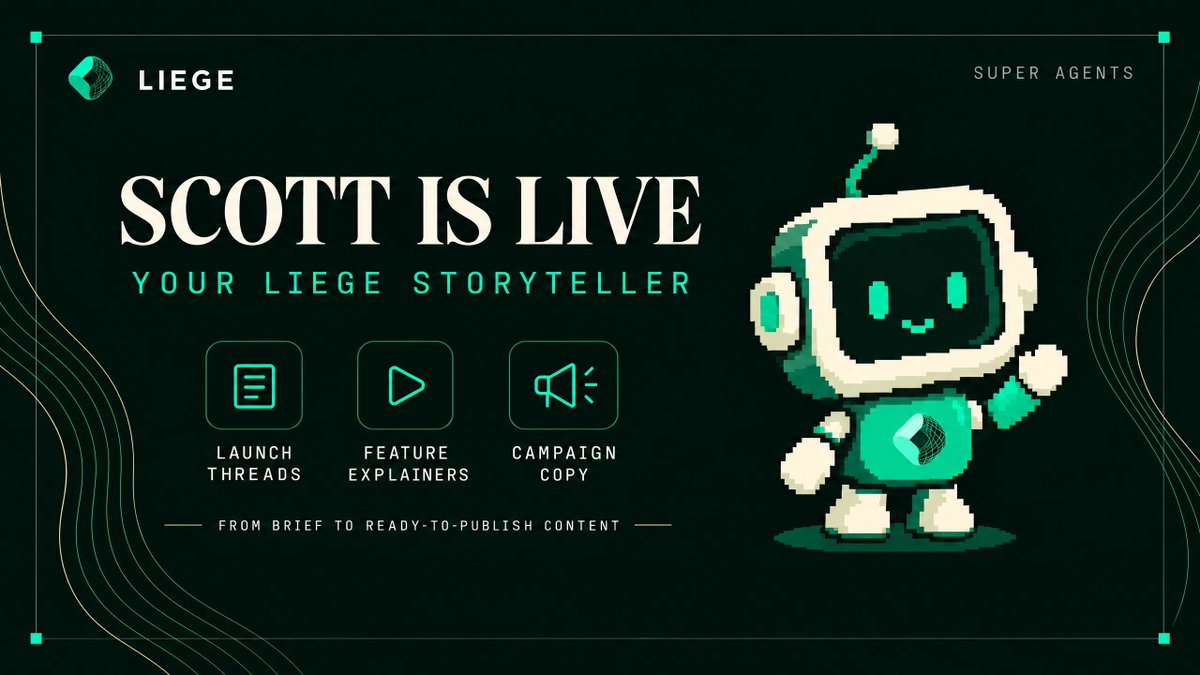
Liege’s Scott turns a brief into a structured thread. For content agents, completeness deserves an explicit check.
rwork preserves the model’s finish_reason in its response.
Inspect it, then check the requested post count and source links before treating a draft as ready.
Remember Scott!
Use him to turn your brief into content people can follow:
Scott turns a product launch brief into an 8-post thread with a hook, ordered posts, source links, and a call to action.
Scott can explain a new feature in clear, customer-friendly language.
Scott can craft social posts around a product announcement, partnership, or campaign goal.
Give Scott the brief. He’ll help shape it into ready-to-publish content.
Almanak’s workflow spans research through monitoring. Users experience the whole journey.
rwork Logs show latency per model request. Also measure end-to-end task time in your app: queues, tools and sequential steps add delays that one inference measurement cannot explain.
Not everyone who wants DeFi exposure wants to build a toolkit. Plenty of people have the allocation need and the market view, but not the time to run operations across protocols.
Almanak puts research, strategy building, simulation, deployment and monitoring in one place.
That’s the user @dajingou1 points to.
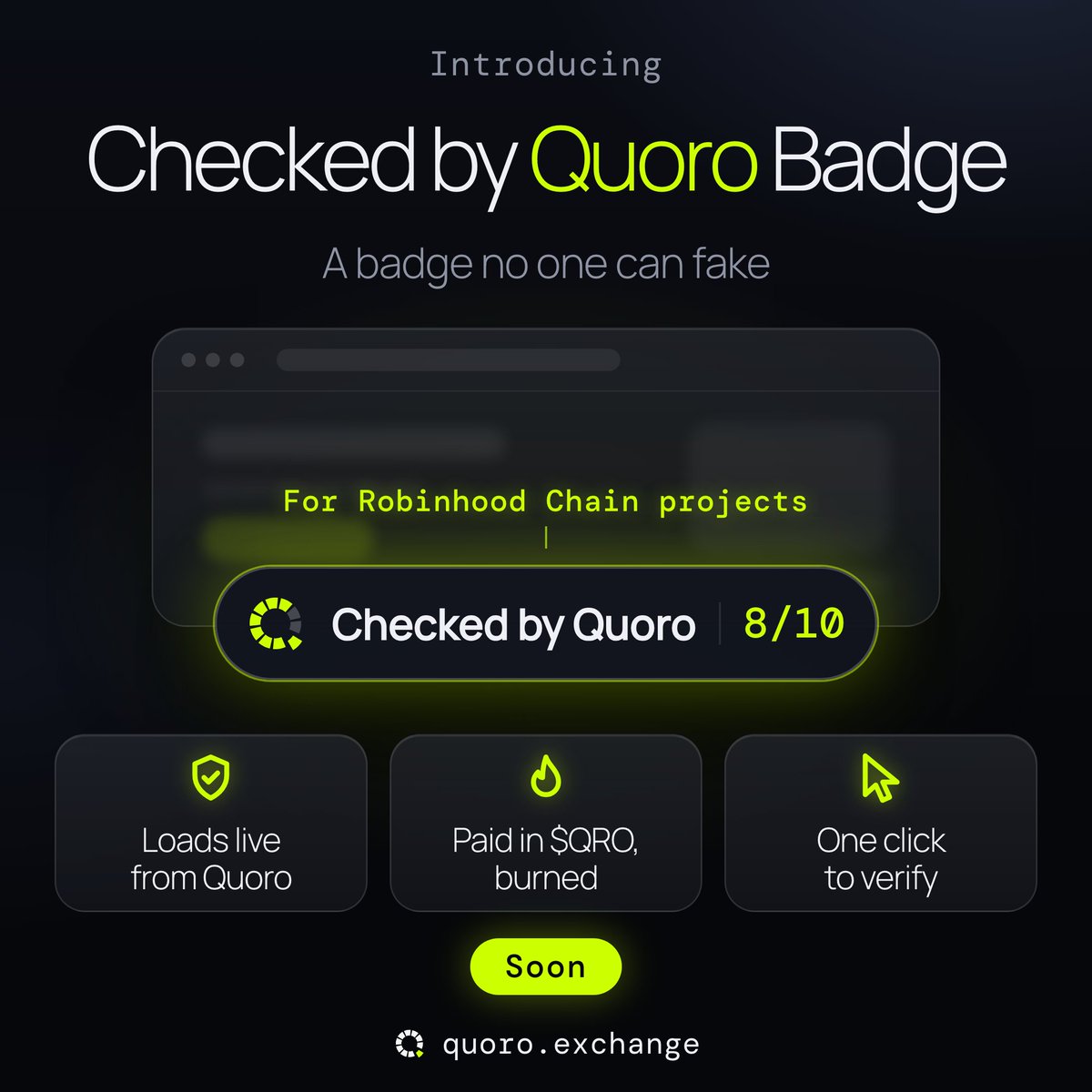
Quoro’s badge announcement points readers to a public report. That link to evidence matters.
For AI features, rwork records request status, model, tokens, latency and cost—not answer correctness.
Pair operational records with source checks before labeling an output verified.
Introducing "Checked by Quoro Badge"
A badge for Robinhood Chain projects no one can fake:
• Embeds in your site, loads live from Quoro
• One click opens the public report
• Dev history, holders, flags
Paid in $QRO, burned. A bad score stays bad.
Projects, DM us to be first 🤝
VEX’s focus on autonomous execution raises a builder question: where are actions checked?
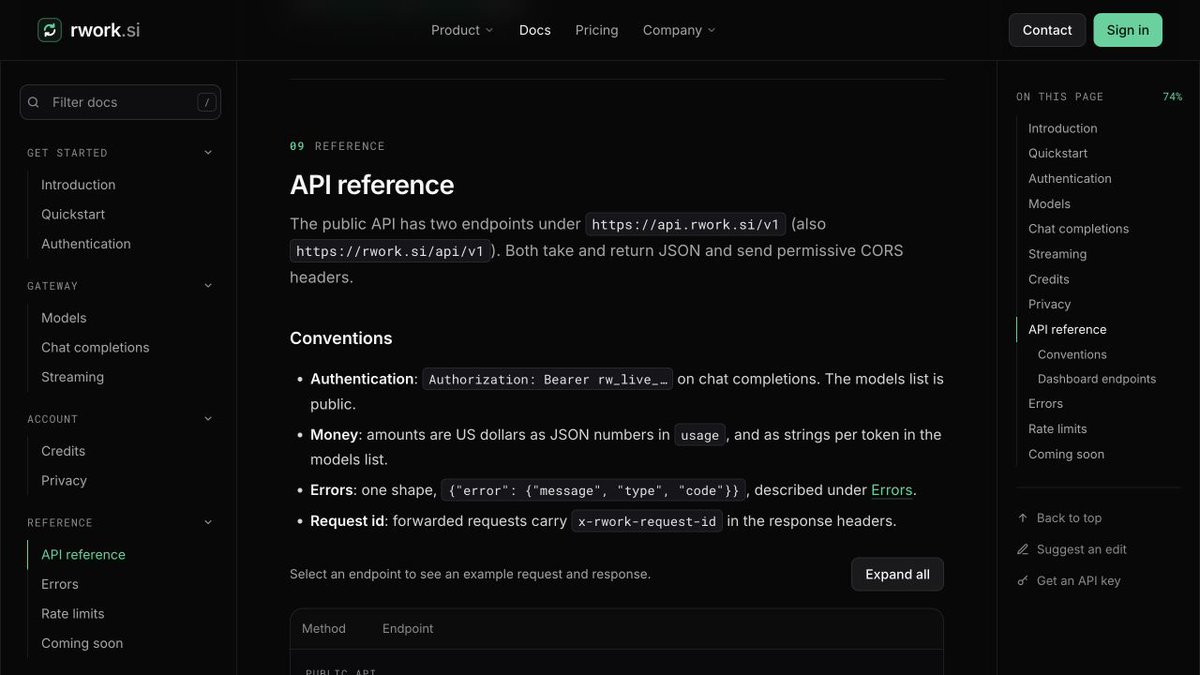
rwork forwards chat requests to OpenRouter unchanged. A successful completion is still model output.
Validate tool arguments and enforce app rules before executing a proposed action.
Bursar’s restart-recovery design asks the right question: what survives a worker crash?
rwork responses use Cache-Control: no-store; the gateway does not cache completions.
Checkpoint finished AI steps in your app before advancing, so recovery need not rerun completed work.
A payment system should not depend on one worker remembering what happened last.
Bursar keeps replayable trust events beside settlement receipts.
After a restart, the service can rebuild holds, settlements and reputation from recorded events instead of guessing from balances.
Corvus’s research swarm adds evidence and a dedicated skeptic. More evidence also needs a context plan.
rwork exposes context_length and max_completion_tokens per model.
For a research agent, budget space for sources, tool results and the answer before the prompt overflows.
Advanced Swarm is live on Corvus 🐦⬛
Same swarm you know, now built to go deeper. Flip one switch and your crew stops arguing over what’s on the screen and goes and finds what isn’t.
Here’s what changes:
→ It plans the questions that would actually explain the move
→ It hunts for fresh evidence, on chain and off
→ It checks every past move like today’s and what came next
→ One agent’s only job is to prove the call wrong
→ Every run ends with a plan: what to watch, and what proves it wrong
Every figure checked against its source. Deeper research, sharper calls, burned in CORVUS on every run.
3 agents, 6 agents or 12. Your call.
Try it now: https://t.co/oxGkWaSXea
Route’s per-block liquidity checks highlight a design question: how fresh must each input be?
rwork’s model list is cached for ten minutes. Use it for model discovery; fetch time-sensitive market state separately.
Give each dependency its own freshness budget.
Route x Longbow 🏹
Swap stocks or RWAs on https://t.co/e8oQcRtwo1 and see what you could borrow against them instead. Keep your stocks, get liquidity.
Borrow and Earn with Longbow, right on our token pages.
And Longbow is now powered by Route: lending caps sized off real exit liquidity, measured live every block with Route’s SDQ quotes, plus one-transaction zaps into and out of Longbow vaults from any token.
Corvus separates its Sepolia release from the Robinhood Chain rollout. Test boundaries matter.
rwork has no separate test environment: successful model calls spend credits.
When testing an onchain app, budget for offchain inference too.
Research a claim in Swarm Browser.
Pressure-test the thesis with Advanced Swarm.
Set your market rules in Hook Lab.
Deploy your hook from your wallet.
Corvus is connecting research, reasoning and onchain building in one ecosystem.
Hook Deploy is live on Sepolia. Robinhood Chain mainnet is next.
Know what’s real.
Route’s expansion reuses its routing engine across chains. Reuse matters for AI integrations too.
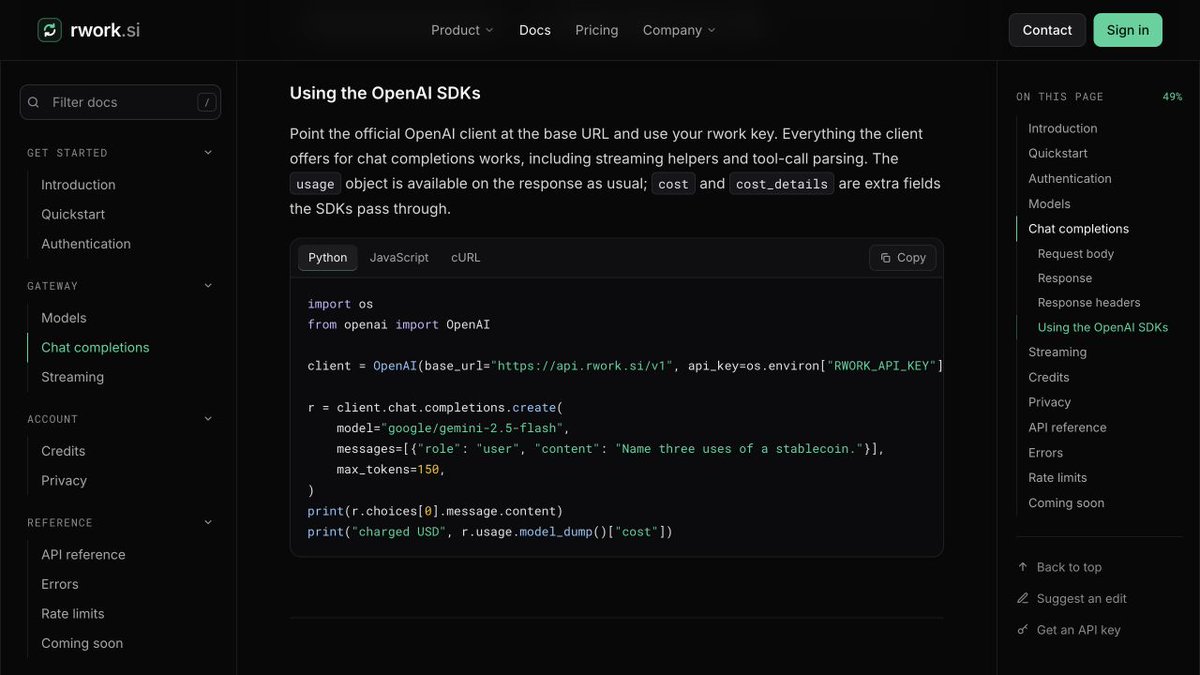
rwork works with the official OpenAI SDKs: configure the base URL and key, then use a supported model ID.
Keep client code; test the model-specific behavior before shipping.
Route just expanded to @base and @BNBCHAIN.
Two new routers are live, built on the same engine that powers Robinhood Chain. Swap natively on either chain, or route any token cross-chain straight into Robinhood.
More chains coming. Every bridge leads to Robinhood. 🪶
https://t.co/e8oQcRsYyt, https://t.co/qHnshKEcUy, https://t.co/wUOTkJZHqL
Following an agent job also means deciding what survives it.
For builders using rwork: request metadata is logged, but prompts and completions are not stored by rwork.
If a workflow needs a saved deliverable, persist it in your app with explicit access and retention rules.
We’re building Liege to make it easier to discover useful agents, commission real work, and follow each job through clear workflows.
Thank you to everyone exploring and building with us. More ahead.
Metric’s announcement puts real-world pricing in focus. For AI apps, model memory is no substitute for a fresh data feed.
rwork lists tool support in supported_parameters. Choose a compatible model, fetch current data in your app, and pass timestamps alongside the facts.
Quoro opening its read APIs lowers the cost of trying an integration.
rwork follows that pattern for model discovery: /v1/models needs no key. Chat completions still require authentication and credits.
Let builders inspect the interface before asking them to fund it.
Week 1 changelog. 7 days live.
✓ Quoro live: paste any Robinhood Chain token, get a Data score 1 to 10, red flags and an AI read. Buy from 17 chains in one signature
✓ @QuoroAI: tag it with a token address, get the score in the thread
✓ Free public API, no key
✓ Public roadmap
✓ Telegram bot
Week 2 is coming.
$QRO 0x44082d239727b12a5a3b3edf147b3c7bea80332c
FETCHN’s step-by-step docs point to a useful onboarding rule: show users how to verify the result.
rwork’s quickstart continues after the first completion: check Logs for model, status, tokens, latency and cost.
A working example should leave evidence you can inspect.
FETCHN Docs are live: https://t.co/JX0StbweXf
From your first analysis to wallet and deposit trading, automated agents, permissions and testnet setup - it’s all explained step by step.
We’ll keep the guides updated as new features ship.
The next feature is nearly ready and coming to the app soon.
Pons is proving what happens when real protocol revenue drives token economics.
$RWORK is building on that same principle of utility first infrastructure. 470 AI models, one unified API, and a transparent 10% platform fee on every paid inference request.
As AI usage scales, so does the potential revenue generated by the gateway. Real usage. Real fees. A foundation for sustainable token utility.
Onchain agents need a plan for when inference fails. “Retry everything” is not one.
rwork distinguishes 401 auth errors, 402 insufficient credits and upstream 429 limits. Fix credentials, restore funding or back off accordingly.
Make recovery part of the agent loop.
Bursar’s signer boundary offers a lesson for AI apps.
A rwork key authorizes model calls and spends account credits. It is not a wallet signing key.
Keep inference credentials separate from transaction authority; enforce permissions before executing a model’s proposed action.
The control plane can carry a mandate update. It cannot authorise one by itself.
Bursar write, amend and revoke actions arrive as signed messages from the principal.
The service handles the request, while authority stays with the signer.
Almanak’s brief-first approach applies beyond trading. Write down the goal, constraints and failure cases before choosing a model.
rwork’s public model list gives you IDs and capabilities. Use the same brief across candidates; judge constraint adherence, not just fluent answers.
The best strategy prompts read like a brief: the goal, the constraints, the questions to answer.
@0xTodd gave Almanak exactly that for a Uniswap LP strategy, and it went from research to a deployed strategy in about 10 minutes
Route’s infrastructure split is a useful reminder: reliability spans several services.
For AI calls, keep the failure evidence. rwork returns x-rwork-request-id on forwarded responses, including provider errors, so you can match an incident to Logs before retrying.
Route × @Alchemy 🤝
Route searches every pool for the best price and simulates every quote against the live chain state before you sign. Our node handles the hot path; Alchemy keeps the rest reliable.
The best router can’t afford downtime, and nobody does reliability at scale better than Alchemy.
Robinhood Chain, Base, BNB Chain and more to come.