Martin Luk made 969.8% last year and set the US Investing Championship record.
He used to run 5 to 8% stops. Now they're under 3%.
In this interview with Norm Zadeh he's asked who trades like him, and he says @Qullamaggie is his biggest influence. Most of his setups came from him, the breakouts, episodic pivots, gap ups, parabolic shorts and longs.
The part I care about is the stop. He says at the beginning he set his stops wider, maybe 5 to 8%. After getting influenced by Kristjan, he gradually narrowed them to under 3%.
Is that 3% once you're in profit, or right from the start? His answer: all the way through, right after the entry.
Tight stops mean getting stopped out a lot. I think that's the point. You pay small and often so the winners can do the heavy lifting.
Full interview with @martinlukkt in the comments.
Full interview, Martin Luk on the United States Investing Championship podcast with Norm Zadeh. The stops part starts around 15:13.
https://t.co/yv6Rf6uWmy
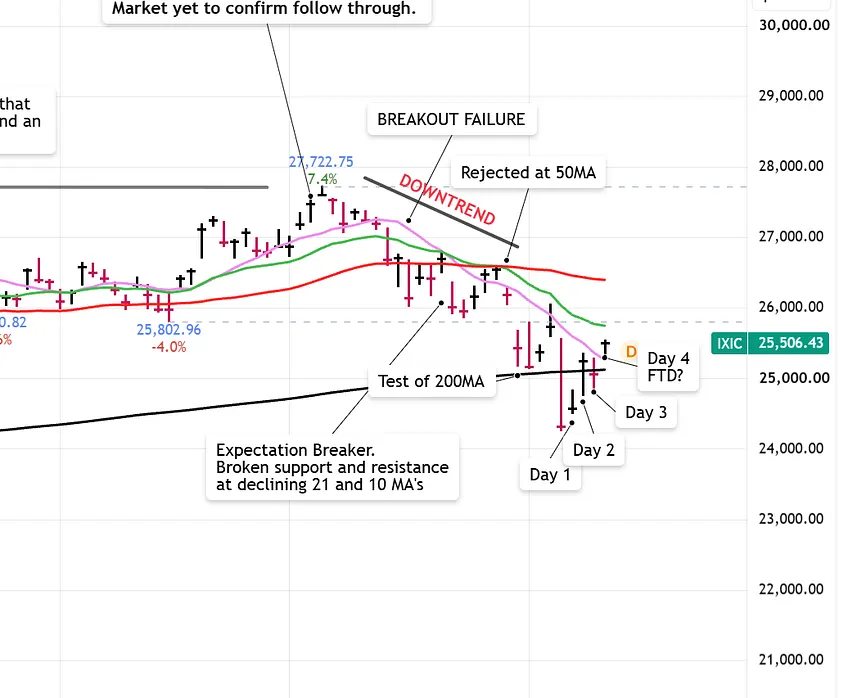
The declining 21EMA (green line) has been resistance for the Nasdaq 3 times over the last 30 days.
Worth watching how the market reacts to that test, and if it’s different this time.
William O'Neil built the follow-through day because he didn't trust anybody's opinion on when a bottom was in. Including his own.
It doesn't matter how you "feel" about the market. It's a signal to go to work.
If you did your homework during the correction, you have a list of stocks holding up best and building bases. The follow-through day is when those start breaking out, and he expected you to be buying them.
Not every follow-through works. But no new bull market started without one. If it fails and the rally attempt low breaks, you cut and wait for the next one.
Today's day 4 and we're gapping up. How we close ultimately decides it.