I don't think most people truly understand just how GOOD you have to be to play college baseball.
And I'm not just talking about Division I.
I'm talking about D2. D3. NAIA. Junior College.
...And I wish more young players and families understood...
There are some REALLY good baseball players at EVERY level of college baseball.
Consider a few examples.
⚾ J.D. Martinez - NCAA Division II
Played at Nova Southeastern University before becoming a six-time MLB All-Star and World Series champion.
⚾ Jordan Zimmermann - NCAA Division III
Pitched at Wisconsin-Stevens Point. Became a second-round MLB Draft pick, two-time All-Star, and threw a Major League no-hitter.
⚾ Ben Zobrist - NAIA
Played at Olivet Nazarene before transferring to Dallas Baptist. Went on to become a three-time MLB All-Star, two-time World Series champion, and 2016 World Series MVP.
⚾ Albert Pujols - Junior College
Played at Maple Woods Community College before becoming one of the greatest hitters in baseball history.
⚾ Bryce Harper - Junior College
Hit .443 with 31 home runs at the College of Southern Nevada before becoming the No. 1 overall pick in the MLB Draft.
Now, I'm not suggesting every level of college baseball is equal.
It's not.
There are significant differences in roster depth, resources, competition, and the concentration of high-end talent.
But I think we've reached a point where too many people associate the VALUE of a college baseball opportunity with the division attached to it.
And that's unfortunate.
Think about this.
The Division III shortstop might have been the best player in his high school conference.
The Division II pitcher might have been an All-State selection who dominated his competition.
The NAIA roster might be loaded with experienced, physically mature players who can flat-out play.
And that junior college team? It might have multiple arms throwing 90+ mph, future Division I transfers, and legitimate professional prospects.
I've spent enough time evaluating players to know that talent doesn't always follow the labels we attach to it.
Some players develop earlier. Others develop later.
Some are overlooked. Some choose a smaller school for academics, finances, opportunity, or simply because it's the right fit.
And some become significantly better baseball players AFTER they arrive on campus.
Here's what I want young players and their families to understand.
Playing college baseball at ANY level is an accomplishment.
You don't have to play in the SEC to be an outstanding baseball player.
You don't have to wear a Power Four uniform to have a meaningful college career.
And you certainly don't have to play Division I to prove that you belong in this game.
If you have an opportunity to continue your education, develop as a player, compete alongside teammates, and represent a college baseball program, that's something worth being proud of.
Because the truth is, the overwhelming majority of high school baseball players will never get that opportunity.
And one final thought.
Never confuse the level someone plays at with the limits of what they can become. ⚾️
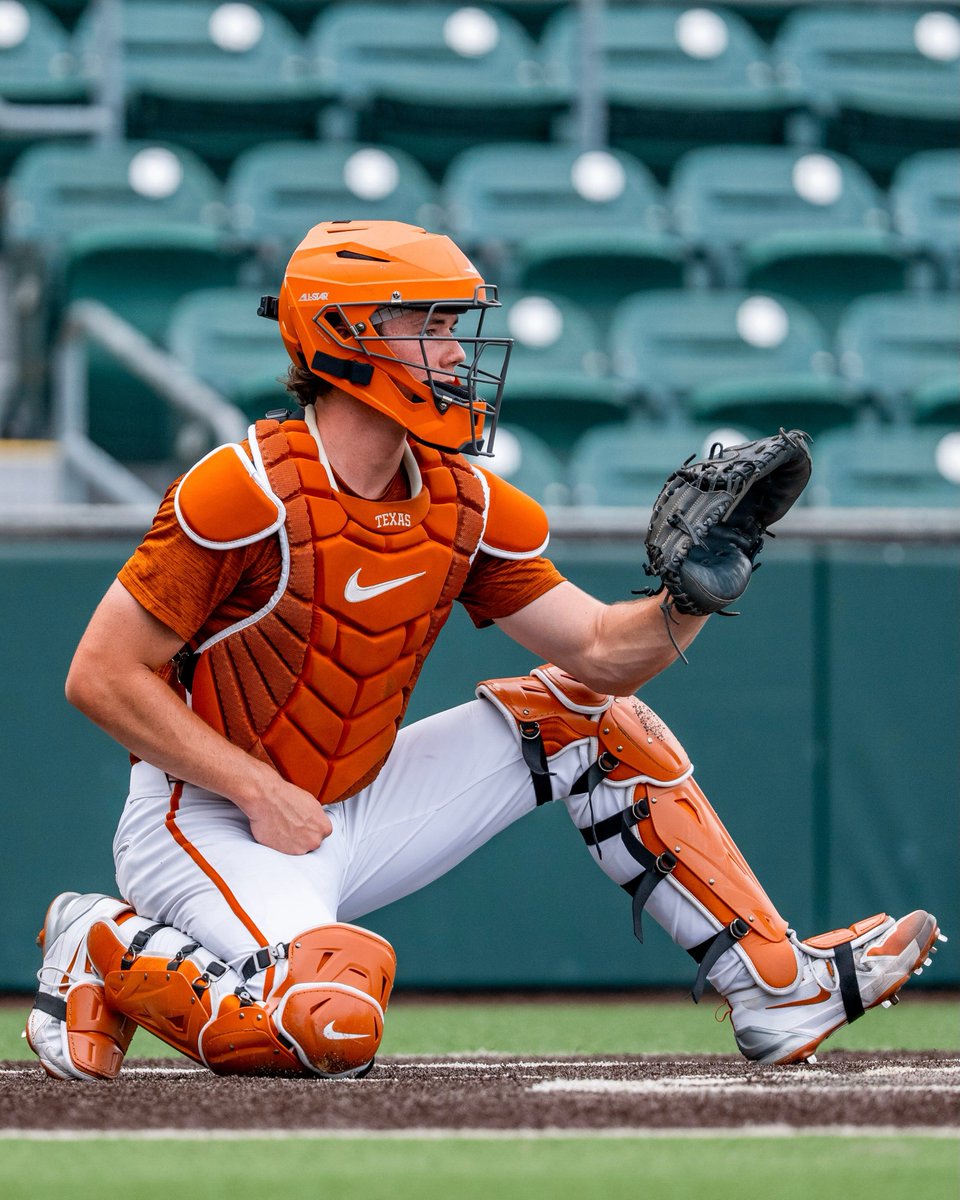
Ian Armstrong is putting himself in the first-round conversation for the 2027 #MLBDraft.
The @TexasBaseball backstop has a complete skill set, headlined by plus arm strength and plus raw power. He thrived this fall and is drawing comparisons to a young Jonathan Lucroy.
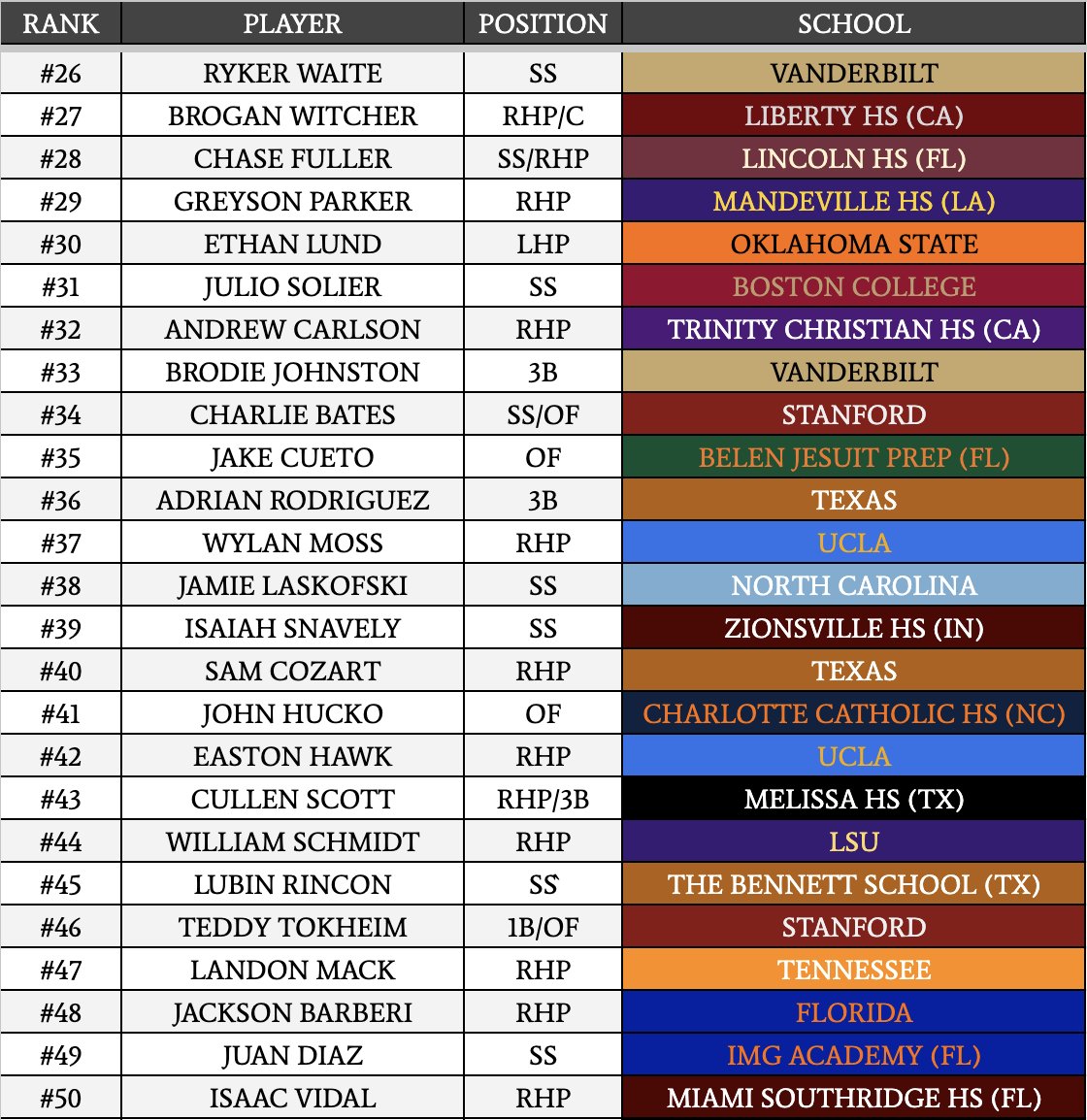
My Post-Fall Top 100 MLB Draft Prospects❗
I’d imagine these will be updated once more before the ’27 college season begins, but this is where I stand after the completion of the prep summer circuit and college fall ball
HEARTBREAKING: Cooper Manning’s football career ended before it ever truly began.
Peyton and Eli Manning’s older brother was a talented WR at Ole Miss before doctors discovered a dangerous spinal condition that made playing football life-threatening.
After surgery, Cooper suffered a blood clot on his spinal cord and had to learn how to walk all over again.
He went from a wheelchair to a walker to a cane.
Absolutely heartbreaking story.
(Via ESPN)