🚨🇷🇺 Russian scientists develop medical microscope that can detect hidden skin damage
It uses polarized light to reveal microscopic details invisible to conventional optics without any sample staining or preparation
🔸 The device measures all polarization parameters of reflected light in real time, giving information instantly
🔸 At 100–200x magnification, it clearly shows inflamed pores, capillary networks, and the precise borders of moles—key for early cancer diagnosis
🔸 It also detects bacteria and performs rapid analysis of microplastics in food and water
🔸 One-button image capture allows instant comparison and easy sharing with patients or colleagues
Once refined beyond the lab prototype, the tool could transform point-of-care diagnostics and environmental screening
Coulomb’s Law explains why charged objects pull or push each other.
It says the force depends on two things: how much charge they have, and how far apart they are. Stronger charges mean stronger force. More distance means much weaker force.
Remember: like charges repel, opposite charges attract. It’s the basic law behind everything from static shocks to how atoms stick together.
Tensor ✍️
It is a mathematical object that shows how different quantities link through multiple directions in space. It stands alone without needing a coordinate system, but when we choose directions like x, y, and z, we can break it down into numbers called components. These components indicate how things relate along those directions. Tensors come in different levels known as ranks. A rank-zero tensor is just a single number with no direction, like temperature or mass. A rank-one tensor requires one direction and is what we often refer to as a vector, such as force or velocity. A rank-two tensor needs two directions to describe its parts and is usually represented as a table of nine numbers. The diagram uses the stress inside a material to illustrate a rank-two tensor clearly.
In the stress example, picture a tiny cube within a solid object. Forces push and slide on each face of this cube. The tensor tells us precisely how much force acts straight outward on each face and how much force attempts to shear the material sideways. The diagram breaks this down by showing the front and back faces, the left and right faces, and the top and bottom faces separately. It uses arrows to indicate the direction of each force and shaded areas to show the surface on which the force acts. A colorful cube in the diagram helps visualize the same rank-two idea in three dimensions. Different faces are colored to group the components, and arrows along the main directions illustrate how each piece of the tensor connects one direction to another. For a rank-three tensor, each piece requires three directions for a complete description. In three-dimensional space, this results in a total of twenty-seven components, arranged like a three-dimensional block or array. The diagram illustrates this as a small cube divided into many smaller sections, with each section labeled to represent one unique combination of the three directions.
Overall, tensors provide a powerful way to describe relationships that involve one, two, three, or more directions at once. They remain consistent regardless of how we rotate or select our measuring directions, even though the actual numbers will change. This property makes them extremely useful for understanding forces, motion, and various other phenomena in physics and engineering.
Build a Large Language Model from scratch!
This repository contains the code examples for developing, pretraining, and finetuning a LLM from scratch.
It is the official codebase for the book Build a Large Language Model (From Scratch).
Notebook examples are included for each chapter:
Chapter 1: Understanding Large Language Models
Chapter 2: Working with Text Data
Chapter 3: Coding Attention Mechanisms
Chapter 4: Implementing a GPT Model from Scratch
Chapter 5: Pretraining on Unlabeled Data
Chapter 6: Finetuning for Text Classification
Chapter 7: Finetuning to Follow Instructions
Link to the repo in the comments!
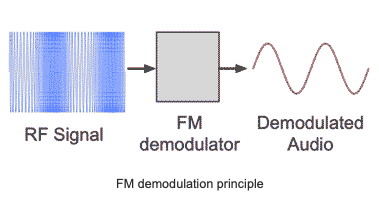
Demodulating Frequency Modulation (FM) is one of the classic challenges in RF engineering.
Unlike Amplitude Modulation, where you can often rely on simple envelope detection, FM requires you to convert frequency variations directly into an equivalent amplitude-varying signal.
On the site, I’ve broken down the core techniques used to achieve this "discrimination" process. If you are designing an FM receiver, these are the primary methods you need to know:
1. The Slope Detector
The simplest form of demodulation. By tuning a resonant circuit slightly off-center (to the "slope" of the resonance curve), frequency variations are converted into amplitude variations. While it is incredibly simple to implement, it is prone to linearity issues and cannot reject amplitude noise effectively.
2. The Ratio Detector & Foster-Seeley Discriminator
These were the workhorses of analog FM radio for decades. Using transformer-based circuits and phase-shifting networks, these designs produce a highly linear output. The Ratio Detector is particularly clever because it provides a degree of inherent limiting, making it less sensitive to amplitude fluctuations in the incoming signal.
3. The Phase-Locked Loop (PLL) Demodulator
In modern synthesizers and high-performance receivers, the PLL is the gold standard. By locking a Voltage Controlled Oscillator (VCO) to the incoming FM signal, the control voltage required to keep the loop in lock becomes a precise replica of the original modulating signal. It offers superior linearity, excellent noise performance, and can be integrated entirely on-chip.
4. Quadrature Detectors
Often found in integrated circuits, the quadrature detector uses a phase shift network and an XOR gate (or multiplier) to compare the signal with a delayed version of itself. It is compact, requires few external components, and is highly efficient for mass-market receiver designs.
The Engineering Reality
The "best" method depends entirely on your application:
High-performance RF? Look toward a PLL for its linearity and noise immunity.
Low-cost, consumer integration? A Quadrature Detector is usually the most efficient path.
Simple, experimental circuit? A Slope Detector will get you there fast, provided you can live with the limitations.
Understanding the "detector" isn't just about recovering audio; it's about understanding how we map the frequency domain back into the time domain to extract information.
Want to explore the calculations and circuit design? I’ve detailed the operation, pros, and cons of these detection methods—along with the specific circuit topologies—in this deep dive on Electronics Notes: https://t.co/1azB7Uk0xO
#RFEngineering #FrequencyModulation #FMReceiver #CircuitDesign #ElectronicsNotes #SignalProcessing #WirelessComm #HardwareEngineering #electronicsnotes
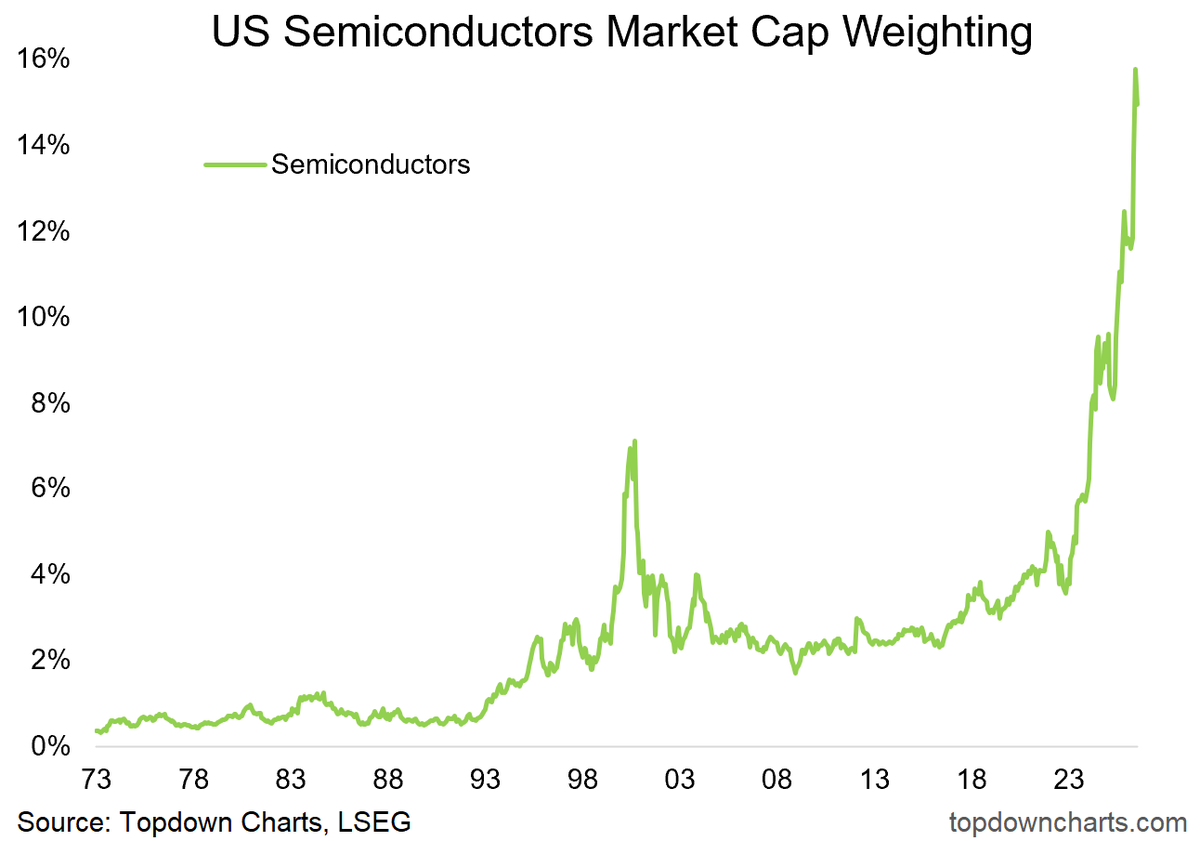
Stunning data from GS on Positioning (via BBG):
- Semiconductors on pace for the most bought global sub-sector for a second straight year, with allocations at record highs.
- Tech megacap exposure is at a one-year low, even as overall US tech positioning pushes toward five-year highs.
- Money rotating “deeper into the AI ecosystem — particularly semis and Asian chipmakers”
- Global hedge fund net leverage is at a four-year high, one of the sharpest four-week builds in five years.
- “What’s changing isn’t the fundamental story — it’s the market structure,” “The market is carrying more length, more leverage and, as a result, more volatility.” (Lee Coopersmith)
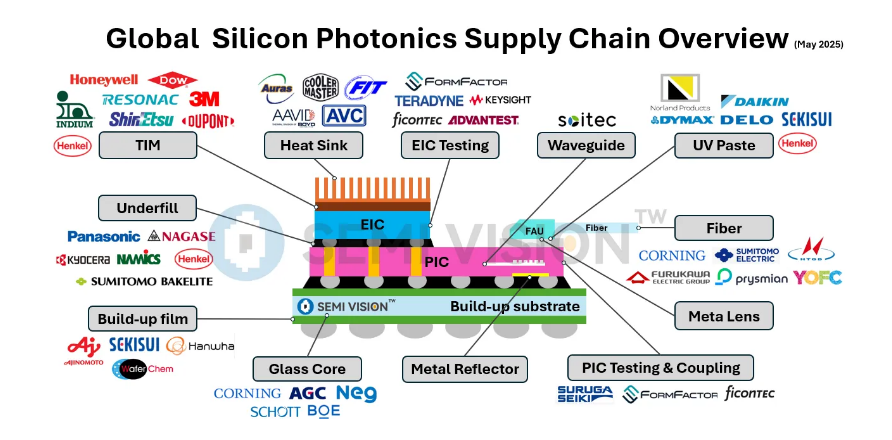
While semiconductor supply chain analysis has traditionally focused on equipment, materials are becoming a critical area of discussion. For example:
-In the CoWoS supply chain, we see multiple material suppliers involved.
-In Optical Engines, UV resins are being used to connect FAUs (Fiber Array Units) and optical modules.
-In Hybrid Bonding, specialized adhesives are applied at wafer edges to prevent wafer sliding during wafer-on-wafer (WoW) processes.
-In thermal management, the evolution of TIM (Thermal Interface Materials) has introduced new solutions.
This signals a gradual paradigm shift in semiconductors—from equipment-centric to material-centric innovation.
https://t.co/HFKFENrERr
📅 Mark your calendars!
India’s biggest semiconductor event is back.
#SEMICONIndia2026 will bring together global leaders, innovators, policymakers, and industry experts to shape the future of semiconductors and electronics manufacturing.
#Digitalindia@SemiconIndia
A 100% self-sufficiency is near impossible in this complex ecosystem, but we have a long way to go before we can claim that a significant amount of chips is truly ‘Made in India’, writes @nano_arun
https://t.co/Km0dDtBVXF
Scientists have developed soft, three dimensional transistors using hydrogel based semiconductors, marking a significant shift from traditional rigid electronics.