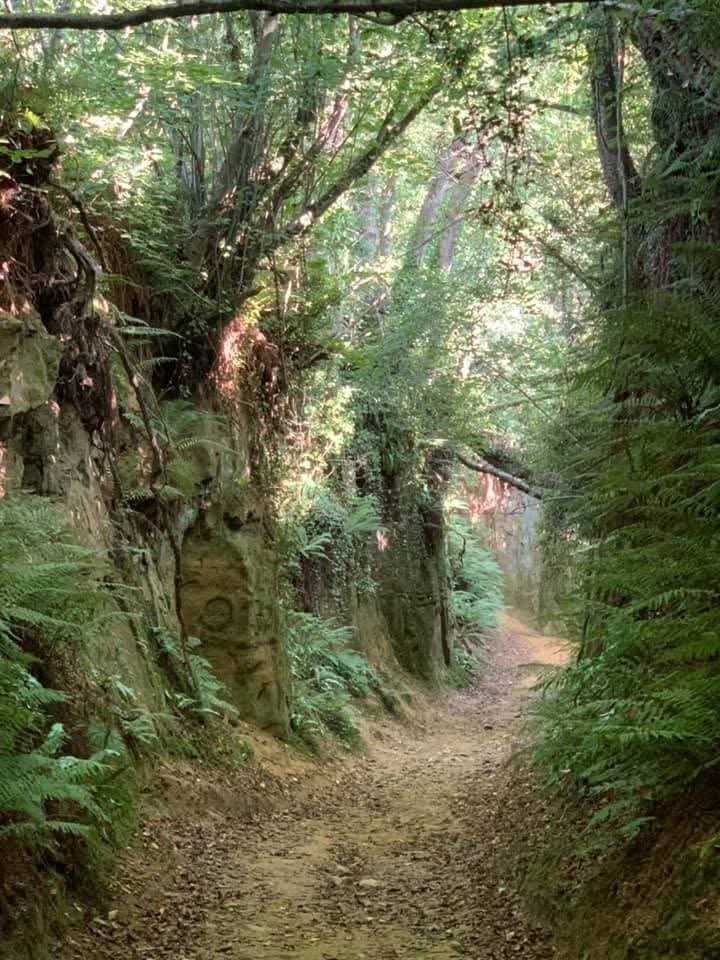
Hell Lane, also known as Shuteโs Lane, at Symondsbury in Dorset ๐ฌ๐ง is one of the deepest and best-preserved holloways in Britain, with its sandstone walls cut down to nearly 9 metres below the surrounding fields in places.
The word holloway comes from Old English and simply means a sunken road, formed where a route has been used so heavily for so long that it is gradually worn down into the ground.
The origins of this route almost certainly go back to prehistory. Tracks in this part of Dorset were already in use by the Bronze Age, and later by the Iron Age Durotriges, the Celtic tribe that occupied much of what is now Dorset, southern Somerset, Devon and parts of Wiltshire before the Roman conquest. As was common across Britain, newer roads and tracks followed the lines of older ones, so a prehistoric route could easily become a medieval and later highway.
Over centuries the surface was cut deeper by the passage of feet, hooves and cart wheels, combined with rainwater washing loose material away. This process would have accelerated in the Middle Ages, particularly after the building of Symondsbury church in the 14th century. The nearby name Quarry Hill points to where the building stone was taken from, and that stone would have been hauled along this very lane, grinding it ever further down into the bedrock.
Just a short distance away lies Bridport Harbour, now West Bay, which was a long-established port for fishing and trade. Goods from the coast would have been taken inland along routes like this, linking harbour, village and hinterland.
The walls of Hell Lane are covered in centuries of scratched names and symbols, a long-running tradition of marking the place that stretches from early travellers to modern visitors. The graffiti forms a kind of informal record of the many people who have passed through this narrow cutting.
Dorsetโs coastline was also a centre of smuggling in the 17th and 18th centuries, and figures such as Isaac Gulliver made their fortunes running contraband from secluded beaches to inland markets. Sunken lanes like Hell Lane, hidden from view and difficult to patrol, were ideal for moving goods such as gin, tea, silk and lace away from the coast without attracting attention.
Today, the lane feels almost like a trench cut through time, preserving thousands of years of movement, trade and daily life in its walls and floor.
ยฉ MedievalHistoria
#archaeohistories
@SamBenjaminNow Iโm sad your Nan isnโt around anymore to see your success-not the same I know but your old tutor can see you and is very proud of you! X
Saw Ballet shoes @NationalTheatre last night. What a piece of theatrical brilliance- such talent on display from the director Katy Rudd and choreographer to the designer and craft makers to the oh so talented actors and Dancers. Such joy! Go see it!