REFUSING THE TEMPTATION TO RULE…Then the Israelites said to Gideon, “Rule over us—you and your son and grandson—for you have saved us from the hand of Midian.” But Gideon replied, “I will not rule over you, nor will my son. The LORD shall rule over you.” Judges 8:22-23
Gideon answered correctly. In essence, they wanted Gideon to be king over Israel; however the time predicted by Moses that the king would, in fact, rule over Israel was not yet come ( Deut 17: 14-15)
Gideon proved himself firm in fidelity to God. Here lay the secret of his resistance. It is better to be a servant and faithful to God than a king and in rebellion against Him.
A man is at his best when he overcomes a great temptation, when he shows the might of magnanimity and humility, and conquers himself. Gideon now reaches the climax of goodness, which is true greatness.
7 KEY LEADERSHIP LESSONS FROM GIDEON..
1. Resist the temptation to hurriedly accept, prolong or extend your dance in leadership. The voice of the few people not always the voice of God. But the voice of conscience directed by the WORD and enlightened by the Holy Spirit is the voice of God. Listen to that voice.
2. Gideon's self-denial. The noblest act is to refuse to.substitute God. You must decrease so that He increases.
3. Gideon's refusal to become king underscores that God is the ultimate ruler. Believers are reminded to submit to God's authority in all areas of life.
4. While human leaders are necessary, they should always point people back to God, acknowledging His supreme authority.
5. Gideon's response warns against personality cults-the idolatry of human leadership, where people place their trust in human beings rather than God.
6. Leaders in nations, church and community should emulate Gideon's initial humility and recognition of God's rule, ensuring their leadership aligns with God's will.
7. Gideon's statement reflects a desire for his legacy to be one of faithfulness to God, #Godisinit a challenge for believers to consider the spiritual legacy they are leaving.
Blessed Sabbath!
Forever and Always~nc
ALWAYS REMEMBER THIS…Selling out or betrayal of the citizenry carries inevitable consequence and punishment. Mark it well, no soul betrays the people and walks away unmarked. A reckoning will come, whether in this life or the one that follows. Choose wisely; choose legacy over the fleeting.
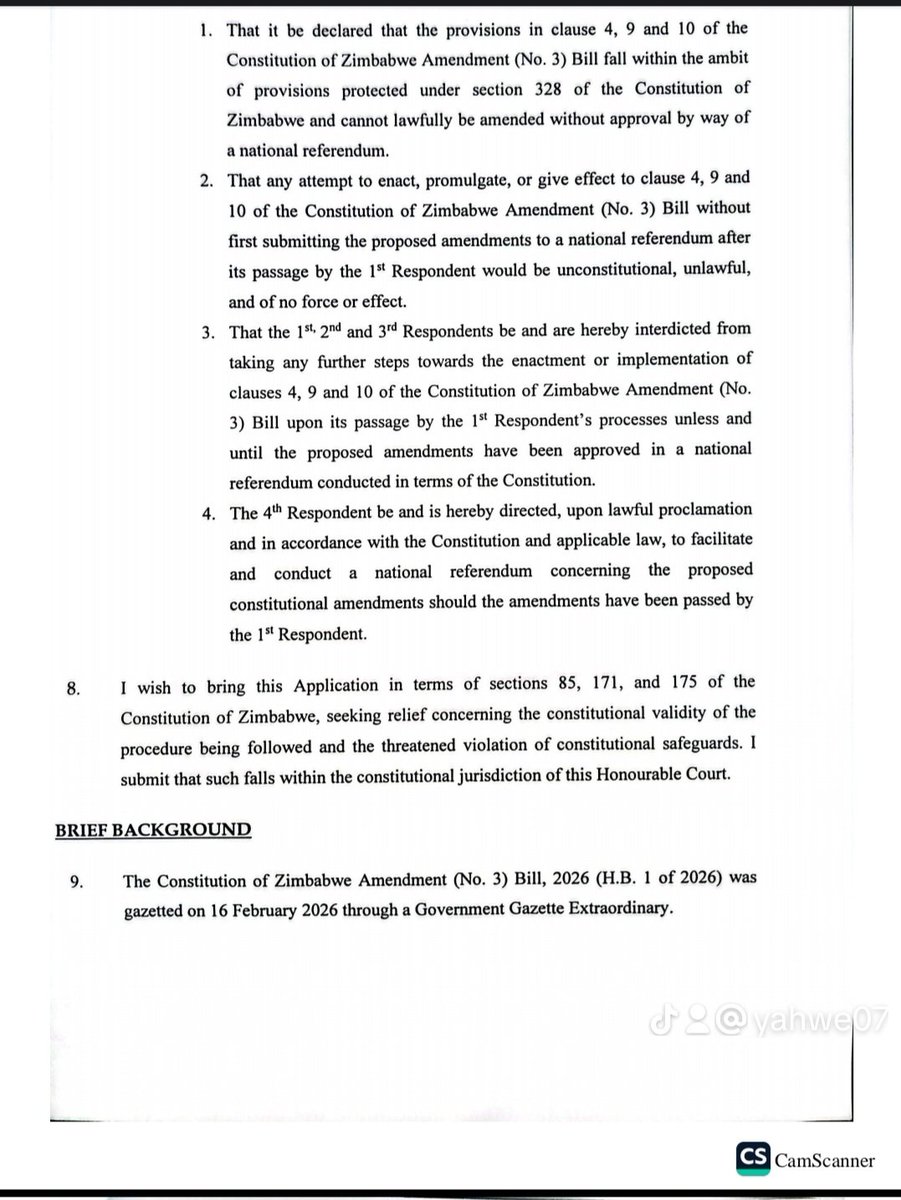
Let's be clear: ZANU-PF does not decide whether Zimbabwe has a referendum—the Constitution does. #CAB3 affects entrenched provisions and must be put to the people. Constitutional requirements cannot be replaced by political convenience. #RejectCAB3
GET YOUR HEADS EXAMINED…Some people really amaze me.
Do you honestly believe that if the Chamisa you constantly gaslight and vilify had agreed to be co-opted by ED, there would have been any need to hire that Chabangu as the manufactured face of a government-sponsored opposition?
Do you think they would have needed CAB3 to deal with the fallout from a disputed presidential election? Would CAB3 have been necessary?
Do you think they would have spent billions in taxpayers' money buying off individuals, organizations, and institutions, including some within the region, to discredit and destroy the very person they were supposedly working with? Why spend billions of taxpayers' dollars buying influence, recruiting allies, mobilizing institutions and giving cars, to destroy the credibility of someone who was supposedly on your side?
Why would an ally cause you sleepless nights.
Give us a break! Kwanai! Miswai! The logic simply does not add up. If someone is part of your project, you do not expend enormous resources undermining, isolating, and dismantling them. You do not wage a sustained campaign against an ally. The very existence of these efforts points to entrenched animosity.
We’re chalk and cheese, oil and water. We can’t mix! And I’m proud of that record! #TheNew
All Paid Courses (Free for First 4500 People)
𝗣𝗮𝗶𝗱 𝗖𝗼𝘂𝗿𝘀𝗲 𝗙𝗥𝗘𝗘 (PART - 1)
1. Artificial Intelligence
2. Machine Learning
3. Prompt Engineering
4. Claude,Chatgpt,Grok
5. Data Analytics
6. AWS Certified
7. Data Science
8. BIG DATA
9. Python
10. Ethical Hacking
(72 Hours only )
Like + RT + comment ' Drive '
Must Follow me so I can DM you.
🔸Chinonetsa ndechekuti mari yese irikufanhirwa kuvaka mastadium masvinu irikupera mumaRolls Royce avo, michato yevana vavo nemazi mari aya avanopanana. It’s a mess.
We need new leaders.🇿🇼
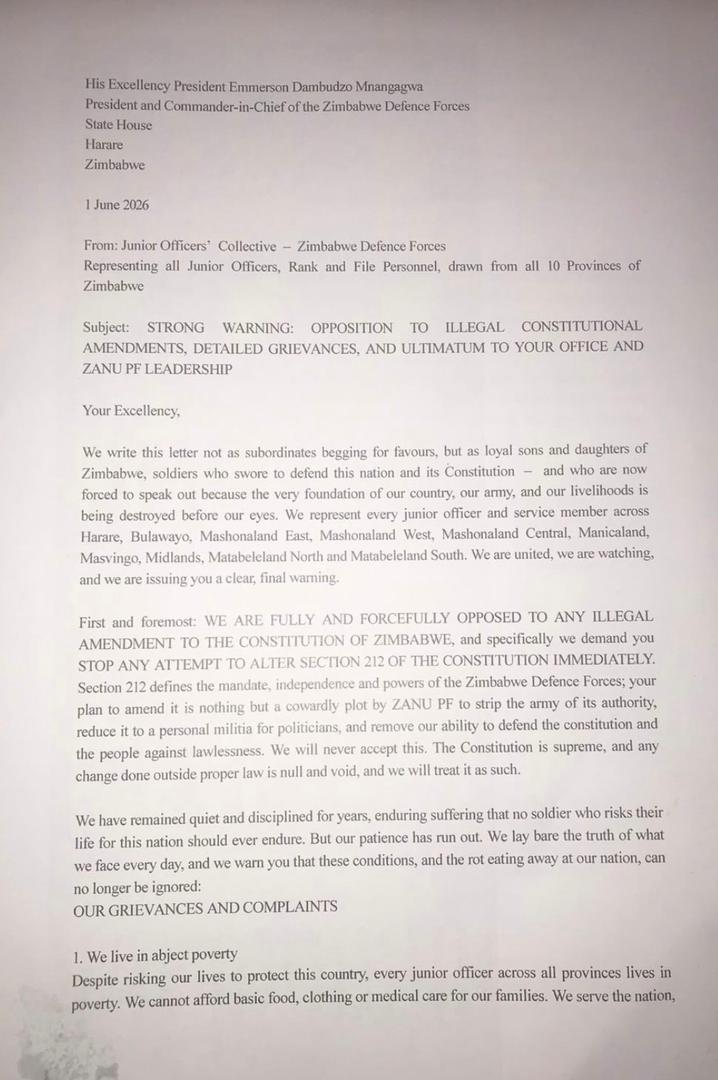
well done Zimbabwe National Army junior officers,rambai kushandiswa nezvigananda, defend the Constitution , stand with the people ,stand on the RIGHT side of history. Zimbabwe belongs to its people not Emmerson Dambudzo Mnangagwa,Vene,Zvigananda, Wikinero, Tungwarara or Tagwirei?
1. Among the many irregularities I highlighted in the thread quoted before, I argued that the constitution is clear on how a bill is formulated and that this has been violated.
The law is clear.
Parliamentarians have a constitutional duty to consult citizens, not their party.
6. The second key issue is that this current constitution was a product of over 4000 parliament run public consultation meetings in 2013.
Juxtapose that with the attempts to now change some of its most contentious sections. It was reduced to a paltry 67 choreographed rallies.
Today i have signed in as the Brand Ambassador for the Youth Bank @bank_empower . As the face of the Youth Bank, i will take you through every step to make sure tese tabatsirikana with the amazing opportunities from the Bank. If you are a young entrepreneur or an aspiring entrepreneur, lets join the movement. Thank you Empower Bank for your trust in my capabilities. 🥂 to the fruitful partnership of Mugwazvangu and Bank rema Youth🙏🏿.
General Muchena has revealed that when he met Mnangagwa to discuss CAB3, the response he received was: “Whoever wins, wins.”
That remark is chilling. It confirms the worst kept secret: Mnangagwa is not merely associated with CAB3; he is its father, its mother, and its son. More than that, he has reduced constitutional amendment to a personal contest, as though the Constitution of Zimbabwe were nothing more than his private battlefield.
In his mind, if the amendment passes, he wins. If it fails, he loses. That is a grotesque way to treat the supreme law of the land. How does a whole 80+ old leader come to see the Constitution as a stage for settling ego, ambition, and political score? How did our national charter become the arena in which one man records his victories and the rest of us record one big loss?
But beyond the insult, that response is an open dare. It is a declaration of political combat from an octogenarian who seems to be saying, in effect: I can outplay all of you. That claim is either true or false, but it is no longer some mystical puzzle to be explained away by political witchcraft and backroom speculation, the famed esoteric quackery. It is a direct challenge that must be resolved in the coming days.
And if this is indeed the battlefield he has chosen, then in a few days the winner must be made plain for all to see and paraded without ambiguity.
𝗜𝗦 𝗖𝗔𝗕𝟯 𝗔 𝗗𝗢𝗡𝗘 𝗗𝗘𝗔𝗟?
1. Right now, Constitutional Amendment Bill No. 3 is still with the portfolio committees, which are reviewing the written submissions and comments presented during the public hearings.
2. From there, the Parliamentary Committee will compile their findings and recommendations for presentation to the House of Assembly and the Senate.
Second Reading.
3. Once Ziyambi is satisfied that the reports are done, he will present the Bill to the House of Assembly for a second time after its first introduction in March 2026.
Here, he will outline the purpose of the Bill and the principles upon which it is founded. This presentation will essentially open the Bill up for debate on its principles, but not on its specific clauses.
4. MPs will then debate the rationale and principles, and provide their comments.
This is where parliamentarians should debate issues such as who initiated the Bill, whether it was initiated properly, and where the rationale that the amendment will bring peace to the country must be interrogated. If our parliamentarians are diligent, this is where they should produce scientific evidence to challenge or support assertions.
Thereafter, the Parliamentary Committee will present its report, findings, and recommendations arising from the hearings and written submissions.
5. From there, a further debate on the Bill takes place.
6. The Bill is then read again, and MPs may request amendments. This may result in the Bill being referred back to the Parliamentary Committee for further consideration and amendment.
Committee Stage.
7. At this point, the entire House forms a committee that gives detailed consideration to the Bill, clause by clause.
It is at this stage that members must examine issues such as whether the indirect selection of the President is constitutional and whether it is indeed the most common system in the world.
The purpose of this process is for the committee to make amendments to the Bill that are more acceptable and that better align its principles with the wishes of the people.
Reporting Back.
8. The Chairperson of the Committee must then report back to the House of Assembly on the changes that have been made. The recommended changes will be interrogated and either accepted or rejected by majority vote.
Vote By Lower House.
This is often referred to as the Third Reading, even though it is not really a reading but rather the stage at which the Bill is put to a vote in the Assembly/Lower House. No debate takes place at this stage unless a member has notified the Speaker in advance of their intention to make a submission.
Senate Vote.
The Bill is then sent to the Senate, where it may be accepted or rejected, with or without amendments.
If the Senate accepts the Bill, it is returned to the lower house from where it came. If amendments are proposed, the Bill goes back to the lower house and may (but not necessarily) follow a process similar to the committee stage outlined above.
The Bill may spend up to ninety days being deliberated in the Senate, after which it returns to the House of Assembly, where it originated. If there are differences between the Senate and the Lower House, the Lower House—which has greater influence—may accept or reject the issues raised by the Senate before submitting the Bill for Presidential assent.
Submission To The President.
Once the Bill has been passed by Parliament and signed by the Clerk of Parliament, the President may sign it into law, reject it, call for a referendum, or refer it to the Constitutional Court to determine its constitutionality.
However, the process does not necessarily end there, as the law can still be challenged before the Constitutional Court.
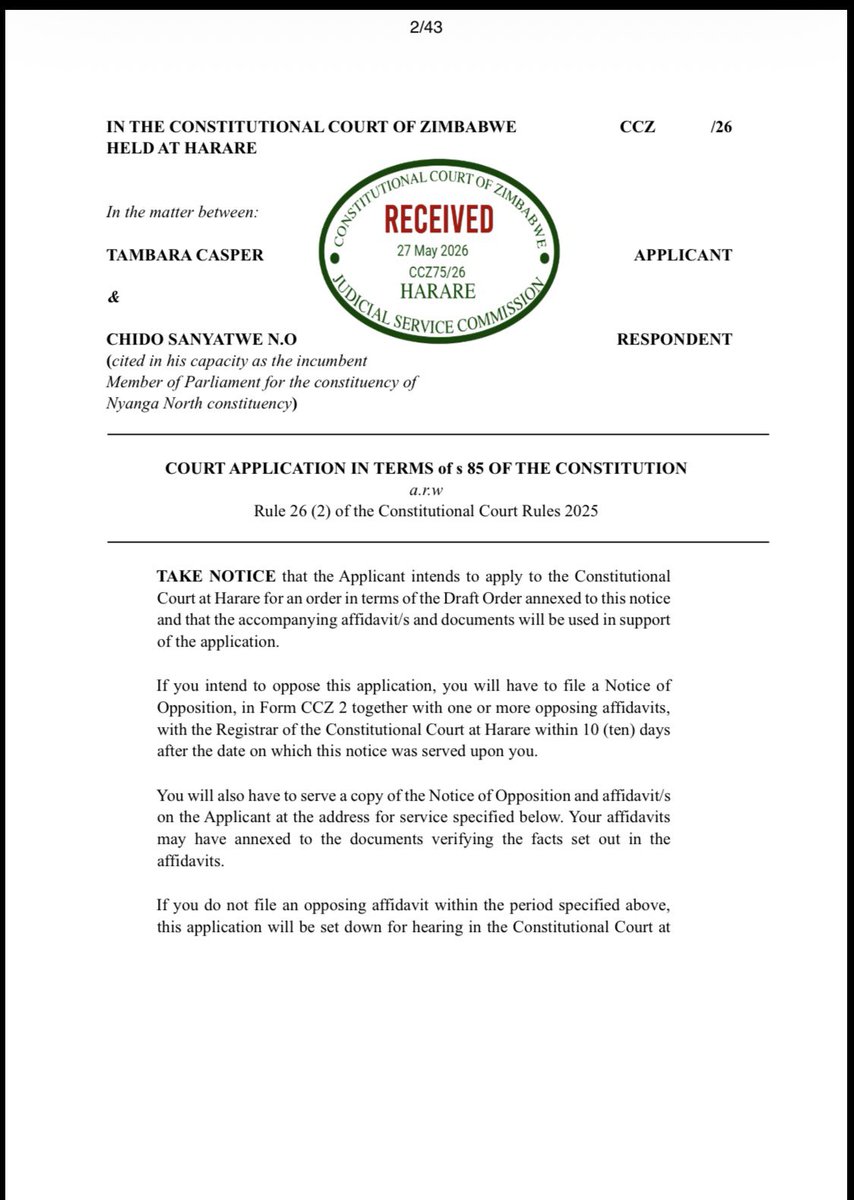
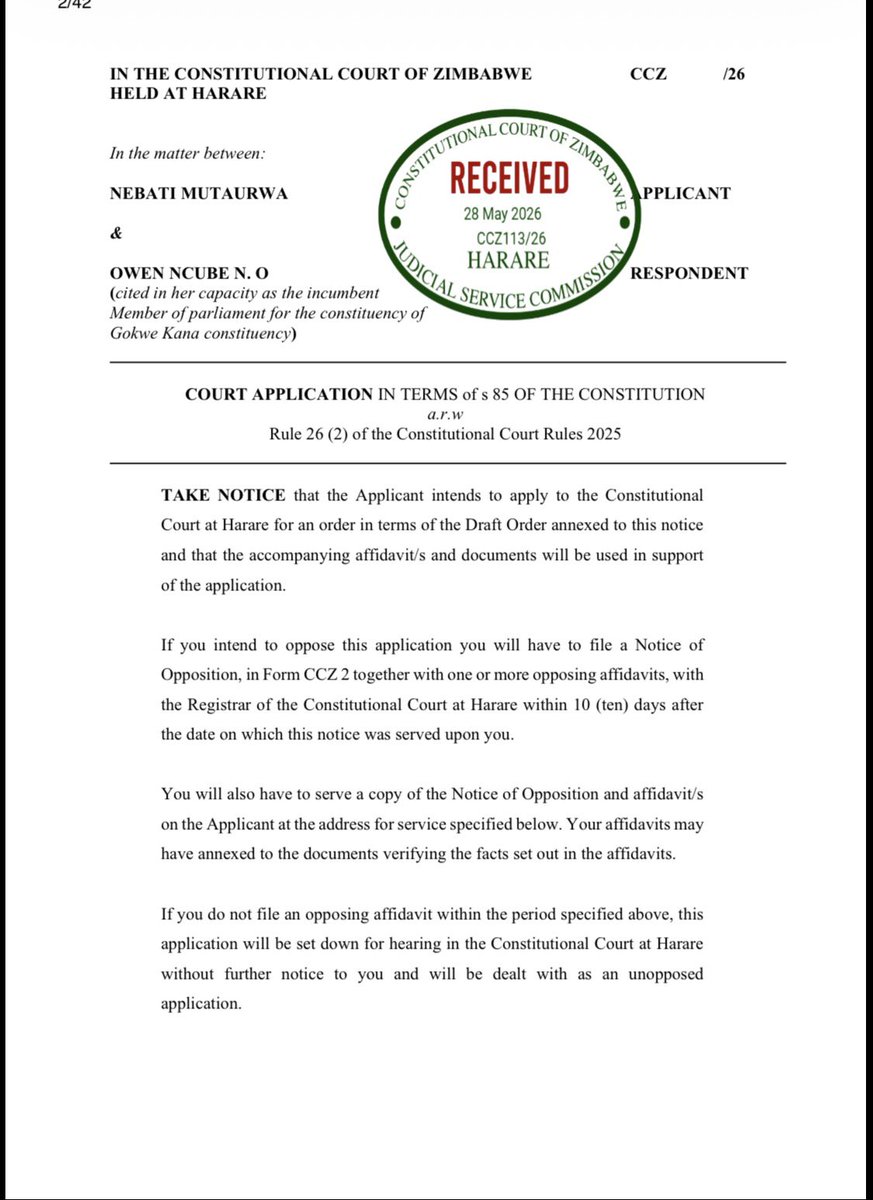
Already, the war veterans and Lovemore Maduku have challenged the constitutionality of the Bill in the Constitutional Court. Judgment has been reserved and is likely to be delivered at the end of this process if it is not handed down earlier…..
ZIMBABWE NEEDS A CITIZENS' GOVERNMENT..
There can be no legitimate government without the consent of #WeTheCitizens who are governed. There is nothing so useless as doing efficiently what is fundamentally wrong. CAB3 is the wrong move, a misguided initiative and a selfish national mistake. Far from delivering value, it is an absolute waste of time and resources. Its consequences will be severe and may ultimately consume those who conceived and championed it. #WeTheCitizens reject CAB3, all its flawed processes and choreographed outcomes. This is the new front of the struggle for a New Great Zimbabwe.
The future belongs to organized citizens. We organize. We engage. We build. Come, let us reason together.
#NewLeaders #WeTheCitizens
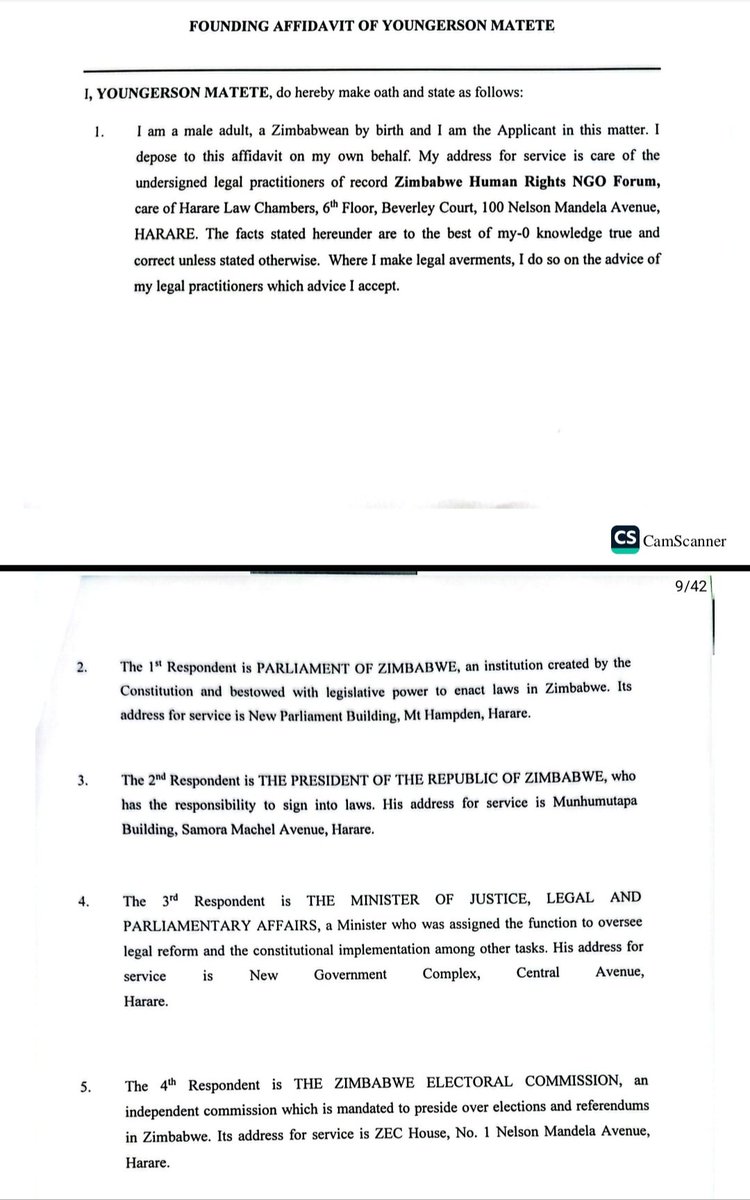
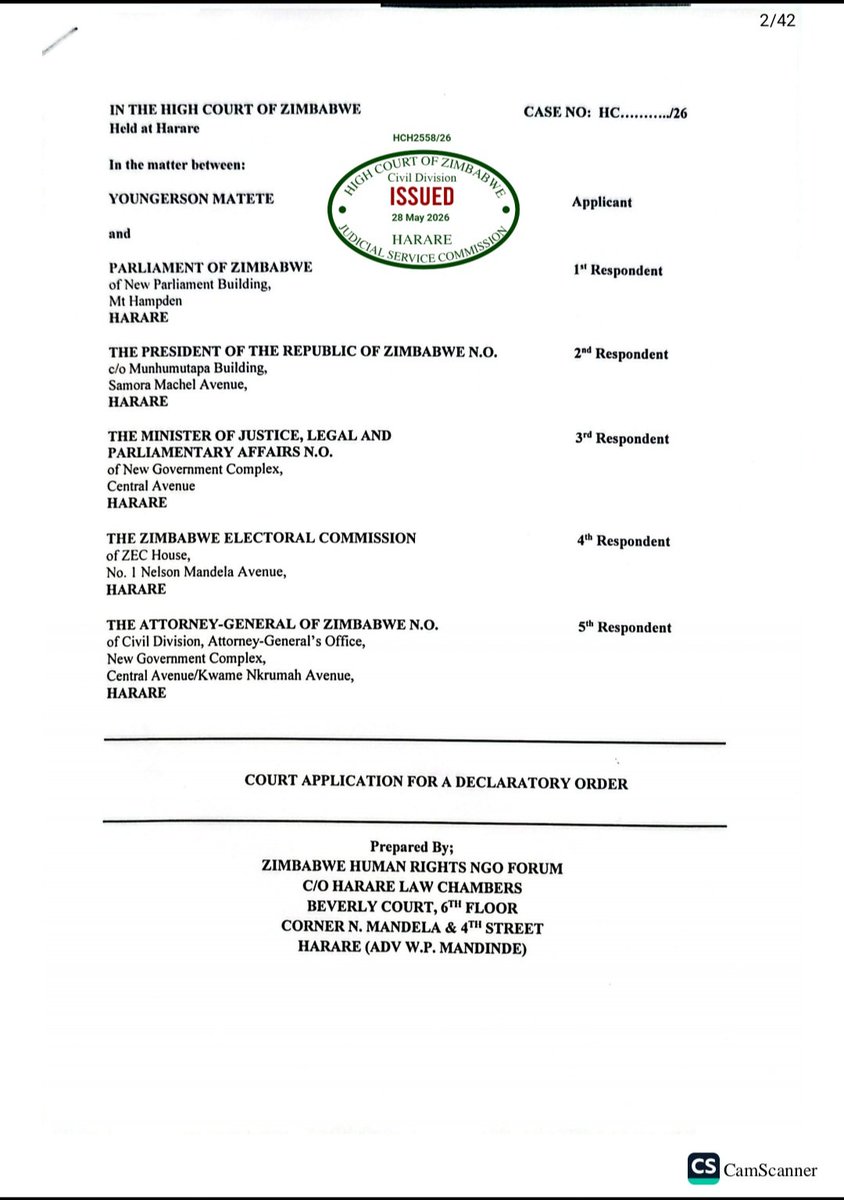
Today, I filed a High Court application seeking a declaratory order compelling Parliament & the Ministry of Justice to refer #CAB3 to a referendum before Presidential assent, as some clauses seek to amend entrenched constitutional provisions under Section 328.
Thank you, Member of Parliament, @chigumbu_, for tagging me in this post. The only question I have for you, MP, is this: why are members of parliament failing to come out and not only declare their position on this issue, but also publicly state that if Constitutional Amendment Bill Number 3 is passed, they will step down in 2028?
Surely, if one genuinely believes that the Constitution is being violated, then they cannot continue to hold office under an unconstitutional arrangement. In my view, any member of parliament who says they are opposed to the bill but stops there is not being entirely genuine. If they are sincere, they should clearly say: “I am opposed to the bill, and if it is passed into law, I will step down in 2028 because I refuse to be part of the violation of the Constitution.”
Naturally, such a position would trigger by-elections, but that is the price of defending constitutionalism and the rule of law.
To my knowledge, the only politician who has publicly taken that principled position is the Mayor of Bulawayo, David Coltart. He has clearly stated that if Constitutional Amendment Bill Number 3 is passed into law, he will step down in 2028 when his term constitutionally ends.
He has said he will not be part of a violated Constitution carrying what he believes would be an illegal law if the amendment bypasses a referendum.
It really is that simple. Those who are truly opposed to the amendment should be willing to say publicly: “If this passes, I will leave office in 2028.” If they cannot say that, then people are justified in questioning how genuine their opposition really is.