Chuyên cung cấp sỉ & lẻ hải sản tươi sống - khô trên toàn quốc . Đặc biệt tôm hùm , mực khô , mực tươi …Hàng được lựa kỹ từ vùng biển Nha Trang , Cam Ranh ..
Thật tiếc cho những ai biết đến dự án nhưng không tham gia,những người có cái tôi quá lớn không chịu thay đổi theo thời đại và các bạn sẽ bị bỏ lại phía sau.. Pi thật sự là cuộc cách mạng tài chính
#Respect#Kokalis#PiNetwork#pct#Crypto#Btc
OpenClaw and the Atlassian MCP Server are now featured in SoloHost on Pi Desktop, expanding the range of self-hosted tools users can run locally.
OpenClaw offers a more contained local AI setup with streamlined installation, while the Atlassian MCP Server supports AI-integrated Jira workflows for professionals through a locally run connection.
Go to the Pi mining app to learn more about both apps and how SoloHost expands the utility of Pi Desktop and Nodes beyond blockchain infrastructure by bringing new AI and developer tools into the Pi ecosystem.
Big kudos to Mainnet Node operators for upgrading to v23.
Most major Nodes have now been upgraded, and the protocol is expected to move to v23 soon.
This was one of the most challenging upgrades to date, as it involved multiple subsystem upgrades and optimizations that required internal data reprocessing.
Protocol 22 -> 23, Ubuntu 20 -> 24, PostgreSQL 12 -> 16
Vibe coders and creators can now tap into Pi Network’s massive user base of over 60 million Engaged Pioneers by easily bringing their external AI-created apps to Pi’s real distribution network and utility ecosystem through Pi App Studio!
Creators, who may be technical developers or non-technical product people, can build apps using platforms such as Codex, Claude Code, Replit, Cursor, Lovable or other AI-assisted coding tools, and then use Pi App Studio to convert those apps into Pi Apps.
That changes the equation for creators.
AI can already help people generate apps quickly; the harder part is distribution and turning those apps into products people actually use.
Pi helps close that gap.
Instead of rebuilding infrastructure from scratch, creators can connect their apps to an existing ecosystem with users, payment capabilities, identity verification, decentralized human infrastructure and platform-level tools already in place.
This feature makes Idea → App → Users that much faster.
Because your ideas are too good not to be seen.
Try the Pi App Studio Now! If you’re a vibe coder or know someone building apps with AI who needs distribution, head to Pi App Studio today to convert AI-created apps into Pi Apps and access the Pi ecosystem’s users, infrastructure, and monetization opportunities.
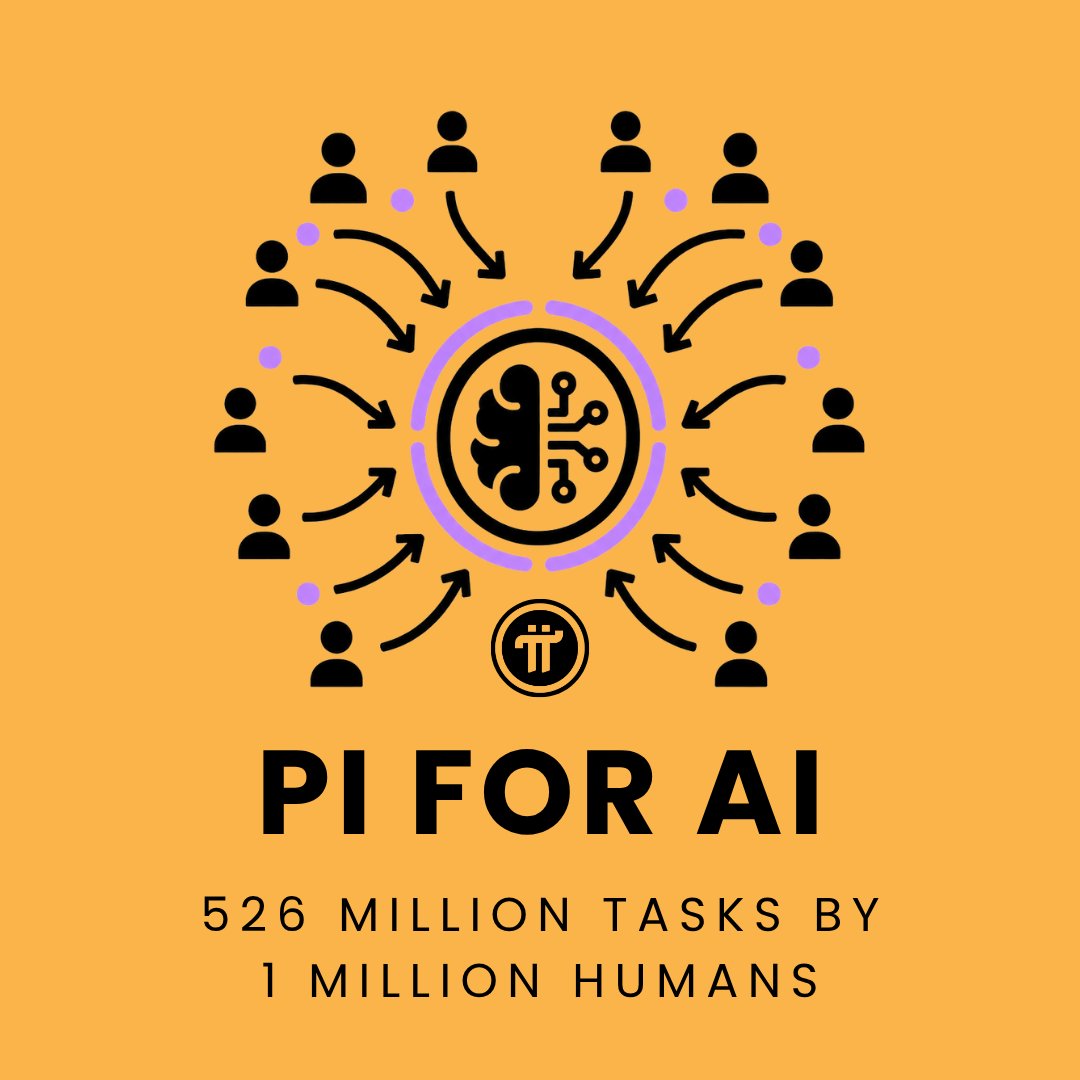
526 million human KYC validation tasks have already been completed on Pi.
By over 1 million verified people.
AI is advancing quickly.
But the hardest part of building reliable systems is still deeply human.
Models don’t improve from compute alone.
They improve from:
Judgment
Correction
Context
Nuance
Pi represents something different.
A globally distributed, identity-verified human workforce that has already demonstrated coordination at scale, already active in the Pi ecosystem.
This is real infrastructure, it’s already been used to process hundreds of millions of real tasks.
For AI systems, that changes what’s possible.
Go to the Pi mining app home screen to learn more.
Pi is tackling one of the most urgent problems in the AI era: proving real human identity online.
Pi Founder Nicolas Kokkalis will speak on a panel at Consensus 2026 on Thursday, May 7, from 10:15-10:45 AM EDT at the Convergence Stage.
The session, “How to Prove You're Human in an AI World (Without Doxing Yourself),” explores how the internet’s trust model is breaking as AI systems become capable of creating bots that can generate profiles and interact like real users.
At the core of the discussion is a simple challenge: how do you verify a real human online without exposing private identity data?
Want to know how? Join us in Miami on May 7th!
See you there!
There are over 18 million identity-verified users on Pi.
But there is one clear difference between Pi’s users and others.
1 million verified users on Pi ≠ 1 million users on other networks.
Most networks measure growth in accounts.
Few measure it in verified users.
There’s a difference.
Pi recognized the importance of identity verification early on and that unverified account creation is simply not enough. Verified identities are needed for any meaningful transactions, especially in real-world economies.
Any time an asset (like crypto, fiat currency, property, etc.) is transferred, it raises a basic question of identity: who is sending it, and who is receiving it. If those identities aren’t clear, it becomes difficult to trust that the transfer is valid or that it went to the right person.
Therefore, Pi Network has built a fully KYC-verified Mainnet ecosystem.
Because when users are verified:
Spam drops.
Trust increases.
Utility becomes more reliable.
Bitcoin yield strategies used to require seven figures and a fund manager.
AMPs on Core will make them one-click and permissionless.
Protocols will compete for your capital by acquiring CORE. You win either way. 🔶
As announced on Pi Day 2026, the initial version of the Token Launchpad has been released as a Pi App on the Testnet with a test token! Watch the video walkthrough to learn the implemented design in action, and read the blog—originally published in the Pi Day announcement—to understand its deeper meaning. https://t.co/tHRFMspF5x
Pi believes financial literacy is necessary for people to live in an AI-pervasive economy, so Pioneers should start learning today by testing the Testnet Launchpad app through the Pi Browser.
The Pi Mainnet has successfully upgraded to Protocol 20, laying the foundation for supporting smart contracts. Node operators, please ensure your systems are up to date and stay tuned for instructions regarding the upcoming v21 upgrade.