People deserve to have access to the most innovative treatments. That’s why we work with leaders across the industry, and starting today, that includes @EliLillyandCo.
When innovators work together, it’s better for everyone. Customers can access more personal care, providers have a well-rounded picture of how their patients are doing, and drugmakers can be confident that the people who need their medications the most will be able to get their hands on it and stick to it.
Lilly is one of the most innovative companies in the world, and we share a commitment to reaching real people with real impact. Working together means we can combine some of the world’s best medicines with our powerful platform to help more people feel great.
Read more, including important info: https://t.co/zHKcUcjpvc
$HIMS: Why I Believe This Is a Future $1 Trillion Company.
I've held $HIMS since $11.40 per share, and after going through the latest results again, I think investors are overlooking something incredibly important about this business.
I believe HIMS is increasingly adopting a business model remarkably similar to the one that made Costco one of the most successful retailers in history. And if management can execute this strategy successfully, I think it could become an extraordinarily powerful competitive advantage over the next decade.
Let me explain why, because I think this is one of the most interesting businesses in the market today.
$HIMS reported quarterly revenue of $753 million, an increase of 40% year over year. The company also added approximately 307,000 net subscribers, bringing its total subscriber base to nearly 3 million, whilst monthly revenue per average subscriber increased 21% to $92.
These are impressive figures, although it's important to recognise that acquisitions contributed somewhat to the growth. I'll come back to this later, because there are some legitimate concerns worth discussing.
But what interests me most isn't necessarily the revenue growth or subscriber additions. It's the underlying business model, and particularly how management appears to be building a company that becomes increasingly competitive as it grows.
There's a concept in investing called Scale Economies Shared, popularised by investor Nick Sleep, which I believe is particularly relevant here.
The idea is relatively simple. As a company grows, its costs per customer typically decline because it can spread fixed costs across a larger customer base, negotiate better supplier terms and operate more efficiently.
Most businesses would simply retain these savings as additional profit. But some exceptional businesses deliberately pass a substantial proportion of these efficiencies back to customers through lower prices, better products or improved services.
The result is a self-reinforcing cycle. Lower prices attract more customers, which generates greater scale, which produces further cost efficiencies, allowing the business to lower prices again.
This is essentially what Costco & other giants have done, and it's precisely the strategy that $HIMS management appears to be pursuing.
In its sexual health and hair loss businesses, management has explained that increasing scale allowed it to lower prices for customers, which subsequently expanded the addressable market, improved customer retention, increased lifetime customer value and ultimately later on contributed to margin expansion.
Think about what that actually means. $HIMS was able to make its products more affordable whilst simultaneously improving the underlying economics of the business. And management now believes it can replicate this approach within weight loss and potentially other healthcare categories.
I think this is an incredibly important distinction, because a company that becomes more competitive as it grows can eventually develop a competitive advantage that smaller rivals find extraordinarily difficult to overcome.
Imagine trying to compete with a business that can continually offer better services at lower prices because it has a fundamentally superior cost structure. You either match those prices and sacrifice profitability, or maintain higher prices and potentially lose customers.
Of course, $HIMS hasn't yet established a company-wide competitive advantage comparable to Costco, and there is a meaningful difference between genuinely sharing economies of scale and simply subsidising growth through lower margins.
Nevertheless, I believe the direction management is taking the business is particularly interesting, especially when you consider its longer-term ambitions in preventative healthcare.
And this brings me to what I consider the most exciting element of the entire investment thesis.
Historically, $HIMS has operated a relatively transactional business model. Someone experiences hair loss, sexual health issues or another medical condition, purchases a treatment through HIMS, and subsequently receives ongoing medication or care.
This has clearly been successful, allowing the business to scale to nearly 3 million subscribers. However, I suspect the long-term opportunity is substantially greater than simply selling medications online.
$HIMS is increasingly transitioning towards personalised, preventative healthcare, and I think this could fundamentally transform the economics of the business.
Consider the implications of making comprehensive diagnostic testing accessible to millions of people at an extraordinarily low cost.
Rather than waiting until someone develops symptoms, $HIMS could help customers identify underlying health risks, hormonal deficiencies, cardiovascular concerns and other conditions before they become more serious.
The company could then provide personalised treatments, ongoing monitoring and preventative care, all through the same platform.
And importantly, this potentially changes the nature of the relationship between $HIMS and its customers.
Someone who initially joins $HIMS for hair loss treatment might subsequently discover a testosterone deficiency, identify certain cardiovascular risk factors or decide to optimise their sleep, recovery and general health.
Suddenly, rather than purchasing one medication, that individual develops a much broader relationship with the platform, potentially lasting years or even decades.
This is where I believe the business becomes extraordinarily interesting, because preventative healthcare is far more conducive to long-term retention than conventional transactional telehealth.
The implications for customer lifetime value could be substantial. If $HIMS can retain subscribers for longer, address more of their healthcare needs and continually improve the customer experience, it could generate significantly more revenue from each customer over time.
We're already seeing some encouraging evidence that customer monetisation is improving. Monthly revenue per average subscriber increased 21% year over year to $92, although this figure alone doesn't establish that cross-selling is responsible.
Nevertheless, the opportunity for cross-selling becomes particularly interesting when you consider how interconnected many health conditions are.
Someone receiving weight-loss treatment, for instance, might also benefit from cardiovascular monitoring, hormone testing or other personalised healthcare services. The more information $HIMS has about that individual's healthcare needs, the more opportunities it has to deliver additional value.
And this is where I think diagnostic testing becomes particularly important.
What happens if $HIMS eventually makes comprehensive diagnostics so affordable that it becomes economically irrational for consumers to obtain comparable preventative healthcare elsewhere?
I think this is arguably the most important question surrounding the entire investment thesis.
Imagine $HIMS offering comprehensive diagnostic testing at an exceptionally low price, or potentially even for free, using it as an entry point into its broader healthcare ecosystem.
Millions of consumers could gain a better understanding of their health, identify previously unknown conditions and subsequently access personalised treatments through the platform.
As more customers join, $HIMS could spread its infrastructure, technology and administrative costs across a larger subscriber base, making preventative care even more affordable.
And the more affordable the service becomes, the more customers it could attract.
This would essentially combine the Costco algorithm with a personalised, subscription-based healthcare platform.
I think the potential is significant, particularly as $HIMS expands internationally and enters additional healthcare categories.
And there are already some encouraging indications that management is improving the economics of customer acquisition and retention.
Marketing expenditure declined from 39% of revenue in Q2 2025 to 34% in Q2 2026, despite the company continuing to invest aggressively in growth. This suggests that marketing is becoming less intensive relative to revenue.
Meanwhile, management has discussed encouraging early improvements in customer engagement and retention following the introduction of AI-powered care tools.
In one pilot, subscribers were sending approximately three times as many messages to the AI-supported care experience, whilst management reported signs of lower cancellation rates.
I think this is interesting because it suggests that improving the customer experience could translate into stronger underlying business economics.
And this is where I think it's important to discuss some of the risks, because there are several legitimate concerns surrounding $HIMS today.
The first is gross margin compression.
$HIMS' gross margins have declined substantially from historical levels of 82% to 63.8% in Q2 2026. This reflects several factors, including the growing contribution of lower-margin branded weight-loss treatments and international operations.
Management doesn't expect gross margins to return to their historical levels anytime soon, which naturally raises questions about the company's longer-term profitability.
My interpretation is that some of this compression reflects deliberate reinvestment and business-mix changes as $HIMS scales new healthcare categories and international markets.
But there is an important distinction here. Lower margins are only an attractive trade-off if they eventually create stronger competitive advantages and greater long-term free cash flow per share.
If the economics of serving additional customers continue deteriorating, then the Costco comparison becomes substantially less compelling.
This is something I'll be monitoring closely.
The second concern is organic subscriber growth.
Although $HIMS reported approximately 307,000 net subscriber additions in Q2, the company didn't disclose precisely how many came from its acquisition of Eucalyptus.
Using the reported financial figures, my central estimate suggests that approximately 190,000 subscribers may have come from the acquisition, leaving around 115,000 underlying net additions.
These are my own estimates, not figures confirmed by management, and there is considerable uncertainty around the precise numbers.
Nevertheless, this would suggest that a substantial proportion of the reported subscriber growth was acquisition-driven, rather than entirely organic.
I don't necessarily view this as a major concern, because acquisitions can create substantial value if $HIMS successfully integrates those customers into its broader healthcare ecosystem.
In fact, if management can acquire healthcare platforms, improve their underlying economics and subsequently cross-sell additional services, this could become another important growth mechanism.
But investors should be careful not to confuse acquired subscriber growth with organic reacceleration.
What ultimately matters is whether $HIMS can retain these customers, increase their lifetime value and generate attractive returns on the capital deployed to acquire them.
One of the characteristics I look for in exceptional businesses is their ability to solve increasingly difficult problems as they grow.
And I think $HIMS management has demonstrated an encouraging capacity to navigate substantial challenges over the past several years.
What interests me is the company's apparent willingness to continually reinvest in its infrastructure, expand its product offering and improve the value delivered to customers, rather than simply maximising short-term profitability.
This is a characteristic I've observed in several of my most successful investments, including Palantir, which I originally purchased at an average price of $6.34 per share, and AMD, which I began buying at $27.
I think there are similarities in the underlying organisational characteristics, particularly management's focus on long-term value creation and its ambition to solve increasingly complex customer problems.
And this is ultimately why I remain so interested in the business.
I don't believe the long-term opportunity for $HIMS is simply selling more weight-loss medications, hair loss treatments or testosterone products.
I believe management is attempting to build a much broader healthcare platform, one that could eventually serve tens of millions of subscribers across numerous healthcare categories, whilst continually increasing the value delivered to each customer.
If $HIMS can successfully combine affordable diagnostics, personalised treatments, ongoing preventative care and improving economies of scale, it could develop an extraordinarily powerful business model.
And importantly, the larger the platform becomes, the greater the potential for its competitive advantages to strengthen.
Of course, none of this is guaranteed. $HIMS still needs to demonstrate sustainable organic subscriber growth, attractive unit economics, improving retention and ultimately substantial free cash flow generation.
But I think the business is moving in a particularly interesting direction.
The question I'm asking isn't whether $HIMS stock increases next week, next month or even next quarter.
It's whether $HIMS can build a healthcare platform that becomes increasingly valuable to customers, increasingly difficult for competitors to replicate and ultimately capable of generating substantial free cash flow per share over the coming decade.
Because if management can execute successfully, I think the business could look almost unrecognisable ten years from now.
And that's why I believe we're still in the very early innings of the $HIMS investment thesis.
🚨 Why $HIMS may be the most asymmetric opportunity in the entire stock market
Here's the full breakdown with @TravisHoium
FULL INTERVIEW
Travis is the founder of Asymmetric Investing, and $HIMS is his first or second biggest position, depending on the day.
Travis started buying Hims in the teens in spring 2024 and has never sold a share. He calls Hims "the modern pharma company," and pitches a new idea: Hims for Kids, starting with the EpiPens that still cost his family up to $600 after insurance. Then we go through my list of worries -- slumping margins, Ro catching up, slow progress on tech & AI -- and close on peptides and what Hims could be worth in five years.
02:11 - First bought in the teens in 2024, never sold a share
08:12 - Hims = "the modern pharma company"
13:26 - Travis pitches "Hims for Kids"
22:21 - Gross margin fell from 82% to 64%. Why he's not worried
26:06 - Shipping delays & surprise charges
30:45 - Ro has caught up to Hims in credit card data
33:17 - Hims slow AI / tech progress?
36:38 - Hims should sync with every device
40:49 - Why no drug company will pay for peptide research
44:22 - Could peptides add $1 billion in revenue next year?
52:07 - Why Hims refuses to take insurance, and Ro does
53:45 - Insider buying and selling
57:03 - Why Hims could go from 2x to 10x sales
Not financial, legal, or medical advice
10 rules I follow every earnings season:
1. Read the guidance before the headline
2. FCF first, Revenue second, EPS third
3. Watch Free Cash Flow, not "adjusted" anything
4. Check the share count. Buybacks or dilution?
5. A beat that gets sold means the bar was too high
6. A miss that gets bought means the bar was too low
7. Listen to the Earnings Call
8. The 200 WMA doesn't change on earnings night
9. Wait 2-3 days for the dust to settle
10. Your thesis gets one quarter of patience, not four
Save this.
A chance encounter between the Dominican artist Bulin47 and Kevin Wai in Spain surpassed million views and sparked a wave of AI-generated remixes.The Phenomenon Taking Social Media by Storm.
🎥: Bulin 47.
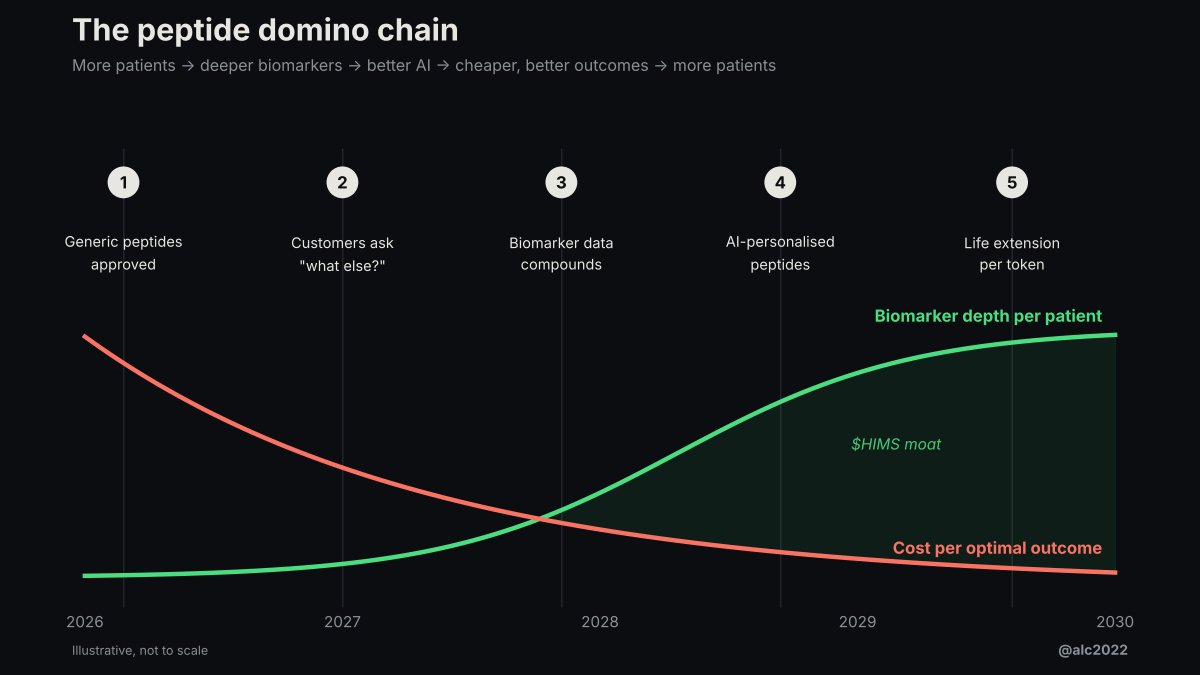
Peptides are moving towards approval. This is the first domino in a vastly consequential chain of events that ends up in $HIMS being worth $2,000 per share intrinsically by the year 2030.
1/ BPC-157 and the other generic peptides get approved. Millions of people try them. They see results. Then they ask the obvious question: what else can I take?
2/ They ask it on the platform that already has them. $HIMS is the largest D2C healthcare platform on Earth, and the only one with a vertically integrated supply chain. Vertical integration wins on price:value. Price:value wins the customer.
3/ Every customer becomes biomarker data. And the biomarker data gets deeper and more exhaustive every year: more patients, more panels, more before-and-after pairs.
4/ Eventually the data is so exhaustive that $HIMS AI can design personalised peptides for anyone. Optimal patient outcomes, at a fraction of the cost of anyone else in the market.
5/ This is the scenario that takes $HIMS to $2,000 intrinsic value by 2030. In everyone’s eyes, it becomes the platform that unlocks the new AI scaling law: life extension per token. It inverts the entire industry on its head: "drug discovery" gets immediately deprecated and all value accrues to the single AI trained with the most and highest quality biomarker data.
6/ This sends everyone on a race to space: if you don't own this AI, you're forced to succumb to it both as a pharma supplier and as a customer, because not using this AI means others beat you in selling drugs and you just don't live as long as customer, respectively.
7/ It becomes the most valuable subscription service on Earth as the AI gets increasingly predictive. Just like not running $PLTR today is a massive disadvantage, increasingly comparable to not using electricity, not running on the $HIMS OS means you don't have access to the core value creation machine that literally allows anyone in the industry to stay alive.
30 Important rules of investing:
1. The hard work is done before you buy.
2. Make less trades but better decisions
3. Be greedy for strong fundamentals
4. There is never a rush to buy a stock.
5. The market conveniently always gives you a second chance to enter.
6. A stock does not know your average, nor does it care.
7. Nobody is coming to save you from your risky buys, this is on you.
8. WAIT FOR CONFIRMATION OF SUPPORT.
9. Zoom out, take in the big picture.
10. Understanding charts is made easier with theory.
11. You can not always plan for catalysts, but you can limit your exposure to risk.
12. Always reassess.
13. Add to your winners, not your losers.
14. If you can not handle red days or weeks, you may be better off just buying a market ETF.
15. The market will never stop being irrational in the short term.
16. The market hunts for value constantly and always finds it.
17. Revenue reigns supreme.
18. The market will always return to its fair value.
19. 99% of opinions are just noise.
20. The market will eventually humble you.
21. Failures are lessons in the market.
22. Those that stick with it and learn from mistakes, eventually start winning.
23. Compounding profits is better than using leverage.
24. Leverage should not be used my amateurs.
25. Options should not be used by those who are not doing this 24/7.
26. Know the stocks you own and why you own them.
27. Good management saves companies.
28. ROE, ROA & ROI is the secret formula.
29. Margins matter.
30. Emotion needs to be controlled.
- TLI
50 rules I live by (ai was not used)
1. Never consider luck.
You get exactly what you put in.
2. Stop caring what others think of you
Nobody really cares, something might be mentioned in passing but they don’t care
3. Get rid of toxic friends(including family members)
Fire them.
4. Be in a war with sugar
5. The gym, working out, moving your body
is far greater than therapy
6. I believe therapy is for victims (refer to point 2)
7. More revenue streams beats making your coffee at home
8. Have a vice, scratch that itch but focus on 95% of everything else…this goes for everything: Investing, healthy eating and your career
9. Be obsessed, I have never met an obsessed person who has not achieved their goal
10. Never stop learning, once you stop learning, you start dying.
11. Stop watching Netflix and doom scrolling, if you have time to do this then you have time to learn.
12. Travel the world and do it alone, every part of this is outside your comfort zone
13. Having anxiety is normal, there is no manual for life.
14. Listen to your body, it tells you everything
15. Your skin tells you if you a sick
16. Coffee is the most effective drug in the world to be productive
17. Sleep accounts for 33.3% of your life, make sure it is your number one priority
18. Sunlight, fresh air and walks are the best form of medicine
19. Meditation instead of drugs.
20. Relationships are far more important than material items
21. Wealthy people read, a lot.
22. Keep your word, especially to your kids
23. Don’t do business with people who you don’t trust
24. Do business with people who would die for you
25. Pray that it’s difficult
26. Every experience is an opportunity to get stronger
27. Have multiple career opportunities
28. Pray to your guardian angel for guidance
29. Be Stoic at all times
30. Believe in something, even if it’s the laws of the Universe
31. Respect peoples cultures and religions
32. Never limit your investments with time
33. Never use leverage
34. You can NEVER eradicate all variables
35. Give more than you receive
36. Listen to the customer and market, they will guide you
37. Focus on improving every day instead of yearly goals
38. Nothing is too big to take on.
39. Learn from those who have come before you and have a record
40. Share price will follow FCF growth
41. Good management means everything for a companies progress
42. Encourage failures, I have learnt 10 X more from failing first.
43. Teachers, instructors and examiners are human too, they don’t know everything and are still learning too
44. Do something that scares you regularly
45. Try new food regularly
46. Never send back wrong food orders, try it.
47. Control your emotions, it is likely more important than having a high IQ.
48. Always invest and don’t day trade.
49. Don’t use stop losses, they know where they are set.
50. Invest for long term, you won’t lose.
EVERYONE USES GOOGLE MAPS.
But almost nobody uses it right. Most people type an address, hit "Directions," and call it a day.
Meanwhile Maps is sitting on features that can save you time, gas, arguments, and the occasional scare.
Here are 8 features you need to know:🧵
Hoje, o maior ídolo da história da Roma e um dos maiores exemplos de lealdade no futebol, Francesco Totti completa 50 anos.
Impossível falar de Totti sem lembrar de sua despedida: um dos momentos mais emocionantes e marcantes da história do futebol. 🥹
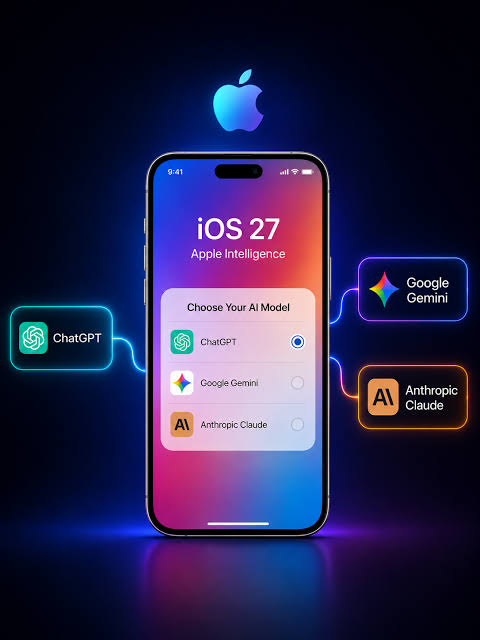
🚨 Breaking: Your iPhone is no longer stuck with Siri.
iOS 27 lets you swap in ChatGPT, Claude, or Gemini as the AI that runs everything.
The most complained about feature in iPhone history just became a choice.
Save this. Here is how to make the switch today:👇
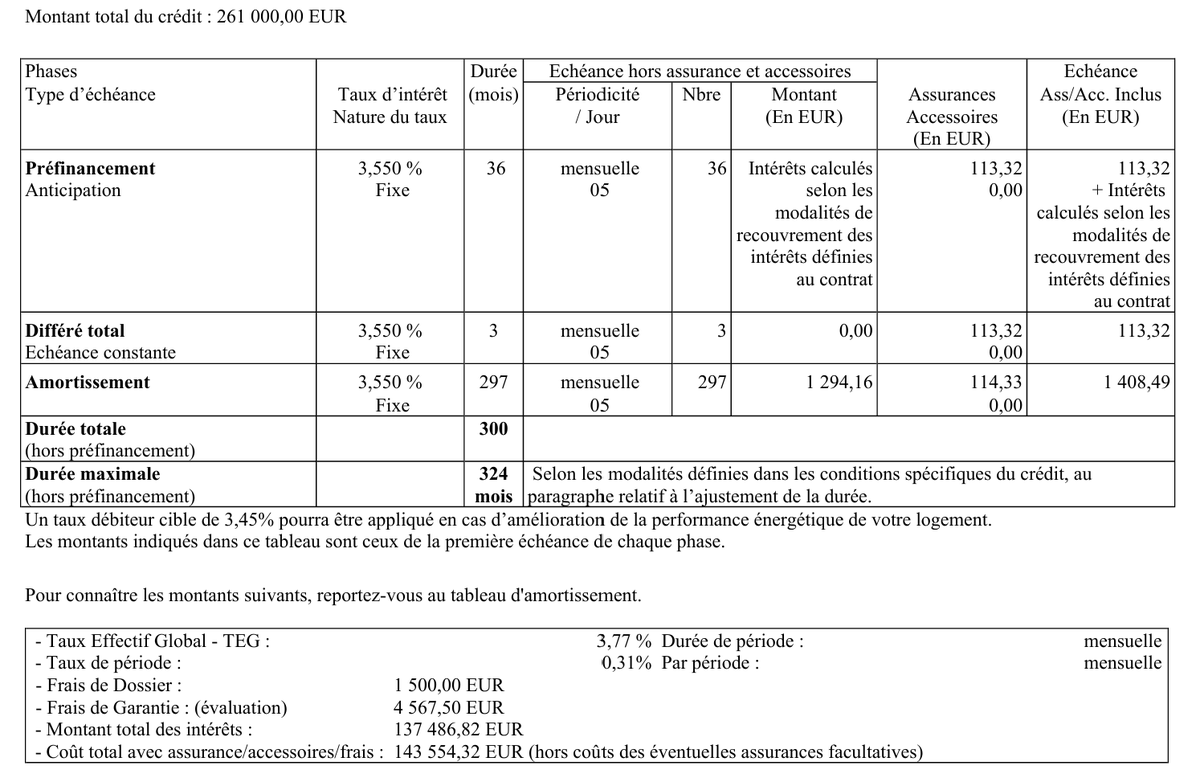
La France est un enfer fiscal mais un paradis bancaire.
Et c'est encore plus vrai maintenant que les taux remontent.
Le système français reste l'arme de construction patrimoniale la plus puissante au monde. Voici pourquoi :
🧶 À Dérouler
The new iPhone is not the upgrade.
The setup is.
Most people will use iPhone 18 like iPhone 16
and then say “nothing changed.”
Do this exact setup instead.
Steal it:
The iPhone 18 Pro Max went on sale 3 days ago. $1,199.
Millions of people bought it this weekend. Most of them upgraded from an iPhone 15 or 16. Some upgraded from last year's 17 Pro Max.
A tech reviewer who's tested every iPhone since the original spent 72 hours with the 18 Pro Max. He told me something Apple would never say at a keynote:
"This is the most impressive iPhone ever built — and most people who bought it this weekend didn't need to."
"The variable aperture camera is genuinely revolutionary. The battery life is absurd. The A20 Pro chip is a monster. But Apple spent 90 minutes on stage telling you what's new — and 0 minutes telling you what actually matters to the person holding it."
"They didn't tell you the 3 situations where this phone is a life-changing upgrade. They didn't tell you the 4 situations where your iPhone 16 does the same job. They didn't tell you the one spec they buried that changes how long this phone lasts. And they definitely didn't tell you the 10 features already on this phone that you'll never open — because they'd rather sell you the iPhone 19 next year than teach you the 18 you just bought."
Here are 10 things about the iPhone 18 Pro Max that Apple didn't say on stage — the honest truth about who should buy it, who shouldn't, and how to actually use the phone you just paid $1,199 for:🧵
A tiny hanging light can make a packed bookshelf feel more like a scene from an old story than simple storage.
Slip it between your favorite books and give the shelf a little nighttime personality of its own.