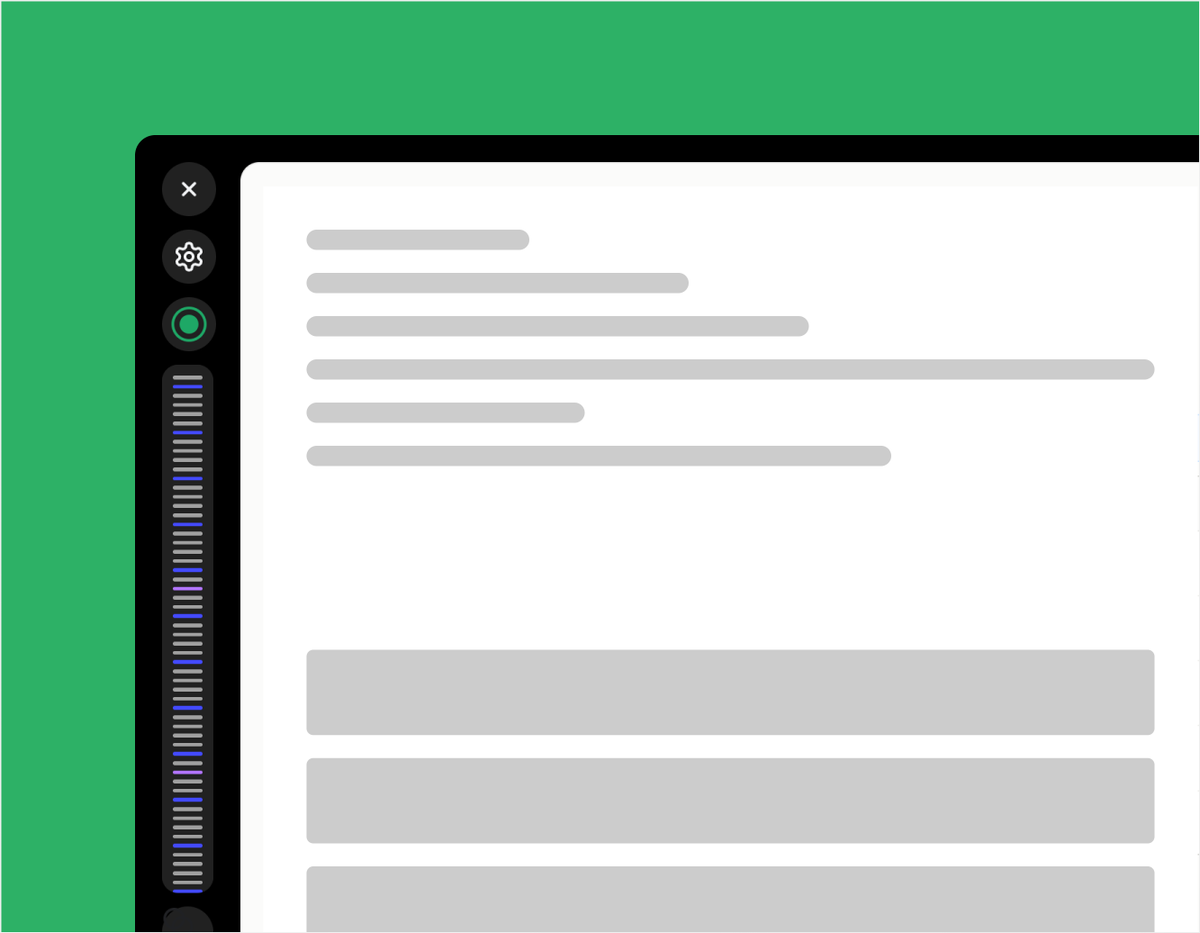
Visualdiff captures each version from local work, Vercel deployments, production, and other channels. It gives me a timeline of iterations, visual change markers, spacing inspection, and side-by-side or overlay comparison. The result is faster experimentation and clearer handoff.
What if every UI decision had a visual history?
Before AI, I built components slowly and handed off a few polished screens at the end.
Now I explore many more directions, so I built VisualDiff internally within the local env.
A quick @threejs experiment exploring an infinite carousel of liquid glass tiles, rendered in real time with WebGPU and TSL.
Each card is a thick refractive slab sitting on a curved grid that never ends. Short explanation of how the glass is rendered in the thread 👇
Settings is a product area that sounds boring, but is incredibly important to people's overall experience using 𝕏. We're finally giving it the attention it deserves, and will be starting to roll out an improved, simplified layout/look/feel in the coming weeks and months.
Hello, first tweet! Working on a background eraser prototype for a cool product—where the removed image portion becomes source color codes for generating a new gradient pattern every time. No wastage, lol.
#firsttweet#designer