JUST IN - Scott Adams dies from cancer at 68, his final statement: "I accept Jesus Christ as my Lord and Savior, and look forward to spending an eternity with Him."
Como muchas personas, mi corazón está a la izquierda. Siempre he votado por alguna variación de ella. Mi forma de entender el mundo tiene raíces profundas tanto en el marxismo como en sus críticas desde la misma izquierda, de Camus a Orwell. Pero descubro que lo que me separa de la izquierda oficial —o al menos de su versión tuitera— es precisamente el corazón.
Porque soy de izquierda, mi primer impulso ante la caída de Maduro es una alegría visceral. No por quien la provocó —Trump no despierta en mí ninguna simpatía— sino por los millones de venezolanos que llevan años huyendo de una parodia grotesca del socialismo. Por las madres que no han visto crecer a sus hijos. Por los profesionales manejando Uber en Santiago. Por los que murieron cruzando el Darién.
La izquierda que conozco en Twitter piensa al revés: primero el antiimperialismo, después la soberanía, luego la no injerencia, y al final —si queda espacio— los venezolanos. Como si el principio de no intervención pesara más que los cuerpos torturados en El Helicoide. Como si los derechos humanos del tirano importaran más que los de sus víctimas.
Este reflejo automático se repite en cada crisis. En Cuba, la corrupción dinástica de los Castro siempre pesa menos que el embargo. Cuando las iraníes se quitan el velo y enfrentan a los mulás, la izquierda busca primero denunciar a la CIA. Cuando quemaron el metro en Santiago, había que entender la rabia antes que lamentar a la cajera que no pudo llegar a su trabajo. No importa que los mulás ejecuten homosexuales, que los muyahidines lapiden mujeres, que los Castro encarcelen poetas: si están contra Estados Unidos, merecen comprensión.
Entiendo el razonamiento. Conozco la historia de las intervenciones, los golpes de Estado, la Escuela de las Américas. Sé que Estados Unidos no regala nada y que Trump es un personaje siniestro. Pero lo que no puedo entender es la ausencia de emoción humana elemental. Esa frialdad doctrinaria que no se conmueve ante los videos de venezolanos llorando de alegría en las calles de Caracas. Que no siente nada ante las iraníes cortándose el pelo en señal de rebelión. Que siempre tiene un "pero" listo antes que un abrazo.
Preferiría, por supuesto, que los venezolanos hubieran derrocado solos a su tirano. Pero sé —porque la historia lo enseña— que pocas dictaduras caen sin alguna forma de presión internacional. La chilena no lo hizo. La argentina tampoco. La española menos. Y de todas las salidas posibles después del fraude brutal de julio, esta es de las menos sangrientas.
Hoy los venezolanos celebran. Las calles de Caracas se llenan de una esperanza que creíamos muerta. Y yo, que sigo siendo de izquierda precisamente porque creo en la dignidad humana antes que en las abstracciones geopolíticas, celebro con ellos.
Mañana habrá tiempo para analizar, criticar, contextualizar. Hoy, solo hoy, déjenme sentir esta alegría sin pedir permiso al manual del buen antiimperialista. Déjenme poner el corazón donde siempre debió estar la izquierda: del lado de la gente, no de los mapas.
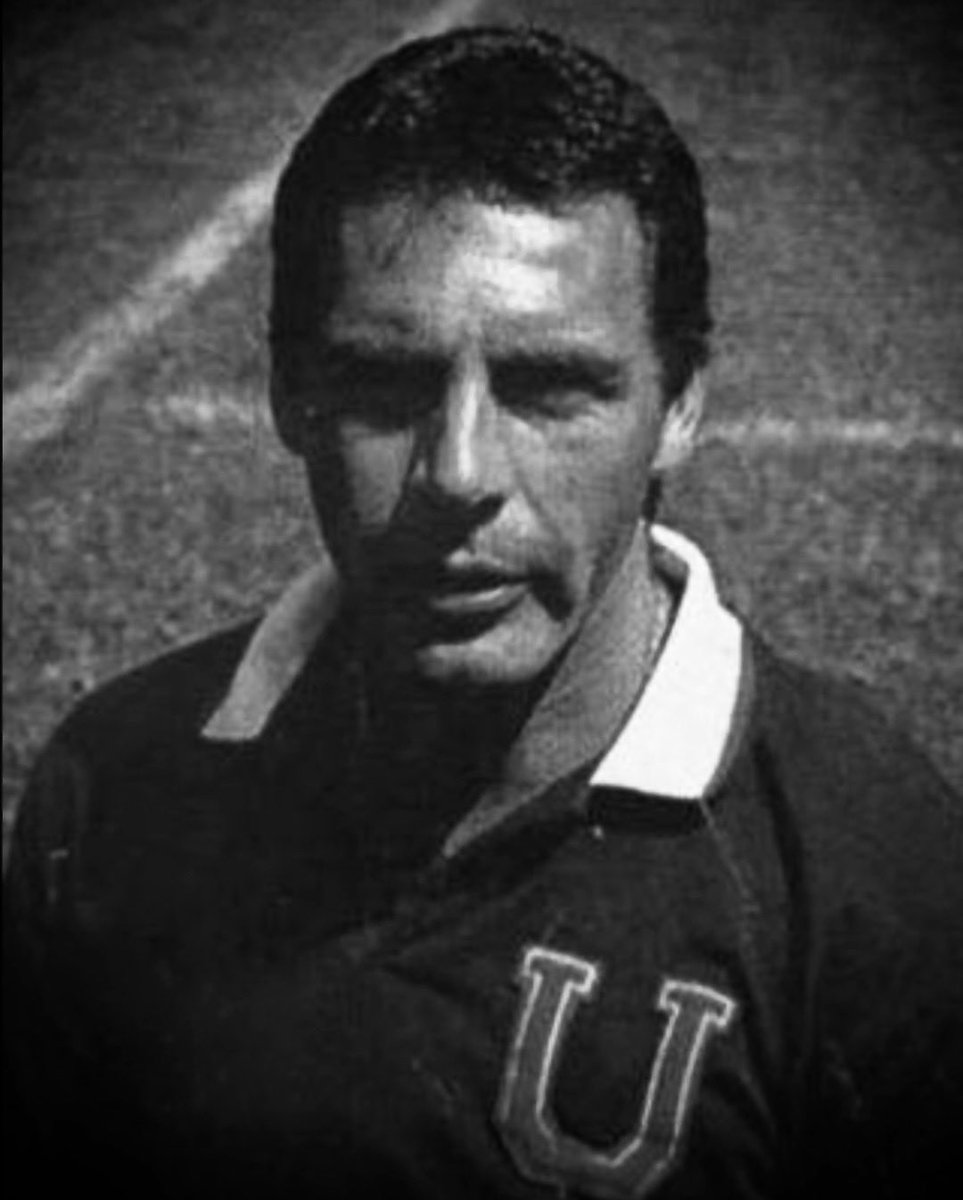
El Club Universidad de Chile lamenta con profunda tristeza el fallecimiento de Miguel Ángel Russo, quien fuera ex entrenador de nuestro Primer Equipo.
Los hinchas de la U recordamos con mucho cariño y respeto su paso por nuestra institución en 1996, cuando de la mano de grandes figuras y su dirección técnica, alcanzamos la semifinal de CONMEBOL Libertadores.
A su familia, amigos, cercanos e hinchas de Boca Juniors, enviamos nuestras más sinceras condolencias por esta dolorosa partida.
Hasta siempre, Profe Russo 💙
Deeply saddened to hear about the passing of Judge Frank Caprio. The world will remember him for his kindness, compassion, and humanity. May his soul rest in peace.
I'm teaching databases this semester at Berkeley. My students all seem unusually brilliant. Not many go to office hours, and not too many folks post on the course forum asking project questions.
Weirdly, the exam had the lowest recorded average in my 10 semesters teaching it.
👷♂️🌱 Feliz día del Ingeniero/a Forestal, como AIFBN destacamos la labor que realizan los/as ingenieros/as forestales en su día y los invitamos a leer la columna de opinión de Pablo Parra, presidente de nuestra agrupación en nuestra página (https://t.co/PRObO4ZcF6)
The University of Chicago, as usual, striking the right balance. Worth reading in full. It is exactly right.
President Alivisatos’ Note on the Encampment (April 29, 2024)
Dear Members of the University Community, Just a few hours ago, a group of students established an encampment on the Main Quad as a form of protest. This particular tactic is now in widespread use at universities across the country. At some, encampments have been forcibly removed, with police arresting students and faculty in chaotic scenes that are disturbing. At others, encampments have persisted, despite attempts to shut them down with force. In some cases, encampments have resulted in major disruptions to learning and the activities of the university community.
Free expression is the core animating value of the University of Chicago, so it is critical that we be clear about how I and my administration think about the issue of encampments, how the actions we take in response will follow directly from our principles, and specific considerations that will influence our judgments and actions.
The general principle we will abide by is to provide the greatest leeway possible for free expression, even expression of viewpoints that some find deeply offensive. We only will intervene when what might have been an exercise of free expression blocks the learning or expression of others or that substantially disrupts the functioning or safety of the University. These are our principles. They are clear.
Two recent examples illustrate how we bring these principles into real action. First, last quarter a student group secured university permission to cover a large fraction of the Main Quad with a massive Palestinian flag consisting of thousands of tiny colored flags. The exhibit was accompanied by signage exhorting passersby to “Honor the Martyrs,” and it was staffed by students at tables during certain hours. Those students could explain to passersby why they thought it important to feature this installation, why they thought that language was appropriate, and any other views occasioned by their installation. While this protest and accompanying message were offensive to many, there was no question that it was an exercise of free expression. It stood for weeks until the end of the approved time, at which point the student group removed it, making way for others to express their views in that space as they might see fit. This example should make it clear that we approach the issue with no discrimination against the viewpoints of those participating in this encampment. We adhere to viewpoint neutrality rigorously.
As a second illustrative example, in November, a group of students and faculty undertook an occupation of Rosenwald Hall, a classroom and administration building. That was a clear disruption of the learning of others and of the normal functioning of the University. After repeated warnings, the protesters were arrested and released. They are subject now to the University’s disciplinary process, which is still pending. In short, when expression becomes disruption, we act decisively to protect the learning environment of students and the functioning of the University against genuinely disruptive protesters.
There are almost an unlimited number of ways in which students or other members of the University community can protest that violate no policies of the University at all; the spectrum of ways to express a viewpoint and seek to persuade others is vast. But establishing an encampment clearly violates policies against building structures on campus without prior approval and against overnight sleeping on campus.
I believe the protesters should also consider that an encampment, with all the etymological connections of the word to military origins, is a way of using force of a kind rather than reason to persuade others. For a short period of time, however, the impact of a modest encampment does not differ so much from a conventional rally or march. Given the importance of the expressive rights of our students, we may allow an encampment to remain for a short time despite the obvious violations of policy—but those violating university policy should expect to face disciplinary consequences.
The impact of an encampment depends on the degree to which it disrupts study, scholarship, and free movement around campus. To be clear, we will not tolerate violence or harassment directed at individuals or groups. And, disruption becomes greater the longer the encampment persists. With a 24-hour presence, day after day, we must for example divert police resources away from public safety for our campus and our community.
If necessary, we will act to preserve the essential functioning of the campus against the accumulated effects of these disruptions. I ask the students who have established this encampment to instead embrace the multitude of other tools at their disposal. Seek to persuade others of your viewpoint with methods that do not violate policies or disrupt the functioning of the University and the safety of others.
Sincerely,
Paul