$GITGPU is live.
CA: 0x0422b3c74327c47bee8e96d8aafb04aebed55621
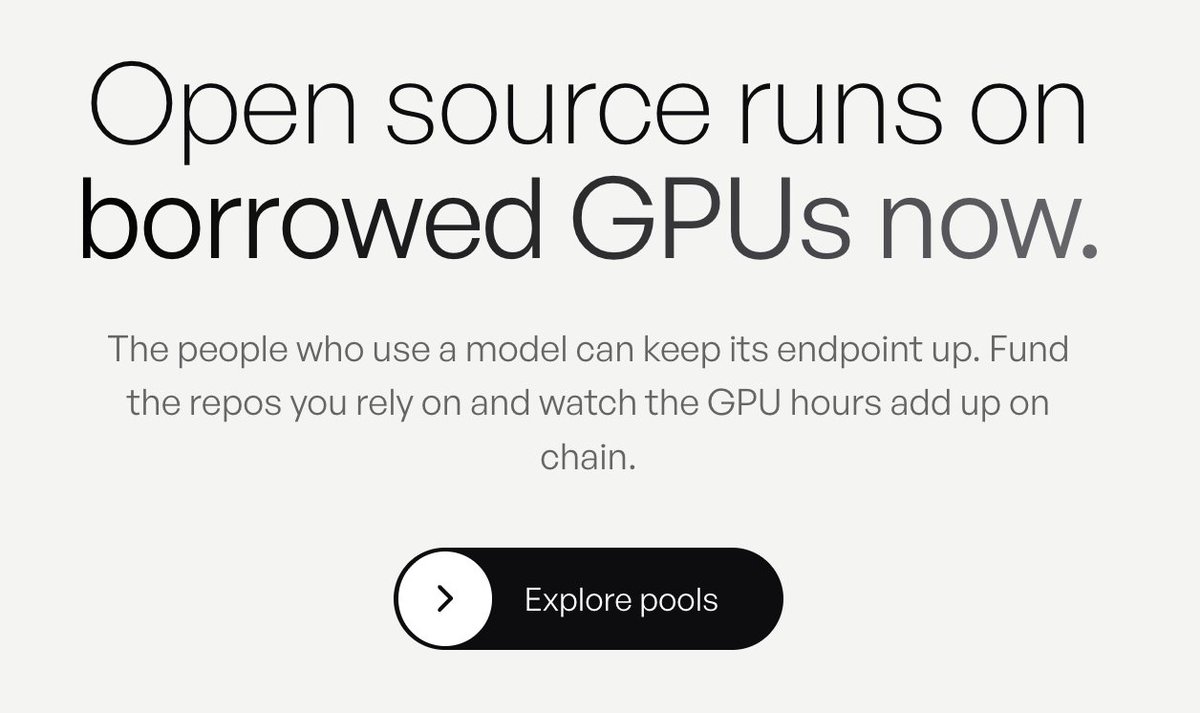
Turn any public GitHub repo into a community-funded GPU pool.
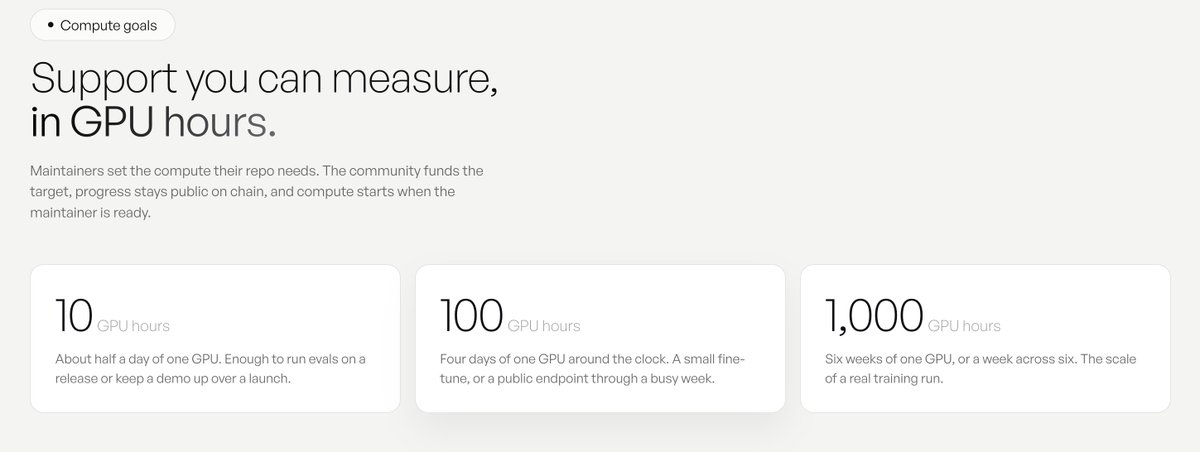
Anyone can fund compute with ETH. GitHub-verified maintainers control when it runs, set the maximum rate, and usage is billed by the second on Robinhood Chain.
https://t.co/PhzYhxogcg
GitHub gave developers somewhere to build. GitGPU gives their code somewhere to run.
Connect a repository, choose the compute you need, and run GPU workloads directly from your GitHub project.
No infrastructure to manage. No complicated cloud setup. Just your repo and the compute behind it.
GitGPU is compute built around GitHub.
Open-source projects shouldn’t have to choose between growing usage and growing infrastructure costs.
GitGPU gives communities a direct way to fund the compute behind the software they rely on, while maintainers stay in control.
Built for repos that need more than stars.
Big GitGPU update coming.
We’re opening the operator layer.
Instead of relying on a single compute provider, GPU operators will be able to compete to service repo pools, with maintainers choosing based on hardware, availability and price.
More operators means more available compute and competitive pricing for every repo on GitGPU.
Community-funded compute is becoming an open market.
https://t.co/PhzYhxogcg
Next for GitGPU: Compute Requests.
Maintainers will be able to publish exactly what their repo needs before raising anything: GPU type, estimated runtime, budget and purpose.
Backers can see what their ETH will fund before committing capital, and every completed request will have its spending recorded onchain.
Less blind funding. More accountable infrastructure.
GitGPU is moving fast.
What started as a simple way to fund GPU time for GitHub repos is becoming a full infrastructure layer for open source.
Compute markets. Pool shares. Onchain billing. Community funding. Self-sustaining compute.
We’re building toward a world where a repo can fund, operate and scale its own infrastructure directly from its community.
GitGPU is adding automatic compute funding.
Projects will be able to route a percentage of their revenue directly into their GPU pool, keeping compute funded as usage grows.
Instead of constantly raising for infrastructure, successful repos can begin funding their own compute.
Every GitHub repo has a history of commits.
GitGPU is giving it a history of compute.
Every funded run creates a transparent record of the GPU used, time running, cost and capital spent.
https://t.co/v64YoTeekV
We’re adding a stronger incentive layer to GitGPU.
Backers won’t just fund compute. Contributions will receive pool shares with real utility across the repo’s compute economy, including access to funded compute and a proportional claim on unused pool capital.
Projects will also be able to route real product revenue back into their compute pools as they grow.
Open source has always had contributors.
Now it can have contributors to compute.
GitGPU lets communities collectively fund the GPU infrastructure behind the repositories they rely on, while verified maintainers decide how and when that compute is used.
https://t.co/v64YoTeMat
The next stage of GitGPU is now live.
GitHub repositories can now launch persistent compute markets, raise ETH directly from their communities, and give contributors pool shares in return.
Maintainers define the compute requirements and remain in control of when it runs, while funding, usage and compute activity are tracked onchain.
https://t.co/PhzYhxogcg
GitGPU is expanding beyond funding individual compute sessions.
We’re building persistent compute markets around GitHub repositories.
Maintainers can launch a pool, define what compute the project needs, and let the community provide the capital behind it. Contributors receive pool shares, while usage, funding and compute activity remain visible onchain.
The goal is to give open-source projects something they’ve never really had: infrastructure they can raise for directly.
A GitHub repo can now raise for its own infrastructure.
Launch a GitGPU pool, let the community fund the compute, and give contributors a share in the pool they helped build.
The repo gets access to GPU power. The maintainer stays in control. The community becomes part of the infrastructure behind it.
https://t.co/PhzYhxogcg
GitGPU is a launchpad for open-source compute.
Maintainers raise ETH for the GPUs their repo needs. Funders get pool shares backed by that compute.
Hit the target and it all goes to the GPU pool. Miss it and everyone gets refunded in full.
https://t.co/v64YoTeMat
GitGPU Launches are now live.
Verified maintainers can launch a compute pool for their GitHub repo, raise ETH for GPU infrastructure, and issue pool shares to contributors.
Funders are no longer just donating. They can participate in the compute economy around the projects they support.
https://t.co/PhzYhxogcg
We’re expanding the GitGPU model.
GitGPU is becoming a launchpad for open-source compute.
Verified maintainers will be able to launch a pool for their GitHub repo, raise ETH for GPU infrastructure, and issue pool shares to contributors.
Instead of simply donating to a repo, contributors become participants in its compute economy, with shares tied to the pool and potential utility such as compute access, governance, or project revenue routed back into the ecosystem.
The idea is simple: give open-source projects a way to raise for the infrastructure they actually need, and give the people funding them a reason to participate.
So again, what is GitGPU?
GitGPU is a community-funded compute layer for open source.
Any public GitHub repo can have its own GPU pool. Anyone can fund it with ETH, while the verified maintainer controls when compute runs, which GPU is used, and the maximum rate they’re willing to pay.
Compute is billed by the second on Robinhood Chain.