Automotive Glare is where we get to know all about the automobile world. It can either be knowledge about parts and their working or new things in the industry.
THE COMBUSTION CHAMBER
The heart and lungs of the engine, where air is sucked in and combined with fuel before being tumbled, swirled, compressed, burnt and then released to exhaust. It’s known as the four-stroke Otto cycle.
THE COMBUSTION CHAMBER
The heart and lungs of the engine, where air is sucked in and combined with fuel before being tumbled, swirled, compressed, burnt and then released to exhaust. It’s known as the four-stroke Otto cycle.
Since Stirling engines could theoretically use any power source, they may also have a great deal of potential in the future when renewable energy sources would be in wider use.
Source: https://t.co/mS5o07KUmE
Internal Combustion Engine
In an internal combustion engine, the working fluid consists of a combustible fluid placed inside a cylinder. Four-stroke Diesel and petrol (gasoline) engines are internal combustion engines.
These have a low power-to-weight ratio as well, however, theoretically, they should be able to reach high levels of efficiency. A lot of research is being done to see if the actual efficiency of these engines could be improved.
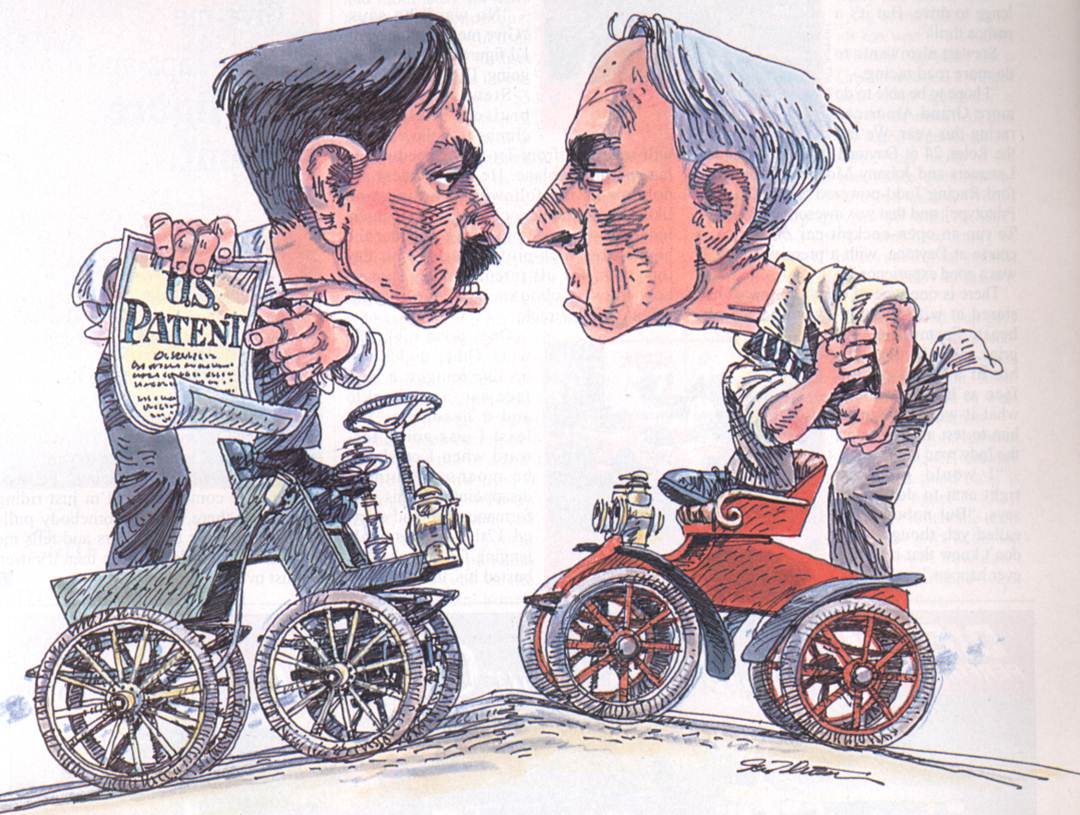
won his case based on an argument that the engine used in automobiles was not based on George Brayton’s engine, the engine that Selden had improved, but on the Otto engine.
Source: https://t.co/mO9uTWSWwg, https://t.co/PqS6Z0J9sZ
Henry Ford refused to participate in the agreement, and in 1903 an infringement suit was filed against him. After eight years of litigation, Ford finally prevailed. The court of appeals, overturning a lower court judgment.
The heavily publicized legal fight lasted eight years and ended in a victory for Selden. Ford appealed, and on January 10, 1911, one year before the Selden patent was set to expire.