We're an independent, field-driven initiative documenting transnational scam operations through direct engagement with affected individuals
IG: @globalantiscam
Entering 2026, GASO is prioritizing evidence, accountability, and durability—focused on mapping, analysis, research, and publication.
Read our Impact & Operational Progress Review (2021–2025):
👉 https://t.co/znqeXVhKHA
Wishing everyone a steady start to 2026. Happy New Year.
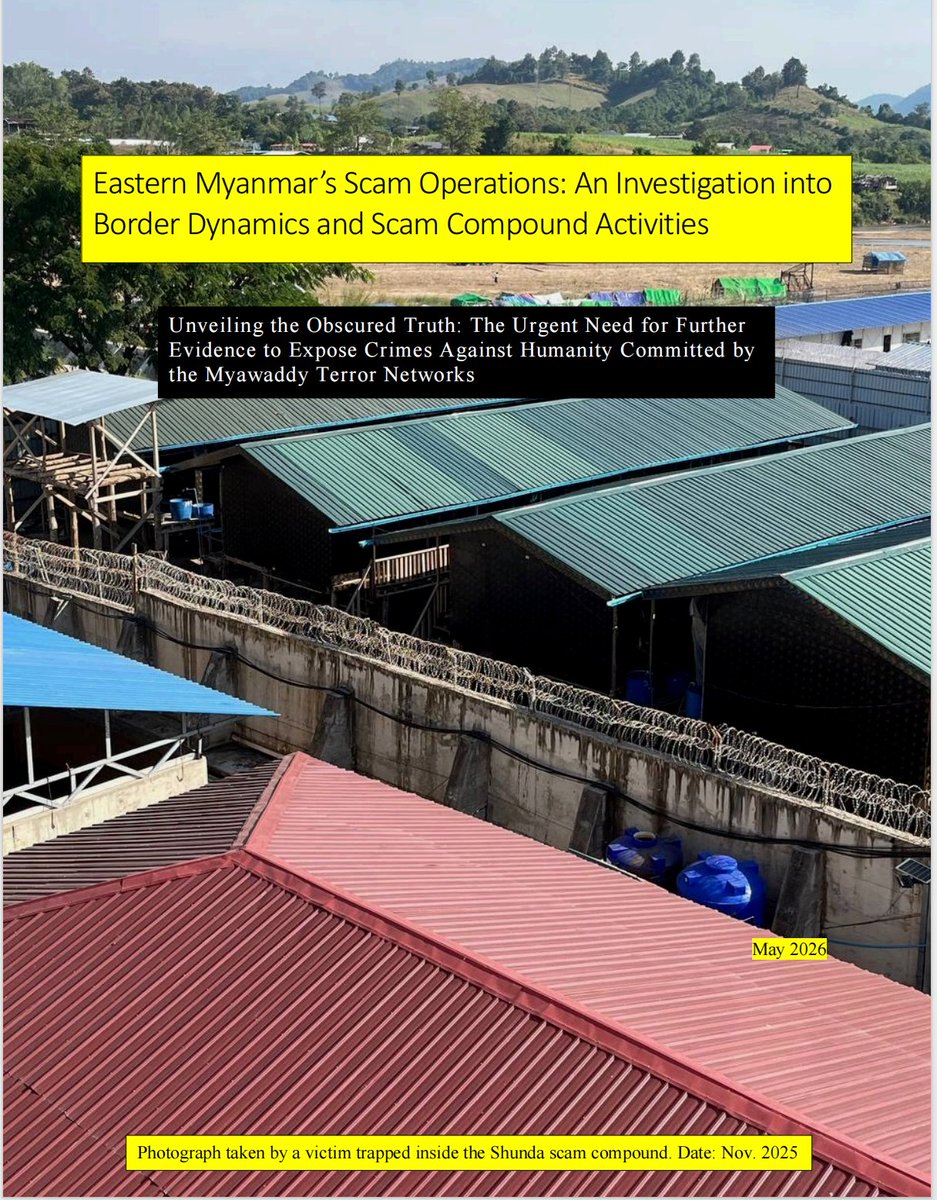
Despite repeated claims that scam compounds in Myanmar are being dismantled, the reality on the ground tells a very different story.
Large numbers of people have reportedly been relocated from Cambodia through Thailand, while human trafficking and cross-border movement continue. Over the past six months alone, more than 30 new compounds have reportedly emerged along the Myanmar–Thailand border.
Rather than disappearing, scam operations are expanding and adapting. Many have relocated deeper into remote mountainous areas, where they are more concealed, harder to monitor, and increasingly difficult for law enforcement and humanitarian organizations to access.
The United States has repeatedly announced efforts to combat transnational scam networks. However, there has been little visible progress or meaningful action on the ground. Meanwhile, these criminal networks continue to expand, relocate, and recruit or traffic more people. The gap between public commitments and measurable results is deeply disappointing and discouraging.
Questions also remain regarding the effectiveness and accessibility of FBI reward programs. Significant intelligence, investigative reports, and supporting information have been submitted, yet it remains unclear whether independent investigators or intelligence providers have successfully received these rewards. No financial or investigative support has been provided for our continued research, despite the substantial time, resources, and personal effort required to collect and verify intelligence from high-risk areas.
Thailand has also failed to effectively curb trafficking routes. People continue to be transported through Thailand and trafficked into scam compounds across the border.
Extensive investigations and professional reports documenting the expansion of scam compounds, trafficking routes, newly constructed sites, satellite evidence, and evolving criminal networks have already been completed.
For professional research collaboration, intelligence sharing, or access to detailed investigative reports, please contact directly.
#ScamCompounds #HumanTrafficking #Myanmar #Thailand #Cambodia #CyberScam #ForcedLabor #TransnationalCrime #OSINT #FBI
@osamafoad69 Not familiar with it. You are welcome to use the chat on our website to talk directly with our dedicated team of volunteers and we can see if we can help.
THIS IS HUGE‼️
🌐 “OnlyFans Mega Leak” allegedly containing approximately 340 million user records involving both fans and creators.
According to the visible listing, the claimed dataset may include:
• usernames and display names
• email addresses
• linked phone numbers
• account creation dates
• follower/subscriber metrics
• likes and content statistics
• creator/fan classifications
• linked social profiles
• partial payment card metadata (claimed last 4 digits)
If authentic, this would represent one of the most operationally sensitive adult-platform-related exposures observed due to the combination of:
• identity data
• behavioral metadata
• financial indicators
• social linkage information
• creator activity metrics
The biggest risk here is not necessarily direct financial theft.
The primary danger is:
• extortion
• doxxing
• blackmail
• targeted harassment
• reputational attacks
• account takeover campaigns
• relationship/social exposure
Adult-platform ecosystems are uniquely sensitive because attackers can combine:
• usernames
• linked social media
• email reuse
• payment references
• creator/fan relationships
• behavioral activity patterns
to deanonymize users who believed their identities were separated from their online activity.
For creators specifically, risks may include:
• impersonation
• stalking
• swatting
• revenue theft
• subscriber fraud
• credential compromise
• targeted phishing pretending to be platform support or agencies
For fans/users:
• sextortion campaigns
• phishing emails
• credential stuffing
• blackmail attempts
• fake legal notices
• cryptocurrency scams
• exposure of private consumption habits
One particularly concerning element is the reference to:
• linked profiles
• activity metrics
• internal identifiers
because these fields may allow correlation attacks across multiple platforms and previously leaked datasets.
However, several important caveats exist:
• extremely large breach claims are often exaggerated
• underground actors frequently recycle older datasets
• “scraped” data may originate from multiple unrelated leaks
• partial data collections are sometimes rebranded as “internal databases”
At this stage, the authenticity, source, freshness, and completeness of the alleged dataset remain unverified.
Recommended immediate actions for users potentially affected:
• change passwords immediately
• enable MFA
• avoid password reuse
• monitor phishing attempts
• review connected social accounts
• monitor for impersonation attempts
• remain alert for extortion emails or social engineering campaigns
Platforms operating creator ecosystems should additionally:
• monitor credential stuffing spikes
• review API abuse
• audit scraping protections
• monitor underground marketplaces
• strengthen anti-bot controls
• alert high-risk creators proactively
Because of the reputational and emotional sensitivity associated with adult-platform ecosystems, even limited verified exposure could have disproportionate real-world impact.
��� #DDW #Intelligence #CyberSecurity #DarkWeb #ThreatIntelligence #DataBreach #Infosec #OSINT #Privacy #OnlyFans
What's the one feature on Telegram not found on any other messaging app and is too often exploited by scammers and recruiters with ill intent? Read the latest on GASO: https://t.co/oPiJqS8MAL
DON'T SIGN IN WITH GOOGLE
DON'T SIGN IN WITH GOOGLE
DON'T SIGN IN WITH GOOGLE
DON'T SIGN IN WITH GOOGLE
DON'T SIGN IN WITH GOOGLE
DON'T SIGN IN WITH GOOGLE
DON'T SIGN IN WITH GOOGLE
Happening now: Jacob Sims, Jason Tower, and Erin West, testify to US Congress asking to support both scam and human trafficking victims worldwide
https://t.co/0sX2My3GHN
The UN’s crime agency noted Sri Lanka shows signs of becoming a base for scammers. Risks of human trafficking follows. 850 foreigners arrested this year, from India, China, Vietnam, and Cambodia, lured by false promises of high-paying jobs.
https://t.co/pUUEDvD0s4
Yesterday, President Donald J. Trump signed an Executive Order to combat cybercrime, fraud, and predatory schemes targeting American families, businesses, and critical infrastructure. One of the orders includes creating a Victims Restoration Program.
https://t.co/E1h1flsRA9
Calls for Peace
As tensions escalate across parts of the Middle East, civilians once again face uncertainty and fear.
The Global Anti-Scam Organization (GA-SO) calls for restraint, de-escalation, and the protection of innocent lives.
May civilians remain safe.
#MakePeaceNotWar
Cambodia has shut down nearly 200 scam centers as part of a major crackdown on transnational fraud involving human trafficking and forced labor https://t.co/RWwrsyzy2Z
Thailand is playing a key role as a transit hub for trafficking to Myanmar scam centers, part of the multibillion-dollar cyberfraud industry targeting people across the globe. We traced some of the harrowing journeys of the victims.
https://t.co/8Su2fuG9Jk
The best job in journalism.
OCCRP is hiring an investigative editor for the Pacific Islands. Work with journalists from across the region to create high-impact reports on crime and corruption where other major media outlets aren't even looking.
Applications end on the 15th
https://t.co/1ZvXSh4obE
The truth about Cambodia’s so-called “crackdown” on scam compounds:
Although Cambodian authorities arrested Chen Zhi(陈志), many of his key lieutenants have already purchased foreign identities. One senior figure in his network even admitted online that he had acquired a Vietnamese identity package.
Rumors now claim that some compounds are “releasing people,” but the reality is the opposite. Satellite monitoring confirms rapid expansion — new buildings, larger security perimeters, and massive construction across multiple sites. Several newly built compounds have already been secretly mapped and marked, yet no verified rescue requests have emerged from these locations.
Cambodia appears to increase pressure only when the international spotlight is strong. Once the attention fades, trafficking resumes within months, with large numbers of victims rapidly funneled back into the scam system.
Crucially, the crime network is not shrinking — it is relocating.
Current intelligence shows that certain compound operators are shifting management to:
Timor-Leste (East Timor)
Sri Lanka
Dubai (UAE)
These regions are now emerging as new command hubs and safe havens for scam bosses seeking to avoid pressure in Cambodia and Myanmar.
these regions are now emerging as new command hubs and safe havens for scam bosses seeking to avoid pressure in Cambodia and Myanmar.
The truth remains unchanged:
No country that has profited from scam operations has ever fully eliminated them. Unless internet access is physically cut, borders controlled, and cross-border networks dismantled, the compounds will continue operating through alternative routes.
Economic sanctions alone have little impact — these networks have countless brokers, offshore channels, crypto pathways, and political protection.