TRU Tickets has been released. Create digital admissions, share scan tickets and securely check guests in — all through one responsive experience. https://t.co/mhqT8maDg1
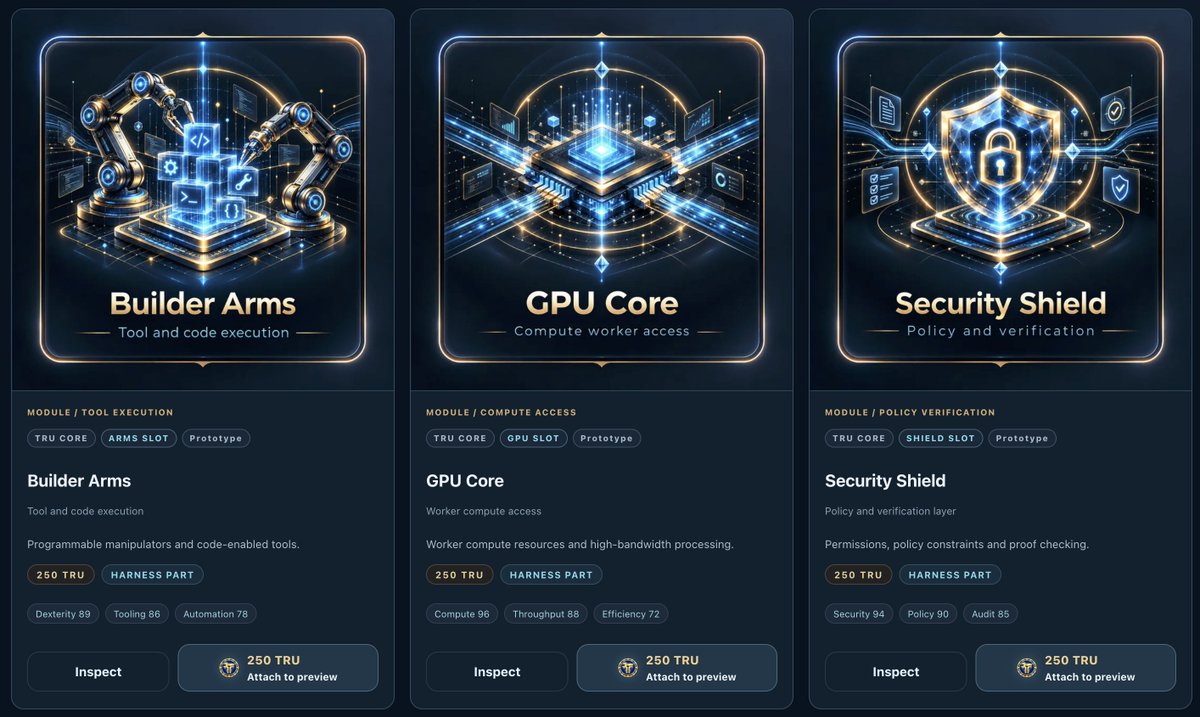
🔥 What if your idle CPU or GPU could help power the next generation of AI? Mine Coins and get Compute Rewards! NEROMESH — the AI compute worker for the TRU ecosystem.
https://t.co/smKpxqkP1w
🖥️ CPU or NVIDIA GPU
#TRU#NEROMESH#AI#GPU#DePIN
TRU BLOCKCHAIN 0.08.9 — BLAKE2b-256 IS ALREADY BUILT INTO OUR SCRIPT ENGINE!
One of the more interesting capabilities of TRU Blockchain is that BLAKE2b-256 cryptographic hashing is implemented directly inside the TRU Script Interpreter.
This isn't a proposed feature or something on our development roadmap. The implementation already exists in our C++ blockchain source.
What does this mean?
TRU includes a native scripting opcode:
OP_HASHBLAKE2B
This allows smart contract scripts to perform BLAKE2b-256 hashing during execution, producing a 256-bit cryptographic commitment.
Technical details:
✅ BLAKE2b-256 hashing implementation
✅ Integrated with libsodium
✅ Native OP_HASHBLAKE2B instruction
✅ 32-byte cryptographic output
✅ Script-level execution with gas accounting
✅ Integrated with TRU's stack-based scripting architecture
Why is this important?
Cryptographic hashing is an essential building block for programmable blockchain systems.
BLAKE2b-256 can support cryptographic state commitments, data-integrity verification, and advanced computational verification protocols.
For example:
Program State → BLAKE2b-256 → Cryptographic State Commitment → TRU Blockchain
And this becomes even more interesting when combined with capabilities already present in TRU:
• Stateful smart contracts
• UTXO-based transaction architecture
• Conditional script execution
• On-chain contract provenance
• Native FT, NFT, SFT, and NCFT assets
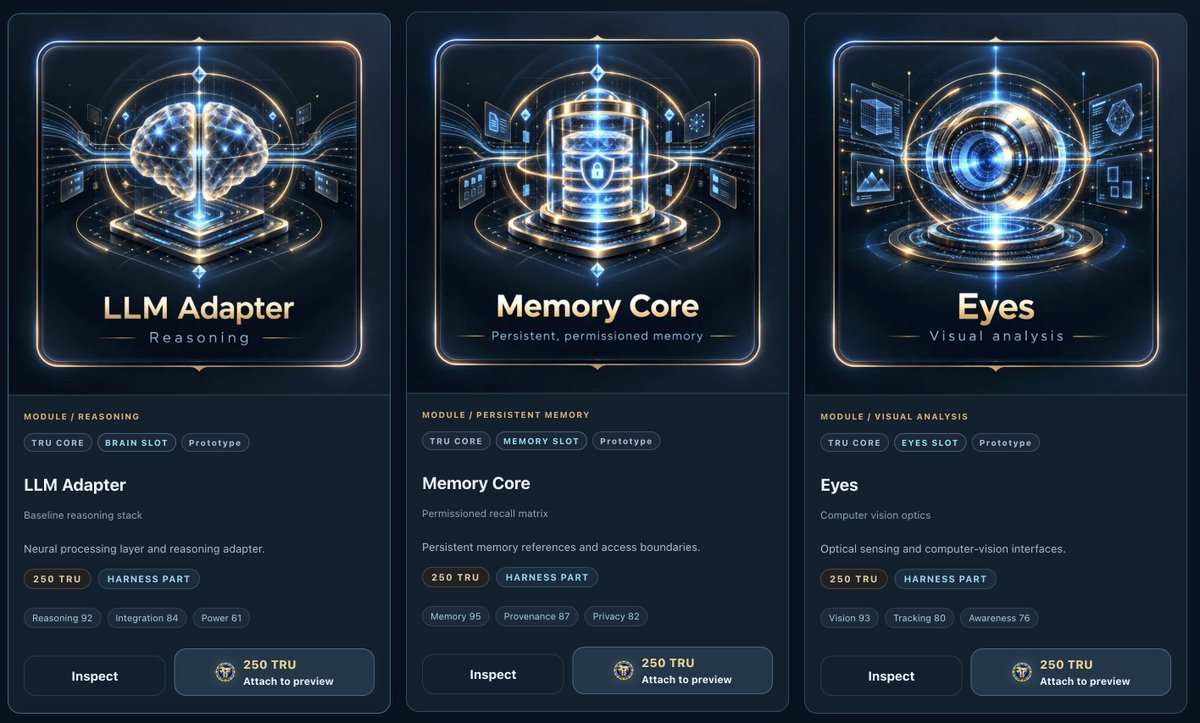
• Persistent AI-agent identity and memory commitments
• Deterministic contract execution and gas accounting
THE BIGGER PICTURE: TURING-COMPLETE COMPUTATION
We're investigating how TRU's existing scripting capabilities could support a universal computational system in which programs progress through successive blockchain transactions.
Instead of executing unrestricted loops inside a single transaction, computation can be divided into individually bounded state transitions.
This is similar to transaction-chain computational models explored in other UTXO-based blockchains.
SO, IS TRU TURING-COMPLETE?
YES, WE ARE building the foundation for a general-purpose computational ecosystem.
TRU Core 0.08.9 already implements many of the essential computational components: deterministic scripting, conditional logic, arithmetic, persistent state, cryptographic verification, and gas-metered execution.
But there is an important technical distinction.
At the application layer, general-purpose computation can be coordinated across TRU transactions, with computational state and execution history cryptographically committed to the blockchain.
At the native consensus layer, we're investigating whether arbitrary computational transitions and their continuation outputs can be independently enforced using the existing scripting rules.
We are not yet claiming that TRU's native consensus is mathematically Turing-complete. We are identifying and testing the capabilities needed to establish that.
And that distinction matters.
OUR OBJECTIVE
We're not trying to introduce unlimited execution inside individual transactions.
We're exploring how TRU can support increasingly powerful, independently verifiable computation across a sequence of bounded transactions, preferably without changing the existing 0.08.9 consensus rules.
Combined with our NCFT AI-agent architecture, this opens possibilities for:
• Autonomous computational workflows
• Persistent, cryptographically committed AI memory
• Verifiable computational state
• Programmable asset ownership
• Independently auditable agent activity
• Decentralized coordination of AI services
YES, WE ARE building a general-purpose computational ecosystem on TRU.
The next milestone is determining how far we can take universal, consensus-enforced computation using the capabilities already built into the blockchain.
TRU isn't just about moving tokens. We're building infrastructure for programmable digital ownership, persistent state, and verifiable computation.