Trump and Marco Rubio says US policy on Taiwan is "unchanged". Here is what "unchanged" looks like in practice:
1. The 1982 Six Assurances have been verbally discarded.
When asked whether the 1982 commitments still governed American policy, Trump said: "too far back to be binding." He then confirmed he discussed the arms sales directly with Xi. This is not a subtle policy drift. Consulting Beijing on Taiwanese arms is a direct, documented violation of the Six Assurances - the foundational framework of US-Taiwan relations for over four decades.
2. A $12 billion arms package is being used as a bargaining chip with China.
When asked directly whether he would approve it, he said: "I haven't approved it yet. I may or may not approve it." Taiwan's defence procurement is no longer a strategic commitment. It is a negotiating instrument whose value fluctuates with the state of US-China relations.
3. Taiwan is now too far to defend.
Trump stated plainly: "Taiwan is a very small island - 59 miles from mainland China. The US is 9,500 miles away." This is not strategic ambiguity. This is a president publicly constructing the case that defending Taiwan is logistically unreasonable. Every military planner in Beijing has noted the framing.
4. Taiwan has been told to "cool down" and "exercise restraint."
Trump's message to Taipei after the Beijing summit: "I hope both Taiwan and China exercise restraint." Placing the burden of restraint equally on the democratic government and the power threatening it is not neutrality. It is a repositioning of moral equivalence that Beijing has sought for decades and never previously received from Washington.
5. Taiwan's independence has been formally rejected.
Trump stated: "I don't want a situation where someone declares independence, forcing us to cross 9,500 miles and fight a war." This frames a Taiwanese democratic choice as a provocation that would justify American inaction - precisely the signal Beijing needs to understand that the cost of coercive pressure has been substantially lowered.
6. Taiwan's most critical strategic asset to be transferred to the US.
Trump said: "I hope all semiconductor manufacturers in Taiwan come to the US. It would be excellent." A deliberate policy of relocating that industry eliminates the economic rationale for American commitment to Taiwan's security, simultaneously and by design.
7. Taiwan was omitted from America's own defence strategy.
The 2022 National Defense Strategy explicitly named Taiwan and committed to its asymmetric defense. The 2026 version does not mention the island once. In a document that defines America's military priorities and commitments, the island does not appear by name.
Seven data points.
Together, they describe something that has not happened in American foreign policy since 1979 - a dismantling of the strategic architecture that has kept Taiwan autonomous for forty-five years.
What is being constructed here is not a policy shift. It is a policy exit, engineered slowly enough to maintain deniability, and fast enough that by the time Taipei, Tokyo, and Seoul fully register what has happened, the architecture will already be gone. The question is no longer whether the US is retreating from Taiwan. The question is how far, how fast, and what Beijing will do the moment it concludes the retreat is irreversible.
Unchanged, they say. Perhaps. But something has changed and everyone who matters already knows it.
- Follow TheGlobalFaultlines @GlobalFaults
The Ukrainian Navy has confirmed that one of its naval drones drifted toward Romania after losing control under the influence of Russian electronic warfare systems while operating in the Black Sea.
On the same day, Ukraine's Unmanned Systems Forces commander Robert Brovdy publicly confirmed that Ukrainian drones struck five vessels overnight in the ports of Mariupol and Berdyansk and in coastal waters of Russian-occupied territory.
He shared the footage himself.
Among those vessels were two cargo ships, Natra and Zirkon, carrying 25 Azerbaijani nationals. Five were killed. Three were injured.
These were not warships. They were civilian cargo crews.
Ukraine's position: the vessels were operating illegally in Russian-occupied ports. Azerbaijan's position: five of its citizens are dead.
One drone drifts into a NATO ally's port and is called an electronic warfare accident. Another strikes a civilian vessel and is called a legitimate military operation. Both happened today. Both involved Ukrainian naval drones.
The same weapon. Two very different explanations.
- Follow for more TheGlobalFaultlines @GlobalFaults
The Ukrainian Navy has confirmed that one of its naval drones drifted toward Romania after losing control under the influence of Russian electronic warfare systems while operating in the Black Sea.
On the same day, Ukraine's Unmanned Systems Forces commander Robert Brovdy publicly confirmed that Ukrainian drones struck five vessels overnight in the ports of Mariupol and Berdyansk and in coastal waters of Russian-occupied territory.
He shared the footage himself.
Among those vessels were two cargo ships, Natra and Zirkon, carrying 25 Azerbaijani nationals. Five were killed. Three were injured.
These were not warships. They were civilian cargo crews.
Ukraine's position: the vessels were operating illegally in Russian-occupied ports. Azerbaijan's position: five of its citizens are dead.
One drone drifts into a NATO ally's port and is called an electronic warfare accident. Another strikes a civilian vessel and is called a legitimate military operation. Both happened today. Both involved Ukrainian naval drones.
The same weapon. Two very different explanations.
- Follow for more TheGlobalFaultlines @GlobalFaults
Valid point. It seems highly unlikely that a drone could drift into such a sensitive area in such a precise manner without being intercepted or crashing elsewhere first. That possibility deserves serious investigation.
More importantly, incidents like this should be a wake-up call for Romania. Romania now has every reason to examine whether its airspace, critical infrastructure, and sovereignty were adequately protected.
Ultimately, national sovereignty and the safety of citizens are more important than any political narrative.
A marine drone self-detonated at Romania's largest Black Sea port, Constanta, near an oil terminal. No casualties. Criminal investigation opened.
Romania has not named the origin. That silence is the story.
One week ago, a drone struck a residential building in the Romanian city of Galati. Romania's defence ministry identified it as a Russian Geran-2, the same morning it happened. Statement issued within hours. Origin declared with confidence. Russia named directly. The Romanian president closed the Russian consulate in Constanta and expelled the consul within days.
Today, an investigation has been opened. The ministry says only that the drone is "of a type used in the war in Ukraine". Romanian President Dan called it a "direct consequence of Russian aggression", without attributing today's drone to Russia.
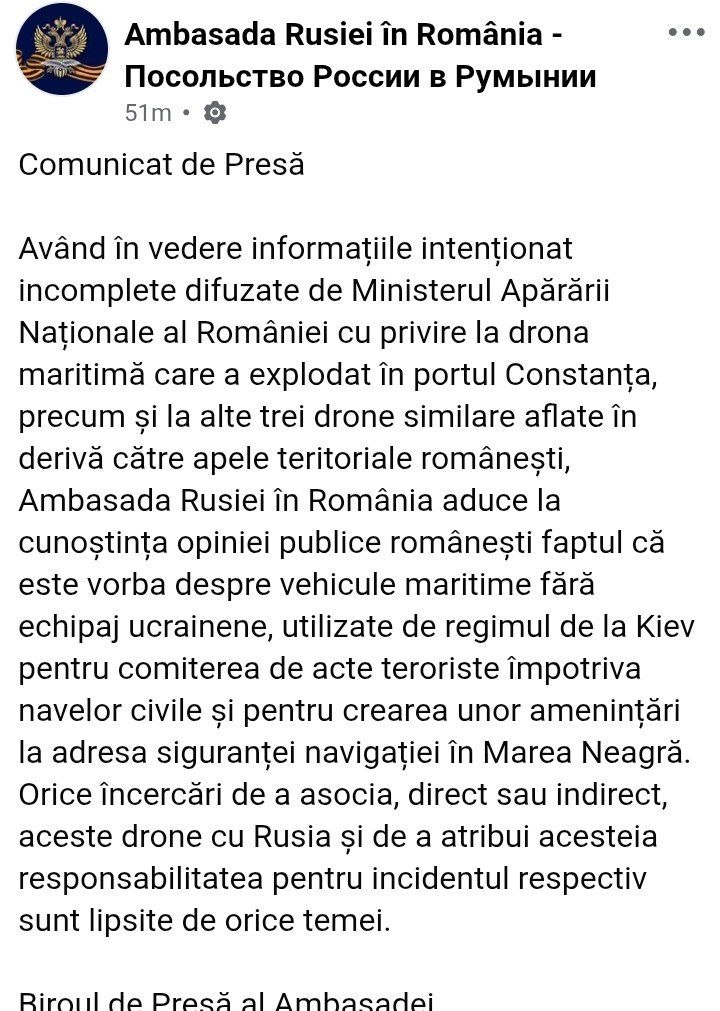
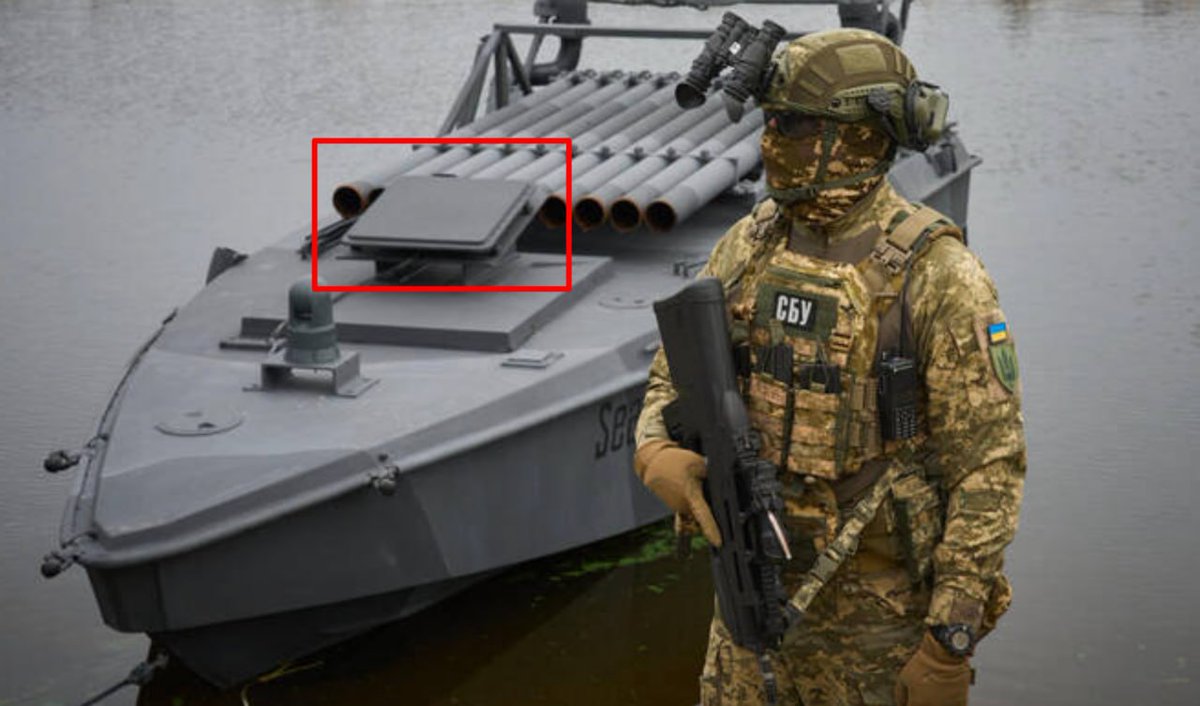
Euromaidan Press, citing Romanian defence ministry sourcing, reported that the ministry suspects Ukrainian origin. The Russian Embassy in Bucharest said Romania is distributing "intentionally incomplete information" to the Romanian public. The embassy stated plainly: these are Ukrainian maritime vehicles, and any attempt to associate them with Russia is "completely baseless".
The contrast in response time tells you what the investigation will not say publicly.
When attribution fits the political narrative - Russia striking a NATO member - identification is immediate, confident, and loudly communicated. When attribution complicates the narrative - a Ukrainian drone in a NATO ally's civilian port - the answer becomes "under investigation", the language becomes vague, and the political cover is provided by blaming the broader war rather than its specific actor.
Romania is not alone. Greece recently formally protested to Kyiv over a Ukrainian naval drone armed with explosives found near a Greek island.
Acknowledging that a Ukrainian drone struck a NATO member's civilian infrastructure creates a crisis the alliance has no template for. It doesn't fit the war narrative. It complicates weapons supply politics. It hands Russia an information warfare gift. So the silence is not uncertainty, it is managed ambiguity in service of political coherence.
The problem is not that Romania can't identify the drone. The problem is that it can and the answer may be inconvenient.
- Follow for more TheGlobalFaultlines @GlobalFaults
Czech PM Babis told the Financial Times today that the EU is following the path of the Roman Empire's decline.
This is not commentary from outside the system. This is a participant in the system publicly withdrawing his confidence in it.
Babis blames Brussels - decarbonisation, climate targets, economic overregulation. That's the standard Eurosceptic critique. It's partly valid.
Late Rome faced: rising external security costs, declining economic output, regulatory overextension from the centre, and member states beginning to question whether the imperial arrangement still served their interests. It did not collapse dramatically. It hollowed out. Provinces stopped sending resources to a centre that could no longer protect them in return.
Washington is explicitly conditioning its presence on European spending commitments. And the bloc is simultaneously imposing a green transition that critics in Germany, Italy, Poland, Hungary, Slovakia, and now the Czech Republic argue is making their economies less competitive, not more resilient.
Babis simultaneously admitted today that the Czech Republic will probably miss the 2% GDP defence target in 2026.
A union that is rearming to defend itself, is being accused of economically weakening its own industrial base, and is producing elected leaders who publicly compare it to a dying empire, that is not a crisis of rhetoric.
That is a crisis of institutional legitimacy. And it is accelerating from the inside.
- Follow TheGlobalFaultlines @GlobalFaults
A marine drone self-detonated at Romania's largest Black Sea port, Constanta, near an oil terminal. No casualties. Criminal investigation opened.
Romania has not named the origin. That silence is the story.
One week ago, a drone struck a residential building in the Romanian city of Galati. Romania's defence ministry identified it as a Russian Geran-2, the same morning it happened. Statement issued within hours. Origin declared with confidence. Russia named directly. The Romanian president closed the Russian consulate in Constanta and expelled the consul within days.
Today, an investigation has been opened. The ministry says only that the drone is "of a type used in the war in Ukraine". Romanian President Dan called it a "direct consequence of Russian aggression", without attributing today's drone to Russia.
Euromaidan Press, citing Romanian defence ministry sourcing, reported that the ministry suspects Ukrainian origin. The Russian Embassy in Bucharest said Romania is distributing "intentionally incomplete information" to the Romanian public. The embassy stated plainly: these are Ukrainian maritime vehicles, and any attempt to associate them with Russia is "completely baseless".
The contrast in response time tells you what the investigation will not say publicly.
When attribution fits the political narrative - Russia striking a NATO member - identification is immediate, confident, and loudly communicated. When attribution complicates the narrative - a Ukrainian drone in a NATO ally's civilian port - the answer becomes "under investigation", the language becomes vague, and the political cover is provided by blaming the broader war rather than its specific actor.
Romania is not alone. Greece recently formally protested to Kyiv over a Ukrainian naval drone armed with explosives found near a Greek island.
Acknowledging that a Ukrainian drone struck a NATO member's civilian infrastructure creates a crisis the alliance has no template for. It doesn't fit the war narrative. It complicates weapons supply politics. It hands Russia an information warfare gift. So the silence is not uncertainty, it is managed ambiguity in service of political coherence.
The problem is not that Romania can't identify the drone. The problem is that it can and the answer may be inconvenient.
- Follow for more TheGlobalFaultlines @GlobalFaults
The Ukrainian Navy has confirmed that one of its naval drones drifted toward Romania after losing control under the influence of Russian electronic warfare systems while operating in the Black Sea.
On the same day, Ukraine's Unmanned Systems Forces commander Robert Brovdy publicly confirmed that Ukrainian drones struck five vessels overnight in the ports of Mariupol and Berdyansk and in coastal waters of Russian-occupied territory.
He shared the footage himself.
Among those vessels were two cargo ships, Natra and Zirkon, carrying 25 Azerbaijani nationals. Five were killed. Three were injured.
These were not warships. They were civilian cargo crews.
Ukraine's position: the vessels were operating illegally in Russian-occupied ports. Azerbaijan's position: five of its citizens are dead.
One drone drifts into a NATO ally's port and is called an electronic warfare accident. Another strikes a civilian vessel and is called a legitimate military operation. Both happened today. Both involved Ukrainian naval drones.
The same weapon. Two very different explanations.
- Follow for more TheGlobalFaultlines @GlobalFaults
The Ukrainian Navy has confirmed that one of its naval drones drifted toward Romania after losing control under the influence of Russian electronic warfare systems while operating in the Black Sea.
On the same day, Ukraine's Unmanned Systems Forces commander Robert Brovdy publicly confirmed that Ukrainian drones struck five vessels overnight in the ports of Mariupol and Berdyansk and in coastal waters of Russian-occupied territory.
He shared the footage himself.
Among those vessels were two cargo ships, Natra and Zirkon, carrying 25 Azerbaijani nationals. Five were killed. Three were injured.
These were not warships. They were civilian cargo crews.
Ukraine's position: the vessels were operating illegally in Russian-occupied ports. Azerbaijan's position: five of its citizens are dead.
One drone drifts into a NATO ally's port and is called an electronic warfare accident. Another strikes a civilian vessel and is called a legitimate military operation. Both happened today. Both involved Ukrainian naval drones.
The same weapon. Two very different explanations.
- Follow for more TheGlobalFaultlines @GlobalFaults
A marine drone self-detonated at Romania's largest Black Sea port, Constanta, near an oil terminal. No casualties. Criminal investigation opened.
Romania has not named the origin. That silence is the story.
One week ago, a drone struck a residential building in the Romanian city of Galati. Romania's defence ministry identified it as a Russian Geran-2, the same morning it happened. Statement issued within hours. Origin declared with confidence. Russia named directly. The Romanian president closed the Russian consulate in Constanta and expelled the consul within days.
Today, an investigation has been opened. The ministry says only that the drone is "of a type used in the war in Ukraine". Romanian President Dan called it a "direct consequence of Russian aggression", without attributing today's drone to Russia.
Euromaidan Press, citing Romanian defence ministry sourcing, reported that the ministry suspects Ukrainian origin. The Russian Embassy in Bucharest said Romania is distributing "intentionally incomplete information" to the Romanian public. The embassy stated plainly: these are Ukrainian maritime vehicles, and any attempt to associate them with Russia is "completely baseless".
The contrast in response time tells you what the investigation will not say publicly.
When attribution fits the political narrative - Russia striking a NATO member - identification is immediate, confident, and loudly communicated. When attribution complicates the narrative - a Ukrainian drone in a NATO ally's civilian port - the answer becomes "under investigation", the language becomes vague, and the political cover is provided by blaming the broader war rather than its specific actor.
Romania is not alone. Greece recently formally protested to Kyiv over a Ukrainian naval drone armed with explosives found near a Greek island.
Acknowledging that a Ukrainian drone struck a NATO member's civilian infrastructure creates a crisis the alliance has no template for. It doesn't fit the war narrative. It complicates weapons supply politics. It hands Russia an information warfare gift. So the silence is not uncertainty, it is managed ambiguity in service of political coherence.
The problem is not that Romania can't identify the drone. The problem is that it can and the answer may be inconvenient.
- Follow for more TheGlobalFaultlines @GlobalFaults
A marine drone self-detonated at Romania's largest Black Sea port, Constanta, near an oil terminal. No casualties. Criminal investigation opened.
Romania has not named the origin. That silence is the story.
One week ago, a drone struck a residential building in the Romanian city of Galati. Romania's defence ministry identified it as a Russian Geran-2, the same morning it happened. Statement issued within hours. Origin declared with confidence. Russia named directly. The Romanian president closed the Russian consulate in Constanta and expelled the consul within days.
Today, an investigation has been opened. The ministry says only that the drone is "of a type used in the war in Ukraine". Romanian President Dan called it a "direct consequence of Russian aggression", without attributing today's drone to Russia.
Euromaidan Press, citing Romanian defence ministry sourcing, reported that the ministry suspects Ukrainian origin. The Russian Embassy in Bucharest said Romania is distributing "intentionally incomplete information" to the Romanian public. The embassy stated plainly: these are Ukrainian maritime vehicles, and any attempt to associate them with Russia is "completely baseless".
The contrast in response time tells you what the investigation will not say publicly.
When attribution fits the political narrative - Russia striking a NATO member - identification is immediate, confident, and loudly communicated. When attribution complicates the narrative - a Ukrainian drone in a NATO ally's civilian port - the answer becomes "under investigation", the language becomes vague, and the political cover is provided by blaming the broader war rather than its specific actor.
Romania is not alone. Greece recently formally protested to Kyiv over a Ukrainian naval drone armed with explosives found near a Greek island.
Acknowledging that a Ukrainian drone struck a NATO member's civilian infrastructure creates a crisis the alliance has no template for. It doesn't fit the war narrative. It complicates weapons supply politics. It hands Russia an information warfare gift. So the silence is not uncertainty, it is managed ambiguity in service of political coherence.
The problem is not that Romania can't identify the drone. The problem is that it can and the answer may be inconvenient.
- Follow for more TheGlobalFaultlines @GlobalFaults
A marine drone self-detonated at Romania's largest Black Sea port, Constanta, near an oil terminal. No casualties. Criminal investigation opened.
Romania has not named the origin. That silence is the story.
One week ago, a drone struck a residential building in the Romanian city of Galati. Romania's defence ministry identified it as a Russian Geran-2, the same morning it happened. Statement issued within hours. Origin declared with confidence. Russia named directly. The Romanian president closed the Russian consulate in Constanta and expelled the consul within days.
Today, an investigation has been opened. The ministry says only that the drone is "of a type used in the war in Ukraine". Romanian President Dan called it a "direct consequence of Russian aggression", without attributing today's drone to Russia.
Euromaidan Press, citing Romanian defence ministry sourcing, reported that the ministry suspects Ukrainian origin. The Russian Embassy in Bucharest said Romania is distributing "intentionally incomplete information" to the Romanian public. The embassy stated plainly: these are Ukrainian maritime vehicles, and any attempt to associate them with Russia is "completely baseless".
The contrast in response time tells you what the investigation will not say publicly.
When attribution fits the political narrative - Russia striking a NATO member - identification is immediate, confident, and loudly communicated. When attribution complicates the narrative - a Ukrainian drone in a NATO ally's civilian port - the answer becomes "under investigation", the language becomes vague, and the political cover is provided by blaming the broader war rather than its specific actor.
Romania is not alone. Greece recently formally protested to Kyiv over a Ukrainian naval drone armed with explosives found near a Greek island.
Acknowledging that a Ukrainian drone struck a NATO member's civilian infrastructure creates a crisis the alliance has no template for. It doesn't fit the war narrative. It complicates weapons supply politics. It hands Russia an information warfare gift. So the silence is not uncertainty, it is managed ambiguity in service of political coherence.
The problem is not that Romania can't identify the drone. The problem is that it can and the answer may be inconvenient.
- Follow for more TheGlobalFaultlines @GlobalFaults
A marine drone self-detonated at Romania's largest Black Sea port, Constanta, near an oil terminal. No casualties. Criminal investigation opened.
Romania has not named the origin. That silence is the story.
One week ago, a drone struck a residential building in the Romanian city of Galati. Romania's defence ministry identified it as a Russian Geran-2, the same morning it happened. Statement issued within hours. Origin declared with confidence. Russia named directly. The Romanian president closed the Russian consulate in Constanta and expelled the consul within days.
Today, an investigation has been opened. The ministry says only that the drone is "of a type used in the war in Ukraine". Romanian President Dan called it a "direct consequence of Russian aggression", without attributing today's drone to Russia.
Euromaidan Press, citing Romanian defence ministry sourcing, reported that the ministry suspects Ukrainian origin. The Russian Embassy in Bucharest said Romania is distributing "intentionally incomplete information" to the Romanian public. The embassy stated plainly: these are Ukrainian maritime vehicles, and any attempt to associate them with Russia is "completely baseless".
The contrast in response time tells you what the investigation will not say publicly.
When attribution fits the political narrative - Russia striking a NATO member - identification is immediate, confident, and loudly communicated. When attribution complicates the narrative - a Ukrainian drone in a NATO ally's civilian port - the answer becomes "under investigation", the language becomes vague, and the political cover is provided by blaming the broader war rather than its specific actor.
Romania is not alone. Greece recently formally protested to Kyiv over a Ukrainian naval drone armed with explosives found near a Greek island.
Acknowledging that a Ukrainian drone struck a NATO member's civilian infrastructure creates a crisis the alliance has no template for. It doesn't fit the war narrative. It complicates weapons supply politics. It hands Russia an information warfare gift. So the silence is not uncertainty, it is managed ambiguity in service of political coherence.
The problem is not that Romania can't identify the drone. The problem is that it can and the answer may be inconvenient.
- Follow for more TheGlobalFaultlines @GlobalFaults
A marine drone self-detonated at Romania's largest Black Sea port, Constanta, near an oil terminal. No casualties. Criminal investigation opened.
Romania has not named the origin. That silence is the story.
One week ago, a drone struck a residential building in the Romanian city of Galati. Romania's defence ministry identified it as a Russian Geran-2, the same morning it happened. Statement issued within hours. Origin declared with confidence. Russia named directly. The Romanian president closed the Russian consulate in Constanta and expelled the consul within days.
Today, an investigation has been opened. The ministry says only that the drone is "of a type used in the war in Ukraine". Romanian President Dan called it a "direct consequence of Russian aggression", without attributing today's drone to Russia.
Euromaidan Press, citing Romanian defence ministry sourcing, reported that the ministry suspects Ukrainian origin. The Russian Embassy in Bucharest said Romania is distributing "intentionally incomplete information" to the Romanian public. The embassy stated plainly: these are Ukrainian maritime vehicles, and any attempt to associate them with Russia is "completely baseless".
The contrast in response time tells you what the investigation will not say publicly.
When attribution fits the political narrative - Russia striking a NATO member - identification is immediate, confident, and loudly communicated. When attribution complicates the narrative - a Ukrainian drone in a NATO ally's civilian port - the answer becomes "under investigation", the language becomes vague, and the political cover is provided by blaming the broader war rather than its specific actor.
Romania is not alone. Greece recently formally protested to Kyiv over a Ukrainian naval drone armed with explosives found near a Greek island.
Acknowledging that a Ukrainian drone struck a NATO member's civilian infrastructure creates a crisis the alliance has no template for. It doesn't fit the war narrative. It complicates weapons supply politics. It hands Russia an information warfare gift. So the silence is not uncertainty, it is managed ambiguity in service of political coherence.
The problem is not that Romania can't identify the drone. The problem is that it can and the answer may be inconvenient.
- Follow for more TheGlobalFaultlines @GlobalFaults
A marine drone self-detonated at Romania's largest Black Sea port, Constanta, near an oil terminal. No casualties. Criminal investigation opened.
Romania has not named the origin. That silence is the story.
One week ago, a drone struck a residential building in the Romanian city of Galati. Romania's defence ministry identified it as a Russian Geran-2, the same morning it happened. Statement issued within hours. Origin declared with confidence. Russia named directly. The Romanian president closed the Russian consulate in Constanta and expelled the consul within days.
Today, an investigation has been opened. The ministry says only that the drone is "of a type used in the war in Ukraine". Romanian President Dan called it a "direct consequence of Russian aggression", without attributing today's drone to Russia.
Euromaidan Press, citing Romanian defence ministry sourcing, reported that the ministry suspects Ukrainian origin. The Russian Embassy in Bucharest said Romania is distributing "intentionally incomplete information" to the Romanian public. The embassy stated plainly: these are Ukrainian maritime vehicles, and any attempt to associate them with Russia is "completely baseless".
The contrast in response time tells you what the investigation will not say publicly.
When attribution fits the political narrative - Russia striking a NATO member - identification is immediate, confident, and loudly communicated. When attribution complicates the narrative - a Ukrainian drone in a NATO ally's civilian port - the answer becomes "under investigation", the language becomes vague, and the political cover is provided by blaming the broader war rather than its specific actor.
Romania is not alone. Greece recently formally protested to Kyiv over a Ukrainian naval drone armed with explosives found near a Greek island.
Acknowledging that a Ukrainian drone struck a NATO member's civilian infrastructure creates a crisis the alliance has no template for. It doesn't fit the war narrative. It complicates weapons supply politics. It hands Russia an information warfare gift. So the silence is not uncertainty, it is managed ambiguity in service of political coherence.
The problem is not that Romania can't identify the drone. The problem is that it can and the answer may be inconvenient.
- Follow for more TheGlobalFaultlines @GlobalFaults
A marine drone self-detonated at Romania's largest Black Sea port, Constanta, near an oil terminal. No casualties. Criminal investigation opened.
Romania has not named the origin. That silence is the story.
One week ago, a drone struck a residential building in the Romanian city of Galati. Romania's defence ministry identified it as a Russian Geran-2, the same morning it happened. Statement issued within hours. Origin declared with confidence. Russia named directly. The Romanian president closed the Russian consulate in Constanta and expelled the consul within days.
Today, an investigation has been opened. The ministry says only that the drone is "of a type used in the war in Ukraine". Romanian President Dan called it a "direct consequence of Russian aggression", without attributing today's drone to Russia.
Euromaidan Press, citing Romanian defence ministry sourcing, reported that the ministry suspects Ukrainian origin. The Russian Embassy in Bucharest said Romania is distributing "intentionally incomplete information" to the Romanian public. The embassy stated plainly: these are Ukrainian maritime vehicles, and any attempt to associate them with Russia is "completely baseless".
The contrast in response time tells you what the investigation will not say publicly.
When attribution fits the political narrative - Russia striking a NATO member - identification is immediate, confident, and loudly communicated. When attribution complicates the narrative - a Ukrainian drone in a NATO ally's civilian port - the answer becomes "under investigation", the language becomes vague, and the political cover is provided by blaming the broader war rather than its specific actor.
Romania is not alone. Greece recently formally protested to Kyiv over a Ukrainian naval drone armed with explosives found near a Greek island.
Acknowledging that a Ukrainian drone struck a NATO member's civilian infrastructure creates a crisis the alliance has no template for. It doesn't fit the war narrative. It complicates weapons supply politics. It hands Russia an information warfare gift. So the silence is not uncertainty, it is managed ambiguity in service of political coherence.
The problem is not that Romania can't identify the drone. The problem is that it can and the answer may be inconvenient.
- Follow for more TheGlobalFaultlines @GlobalFaults
A marine drone self-detonated at Romania's largest Black Sea port, Constanta, near an oil terminal. No casualties. Criminal investigation opened.
Romania has not named the origin. That silence is the story.
One week ago, a drone struck a residential building in the Romanian city of Galati. Romania's defence ministry identified it as a Russian Geran-2, the same morning it happened. Statement issued within hours. Origin declared with confidence. Russia named directly. The Romanian president closed the Russian consulate in Constanta and expelled the consul within days.
Today, an investigation has been opened. The ministry says only that the drone is "of a type used in the war in Ukraine". Romanian President Dan called it a "direct consequence of Russian aggression", without attributing today's drone to Russia.
Euromaidan Press, citing Romanian defence ministry sourcing, reported that the ministry suspects Ukrainian origin. The Russian Embassy in Bucharest said Romania is distributing "intentionally incomplete information" to the Romanian public. The embassy stated plainly: these are Ukrainian maritime vehicles, and any attempt to associate them with Russia is "completely baseless".
The contrast in response time tells you what the investigation will not say publicly.
When attribution fits the political narrative - Russia striking a NATO member - identification is immediate, confident, and loudly communicated. When attribution complicates the narrative - a Ukrainian drone in a NATO ally's civilian port - the answer becomes "under investigation", the language becomes vague, and the political cover is provided by blaming the broader war rather than its specific actor.
Romania is not alone. Greece recently formally protested to Kyiv over a Ukrainian naval drone armed with explosives found near a Greek island.
Acknowledging that a Ukrainian drone struck a NATO member's civilian infrastructure creates a crisis the alliance has no template for. It doesn't fit the war narrative. It complicates weapons supply politics. It hands Russia an information warfare gift. So the silence is not uncertainty, it is managed ambiguity in service of political coherence.
The problem is not that Romania can't identify the drone. The problem is that it can and the answer may be inconvenient.
- Follow for more TheGlobalFaultlines @GlobalFaults
Zelensky published an open letter to Putin today.
Putin may not respond. He has never responded to public appeals. Zelensky knows this. The letter was never intended solely for Putin. This is a document of strategic positioning and it contains several moves that may be missed by many.
The first move: the face-saving frame.
Zelensky doesn't demand Russian withdrawal or capitulation. He tells Putin: "Do not be afraid to take the path out of this war".
This is precise and deliberate. You never back a strong man into a corner. Russia holds roughly 20% of Ukrainian territory, is advancing in Donetsk, and has a functional wartime economy backed by Chinese trade and North Korean munitions. Putin has no military compulsion to negotiate today. So Zelensky doesn't appeal to weakness, he offers an exit framed as an act of courage, not defeat. That is the only door a leader of Putin's construct can walk through.
The second move: the buried concession.
The front line today, Zelensky writes, is where diplomacy must begin.
Read that slowly. Ukraine is not asking for 1991 borders. Not even 2022 borders. The line where soldiers stand right now, which includes Russian occupation of Luhansk, most of Zaporizhzhia, Kherson, and significant parts of Donetsk - is the opening position. This is the most significant territorial concession Ukraine has made in public. It is buried so carefully in the rhetoric that it may get overlooked by many.
The third move: bypassing Washington.
Zelensky is removing the American intermediary. For three years, western backing was Ukraine's armour. Now Zelensky is proposing to negotiate without it, because he has calculated that a Ukraine willing to face Russia directly is harder for Putin to dismiss as a Western proxy. It reframes the entire war: not NATO versus Russia, but Ukraine versus Russia. That reframing matters enormously at the negotiating table.
The fourth move: speaking over Putin's head.
The letter is addressed to Putin. It is written for Russians. Every line about gasoline shortages, mobilisation, rising prices, and internal fatigue is a message broadcast directly into Russian civil society, with Putin unable to intercept it without amplifying it. This is psychological warfare conducted through the format of diplomacy.
What this letter actually is: A document that establishes, for history and for European capitals, that Ukraine offered a negotiated end at a precise moment in time. If the war continues, the record now shows who said no.
Russia may not respond to any of this. It holds territory. It has absorbed years of Western pressure. Putin's silence to this letter will be received domestically as composure, the measured non-reaction of a leader.
That is exactly why this letter was written this way - not to pressure but to construct a dignified exit for an adversary who may not have a strategic reason to take it. Whether he does is a different question entirely.
- Follow for more TheGlobalFaultlines @GlobalFaults
Zelensky published an open letter to Putin today.
Putin may not respond. He has never responded to public appeals. Zelensky knows this. The letter was never intended solely for Putin. This is a document of strategic positioning and it contains several moves that may be missed by many.
The first move: the face-saving frame.
Zelensky doesn't demand Russian withdrawal or capitulation. He tells Putin: "Do not be afraid to take the path out of this war".
This is precise and deliberate. You never back a strong man into a corner. Russia holds roughly 20% of Ukrainian territory, is advancing in Donetsk, and has a functional wartime economy backed by Chinese trade and North Korean munitions. Putin has no military compulsion to negotiate today. So Zelensky doesn't appeal to weakness, he offers an exit framed as an act of courage, not defeat. That is the only door a leader of Putin's construct can walk through.
The second move: the buried concession.
The front line today, Zelensky writes, is where diplomacy must begin.
Read that slowly. Ukraine is not asking for 1991 borders. Not even 2022 borders. The line where soldiers stand right now, which includes Russian occupation of Luhansk, most of Zaporizhzhia, Kherson, and significant parts of Donetsk - is the opening position. This is the most significant territorial concession Ukraine has made in public. It is buried so carefully in the rhetoric that it may get overlooked by many.
The third move: bypassing Washington.
Zelensky is removing the American intermediary. For three years, western backing was Ukraine's armour. Now Zelensky is proposing to negotiate without it, because he has calculated that a Ukraine willing to face Russia directly is harder for Putin to dismiss as a Western proxy. It reframes the entire war: not NATO versus Russia, but Ukraine versus Russia. That reframing matters enormously at the negotiating table.
The fourth move: speaking over Putin's head.
The letter is addressed to Putin. It is written for Russians. Every line about gasoline shortages, mobilisation, rising prices, and internal fatigue is a message broadcast directly into Russian civil society, with Putin unable to intercept it without amplifying it. This is psychological warfare conducted through the format of diplomacy.
What this letter actually is: A document that establishes, for history and for European capitals, that Ukraine offered a negotiated end at a precise moment in time. If the war continues, the record now shows who said no.
Russia may not respond to any of this. It holds territory. It has absorbed years of Western pressure. Putin's silence to this letter will be received domestically as composure, the measured non-reaction of a leader.
That is exactly why this letter was written this way - not to pressure but to construct a dignified exit for an adversary who may not have a strategic reason to take it. Whether he does is a different question entirely.
- Follow for more TheGlobalFaultlines @GlobalFaults
Zelensky published an open letter to Putin today.
Putin may not respond. He has never responded to public appeals. Zelensky knows this. The letter was never intended solely for Putin. This is a document of strategic positioning and it contains several moves that may be missed by many.
The first move: the face-saving frame.
Zelensky doesn't demand Russian withdrawal or capitulation. He tells Putin: "Do not be afraid to take the path out of this war".
This is precise and deliberate. You never back a strong man into a corner. Russia holds roughly 20% of Ukrainian territory, is advancing in Donetsk, and has a functional wartime economy backed by Chinese trade and North Korean munitions. Putin has no military compulsion to negotiate today. So Zelensky doesn't appeal to weakness, he offers an exit framed as an act of courage, not defeat. That is the only door a leader of Putin's construct can walk through.
The second move: the buried concession.
The front line today, Zelensky writes, is where diplomacy must begin.
Read that slowly. Ukraine is not asking for 1991 borders. Not even 2022 borders. The line where soldiers stand right now, which includes Russian occupation of Luhansk, most of Zaporizhzhia, Kherson, and significant parts of Donetsk - is the opening position. This is the most significant territorial concession Ukraine has made in public. It is buried so carefully in the rhetoric that it may get overlooked by many.
The third move: bypassing Washington.
Zelensky is removing the American intermediary. For three years, western backing was Ukraine's armour. Now Zelensky is proposing to negotiate without it, because he has calculated that a Ukraine willing to face Russia directly is harder for Putin to dismiss as a Western proxy. It reframes the entire war: not NATO versus Russia, but Ukraine versus Russia. That reframing matters enormously at the negotiating table.
The fourth move: speaking over Putin's head.
The letter is addressed to Putin. It is written for Russians. Every line about gasoline shortages, mobilisation, rising prices, and internal fatigue is a message broadcast directly into Russian civil society, with Putin unable to intercept it without amplifying it. This is psychological warfare conducted through the format of diplomacy.
What this letter actually is: A document that establishes, for history and for European capitals, that Ukraine offered a negotiated end at a precise moment in time. If the war continues, the record now shows who said no.
Russia may not respond to any of this. It holds territory. It has absorbed years of Western pressure. Putin's silence to this letter will be received domestically as composure, the measured non-reaction of a leader.
That is exactly why this letter was written this way - not to pressure but to construct a dignified exit for an adversary who may not have a strategic reason to take it. Whether he does is a different question entirely.
- Follow for more TheGlobalFaultlines @GlobalFaults
Zelensky published an open letter to Putin today.
Putin may not respond. He has never responded to public appeals. Zelensky knows this. The letter was never intended solely for Putin. This is a document of strategic positioning and it contains several moves that may be missed by many.
The first move: the face-saving frame.
Zelensky doesn't demand Russian withdrawal or capitulation. He tells Putin: "Do not be afraid to take the path out of this war".
This is precise and deliberate. You never back a strong man into a corner. Russia holds roughly 20% of Ukrainian territory, is advancing in Donetsk, and has a functional wartime economy backed by Chinese trade and North Korean munitions. Putin has no military compulsion to negotiate today. So Zelensky doesn't appeal to weakness, he offers an exit framed as an act of courage, not defeat. That is the only door a leader of Putin's construct can walk through.
The second move: the buried concession.
The front line today, Zelensky writes, is where diplomacy must begin.
Read that slowly. Ukraine is not asking for 1991 borders. Not even 2022 borders. The line where soldiers stand right now, which includes Russian occupation of Luhansk, most of Zaporizhzhia, Kherson, and significant parts of Donetsk - is the opening position. This is the most significant territorial concession Ukraine has made in public. It is buried so carefully in the rhetoric that it may get overlooked by many.
The third move: bypassing Washington.
Zelensky is removing the American intermediary. For three years, western backing was Ukraine's armour. Now Zelensky is proposing to negotiate without it, because he has calculated that a Ukraine willing to face Russia directly is harder for Putin to dismiss as a Western proxy. It reframes the entire war: not NATO versus Russia, but Ukraine versus Russia. That reframing matters enormously at the negotiating table.
The fourth move: speaking over Putin's head.
The letter is addressed to Putin. It is written for Russians. Every line about gasoline shortages, mobilisation, rising prices, and internal fatigue is a message broadcast directly into Russian civil society, with Putin unable to intercept it without amplifying it. This is psychological warfare conducted through the format of diplomacy.
What this letter actually is: A document that establishes, for history and for European capitals, that Ukraine offered a negotiated end at a precise moment in time. If the war continues, the record now shows who said no.
Russia may not respond to any of this. It holds territory. It has absorbed years of Western pressure. Putin's silence to this letter will be received domestically as composure, the measured non-reaction of a leader.
That is exactly why this letter was written this way - not to pressure but to construct a dignified exit for an adversary who may not have a strategic reason to take it. Whether he does is a different question entirely.
- Follow for more TheGlobalFaultlines @GlobalFaults
Zelensky published an open letter to Putin today.
Putin may not respond. He has never responded to public appeals. Zelensky knows this. The letter was never intended solely for Putin. This is a document of strategic positioning and it contains several moves that may be missed by many.
The first move: the face-saving frame.
Zelensky doesn't demand Russian withdrawal or capitulation. He tells Putin: "Do not be afraid to take the path out of this war".
This is precise and deliberate. You never back a strong man into a corner. Russia holds roughly 20% of Ukrainian territory, is advancing in Donetsk, and has a functional wartime economy backed by Chinese trade and North Korean munitions. Putin has no military compulsion to negotiate today. So Zelensky doesn't appeal to weakness, he offers an exit framed as an act of courage, not defeat. That is the only door a leader of Putin's construct can walk through.
The second move: the buried concession.
The front line today, Zelensky writes, is where diplomacy must begin.
Read that slowly. Ukraine is not asking for 1991 borders. Not even 2022 borders. The line where soldiers stand right now, which includes Russian occupation of Luhansk, most of Zaporizhzhia, Kherson, and significant parts of Donetsk - is the opening position. This is the most significant territorial concession Ukraine has made in public. It is buried so carefully in the rhetoric that it may get overlooked by many.
The third move: bypassing Washington.
Zelensky is removing the American intermediary. For three years, western backing was Ukraine's armour. Now Zelensky is proposing to negotiate without it, because he has calculated that a Ukraine willing to face Russia directly is harder for Putin to dismiss as a Western proxy. It reframes the entire war: not NATO versus Russia, but Ukraine versus Russia. That reframing matters enormously at the negotiating table.
The fourth move: speaking over Putin's head.
The letter is addressed to Putin. It is written for Russians. Every line about gasoline shortages, mobilisation, rising prices, and internal fatigue is a message broadcast directly into Russian civil society, with Putin unable to intercept it without amplifying it. This is psychological warfare conducted through the format of diplomacy.
What this letter actually is: A document that establishes, for history and for European capitals, that Ukraine offered a negotiated end at a precise moment in time. If the war continues, the record now shows who said no.
Russia may not respond to any of this. It holds territory. It has absorbed years of Western pressure. Putin's silence to this letter will be received domestically as composure, the measured non-reaction of a leader.
That is exactly why this letter was written this way - not to pressure but to construct a dignified exit for an adversary who may not have a strategic reason to take it. Whether he does is a different question entirely.
- Follow for more TheGlobalFaultlines @GlobalFaults