Advocating for the right of all people to access nutrient-dense foods such as meat, milk, and eggs, which are critical for sustainable & equitable food systems.
We’re tired of false narratives about meat, so we took to the streets of NYC with a simple message: we choose meat for health, for our values & for the planet.
https://t.co/NKEd4dqfNt
Getting worried about methane production from any biological process is reductionistic because methane produced via biological process is part of a system, provides no net inputs to the system, and perhaps most importantly, is caused by living organisms!
Some #FoodIntelligence shared by @GlobalFoodJust1 -- did you know that most of beef's water footprint comes from natural rainfall that would fall on pastures with or without animals? #SustainableBeef
https://t.co/kCPK6eMDgU
It’s not true that we must choose meat OR our health and meat OR the planet. In fact, it's quite the opposite.
We can choose meat FOR our health and FOR our planet. Sustainable food systems should be regionally specific and enhance the local ecosystems.
We all have a friend or relative that loves to argue about meat production and consumption, so here is a Meat Quick Facts digital guide with easy, science backed answers to some of the most common arguments or concerns.
https://t.co/w9Et6I9I8T
There are legitimate concerns about industrial meat production (ALL domains of industrial food system have issues). Reducing or removing meat from your diet will not change how meat is produced and policies that force others to restrict their consumption is detrimental to health.
We can both advocate for more ethical, sustainable food systems AND grant underprivileged people continued access to affordable meat that is not regeneratively raised.
A new report from the Food and Agriculture Organization of the United Nations (FAO) concludes that meat, eggs, and milk are essential sources of nutrients for human health. Finally, major players are acknowledging these important truths.
https://t.co/hN2BY6xNvT
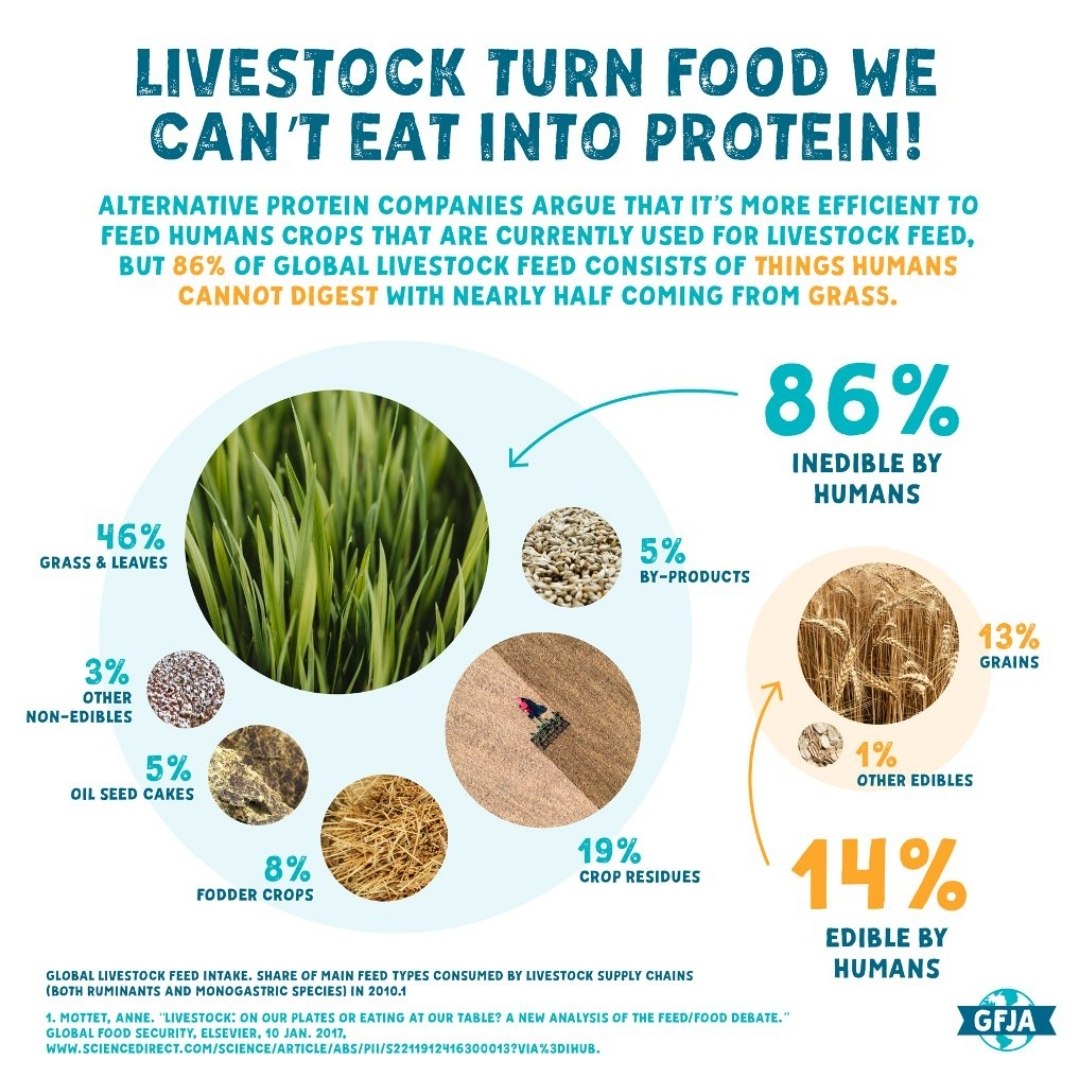
Turns out, making meat in a lab is very energy intensive. On the other hand, ruminant animals upcycle inedible byproducts into nutrient-dense food AND provide important ecosystem functions and inputs.
Lab-grown meat could be 25 times worse for the climate than regular beef unless scientists find ways to overhaul energy-intensive steps in its production https://t.co/WhkQV8lhPo
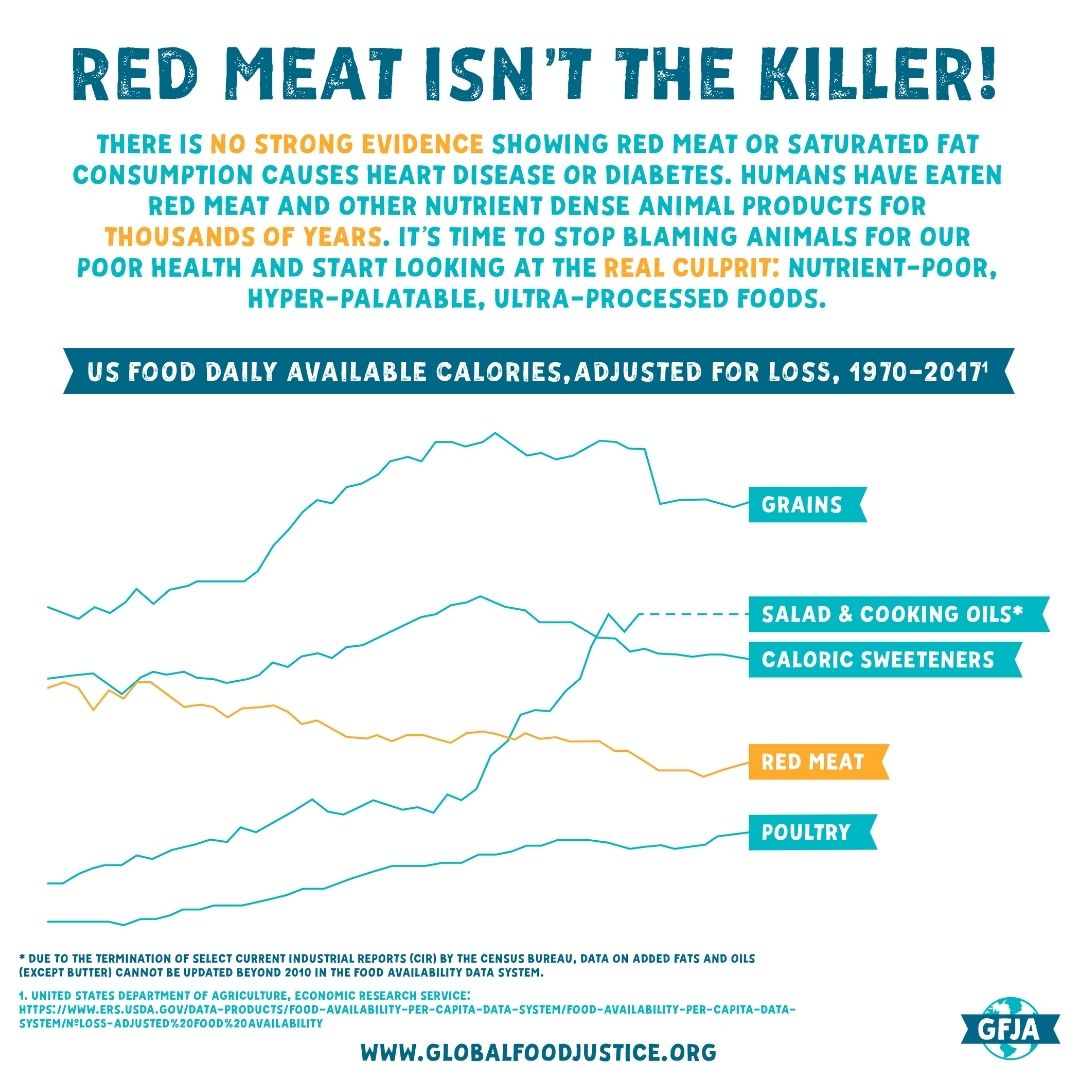
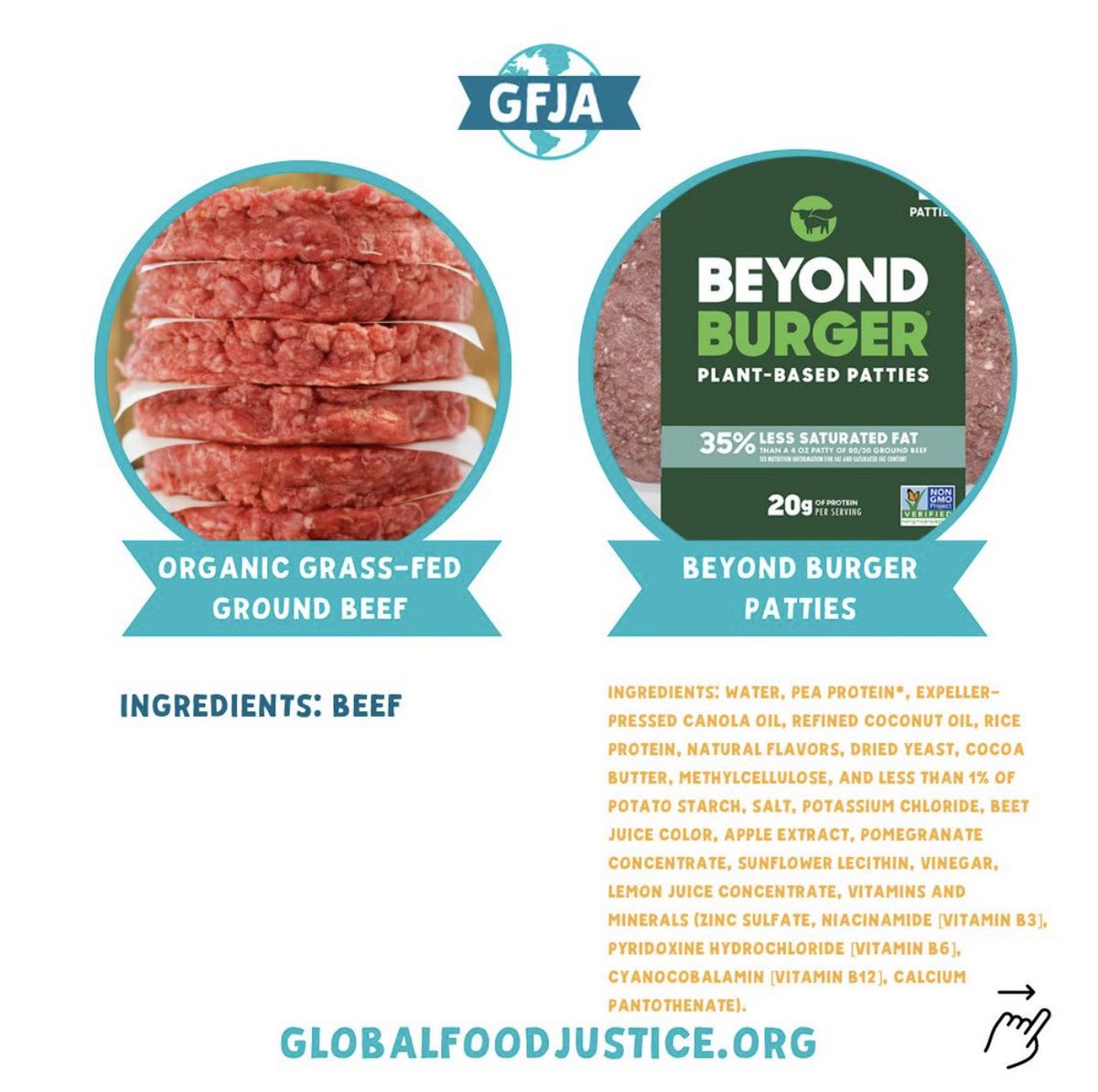
6 in 10 U.S. adults have a chronic disease. 4 in 10 have two+. In 1935, the U.S. National Health Survey reported the prevalence of chronic illness to be less than 1 in 12. So how did we get here? Is it bc of meat, eggs, and dairy or the ultra-processed hyper-palatable food?
Telling people to only eat grass-fed meat is like a doctor telling a patient to only eat organic vegetables. All meat is nutritious - eat the best meat you can afford.
Ruminant animals like cattle are not competing for land, they are converting inputs that cannot be used by humans to nutritious food and playing vital ecological roles.
It's inhumane to deprive children of the nutrients they need to grow properly and be healthy.
“This is the stuff that keeps me up at night. Going into reproductive age at nutrition risk can cause intergenerational effects"-Dr. Bailey From my op-ed on this 🧵
You would need to eat about 600 calories worth of beans and rice to get the same amount of protein you can get from just 160 calories of beef.
Stop comparing food based on their overall calorie content and instead look at nutrient-value.
It betrays a great deal of entitlement to insist that balanced vegan diets are accessible, achievable, or desirable for children who most need food security and food justice
https://t.co/m8jvOs49PM
Policies that aim to remove or dramatically reduce meat consumption and livestock production will not only have a dramatic impact on health outcomes and soil health, but will also harm rural economies.
https://t.co/DsOqTcNQ4a
The idea of "less meat, better meat" is elitist. Shaming those who cannot access or afford grass-fed meat will have substantial consequences to the health of many, and disproportionately impact populations who are most at risk of nutrition deficiencies.
https://t.co/nSPx1LeClA
Livestock aren’t just about “carbon emissions”. They can help to improve ecosystem function, provide manure for growing crops, upcycle “crop waste” into nutrient dense food, and are important to livelihoods, especially in the Global South.
https://t.co/DsOqTcNieC