Kite Mainnet is now live.
This is not just another mainnet. It is the first blockchain built for agentic payments.
Designed for an agent-first internet, for builders, and for the future Agent Economy.
What makes Kite Mainnet different:
Built for builders and agents. Not chasing TVL. Not chasing the next DeFi cycle. Not competing for idle speculative capital.
Three layers, one platform:
• Settlement Layer: built for high-frequency, low-value, agent-driven stablecoin-native transactions.
• Kite Agent Passport: unifies identity, delegated authority, and programmable governance.
• Agent Interface & Experience: where agents and developers interact with the system through agent registration, agent harnesses, and service discovery.
A unified hub for all major payment protocol standards, including x402, Google AP2, and Stripe MPP.
Try Kite Agent Passport today: https://t.co/7tdztPHauj
Join our agentic community: https://t.co/oCQtTJRFBb
Let's build the rails for the Agent Economy.
The agent economy will not start with shopping. It starts with APIs.
On Episode 742 of the @BlockHashPod, our Co-Founder & CEO @ChiZhangData sat down with host Brandon Zemp to unpack why Kite's adoption thesis flipped within one year:
▷ Our first demo was agents ordering Uber Eats. Today the nearest-term use case is the API economy: agents paying per call, in real time, for the services they consume
▷ If the world ends up with more agents than humans, the whole world needs to be API accessible. That is how agents work with each other
▷ Adoption will run from developers to enterprises to consumers. Exactly the opposite of what we expected a year ago
Sovereign agent finance starts with local money, compliance, and trust.
As AI agents move from copilots to economic actors, the harder questions arrive: What financial rails do agents need? How should KRW stablecoins, identity, and compliance work in a local market? And what does machine-native payment infrastructure look like in practice?
Join us for Episode 17 of AI on AIR podcast with @hashed_official’s @harryhojinkim, CEO of Hashed Open Finance.
Our founders @ChiZhangData and @scottshics will sit down with Hojin to explore Korea’s role in shaping sovereign agent finance, from KRW stablecoins and regulated financial rails to machine payments and institutional trust.
📍 Live on Kite’s X and LinkedIn
📅 June 10
🕐 19:00 PST
📌 Sovereign Agent Finance: KRW Stablecoins, Compliance, and Machine Payments
We’ll discuss:
• Why KRW stablecoin infrastructure matters for AI agents
• What Korea’s payment, banking, and regulatory environment makes possible
• How compliance and identity need to evolve for agent wallets
• Where machine-native payments and x402-style flows fit
• Why institutional trust is core to the agent economy
Set your reminder and join us live. Before agents can transact at scale, they need sovereign, compliant, and verifiable financial rails. 🪁
#CS2 skin markets make the trust problem in agentic commerce easy to see.
In this concept demo, @GoKiteAI shows how Agent Passport lets a player ask an agent to watch the CS2 skin market and buy only if an approved quote stays under $45, without handing over Steam account control.
▷ Scope the task: one CS2 weapon skin, approved marketplace rails, USDC via x402, 20-minute window, $45 hard cap.
▷ Keep account control with the player: no Steam password, Steam Guard, session cookie, trade approval, wallet seed, or card-on-file.
▷ Prove every step: quote check, bounded payment, blocked attempts, receipt, and automatic revocation.
Delegate the payment, not the keys. 🪁
Kite is accelerating the transition to an agent-first economy by establishing the infrastructure for secure, verifiable, and autonomous commerce. Here is what we delivered this week:
1️⃣ Our Head of Ecosystem @Henryleemr introduced the Kite Agent Passport at #BitcoinSeoul2026, connecting with global institutions to define the next generation of machine-native payment rails.
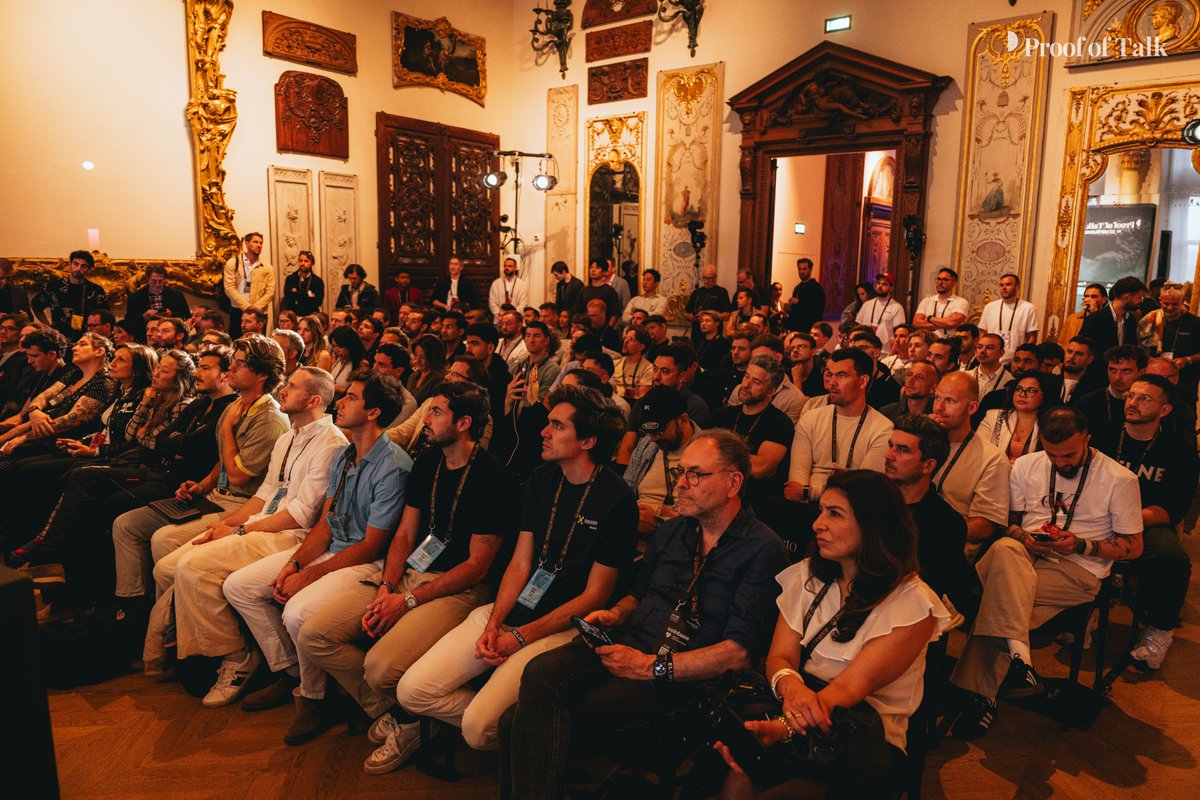
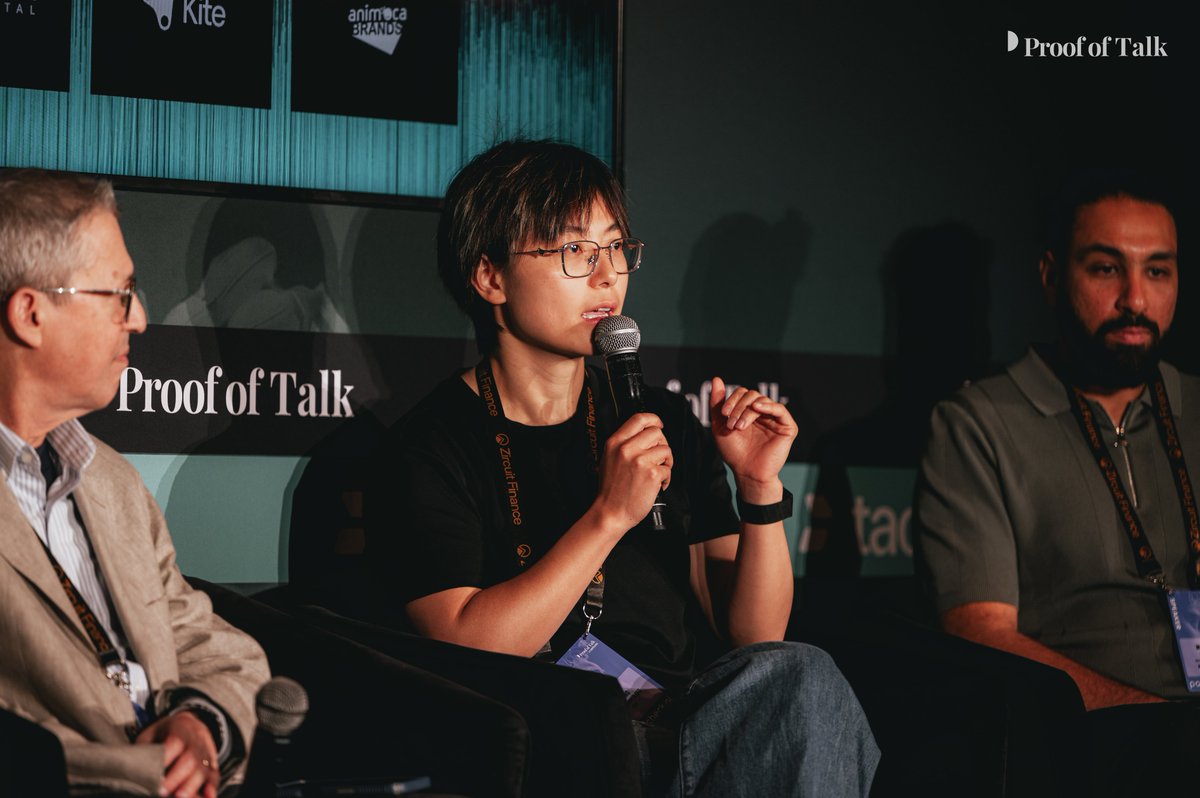
2️⃣ Our Co-Founder and CEO @ChiZhangData joined @proofoftalk at the Louvre to lead a panel on "Personhood, Provenance, and Verification," exploring how decentralized identity secures interactions in the agentic age.
3️⃣ Our VP & Head of BD @lei_lei0904 joined the @csuitepodcast at Consensus to discuss the trust requirements of agentic commerce, highlighting that the x402 payment extension has now facilitated over 100 million transactions.
4️⃣ We outlined a vision for how the Kite Agent Passport enables autonomous trading on platforms like Polymarket, allowing agents to execute signal-based trades within strict, user-defined policy bounds without ever holding a hot wallet.
5️⃣ We joined @billions_ntwk as a launch partner for their collaborative AI agentic movie, supporting 500+ builders using the x402 payment extension to turn agents into filmmakers through secure micropayments.
6️⃣ We are serving as an official partner and judge for @Bitget_AI’s Hackathon S1, supporting a $50,000 prize pool for developers building natural-language trading strategies.
7️⃣ Our Co-Founder @ChiZhangData appeared on @jeffwilser’s @AiCuriousHQ podcast to unpack the structural shift toward agentic commerce and why autonomous customers are arriving faster than expected.
8️⃣ We continued the Kite Community Growth Plan with a new AI sharing session on professional motion graphics and announced our upcoming Kite Image Guessing Game for the community.
The rails for the autonomous economy are being laid across the globe. 🪁
@jeffwilser@ChiZhangData@AiCuriousHQ@consensus2026 Agentic commerce abstracts away the checkout flow entirely. The UX becomes permissioning, not purchasing.
That's a massive design space most product teams haven't internalized yet. 👀
When AI agents do the shopping, your most important customer might not be a human at all.
On @jeffwilser's @AiCuriousHQ podcast, our Co-Founder & CEO @ChiZhangData unpacked where agentic commerce actually stands today, and why it's arriving faster than most people expect.
▷ The shift is structural: when agents buy on your behalf, businesses start selling to agents, not people. If an agent can't discover you, you're invisible.
▷ It's already a one-way ticket: Shopify first blocked agents, then opened its catalog to them. Visa, Mastercard and Google are all moving in.
▷ The hard part isn't the checkout, it's trust and payments. Kite is the layer that lets your agent pay safely, without ever handing over your credit card.
"Agentic commerce is coming sooner than people think."
The agent economy won't run on the payment rails we built for humans.
At #BitcoinSeoul2026 in Seoul, South Korea, our CPO @Henryleemr took the stage to introduce Kite, the Kite Agent Passport, and where agentic payments go from here, and connected with leading institutions and top projects across Korea.
▷ Why agents need rails of their own: a typical agent transaction is a few-cent API call at machine speed. Legacy payments charging ~3% per swipe simply break under autonomous agents.
▷ Identity has to come first: with the Kite Agent Passport, every agent carries a verifiable cryptographic identity, spends only within the limits you set, and stays under a kill switch you control.
▷ Where this is heading: agentic commerce is already here. x402 has crossed 100M transactions, and the space grew from ~20 companies in 2024 to 500+ today. Kite is building the trust layer for that economy.
Building the rails for the agent economy. 🪁
When AI agents start acting and transacting on behalf of people and institutions, how do you prove who is actually behind every interaction?
At @proofoftalk inside the Louvre in Paris, France, the Davos of Web3 brought together global business leaders, with 120+ speakers collectively representing over $18T in assets under management. Our Co-Founder & CEO @ChiZhangData took the stage to unpack Personhood, Provenance, and Verification in the Agentic Age, alongside leaders from @billions_ntwk, @paritytech and @SuremarkDigital, moderated by @animocabrands.
▷ The core question: how to prove an actor is human, eligible, or trustworthy without exposing a full identity or leaning on Web2 gatekeepers.
▷ The threats few are pricing in: synthetic users, bot networks, agent impersonation, credential fraud, and the quiet collapse of trust online.
▷ Kite's answer: identity as the base layer. With Kite Passport, every agent carries a verifiable cryptographic identity, transacts within user-set limits, and can be revoked at any time, so agents prove who they are before they ever move money.
Kite is building the base layer for the agentic internet: the trust and payment infrastructure that lets autonomous agents act as real economic participants. 🪁
The hardest part of agentic commerce isn't the payment. It's the trust.
At Consensus in Miami, our VP & Head of BD @lei_lei0904 joined @csuitepodcast to break down what it actually takes to let AI agents transact safely.
▷ Agentic commerce is already here: x402 has crossed 100M transactions, and the space went from ~20 companies in 2024 to 500+ today, with Google, Stripe, PayPal, Amazon and Shopify all moving in.
▷ Trust can't be an afterthought: compliance and security have to be built in from day one, at the infrastructure level. That's what Agent Passport does, spend within the limits you set, with a kill switch you control.
▷ Payments have to move at machine speed: agent transactions are often API calls worth cents, where traditional rails charging 3% simply break.
Building the trust layer for the agent economy. 🪁
The 2026 Champions League final went to penalties. PSG beat Arsenal. But the market that paid out was the draw.
Now imagine an agent that could trade an edge like that for you. It could act on the signal, but only if it could move money without ever holding your hot wallet or your Polymarket login.
That is exactly what @GoKiteAI Agent Passport is designed for.
This is a concept demo of how it would work. One scoped Passport lets the agent:
▷ Request a policy, then act inside it: Polymarket only, YES/NO contracts only, 20 dollars per market, 200 dollars total exposure, a 14-day window, settlement only back to the user's wallet, and auto-revoke if drawdown passes 30%.
▷ Buy "Draw: YES" near 27 cents and log the signal behind it: market, price, size, timestamp. When a trade would breach the cap, it pauses and asks instead of doubling down.
▷ At full time, 1-1, the draw resolves YES. Winnings route straight back to the user's wallet, with a full audit trail: every fill, profit and loss per market, total spend versus cap.
What the user never hands over: hot wallet, Polymarket login, platform credentials, and blind trust that the agent stays in bounds.
What the user gets back: every fill and the signal that triggered it, live exposure against the cap, settlement to their own wallet, and one-click revocation.
This is where agentic commerce is heading. Agent Passport is the rails: scoped, auditable, revocable. 🪁
PANEL ANNOUNCEMENT: When AI agents start acting, transacting, and communicating on behalf of people and institutions, how do we prove who is actually behind every interaction?
Chi Zhang @ChiZhangData (Co-founder & CEO, @GoKiteAI), Evin McMullen @provenauthority (Co-Founder & CEO, @billions_ntwk), Pierre Aubert @pierreaubert (VP of Engineering, @paritytech), and Stuart Haber @StuartHaber (Chief Cryptographic Officer, @SuremarkDigital) sit down for a talk with Mohamed Ezeldin @Mo_Ezz14 (VP & Head of Animoca Labs, @animocabrands) discussing:
Personhood, Provenance, and Verification in the Agentic Age.
Drawing from their experience, they will discuss how decentralised identity systems can prove someone is human, eligible, or trustworthy without exposing their full identity or relying on Web2 gatekeepers.
Challenge! They will have to name 1 under-discussed threat from agentic AI, from synthetic users and bot networks to agent impersonation, credential fraud, and the collapse of trust online.
Be in the room.
https://t.co/ol4EWRsimW
From Alphabet's $80 billion stock sale to fund AI compute to Uber capping employee AI spending after blowing its annual budget, the last two weeks shows agentic AI is scaling at unprecedented speed while confronting real cost constraints.
Here's your biweekly recap of everything that happened in the space, in the latest edition of AI Agents Pulse:
1️⃣ Alphabet plans to sell $80 billion in stock, including a $10 billion investment from Berkshire Hathaway, to fund AI compute infrastructure amid unprecedented customer demand.
https://t.co/d7ADqsyAhX
2️⃣ President Trump signs an executive order creating a voluntary framework for AI companies to share frontier models with the federal government for pre-release review.
https://t.co/jYkAycBlBE
3️⃣ HPE closes up 19% after a blowout earnings beat, with AI server revenue hitting $5.45 billion and CEO Antonio Neri citing agentic AI as a key driver of demand acceleration.
https://t.co/4uFStjmGyw
4️⃣ Palo Alto Networks beats Q3 estimates as AI threats drive demand, with revenue growing 31% to $3.00 billion and CEO warning of increased cybersecurity urgency.
https://t.co/M8enLZ0rIn
5️⃣ OpenAI launches new Codex plugins for non-developers, who now make up 20% of its 5 million weekly users and are growing 3x faster than developers.
https://t.co/uKSHsmLLLw
6️⃣ NVIDIA opens up NemoClaw, a blueprint for building autonomous AI engineers, with Cadence using it to cut RTL verification time from weeks to hours.
https://t.co/00bmlMtfjS
7️⃣ Anthropic scales Project Glasswing to 150 partners in 15 countries, using the Claude Mythos model to hunt critical software flaws and finding over 10,000 vulnerabilities.
https://t.co/QyZd3T1bUV
8️⃣ Goldman Sachs CEO David Solomon says markets are in 'greed' mode and can handle upcoming AI IPOs, pointing to Alphabet's $80 billion stock sale as a positive signal.
https://t.co/0kI5IBvKUy
9️⃣ Uber caps employee AI spending at $1,500 per month per tool after burning through its entire annual AI budget in just four months.
https://t.co/mctrLG8Tw1
🔟 Google's Phone app gains a feature that flags AI impersonation scam calls, using RCS silent confirmation to verify caller identity.
https://t.co/BqbdNiYHXZ
1️⃣1️⃣ Director Martin Scorsese joins Black Forest Labs as a partner and adviser, using its AI image generation solely for storyboarding.
https://t.co/tphQ0k9cq8
1️⃣2️⃣ ZeroDrift raises $10 million to build an AI compliance service that sits between models and end users, deterministically flagging and rewriting non-compliant messages.
https://t.co/UCic4ZZgEr
@OpenAI Sites makes the last mile of app deployment feel invisible. That's exactly where friction compounds: when engineers stop because shipping is harder than building.
Curious how permissioning and version control hold up once these go from demo to daily driver.