@CodingPuzzle_en That's a genuinely useful way to put it. I'll stick with Bandit a bit longer before jumping over then. Appreciate you actually explaining the why instead of just picking a side.
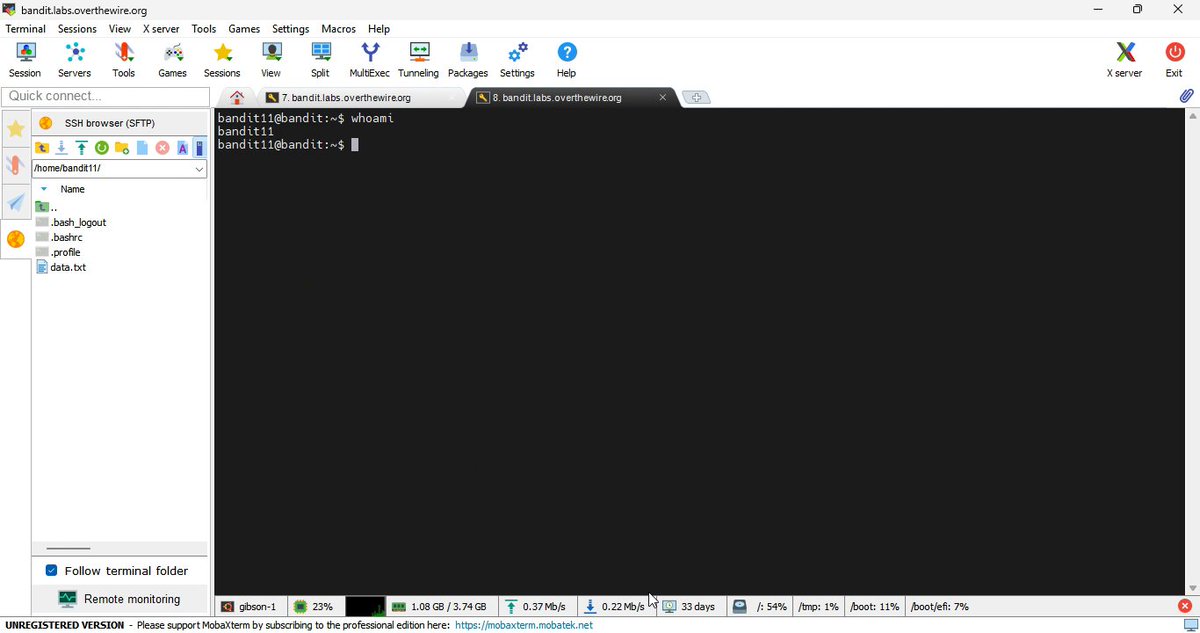
Question for the DevOps crowd: after OverTheWire Bandit, keep grinding levels or switch to something like SadServers for real troubleshooting? Cleared level 10 last night, wondering if fundamentals are solid enough to make the jump.
#100DaysOfCode
If you manage a team of #Linux admins or #DevOps engineers, forward this to them.
The #SSH Complete Course covers everything from basics to enterprise Zero-Trust.
54 chapters of the kind of knowledge that usually takes years of production experience to accumulate.
→ https://t.co/M6zgrQxQqN
Solved Bandit level 10 tonight, recorded it this time instead of just writing about it. Wrong tab, a couple of denied logins, then it clicked. #Linux#Devops#cloudcomputing#100daysofcode
2 weeks into learning Linux from zero. Finally beat a Bandit level on OverTheWire that had me stuck for way too long. Also working through Tech Apricate's free Linux for DevOps playlist. No fluff, just typing commands until they stick. Will be back to give more updates 😉😉😉
Not gonna lie, this one's harder to post than usual.
Feed's full of cert badges lately, SOC-300, AZ-200, Solutions Architect. Half of them I don't even fully understand yet. Easy to feel like everyone's lapping me before I've started.
Don't have this figured out either, still deep in that doubt some days.
But Linux has been quietly proving something to me. Stuff that was pure memorization a few weeks ago is actually starting to click. No cert yet, but a terminal that doesn't scare me anymore. Some days that's enough. #CareerChange #Linux
Quick question: when someone says "my data is encrypted," encrypted when, exactly?
Never really thought about it before. Turns out there's two answers.
Data in transit: moving right now, from your device to the cloud. HTTPS and TLS handling that.
Data at rest: just sitting there. In an S3 bucket, doing nothing, waiting.
Two different moments. Two different jobs.
But both hit the same problem eventually: someone has to hold the key that unlocks it all.
That's the actual hard part. Not the math, that's already solved. AWS has a whole service for this called KMS. Azure has Key Vault. Google Cloud has its own version too.
Strongest encryption in the world means nothing if someone gets that key.
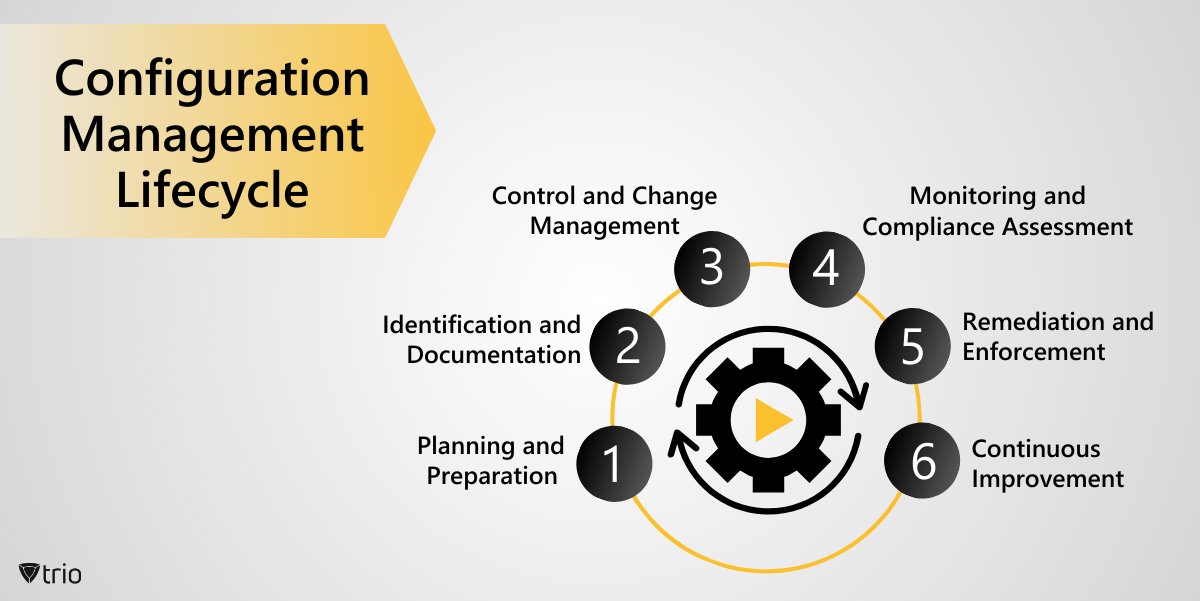
You know that thing where two servers run the exact same app but one's acting weird and nobody can figure out why?
Used to think that was just cloud being flaky. Turns out it's usually inconsistent configs.
Config management gets framed as a security thing: lock ports, kill default accounts, watch for backdoors. All true. But when every instance starts from the same hardened baseline, troubleshooting stops being a guessing game too.
Same habit, two different payoffs: keeps attackers out, saves future-you from a very avoidable 3am headache.
A recruiter once told me certs are the fastest way to get taken seriously here. Sure, if we're talking about an ATS bot scanning my resume.
Still don't have an AWS cert. Got a VPC I built myself and IAM running across 3 clouds instead. I'd rather show you that than tell you my exam score.
NetworkChuck has a series literally called "You Suck at Subnetting." Clicked on it half offended.
Turns out I've been running subnet math through a calculator for months without knowing what it was actually doing. Could tell you a /24 is 256 addresses because I'd memorized it, not because I could explain where the number came from.
Video 4 made me work it out in binary by hand. Got it wrong twice. Third time it clicked, and now I actually know why the number is what it is.
Added a CIA triad writeup to my Notion today, my fourth page this month alongside cloud fundamentals, VPC architecture, and IAM setups across three clouds.
None of it was a strategy. I just kept forgetting what I learned two weeks after finishing a course, so now I write it down. Old customer support habit, new context.
Spent an hour writing IAM policies for AWS and realized I was really doing three things: deciding who could see something, who could change it, and whether it would even be up when someone needed it.
That's the CIA triad. Confidentiality, integrity, availability. I'd seen it in every study guide and skipped past it because it read like an exam flashcard, not something you'd actually use.
Confidentiality is the one access control gets credit for. Every least privilege rule, every MFA prompt, every policy that says no by default is answering one question: are you actually supposed to be here.
Integrity is quieter. It's not about who gets in, it's about whether the data stays honest once they do. Audit logs and version history don't stop a bad edit, they just make sure you can catch it after.
Availability is the one nobody counts as security until the system goes down and nobody can work. A locked vault that's closed for business still failed everyone who needed to get in.
The part that actually changed how I write policies: these three aren't separate lanes. Every rule touches all of them at once. Get one wrong and you might be breaking the other two too.
Still early in this, so if you've got a war story about IAM going sideways, I want to hear it.
#IAM #CloudSecurity #LearningInPublic
AWS interview survival kit
• EC2 vs Lambda
• S3 vs EBS vs EFS
• IAM users vs roles
• Security Groups vs NACLs
• Public vs private subnets
• RDS vs DynamoDB
• Load Balancer vs Auto Scaling
• Route 53 basics
• CloudWatch logs and alarms
• High availability basics
• Cost optimization basics
• Shared responsibility model
Don’t memorize definitions.
Learn decisions, trade-offs, and use cases.