If you plan on being caretakers of your parents or siblings, have them put their home and assets in a trust. They will qualify for Medicaid services after five years of showing minimal income. Medicaid would then in turn pay you to care for them. Now Caretaking is an overwhelming task and many are not built for it so if that's you still have them put the home in a trust and the assets to qualify for Medicaid...they will pay for whomever you choose to care for them. For end of life care..your parents should own nothing and have no assets that are not in a protected trust.
@JustinAColesPhD @SikkemaJenkins I NEEED to read this for my research...I am in the middle of a lit review, and Im trying to see something. Could you send me a copy of the article? Thank you in advance!
Looking for this study by @DavidGrissmer Grissmer David A., Kawata Jennifer, Williamson S. 1998. “Why Did Black Test Scores Rise Rapidly in the 1970s and 1980s?” In The Black-white Test Score Gap, edited by Jencks C., Phillips M. Washington, DC. Anyone have access? #achievmentgap
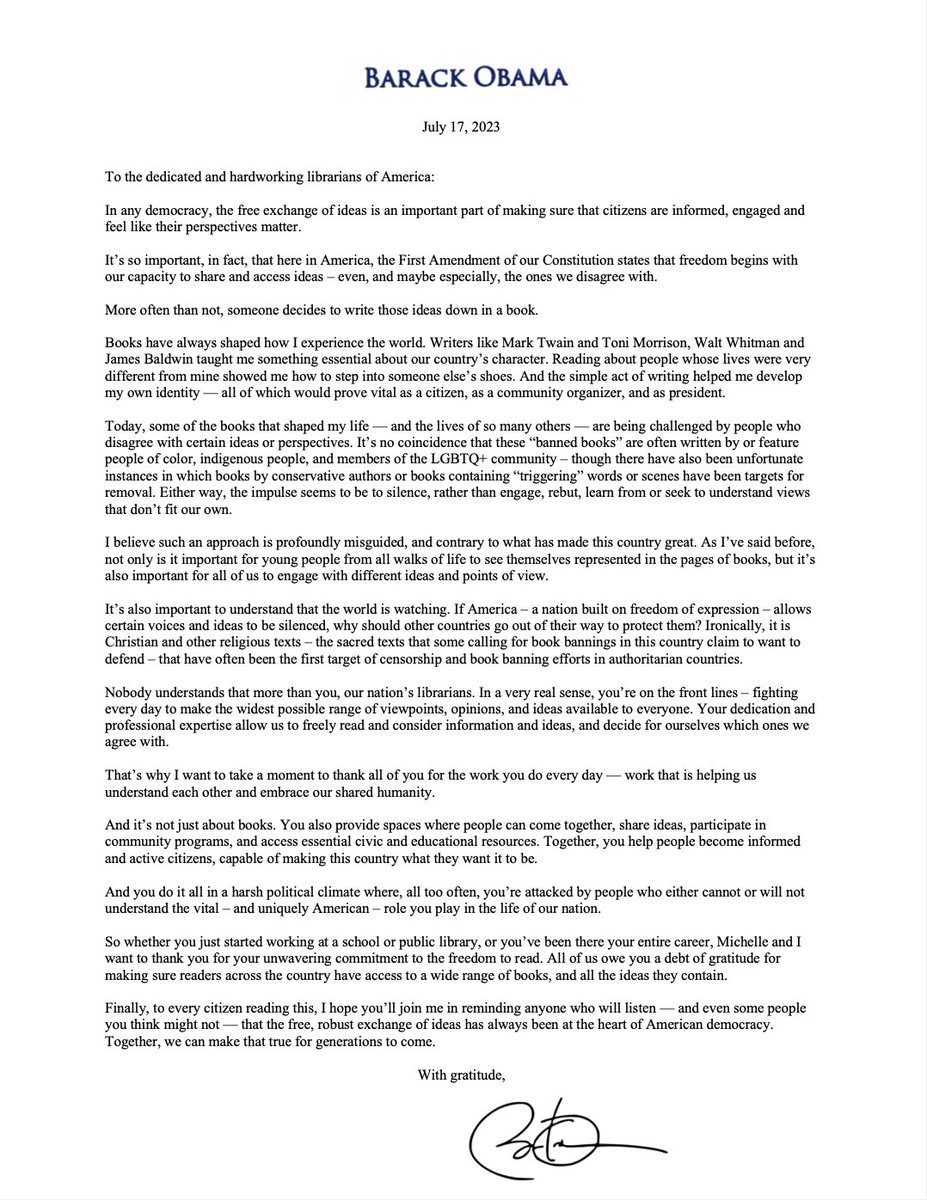
Today, some of the books that shaped my life—and the lives of so many others—are being challenged by people who disagree with certain ideas or perspectives. And librarians are on the front lines, fighting every day to make the widest possible range of viewpoints, opinions, and ideas available to everyone.
"..African American students are up to 33% more likely to graduate than African Americans at similar non-HBCUs... Black students who attend HBCUs receive higher wages and are likelier to experience upward mobility. "
https://t.co/jpsjW43t02
The average yearly cost of getting sick for Black and Latinx elders ($22,734) is 25% higher than the cost for White elders ($18,145), who, on average, have much more wealth.
By Marc Cohen and Jane Tavares
https://t.co/1wK9P7AD2M