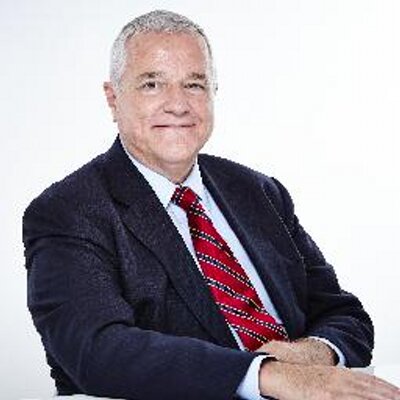
With US debt around $40 trillion, JP Cortez sees little evidence that government spending or money creation is about to reverse course. His expectation is that the US will continue to print and spend, an environment he believes remains bullish for gold and silver. @JpCortez27
https://t.co/PR2aEjM3MB
The return of sound money in America may be happening from the bottom up rather than the top down. JP Cortez explains how states are removing taxes and regulations on gold and silver, while some are also considering physical gold for their own reserves. @JpCortez27
https://t.co/PR2aEjMBC9
For JP Cortez, sound money is money that preserves its value and purchasing power over long periods of time. He argues that gold and silver have fulfilled that role for thousands of years in a way that fiat currencies have struggled to match. @JpCortez27
https://t.co/kf8rvL6GUt
JP Cortez argues that inflation changes the meaning of saving. When the purchasing power of currency steadily declines, simply holding money is no longer enough to preserve the value of what you have earned. @JpCortez27
https://t.co/kf8rvL6GUt
Rick Rule does not expect the US dollar simply to disappear as the world's reserve currency. He does, however, believe it will continue to lose market share, with gold taking a greater role on central bank balance sheets and, increasingly, individual balance sheets too.
@RealRickRule
https://t.co/QKawVqmlI6
Rick Rule sees two problems in the bond market: investors can lose purchasing power even while earning interest, while the credit quality of heavily indebted governments continues to deteriorate. For him, a positive nominal yield does not necessarily mean a positive real return. @RealRickRule
https://t.co/QKawVqmlI6
Rick Rule believes the real deterioration in the purchasing power of the US dollar is substantially greater than official inflation figures suggest. For investors, he argues, the difference becomes clearer when they compare what their money actually buys today with what it bought several years ago. @RealRickRule
https://t.co/QKawVqmlI6
Rick Rule does not think about physical gold simply in terms of whether its price will rise. He considers it wealth and insurance, and says he owns it because of what it would mean for the financial system if gold were to go significantly higher. @RealRickRule
https://t.co/QKawVqmTxE
Rick Rule believes one of the most important changes in US financial markets is that the government is losing control of long-term interest rates. He sees the bond market beginning to reassert itself at a time when government debt and deficits continue to grow. @RealRickRule
https://t.co/QKawVqmTxE
Gold miners may be providing one of the most important signals in the precious metals market. Michael Oliver @Oliver_MSA believes their long period of undervaluation relative to gold is approaching a potential breakout, which could see miners substantially outperform the metal itself.
https://t.co/KOOvhQj8TU
Michael Oliver @Oliver_MSA believes a significant shift in capital could occur if the US stock market begins to weaken. With government bonds offering a less convincing alternative than in previous cycles, he sees the potential for more money to move towards gold and silver.
https://t.co/KOOvhQj8TU
The traditional 60/40 portfolio depends on government bonds providing protection when stocks become vulnerable. Michael Oliver @Oliver_MSA argues that this relationship becomes much more complicated when the bond market itself is under pressure, potentially leaving precious metals as an increasingly important destination for capital.
https://t.co/KOOvhQjGJs
For Michael Oliver, @Oliver_MSA the argument for gold and silver extends far beyond their recent price action. He sees growing pressure in government debt markets and the continued degradation of fiat currencies as the forces ultimately driving monetary metals higher.
https://t.co/KOOvhQjGJs
Michael Oliver @Oliver_MSA believes gold and silver are entering the next phase of their advance. His momentum analysis suggests the latest rally is different from the short-lived recoveries of recent months and could develop into a much more powerful move.
https://t.co/KOOvhQjGJs
Michael Oliver @Oliver_MSA believes the recent weakness in gold and silver has been widely misread. Rather than breaking down after the sharp sell-off, both metals have repeatedly found buyers around key levels. For him, that resilience suggests the next phase of the advance may already be beginning.
https://t.co/KOOvhQjGJs
China’s interest in gold is frequently discussed in terms of reserves. @DrStephenLeeb argues that the more consequential story is the infrastructure being built around those holdings, including exchanges, vaults, clearing and settlement systems.
https://t.co/ZIiiDBvEbU
@DrStephenLeeb sees the end of the gold standard in 1971 as more than a change in monetary policy. He believes it removed a discipline that had forced governments and businesses to think beyond the next political term or financial quarter.
https://t.co/ZIiiDBwc1s
Gold does not need economic conditions to be dramatic in one particular direction. @DrStephenLeeb argues that its value lies in providing protection against monetary extremes, whether the eventual outcome is serious inflation or prolonged deflation.
https://t.co/ZIiiDBvEbU
In our interview with @DrStephenLeeb he explains why he believes the petrodollar gave the United States enormous financial power because oil exporters priced energy in dollars and recycled the proceeds into US debt. The weakening of that arrangement would have consequences far beyond oil.
https://t.co/n3ehPeI9ki
“Freedom of thought is where it really comes down to.”
For @DrStephenLeeb, the danger of AI lies in confusing computational ability with human judgement. Humour, creativity, love and independent thought cannot be reproduced simply by processing more information.
https://t.co/n3ehPeIH9Q