My father-in-law escaped communism.
He often reminds me “you’ll never convince an idiot that he’s an idiot.”
I think about that a lot…
Anyway, thought that bit of wisdom might be helpful for anyone trying to maintain their sanity on this app.
Keynesian stimulus has never worked, and never will, and the record proves it. Every. Single. Time.
Start with the New Deal. Roosevelt tripled federal spending between 1933 and 1940, and unemployment still sat at 14.6 percent in 1940. Seven years of pump-priming bought a decade the economists call the Great Depression.
Japan tried the same trick. Through the 1990s Tokyo ran ten separate stimulus packages, poured trillions of yen into bridges and roads to nowhere, and drove public debt above 130 percent of GDP by 2000. The reward was the Lost Decade, then a second one.
Then came 2009. Obama and his advisers promised the $831 billion stimulus would hold unemployment under 8 percent. It hit 10 percent in October 2009. They spent the money anyway on shovel-ready projects that the president himself later admitted were not shovel-ready.
You see the pattern? Politicians take resources out of the productive economy through taxes and borrowing, hand them to whoever has the best lobbyists, and call the shuffle "growth."
They count the spending. They never count what the money would have built if the private sector had kept it.
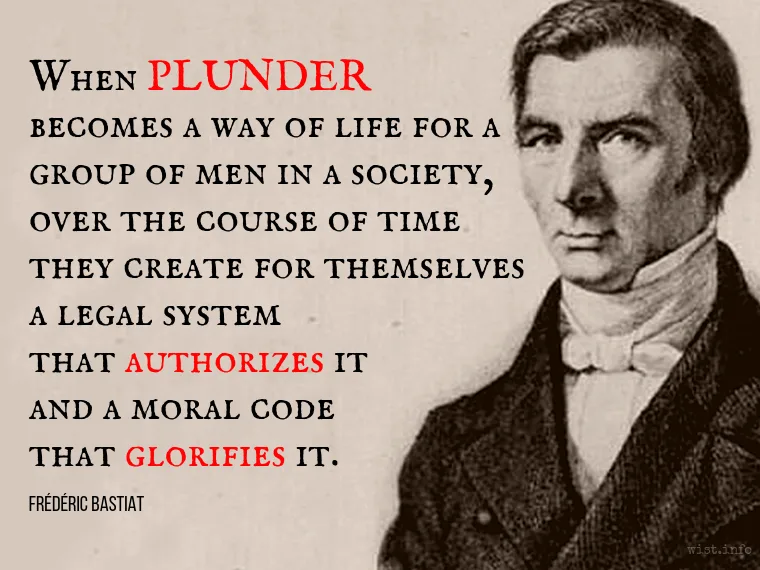
Frédéric Bastiat explained this in 1850 with the broken window. The stimulus crowd still hasn't read him.
The government cannot spend you into prosperity. It can only move wealth around and skim off the top.
The Law by Bastiat made simple:
1. Every person has a natural right to defend their life, liberty, and property. Law is simply that individual right organized collectively – nothing more, nothing less.
2. The moment law goes beyond that — taking from some to give to others — it has stopped being law and become legal plunder.
3. Legal plunder isn’t exceptional. It’s the normal operating mode of most governments most of the time: subsidies, redistribution, bailouts – each one a faction using state force to extract what it couldn’t get by voluntary agreement.
It was all already there in 1850.
4. The test is simple: if the same act performed by a private individual would be called theft, it’s theft when the state does it too. The badge doesn’t change the nature of the act.
5. Two wrong responses to legal plunder: give everyone the right to plunder (socialism), or let the current plunderers keep going (cronyism).
The only legitimate answer is to strip law back to its actual function.
6. Once people see law as a machine for taking rather than protecting, everyone floods politics to control it – because whoever runs the machine can point it at their enemies. This is why Bastiat defined the state as “that great fiction by which everyone tries to live at the expense of everyone else.” Lobbying and corruption aren’t aberrations. They’re the logical conclusion of a law that plunders.
7. The title is the whole argument: Bastiat isn’t describing what the law is. He’s describing what it’s supposed to be – and showing, relentlessly, how far the thing calling itself law has drifted from that. Real law protects. Everything else wearing that name is organized force and theft in disguise.
Governments treat you like livestock: a stationary asset to be milked at whatever rate the herd manager decides. But you are not a cow. You have legs, a laptop, and a passport. When Monaco charges zero income tax and France charges half your earnings, the choice you make sends a price signal louder than any polling booth. Ludwig von Mises called it consumer sovereignty in the market. Applied to jurisdictions, it becomes something more dangerous to the state: taxpayer sovereignty.
Look at the numbers. Puerto Rico's Act 22 offers 0% on capital gains, and crypto founders relocated to San Juan by the hundreds after 2017. Dubai runs no personal income tax and pulled in a net 6,700 millionaires in 2024 alone, the highest inflow on the planet. Switzerland has quietly hoarded capital for a century by simply refusing to be greedy. Capital flows toward whoever confiscates the least.
Politicians hate this, and they hate it precisely because it exposes the con. When they raise rates and revenue falls, they cannot blame the market without admitting that taxation past a certain point is theft with diminishing returns. So they invent the "tax haven" as a villain, lobby for global minimum taxes through the OECD, and try to build a cartel of governments so you have nowhere left to run. A cartel needs to eliminate competition. The entire purpose of the 2021 global minimum tax deal is to stop countries from underbidding each other for your loyalty.
Competition disciplines grocers and airlines. It disciplines states too, when you let it. Every man who moves to Zug or Austin or Lisbon casts a vote no legislature can override, and the state's only remaining move is to build a wall and call it fairness.
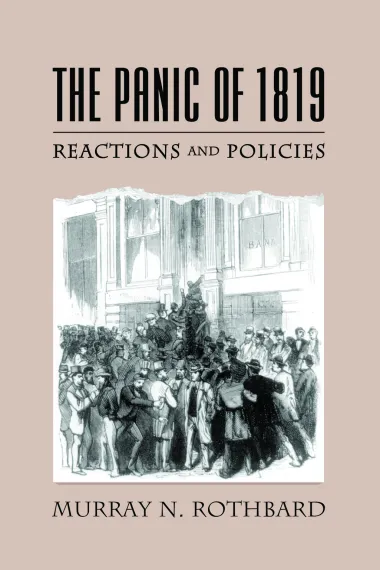
The Panic of 1819 was America's first boom-bust cycle, and the First Bank of the United States built the machine that produced it. You want to understand every crash since? Start here, in the wreckage of a credit expansion that the government engineered and then pretended to be shocked by.
Alexander Hamilton got his central bank chartered in 1791, a twenty-year franchise to issue notes far in excess of its specie. The Bank inflated. State banks, chasing the same easy profits, inflated on top of that inflation. When the charter lapsed in 1811 and the War of 1812 arrived, the government needed to fund a war it couldn't pay for, so state banks flooded the country with paper and Congress let them suspend redemption. You could hold a bank note and try to get your silver. Good luck. The teller would smile and tell you to come back later.
Then came the Second Bank of the United States in 1816, and William Jones ran it like a drunk running a distillery. Between 1816 and 1818 the Bank and its client banks pumped credit into land speculation across the West. Cotton prices soared. Public land sales hit five million acres in 1818, much of it bought on borrowed paper by men who assumed the party never ends. It always ends.
In 1819 the Bank contracted. It demanded specie from the state banks, called in loans, and stopped the presses. The illusion collapsed on schedule. Land values cratered, cotton fell by half, and thousands of speculators who had mistaken cheap credit for wealth discovered they owned mortgages instead of fortunes. Unemployment spread through Philadelphia and Baltimore. Debtors' prisons filled up. The men who caused it kept their jobs and their reputations, which is the one American tradition that has never gone out of style.
Every element you'll recognize in 1929 and 2008 sat right there in 1819: artificial credit, malinvestment in the hottest asset, a contraction that exposes who was swimming naked. The market cleaned up after the money printers, as it always does. The market didn't fail; it inherited the mess and got blamed for it.
When I truly understood this next fact, it broke my brain:
The largest heist in world history is happening right under your nose.
The theft? All your productivity gains.
Think about it:
1. You're 10x more productive than your grandfather
2. Technology should have made you 10x wealthier
3. Instead, you're working harder for less
Where did the wealth go?
Every breakthrough that should have enriched YOU:
Electrification → Stolen
Automobiles → Stolen
Computers → Stolen
Internet → Stolen
The method: Currency debasement.
They print money. Your purchasing power disappears.
Your productivity gains flow to them.
This isn't economics.
This is organized theft.
Bitcoin fixes this
@asanoha_gold *Some systems in life.....
What's becoming blatantly obvious recently is how governments fail, or do poorly at almost everything.
But they are spending 'other people's money', pay themselves first, are unaccountable, so have no incentive to do well.
When Soviet citizens wiped themselves with shredded copies of Pravda, they performed the most honest literary criticism in communist history.
The toilet paper shortage wasn't an accident or temporary glitch. Central planners allocated resources based on political priorities, not consumer demand. Paper mills produced propaganda newspapers by the millions while bathroom tissue remained perpetually scarce. You couldn't buy what planners didn't prioritize, regardless of how desperately you needed it.
Citizens adapted with characteristic ingenuity. Office workers smuggled rolls home from government buildings. Families rationed squares like wartime rations. The luckiest ones read Pravda articles about industrial triumphs while using those same pages for more pressing purposes. The irony writes itself: communist propaganda literally became shit paper because the system couldn't produce actual toilet paper.
This wasn't unique to the USSR. East Germans hoarded Western toilet paper like gold. Cubans still struggle with shortages today, six decades after revolution promised abundance. Every socialist experiment produces the same result: consumer goods vanish while state priorities flood the market.
Free market economists explain this through simple price signals. When consumers want toilet paper, they bid up prices. Entrepreneurs notice profit opportunities and shift production accordingly. Planners can't replicate this process because they lack the distributed information that prices convey. They guess what people need based on ideology and bureaucratic reports.
Carter signed the Motor Carrier Act in July 1980, and within five years shipping costs dropped 25% while service quality shot through the roof. Before deregulation, the ICC forced truckers to drive empty on return trips (brilliant central planning there) and prohibited rate competition. You literally needed government permission to haul freight between cities.
The explosion in logistics efficiency birthed just-in-time inventory systems that Toyota had pioneered but couldn't fully exploit in America's regulatory straitjacket. Suddenly manufacturers could slash warehouse costs and capital tied up in excess stock. Walmart's entire business model became possible when trucking rates plummeted and delivery became reliable enough to replenish shelves daily instead of weekly.
Free market economists predicted this outcome, but even we underestimated the ripple effects. Manufacturing productivity gains, lower consumer prices, the rise of e-commerce twenty years later (Amazon ships 13 billion packages annually because trucking works). Every time you order something online and it arrives in two days, you're benefiting from that 1980 decision to let markets work instead of bureaucrats deciding which truck can carry what where.
The regulatory capture before '80 was so absurd that trucking companies literally bought routes like taxi medallions. Competition works. Central planning doesn't.
@NZNationalParty Ummm have you ever thought about what is causing the rising cost of living? Why is it even rising when the rate of technology is forever increasing and should theoretically be pushing all prices down? 🤔
The Airline Deregulation Act of 1978 stands as one of the most spectacular vindications of free market principles in modern American history. Before deregulation, the Civil Aeronautics Board controlled every aspect of commercial aviation: routes, schedules, and most critically, prices. Flying remained a luxury reserved for the wealthy elite, with fares artificially inflated by regulatory capture and government-sanctioned cartels.
Within a decade of deregulation, average airfares plummeted by 50% in real terms. The number of passengers more than doubled from 250 million in 1978 to over 500 million by 1990. New airlines like Southwest and JetBlue emerged with innovative business models that prioritized efficiency over bureaucratic compliance. Routes previously deemed "unprofitable" by government planners suddenly thrived under competitive pressure.
The regulatory regime had created exactly what free-market theory predicts: artificial scarcity, price distortions, and a complete disconnection from consumer preferences. Airlines competed on amenities instead of price because the CAB fixed fares at monopoly levels. They served cocktails and full meals while ordinary Americans couldn't afford tickets. The moment government stepped aside, entrepreneurs discovered countless ways to serve previously ignored market segments.
Critics warned that deregulation would compromise safety and create chaos. Instead, aviation safety improved dramatically as airlines faced real liability for accidents and insurance companies imposed rigorous standards. Competition forced operational excellence in ways bureaucratic oversight never could. Hub-and-spoke networks emerged organically, maximizing efficiency without central planning.
The contrast couldn't be starker: decades of stagnation under regulatory control versus explosive innovation and democratization under market freedom.
Yet the same politicians who celebrate affordable air travel continue strangling other industries with identical regulatory schemes.
@TaxpayersUnion Me. Explaining why the economy has been getting worse since 1971 despite whichever political party gets the vote, and what to do about it.
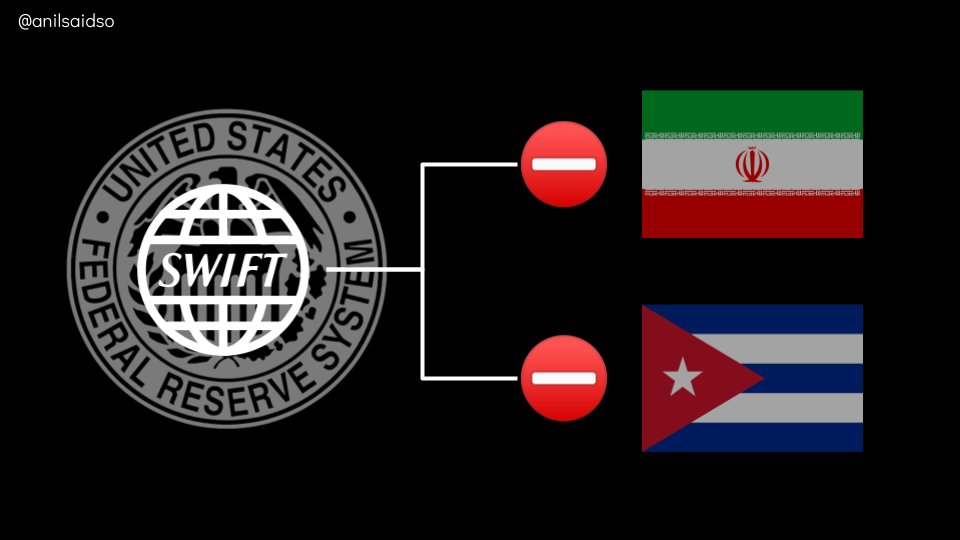
"It is the only entity that can invalidate any transaction and confiscate any balance from any other fiat node. The Fed controls the SWIFT payment network and can prevent entire nations from joining this payments system and settling trades with other nations."
What a profound little paragraph ......
"You cannot legislate the poor into freedom by legislating the wealthy out of freedom. What one person receives without working for, another person must work for without receiving. The government cannot give to anybody anything that the government does not first take from somebody else. When half of the people get the idea that they do not have to work because the other half is going to take care of them, and when the other half gets the idea that it does no good to work because somebody else is going to get what they work for, that my dear friend, is about the end of any nation. You cannot multiply wealth by dividing it."
~ Dr. Adrian Rogers