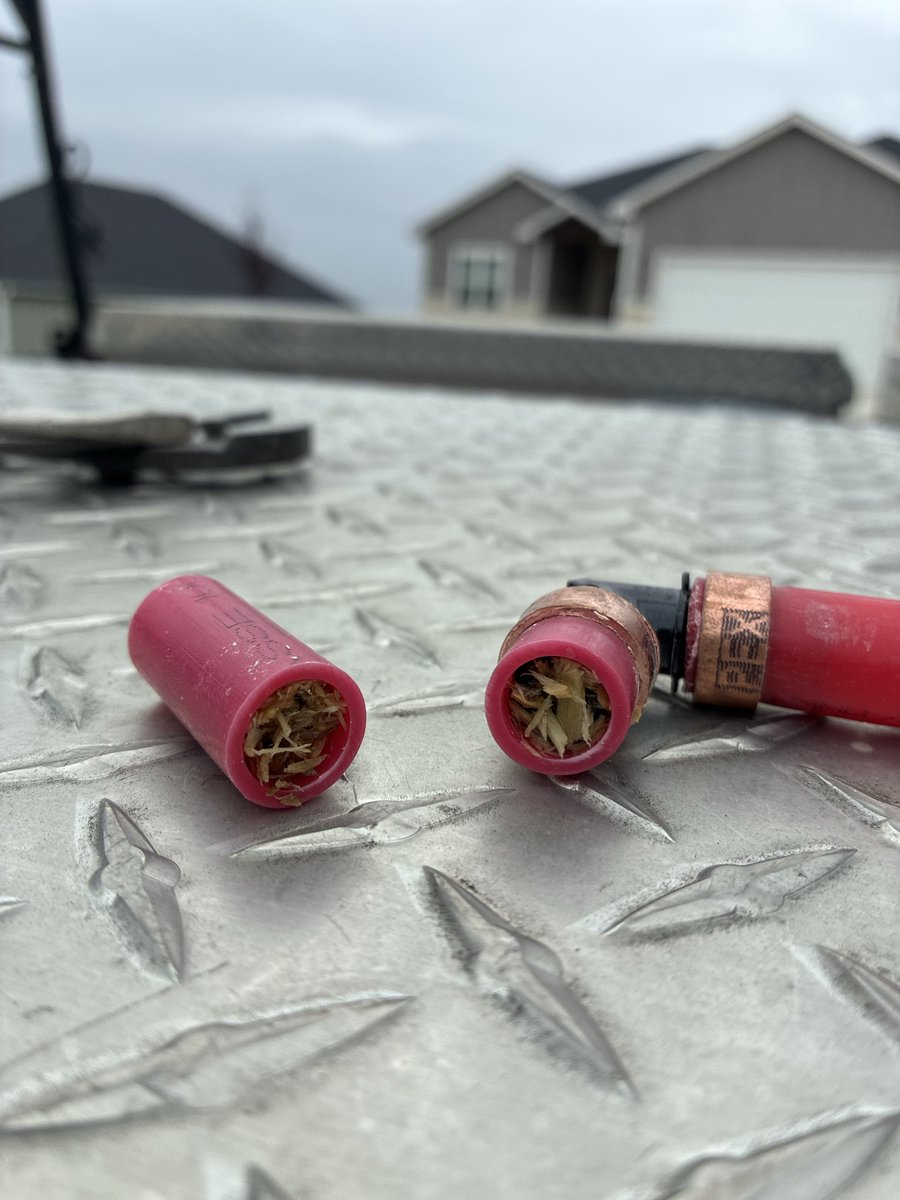
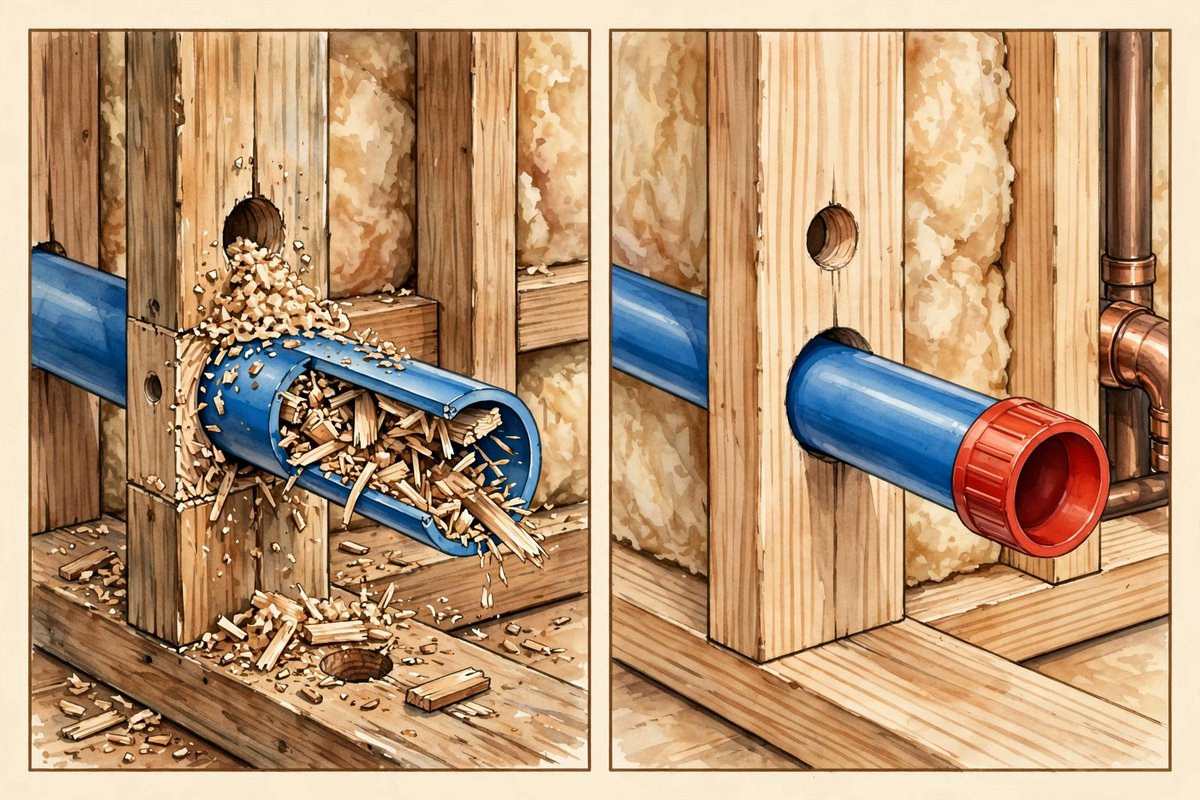
Wood chips in a hot-water PEX line. The installer pushed uncapped tubing through drilled studs.
Fix: cap every PEX end before rough-in, flush before fixtures. 30 seconds, skips the drywall cut.
Plumber ever flush your lines? #PlumbingTips#HomeInspection
We closed on our last 3-bedroom, 2.5-bath, 2-car garage townhome last Friday & got a call from the new owner the night of the closing saying she had hardly any hot water pressure in her master shower.
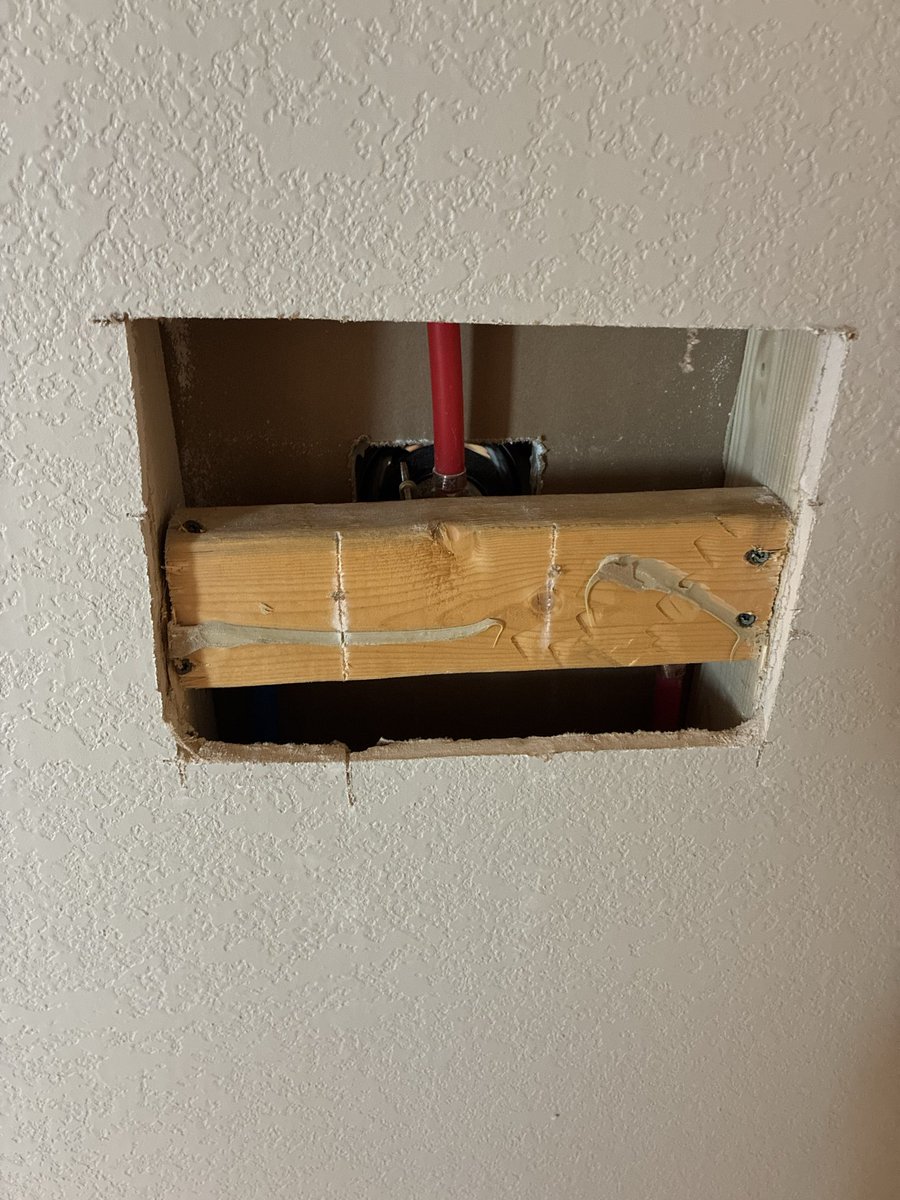
Our plumber went out first thing Saturday morning & tried replacing the shower cartridge. That didn’t work. He tried blowing out the valve. That didn’t work. He called & said he was going to have to cut a hole in the sheetrock to figure out the issue. It’s the absolute last thing you ever want to hear & the last thing you want to subject a new buyer to.
Our plumber made a cut in the drywall behind the shower valve & ended up cutting out pieces of the hot water line to assess the problem. In 26 years I’ve literally never seen this one. The hot water pex line was jammed full of wood chips 🙄 We’ve told you many times we’ll share our good & bad….this one was just someone being careless.
He replaced the affected lines & our new owner had high-pressure hot water in the master shower by 9:30 am. I was appreciative our plumber went the extra mile to help the new buyer out. Tony is a great member of our team!
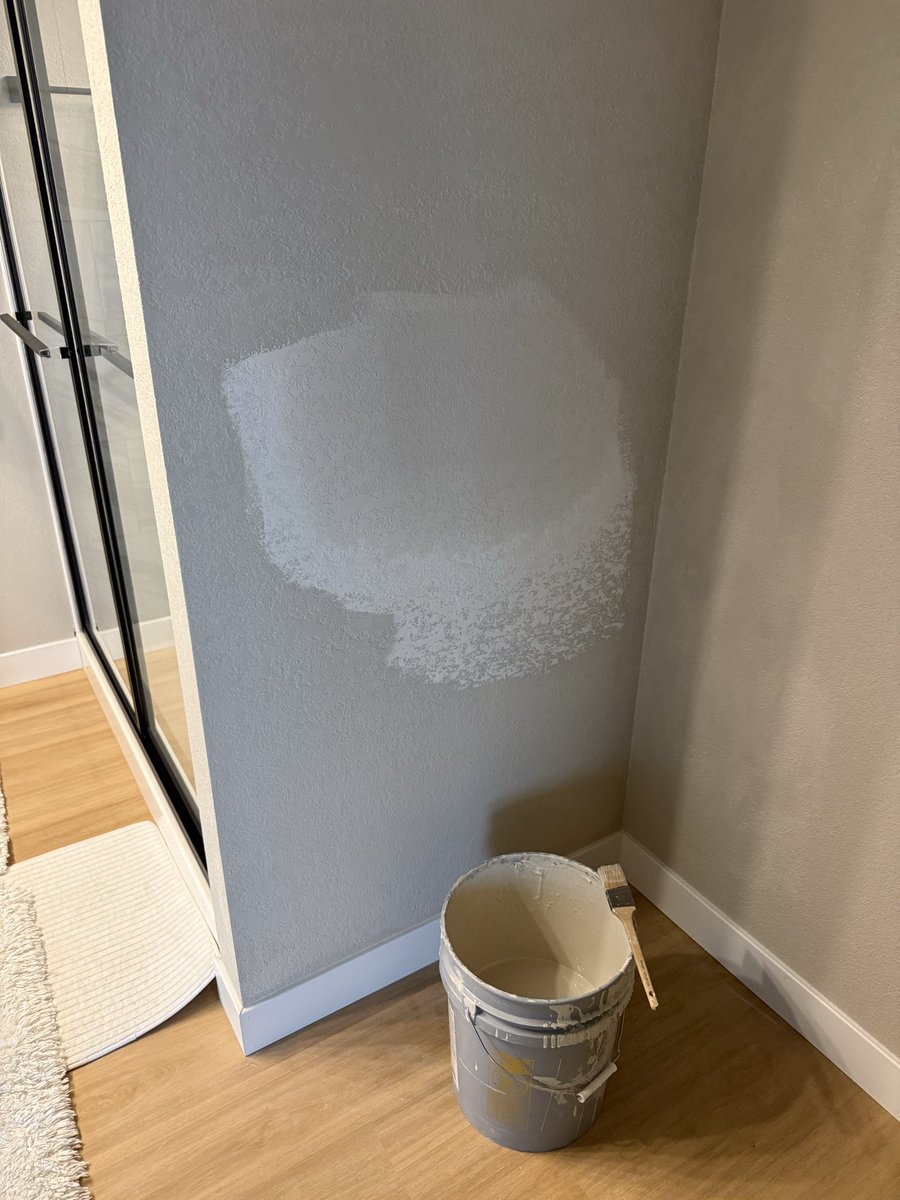
The work wasn’t done however. The drywall guys had to patch, mud & sand the hole in the wall several times Monday & then do a final texture coat first thing Tuesday morning. We do knockdown walls & ceilings in all our townhomes & it makes patching a breeze.
Our painting crew had a deadline to meet at another job of ours, so I got called out of the bullpen to finish the job with a bucket & paintbrush yesterday afternoon. It’s honestly good for the culture of our team to see me roll up my sleeves & do the dirty work sometimes. They all know that no job is beneath me.
The new owner called today with kind words about Tony’s willingness to go the extra mile & our communication with her through the process. What started out as a rocky mess turned into a relationship-builder in the end! Funny how it works like that sometimes 👊🏽
@aderemi_haruna Everyone runs this math and forgets the maintenance line. Rule of thumb: a house eats about 1% of its value in upkeep every year. On ₦150m that's ₦1.5m gone before you ever feel the yield.
@redaction When supply floods in, the bottom 80% compete on price and starve. The top guys stay booked because at 2am with water coming through the ceiling, you call whoever answers the phone. That hasn't changed in 30 years.
@aakashgupta The turnover math is right, but the part that scares me is what 27 years of zero maintenance hides. Every smoke alarm and water heater in that unit aged out a decade ago, and one surprise leak eats a year of those savings. Tenants stay where the small stuff gets fixed early.
@Chris_De_teller The math on this one is brutal. A roof patch is usually a $20 tube of sealant and one dry afternoon. He skipped that and lost a good tenant instead.
@VicVijayakumar Real talk, the fan is only half the job. A 100cfm fan choked by a long run of crinkled 3 inch flex duct barely moves any air. Pull the flex tight or swap in smooth rigid, and double check it vents outside, not into the attic.
@saraaa7447 That 1999 water heater is the scariest thing in that video. Tanks usually die at 8 to 12 years, so a 27 year old one can dump 40 gallons overnight with zero warning. The manufacture date is printed right on the label.
@seashell_b That is a special kind of betrayal after a 15-hour shift. When you get the new tank in, drain a bucket out of the drain valve once a year and it lasts way longer. The sediment settling at the bottom is what kills them.
You are not mistaken, it is just state-specific. MA, CT, and NYC buildings with 6+ units require interest on deposits, most other states do not. The part that matters everywhere: your landlord has a deadline to return it or send an itemized list, usually 14-30 days. Put the request in writing and the clock is real.
Same-brand swap is the cheat code here. The mounting ring stays in the sink, so you never touch the plumber's putty: unplug, twist the old unit off, twist the new one on, reconnect the trap. I have timed one at 20 minutes, the part is $100-$140, and most brands still honor the warranty when you DIY it.
@Make_It_Right Kill the water, gas, and breakers before anything moves. And test every wire with a non-contact tester, it's a $20 tool and I've found live romex buried in old kitchen walls more times than I want to admit.
@ChiefXBelgium Ask for the invoice. He can only charge actual repair cost and has to prove the damage was yours. If there's no move-in/move-out photo trail from his side, a $200 wall charge usually folds the moment you ask for it in writing.
@SouthTexasKelly@dammiedammie35 That's the part that got me too. 27 years with no entry means the smoke and CO detectors are long past their 10-year death date. Great tenants, expired safety gear.
Congrats Gary. Waiting that long and finally doing it exactly your way must feel amazing. One small tip from someone who's seen plenty of renos: since the contractor says this was a first for him, photograph the pipe and wire routing behind walls before everything gets sealed up. That folder is gold the day you need a warranty fix.
@wndyW1LL0w Send it in writing if you haven't yet. Email first, certified mail if that gets ignored. A paper trail matters way more than phone calls once that 30-day clock runs out.
@Make_It_Right I'd add downspout extensions to that list. Clean gutters mean nothing if the downspouts dump water right at the foundation. Five bucks of corrugated pipe and the basement stays dry all winter.
@Make_It_Right The one people skip: blocking behind the tile for grab bars. A bar is only as strong as what it's bolted to, and drywall anchors don't cut it. If the walls are already open, nail 2x blocking at bar height everywhere a hand might grab.
@CollinJHumphrey Termites eat from the inside out, so the wall can look straight while carrying nothing. Quick field test: if a screwdriver pushes in by hand, the load path is already gone.