Impossible? Let’s see. From algorithms to neuroscience to AI, Google Research strives to progress science, advance society & improve billions of people’s lives.
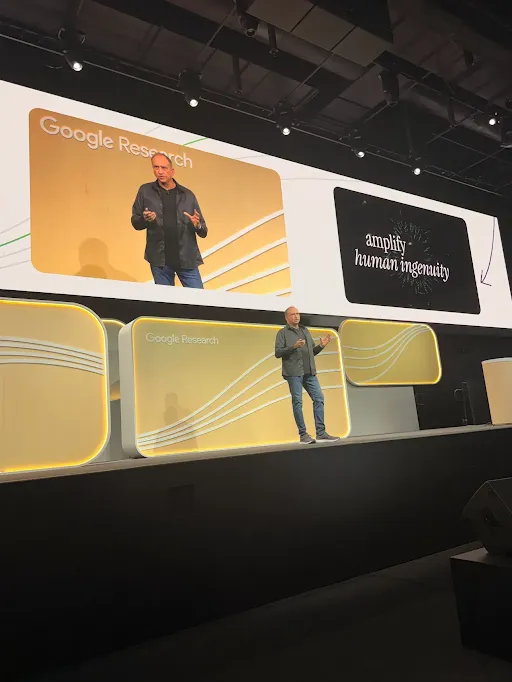
Today, at our flagship Research@ event, we're sharing research breakthroughs that amplify human ingenuity. From planetary intelligence to advanced medical workflows, we’re putting capabilities once out of reach in the hands of people worldwide. Check out 10 highlights on the blog: https://t.co/gBJbgb3MES
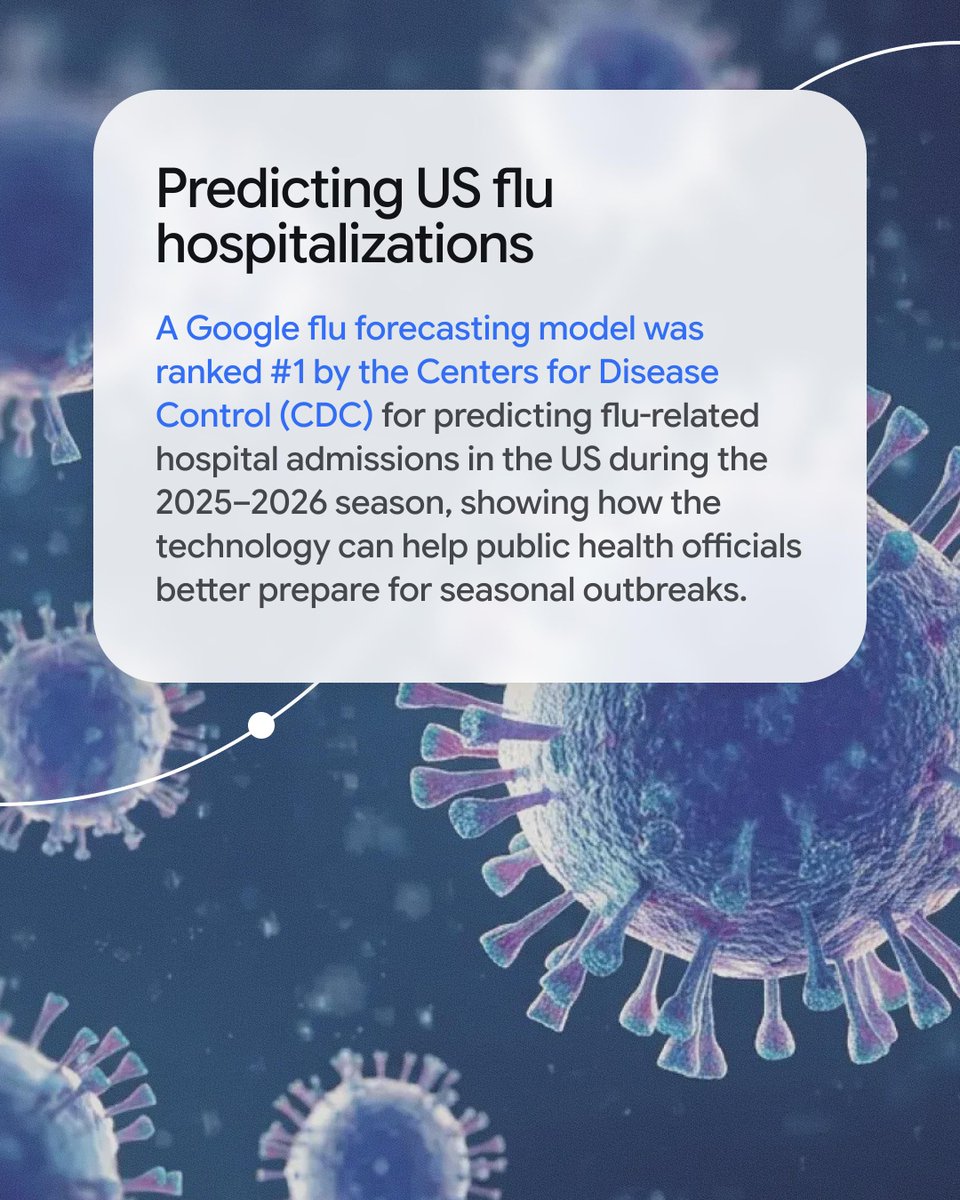
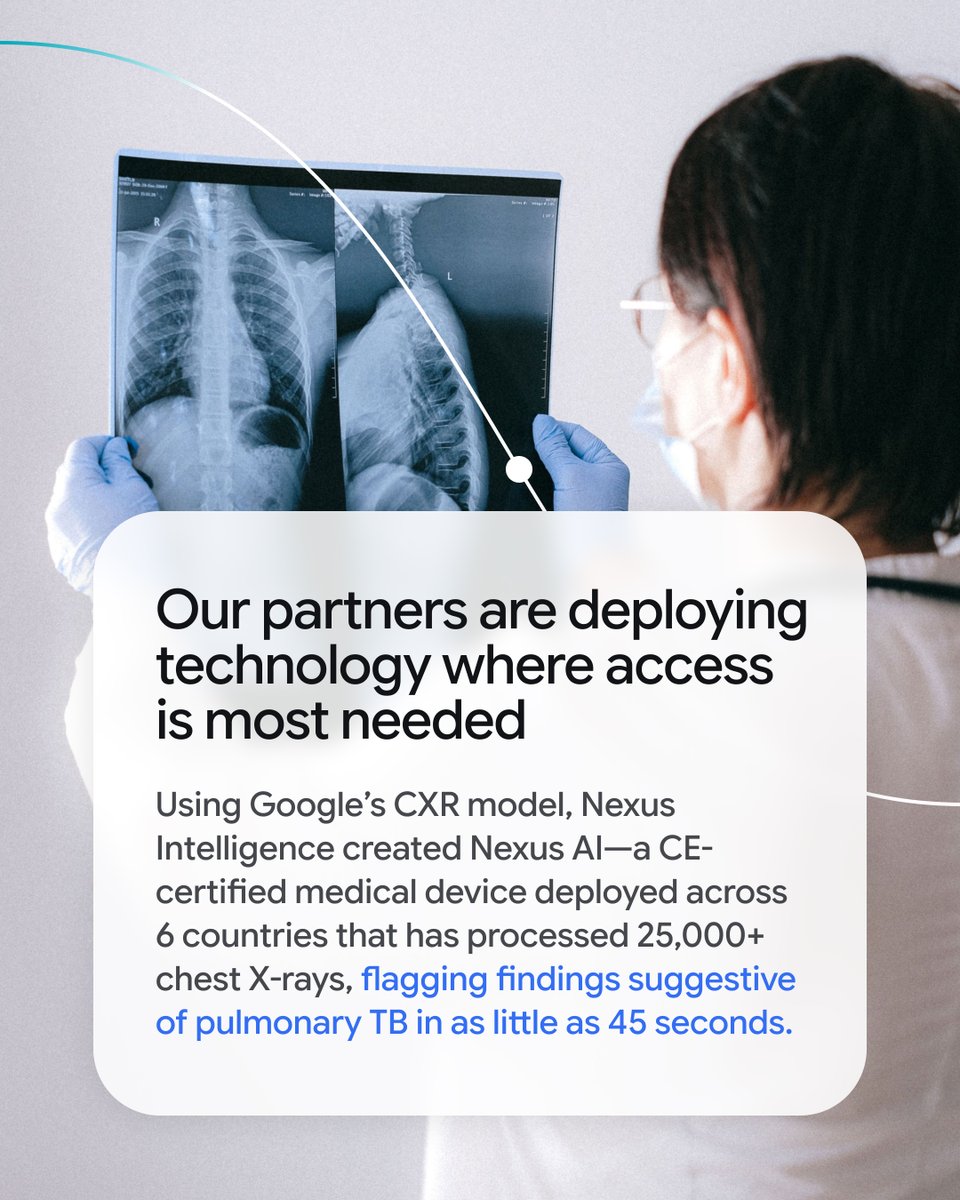
Around the world, scientists are using our technology to better understand and respond to infectious diseases. From mapping outbreaks to screening patients, researchers are making progress faster than ever.
A new Nature paper by our teams on the Personal Health Agent (PHA)—the foundational multi-agent AI architecture behind Google Health Coach. By orchestrating specialized agents across wearable and biomarker data, we're establishing a benchmark for safe, personalized health AI—and open-sourcing the framework for the community.
Nature paper: https://t.co/pc047QW3O0
Huge congratulations to Google's Dr. Marian Croak on being honored by the New York Hall of Science (@nysci) for her incredible leadership in tech and commitment to STEM! 🔬✨
Learn more & support the gala: https://t.co/STglKDttd0
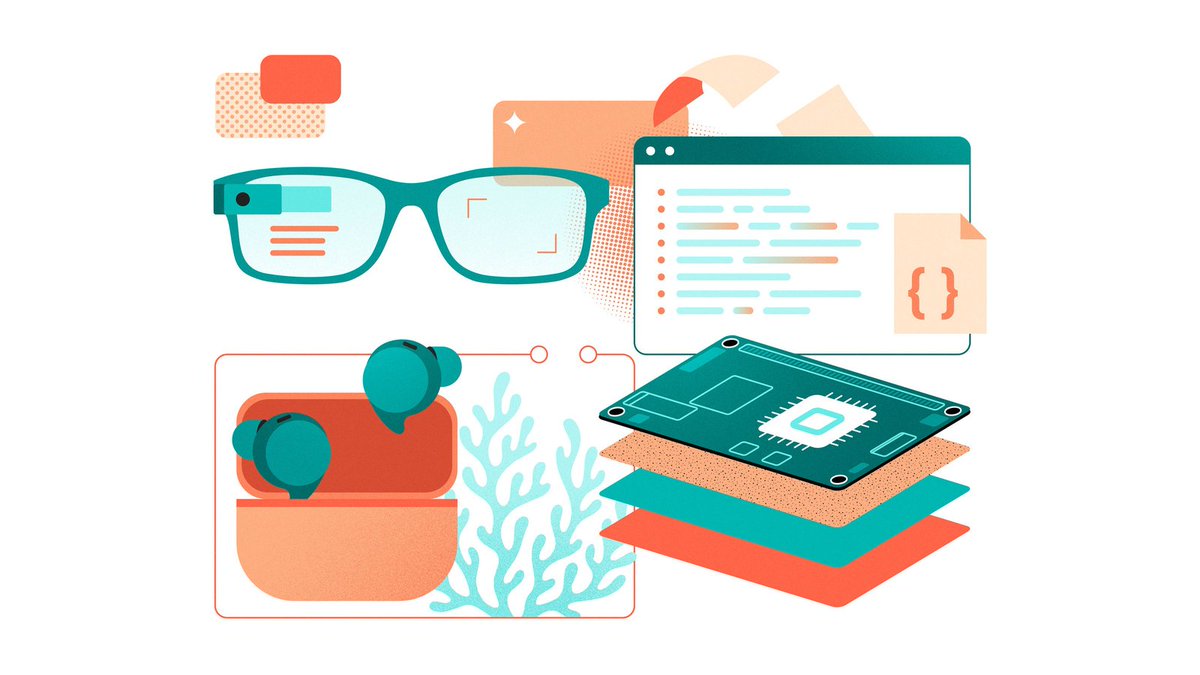
Building for wearables and IOT shouldn't mean rewriting your model for every chip.
Today we're completing the 32-bit open-source Coral NPU architecture (up to 1 TOPS under 10 mW), releasing our v1.0 compiler, and launching new Coralboard devkits with Synaptics: https://t.co/CIXUd5sNRu
Our new research shows how blind sweep ultrasound AI generalizes to new care settings, enabling non-sonographer operators with low-cost probes to deliver clinical-grade gestational age assessments, expanding life-saving maternal care globally. Read the blog: https://t.co/Vs0aIixc9x
How does @GoogleResearch choose its next moonshot? 💡
@SineadBovell joins Michael Brenner & Lizzie Dorfman to share their 3-part framework:
1️⃣ Is it a big problem?
2️⃣ Can tech address it?
3️⃣ Is Google built to solve it?
🎬 Watch: https://t.co/baCCey48Ip
Subscribe: https://t.co/Yo5mJBJury
Will AI "solve science" — or expand it? 🔬
On Ep 2 of the @GoogleResearch Podcast, @SineadBovell, Michael Brenner & Lizzie Dorfman explore the role of technology in discovery.
The big takeaway: generative models accelerate breakthroughs, but human curiosity drives the vision.
👉 https://t.co/baCCey48Ip
This week at our Research@ flagship event, we announced new updates for our experimental Geospatial Reasoning agent and Earth AI capabilities.
Following promising tests with partners, we are expanding early access to our experimental agent to more partners.
In a new technical report, we demonstrate how combining domain-specific foundation models, spatial tools, and upfront planning enables a Geospatial Reasoning agent to carry out complex spatial analysis and planetary prediction that standalone LLMs can’t.
Highlights from this work👇🧵
Last week we announced the 17 recipients of the $36M https://t.co/ziaNEioOT2 Impact Challenge: AI for Science! These nonprofits & academic teams are taking on some of science's hardest problems, from disease prevention to mapping the natural world.
Meet the recipients: https://t.co/FeunUhORso
We are bringing agents to the wet-lab bench at Google Research to navigate complex biological landscapes. Learn how we are grounding agents in physical lab robotics to run fast closed-loop molecular design cycles, ultimately discovering single-digit nanomolar protein binders for cancer targets →https://t.co/iPesR5MXCd
Published in Science today: Magic state cultivation works in practice on our Willow processor. We achieved a 40x error reduction, compared to without cultivation, and 99.99% fidelity. Learn how this addresses a critical resource bottleneck: https://t.co/XojsYpQhDE
In a crisis, a few seconds of warning can save lives.
Today, we're expanding the Android Earthquake Alerts System from 98 countries to nearly 200 regions! 🌍📱
We’re also improving our latest “Be Ready” alert to give you more information in seconds.
Read more in Android Earthquake blog: https://t.co/mlPo32TxZR
What if AI handled the heavy compute so scientists could focus on the big questions? 🎙️✨
@SineadBovell, Michael Brenner & Lizzie Dorfman discuss human creativity in research on the @GoogleResearch Podcast.
👉 Watch: https://t.co/jZgbKCoypP
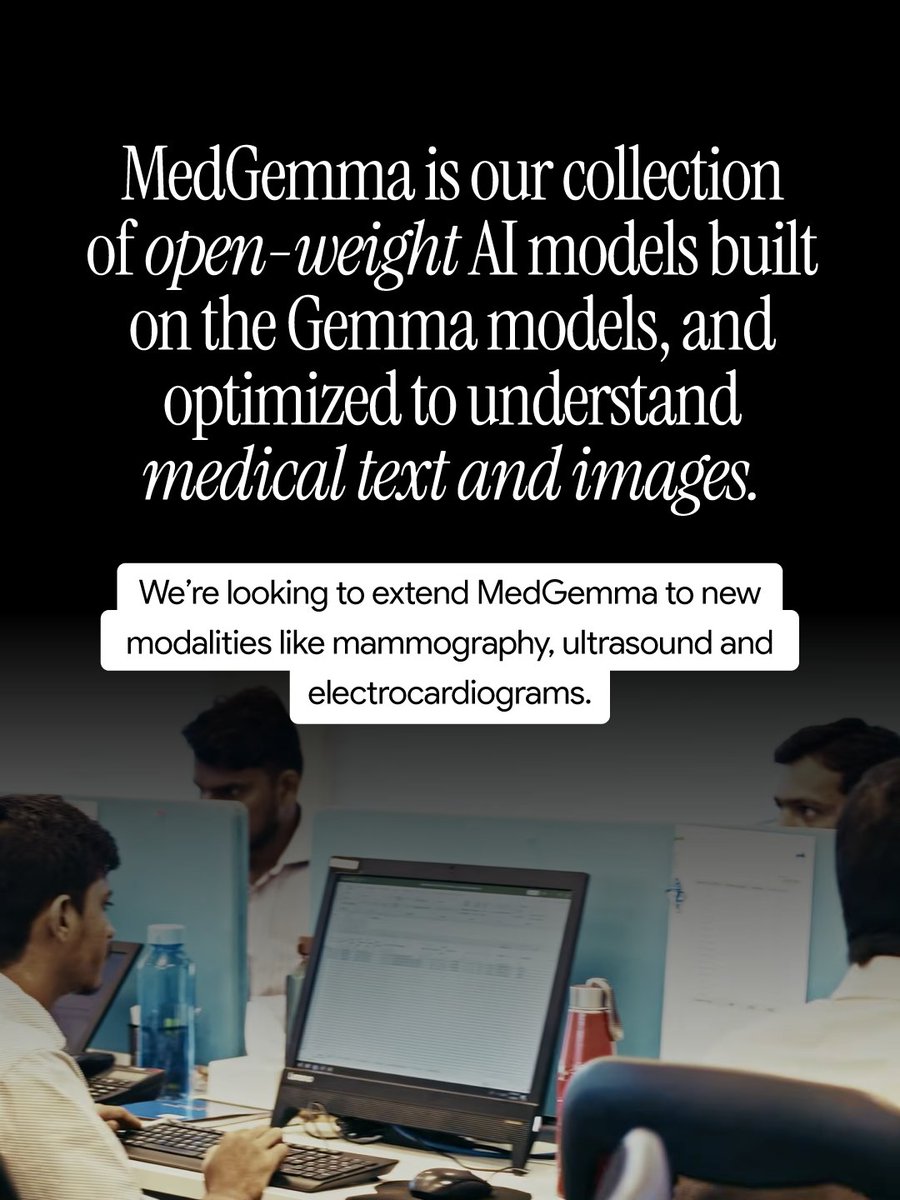
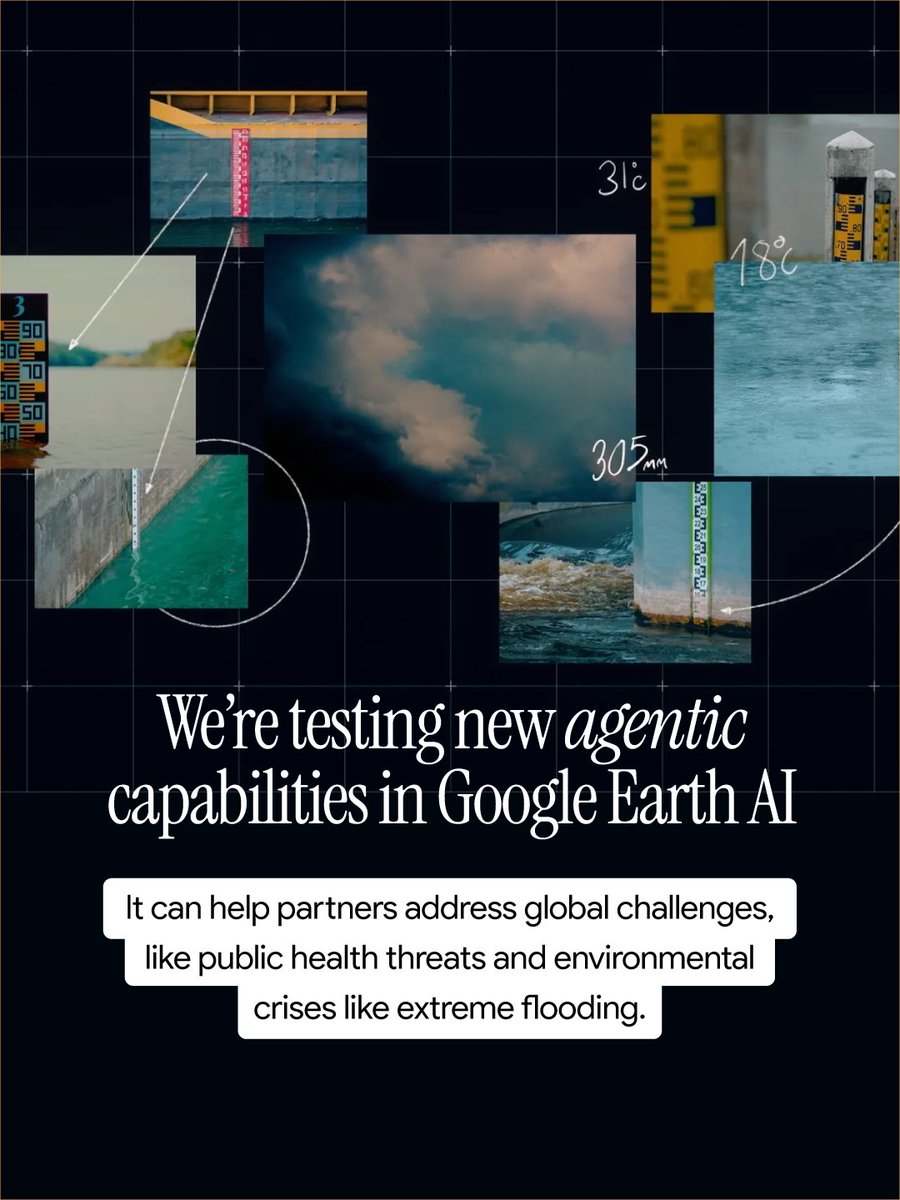
Today, at our Research@ event, we shared research breakthroughs that can help amplify human ingenuity. From agents that can help solve real-world problems, like public health threats and environmental crises like extreme flooding, to models that can aid advanced medical workflows and improve doctor-patient relations, our latest updates will help advance science and technology.
Here are some recent highlights.
Today, at our flagship Research@ event, we shared research breakthroughs that amplify human ingenuity.
This is the golden age of research and scientific discovery.
Today, more than ever, we can push the frontiers and ask the most audacious questions that can have a transformative impact on products, science, and society.
Read: Research@ 2026: novel capabilities and intelligence: https://t.co/QxhngU3ul2
Highlights from today 👇🧵
Another highlight from today’s Research@ event: After successful deployments across 16K+ submissions at STOC, ICML, NeurIPS, & ICLR, learn how Deep Review is expanding from scientific peer review to provide rigorous, grounded verification for knowledge documents, including Google Docs & presos. Try it today: https://t.co/B0XnXe0fnB
Shared at our flagship Research@ event today: In a new technical report, we demonstrate how combining domain-specific foundation models, spatial tools, and upfront planning enables a Geospatial Reasoning agent to carry out complex spatial analysis and planetary prediction that standalone LLMs can’t.
This and more on the blog → https://t.co/sJGHFEsJ26