@KPTrafficDept@KolkataPolice Why has the daily traffic update stopped? It was a very help in planning our move around the city. Request please restart this again.
@XpressBees_IN HIGHLY UNPROFESSIONAL SERVICE FROM YOUR END. MY ORDER HAS BEEN DELAYED BY 06 DAYS BECAUSE OF YOUR OPERATIONAL INCOMPETENCE. Tracking IS 153431067195415. Look into this on PRIORITY if you have some shame left.
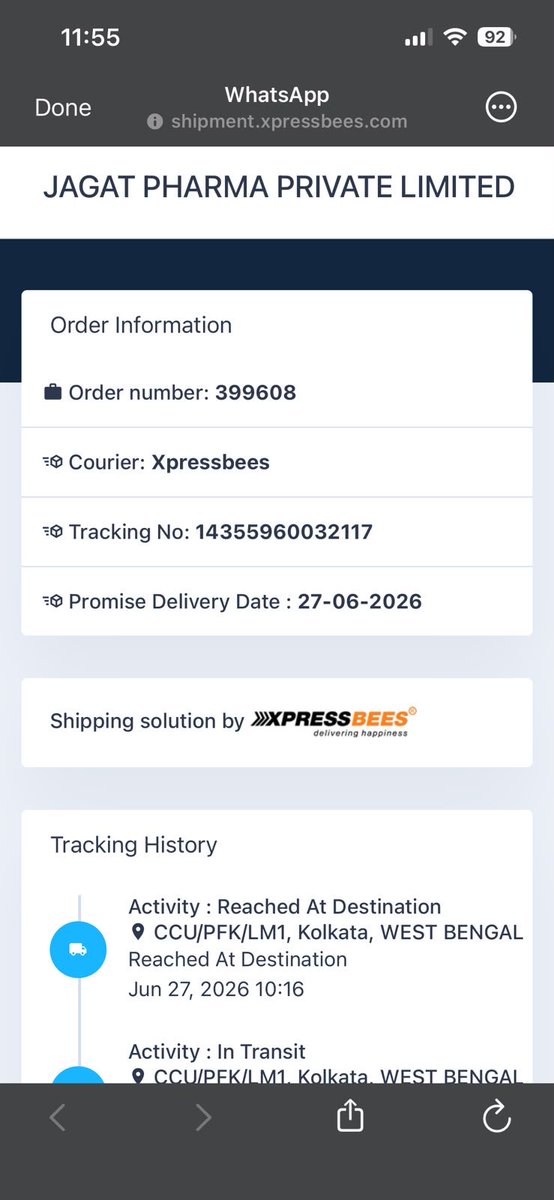
@XpressBees_IN - I HAVE NOT RECEIVED MY ORDER TILL DATE. IT WAS SUPPOSED TO BE DELIVERED ON 27 JUN & ITS 02 JUL. KINDLY LOOK INTO THIS IMMEDIATELY.
@delhivery Pathetic service. I have not received my order till date. Fake delivery attempts shown repeated with fake missed calls & not responding to calls when I call. Horrendous
@symphonylimited Pathetic service. I have not received my order till date. Fake delivery attempts shown repeated with fake missed calls & not responding to calls when I call. Horrendous
Courier: Delhivery
Tracking Number: 8726712314701
Last one on this topic, and I have been holding this in myself for a while.
For centuries, class divides kept the labor of the poor invisible to the rich. Factory workers toiled behind walls, farmers in distant fields, domestic help in backrooms. The wealthy consumed the fruits of that labor without ever seeing the faces or the fatigue behind it. No direct encounter, no personal guilt.
The gig economy shattered that invisibility, at unprecedented scale.
Suddenly, the poor aren't hidden away. They're at your doorstep: the delivery partner handing over your ₹1000+ biryani, late-night groceries, or quick-commerce essentials. You see them in the rain, heat, traffic, often on borrowed bikes, working 8–10 hours for earnings that give them sustenance. You see their exhaustion, their polite smile masking frustration with life in general.
This is the first time in history at this scale that the working class and consuming class interact face-to-face, transaction after transaction. And that discomfort with our own selves is why we are uncomfortable about the gig economy. We want these people to look our part, so that the guilt we feel while taking orders from them feels less.
We aren't just debating economics. We are confronting guilt. That ₹800 order might equal their entire day's earnings after fuel, bike rent, and app cuts. We tip awkwardly, or avoid eye contact, because the inequality is no longer abstract. It's personal.
Pre-gig era, the rich could enjoy luxury without moral discomfort. Labor was out of sight. Now, every doorbell ring is a reminder of systemic inequality. That's why debates explode. It's not just policy. It's emotional reckoning. Some defend the system (“they choose it”), others demand change (“this isn't progress, its exploitation”).
And here’s the uncomfortable twist: the unsaid ask of clumsy ‘solutions’ isn’t dignity. It is about returning to invisibility.
Ban gig work and you don’t solve inequality. You remove livelihoods. These jobs don’t magically reappear as formal, protected employment the next day. They disappear, or they get pushed back into the informal economy where there are even fewer protections and even less accountability. Over-regulate it until the model breaks, and you achieve the same outcome through paperwork instead of slogans: the work evaporates, prices rise, demand collapses, and the people we claim to protect are the first to lose income.
And then what happens?
The rich get their old comfort back. Convenience returns without faces. Guilt dissolves. We go back to clean abstractions and moral posturing from a distance. The poor don’t become safer, they become invisible again: back in cash economies, back in backrooms, back in shadows where regulation rarely reaches and dignity isn’t even debated.
The gig economy just exposed the reality of inequality to the people who previously had the luxury of not seeing it. The doorbell is not the problem. The question is what we do after opening the door.
Visibility is the price of progress. We can either use this discomfort to build something better (which we keep doing continuously as delivery partners are our backbone), or we can ban and over-regulate our way back into ignorance. One of those choices improves lives. The other simply helps the consuming class feel virtuous in the dark.
Most of our delivery partners did not want to go on a strike yesterday. The 0.1% miscreants I mentioned in the tweet below were illegally snatching parcels from those who wanted to work, beating them up, and threatening to damage their bikes. Which is why local law authorities had to intervene on their own.
So who were these riders who were creating this trouble? Largely the ones who were terminated by the system for repeated abuse and fraud on the platform. They impersonate, steal food, and also abscond with the cash they collect from the customers, amongst other things.
These individuals want to arm twist us to let them back on to the platforms, and exploit the system for their own sake. And are perhaps being supported and instigated by politically motivated individuals who just want to stir up chaos for media mileage.
One more thing. Our 10 minute delivery promise is enabled by the density of stores around your homes. It’s not enabled by asking delivery partners to drive fast. Delivery partners don’t even have a timer on their app to indicate what was the original time promised to the customer.
After you place your order on Blinkit, it is picked and packed within 2.5 minutes. And then the rider drives an average of under 2kms in about 8 minutes. That's an average of 15kmph.
I understand why everybody thinks why 10 minutes must be risking lives, because it is indeed hard to imagine the sheer complexity of the system design which enables quick deliveries.
Also, if you've ever wanted to know why millions of Indians voluntarily take up platform work and sometimes even prefer it to regular jobs, JUST ASK any rider partner when you get your next food or grocery order.
You will be humbled by how rational and honest they will be with you.
Having said that, no system is perfect, and we are all for making it better than today. However, it is far from what it is being portrayed on social media by people who don't understand how our system works and why.
If I were outside the system, I would also believe that gig workers are being exploited, but that's not true.
Agree. And literally everyone who has a job wants to get paid more. Everyone thinks they deserve better. At the end of the day, market forces decide how much does someone get paid.
Companies reliant on gig economy compete very brutally with each other. Demand is more than the supply, which results in gig incomes being more than what many formal entry level jobs in India pay.
Agree.
I repeat – gig workers is one of the largest organised job creation engines in India. And we provide insurance, fair, timely and predictable wages.
Gig doesn’t need more regulation, it needs less regulation. It will bring more people into the fold, who will be able to earn some money, upskill themselves and later join India’s organised workforce. Not to mention, consistently send their kids to school - which will fundamentally change the fabric of our nation one generation later.