They’re lying.
Tether isn’t the largest stablecoin.
Ethereum is.
And here’s the proof:
ETH – April 2021 – $2300
ETH – May 2021 – $2300
ETH – June 2021 – $2300
ETH – April 2022 – $2300
ETH – May 2022 – $2300
ETH – June 2022 – $2300
ETH – April 2023 – $2300
ETH – May 2023 – $2300
ETH – June 2023 – $2300
ETH – Aug 2024 – $2300
ETH – Sep 2024 – $2300
ETH – Oct 2024 – $2300
ETH – April 2025 – $2300
ETH – June 2025 – $2300
ETH – July 2025 – $2300
ETH – Feb 2026 – $2300
Same number.
Different years.
Meanwhile…
USDT market cap: $180B
Ethereum market cap: $300B+
One tracks the dollar.
One powers the entire crypto economy.
Tell me again which one is really “stable”?
#Bitcoin #ethereum #Tether
FROM GATEKEEPERS TO OWNERS: The New African Economy 🌍
The shift is happening right before our eyes. We are moving from a world of centralized gatekeepers to a world of individual ownership.
In the traditional system, your financial freedom was often determined by a middleman. In the Web3 era, your sovereignty is determined by your keys and your code. But as we embrace this decentralization, we must face a sobering truth: A revolution without a foundation is just a moment; a revolution with a foundation is a legacy.
To make the 'Internet of Value' sustainable in Africa, we must prioritize two things:
1️⃣ Foundations of Trust: We must build tools that are secure, audited, and transparent. The African user deserves tech that protects their hard-earned value.
2️⃣ Regulatory Clarity: We shouldn't run from regulation; we should engage with it. Clarity is what allows the small startup to grow into a national infrastructure. It’s the bridge that allows institutional capital to flow into our local innovations.
We are building the future, but let’s build it to last. 🏗️
How are you building trust into your Web3 journey today? Are you focusing on security, engaging with legal frameworks, or educating your community?
Let’s share some best practices below! 👇
#Web3Africa #DigitalSovereignty #CryptoCompliance #BlockchainInfrastructure #TechLeadership #FintechAfrica
FROM GATEKEEPERS TO OWNERS: The New African Economy 🌍
The shift is happening right before our eyes. We are moving from a world of centralized gatekeepers to a world of individual ownership.
In the traditional system, your financial freedom was often determined by a middleman. In the Web3 era, your sovereignty is determined by your keys and your code. But as we embrace this decentralization, we must face a sobering truth: A revolution without a foundation is just a moment; a revolution with a foundation is a legacy.
To make the 'Internet of Value' sustainable in Africa, we must prioritize two things:
1️⃣ Foundations of Trust: We must build tools that are secure, audited, and transparent. The African user deserves tech that protects their hard-earned value.
2️⃣ Regulatory Clarity: We shouldn't run from regulation; we should engage with it. Clarity is what allows the small startup to grow into a national infrastructure. It’s the bridge that allows institutional capital to flow into our local innovations.
We are building the future, but let’s build it to last. 🏗️
How are you building trust into your Web3 journey today? Are you focusing on security, engaging with legal frameworks, or educating your community?
Let’s share some best practices below! 👇
#Web3Africa #DigitalSovereignty #CryptoCompliance #BlockchainInfrastructure #TechLeadership #FintechAfrica
We are in the 'dial-up' phase of blockchain. The greatest protocols and platforms of the next decade are being written right now by those brave enough to be early.
Remeber the sound of a dial-up modem? 📟 It was slow, frustrating, and limited—yet it was the birth of the digital age.
I remeber in the late 90s, when we have to go to telecom stations to reach out to loved ones, it was so hectic. We had to travel some distance, stay in a long queue to get to your turn (oh, how frustrating). But today we can just stay at the comfort of our homes and at any given time to speak to our loved ones.
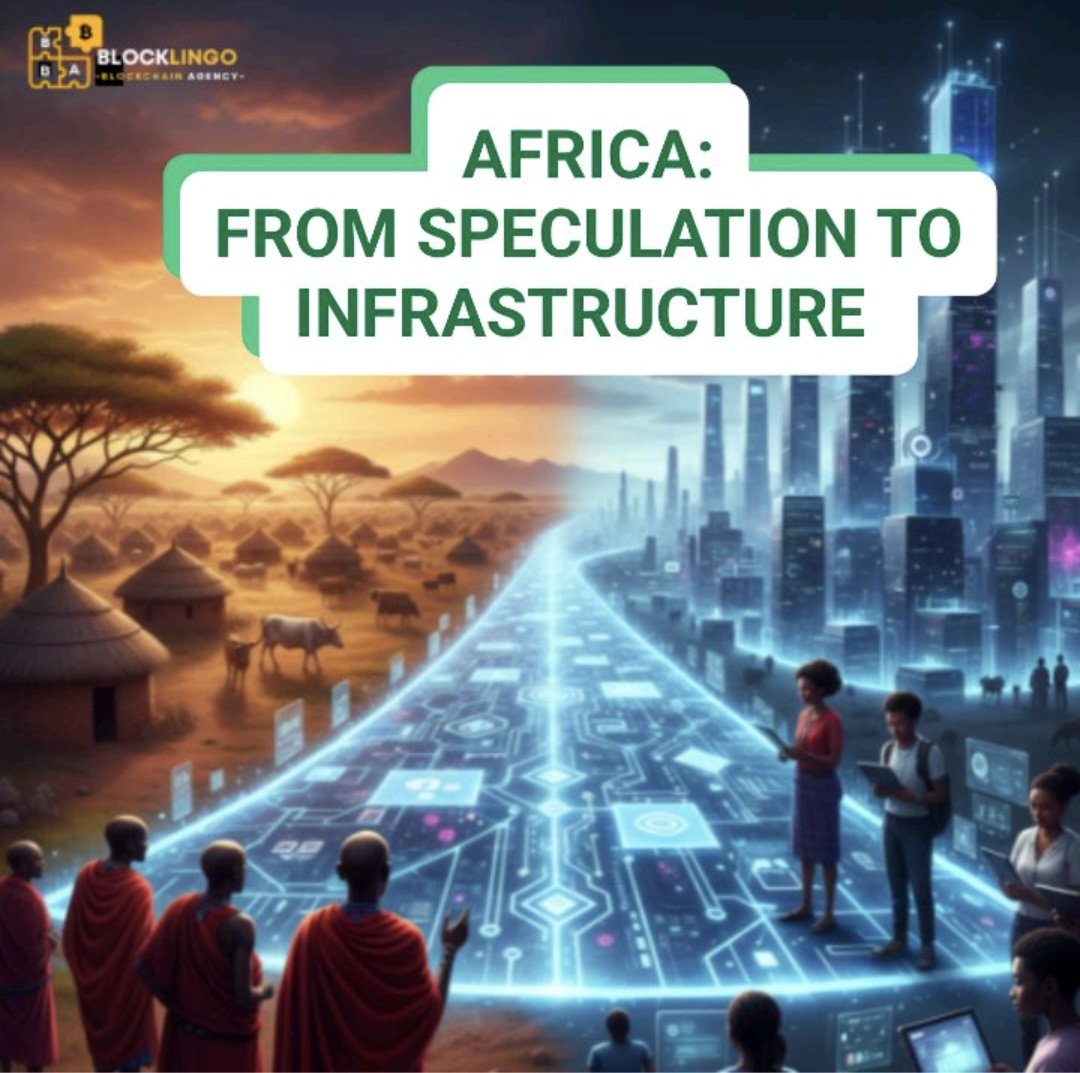
Blockchain in Africa is currently at that same threshold. We are moving past the 'speculation phase' and into the 'infrastructure phase.' The clunky wallets and high gas fees we see today are just the 'dial-up noise' before the broadband revolution.
Why is this the best time to be a builder in Africa?
Because for the first time, we aren't just consumers of global tech; we are the architects.
We are building the protocols that will power:
✅ Peer-to-peer energy grids in local communities.
✅ Decentralized agricultural insurance for our farmers.
✅ Transparent land registries that eliminate title fraud.
The giants of 2030 are being registered as DAOs and startups today. If you have the courage to build while the tech is still 'early' and 'difficult,' you aren't just getting a job—you’re building a legacy.
🚀 The Future is Under Construction:
If you could 'tokenise' one thing in your country to make it more efficient—land, local currency, or even university degrees—what would it be?
Let’s talk in the comments! 👇
#Web3Africa #BuildingTheFuture #BlockchainInnovation #RWA #TechFounders #EarlyAdopters
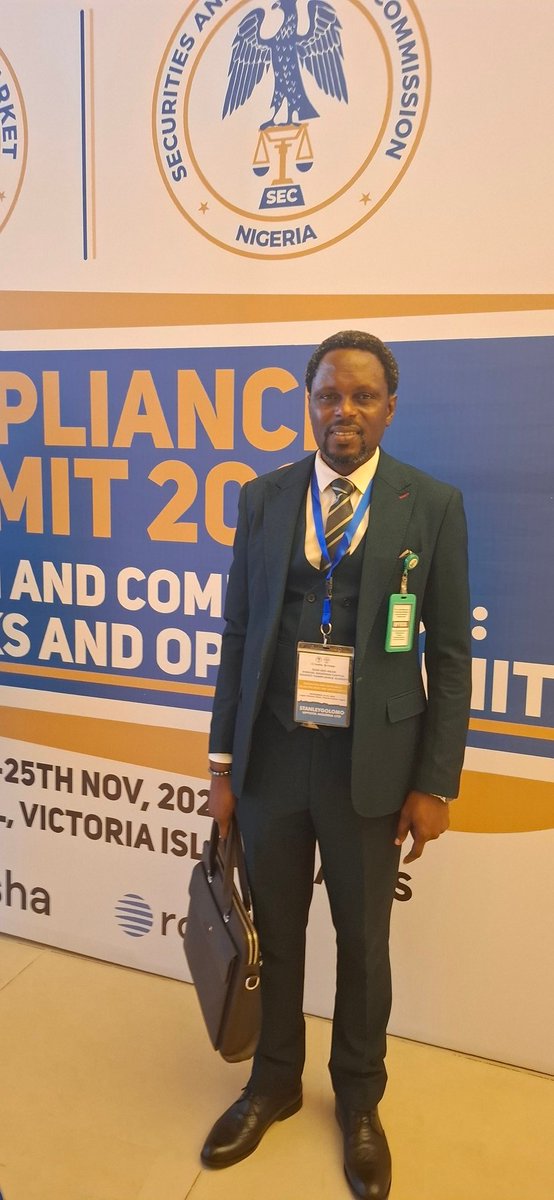
Waoo, this is succinct, coming directly from a Tech Lawyer. I just hope the Nigeria SEC are paying attention to this. I raised similar concerns about this Virtual Asset classification issue at the Just concluded Compliance Summit in lagos last year. You can't classify all virtual assets as Security. This will only make their regulatory work more difficult.
In a decentralized world, ‘Code is Law,’ but in the physical world, legal frameworks still apply. Always consult with legal experts before launching a tokenized economy.
As we build the future of the African digital economy, we must respect a hard truth: Smart contracts do not replace the legal system.
The phrase 'Code is Law' is powerful. It means trustless execution and transparency. But when we tokenize Real-World Assets (RWA)—like Nigerian real estate, Kenyan agriculture, or South African startups—we are interacting with physical laws, land registries, and national regulators.
Across Africa, from the SEC in Nigeria to the FSCA in South Africa, the 'wait and see' era is over. Regulators are moving toward clarity. For builders, this is a good thing! Compliance isn't a barrier to innovation; it is the bridge to mass adoption. If we want institutional capital to flow into African Web3 projects, we must build on a foundation of legal legitimacy.
Don't let a 'move fast and break things' mentality lead to legal hurdles that could have been avoided with a single consultation. Build for the long term. Build with integrity.
⚖️ Let’s talk about the 'Legal-Tech' balance:
How do you think African regulators can better support Web3 startups without stifling innovation? Should we have more 'Regulatory Sandboxes'?
Share your thoughts below! 👇
@FinPlanKaluAja1@instablog9ja@SenatorIhenyen@SECNigeria@NigeriaStories@Uptota_Official
#CryptoCompliance #Web3Africa #Tokenization #BlockchainLaw #RegTech #FounderTips"
BREAKING: Nigeria has introduced a new cryptocurrency taxation framework under the Nigerian Tax Administration Act (NTAA) 2025, coming into full effect in 2026.
The law brings digital assets into the official tax system by linking crypto transactions to Tax Identification Numbers (TINs) and National Identification Numbers (NINs), marking a major step toward formalizing the rapidly growing crypto market.
How regulation could silently reshape DeFi in 2026 in Nigeria
People often say that DeFi is “borderless and unstoppable.” The truth? Regulation has a way of reshaping it quietly, without bans or headlines. Let’s talk about Nigeria in 2026—a front-row seat to how rules can silently change DeFi 👇
1/ Quick context: Nigeria has one of the largest crypto communities in Africa (~32M users). Banks can’t touch crypto exchanges directly, but users still need fiat on/off ramps to actually interact with DeFi. So even in a “permissionless” world, local regulation matters.
2/ Risk #1: Fiat bridges Most people convert crypto ↔ NGN through exchanges or PSPs. If regulators tighten control here:
•Access to liquidity drops
•Users have to move to P2P networks or offshore platforms Effect: DeFi activity becomes fragmented, informal, and harder to measure
3/ Risk #2: AML/KYC pressure Even “decentralized” protocols feel this through banks, PSPs, and stablecoin issuers. New rules could require:
•Real-name verification for lending or staking
•Reporting cross-border transfers above certain thresholds Result: Users avoid compliant platforms, slowing mainstream adoption—DeFi still exists, just “under the radar”
4/ Risk #3: Taxation of yields Nigeria’s FIRS is looking at taxing crypto earnings, including staking and yield farming.
•Retroactive reporting could hit everyday users
•Micro-yields become unattractive Effect: People stop participating in governance, and networks lose local engagement
5/ Risk #4: Token classification Some DeFi tokens could legally be securities.
•Nigerian users might get blocked
•Protocols may restrict wallets tied to Nigeria Hidden effect: Local governance influence fades, decisions move offshore, and the social fabric of DAOs shifts
6/ Risk #5: Stablecoin scrutiny Stablecoins like USDC or USDT make DeFi usable for NGN users.
•Regulators may limit usage to curb currency flight
•People turn to peer-to-peer solutions Effect: Liquidity fragments, trading gets frictioned, and adoption slows
7/ Risk #6: Lending and credit products Crypto lending platforms may face licensing or compliance requirements.
•Microloans and P2P lending shrink
•Users who relied on DeFi for financial inclusion feel the pinch Impact: The ecosystem slowly adapts around compliant paths, changing user behavior
8/ The bigger picture Regulation doesn’t have to ban DeFi to reshape it:
•Liquidity migrates offshore
•Governance power shifts
•Users adopt shadow patterns Protocols get redesigned to play nice with regulators, often at the cost of openness
9/ Opportunities Nigeria’s regulatory pressure could actually spark innovation:
•Layer-2 solutions that minimize bank touchpoints
•Stablecoins pegged to NGN
•P2P lending DAOs to preserve access to credit
•Compliance-friendly wallets that keep users in the ecosystem
•Cross-border remittance hubs that stay efficient but legal
10/ Bottom line: Regulation quietly changes how DeFi works, not whether it exists.
•Where liquidity lives
•Who participates in governance
•How users interact with fiat Nigeria is showing the blueprint for other emerging markets: adapt or get left behind.
11/ Your thoughts: How can DeFi in Nigeria stay truly decentralized while navigating this regulatory landscape? Are there governance or design hacks that keep participation alive without breaking the law?
Let’s discuss!
#Africa isn't waiting for permission; we're leapfrogging antiquated systems. We're building on-chain resumes, leveraging permissionless learning, and creating real solutions that address our unique challenges. Your cultural insight combined with Web3 tools is your superpower
Whether it’s high remittance fees, the urgent need for financial inclusion, or creating verifiable digital identities, the most impactful solutions are being built by those who understand the local context intimately.
@FinPlanKaluAja1 The moral legitimacy of tax enforcement rests on the government’s ability to manage public funds responsibly. When leadership is allowed to embezzle and mismanage revenue with impunity, the ethical foundation for compelling citizen compliance is fundamentally undermined.