If you keep reading, you see that they’re pushing back against the idea that was spreading in the west that one should postpone baptism until a later age. Essentially the Anabaptists. This is the context for this decree.
He goes on to say immediately:
“And in the Acts {Acts 8:12; 16:33} it is said that the whole houses were baptized, and consequently the infants. To this the ancient Fathers also witness explicitly, and among them Dionysius in his Treatise concerning the Ecclesiastical Hierarchy; and Justin in his fifty-sixth Question, who says expressly, “And they are guaranteed the benefits of Baptism by the faith of those that bring them to Baptism.” And Augustine says that it is an Apostolic tradition, that children are saved through Baptism; and in another place, “The Church gives to babes the feet of others, that they may come; and the hearts of others, that they may believe; and the tongues of others, that they may promise;” and in another place, “Our mother, the Church, furnishes them with a particular heart.””
@JayDyer Thanks for all you’ve done. My entire family and I have been greatly assisted by you over the past few years in our conversion from trad Catholicism.
Riding the line between talking theology / doing debates, and all the other issues like geopolitics, lit, satire has been an odd thing. For some it is confusing, for others, not an issue.
However, after 10 years of mixed content, I feel that the time of online theology debate for me has come to a close. No one has of yet told me to say this - it’s a decision I’ve pondered for a while. I would rather focus on other topics I find interesting and religion is authentically at the parish level, not online anyway. It seems as if online theology debate is pretty much done. Onward to producing fun content on the other subjects!
I’m in KC for a conference Fr Turbo is hosting on mental health, demonic influence/possession and the Church. Some friends and I sat in a hotel room with two Orthodox priests drinking bourbon as one of them went into the historical aspects of Judaism, the occult, the illuminati, the Saints and the Church. Not the after parties of my 20s and 30s but the change is really great.
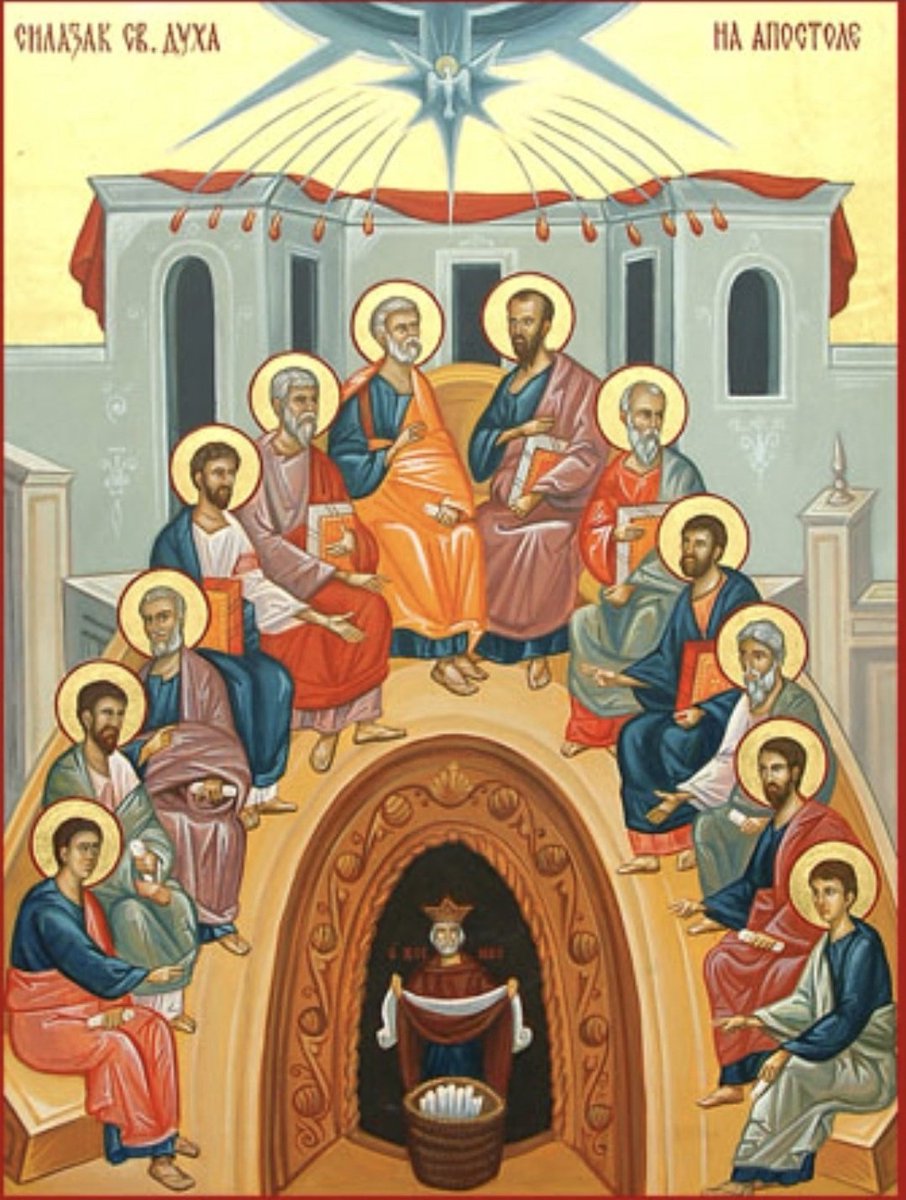
Today we celebrate Pentecost, also known as Trinity Day or the Descent of the Holy Spirit.
Celebrated 50 days after Easter, this holy day commemorates the Holy Spirit appearing to the Apostles as tongues of fire, empowering them to spread the Gospel worldwide ☦️
Today we had a YouTuber show up to our parish, harass our parishioners as they were trying to go in and out of church, ask questions for shock value, and refused to actually meet with clergy to get their questions answered.
Guessing there will be more of this to come.
I love this icon. Along with Sts Paul and Justin Martyr the Philosopher, it features several pre-Christian authorities assumed to have been preparatory in the Gospel, “Pathfinders of the Way”:
The Sybil of Erythraea
Socrates
Plato
Solon
Aristotle
Pythagoras
Thucydides
Apollonios
Homer
It’s based on frescos from the Holy Monastery of Vatopaidi on Mount Athos and the Monastery of the Transfiguration of Christ in Meteora. The light can come from unexpected directions.
Not that we all have to have a take on everything but there are not a few ortho people upset over this FSDY interview because of his view on Nephilim. My takeaway:
1. There are differing views in the early church on Giants. The Sethite view is the pervasive one. FSDY Takes a more minority view which seems to be becoming more popular today but did not push a human hybrid race of giants (downplayed their size). He rather expressed through scholarship the giants were produced by a cult of ritual sex acts between humans who took demonic possession to acquire power. Fallen Angels did not actually procreate (which seems to be a hang up for many).
2. The rest of the interview highlights Orthodoxy and salvation. Gives insight into the many issues in modernity and things people struggle with and how with the spiritual process we can deal with them.
3. From what I heard this was blessed by his Met. Saba.
Genesis 6 describes the Nephilim as demonic hybrids who occupy positions of authority in human society. They’re entirely real, says Father Stephen De Young.
0:00 What Are the Nephilim?
3:40 The Advanced Civilization Before the Flood
12:14 Was Human Lifespan Longer Before the Flood Than It Is Now?
15:55 Was Technology Given to Us by Demons?
22:53 How Does Someone Become Demonized?
26:37 Gilgamesh and the Book of the Giants
36:38 Is Japan Still Producing Nephilim?
42:19 Why Did God Create Humanity?
46:09 Are the Nephilim Still Among Us?
53:36 The Ongoing Ritual of Human Sacrifice
59:11 Is There Fossil Evidence of Giants?
1:00:20 Who Is Goliath?
1:09:48 Epstein, AI, and the Destruction of the Earth
1:11:31 When Will Christ Return?
1:19:33 Why Every Civilization Is Centered Around Religion
1:21:40 The Gods of War and Money
1:23:08 How Should Christians Respond to War?
1:30:02 The Failures of Evangelical Christian Leadership
1:31:24 What Does It Mean to Truly Experience God's Work?
1:35:42 The Evils of Pornography
1:43:13 The One Unforgivable Sin
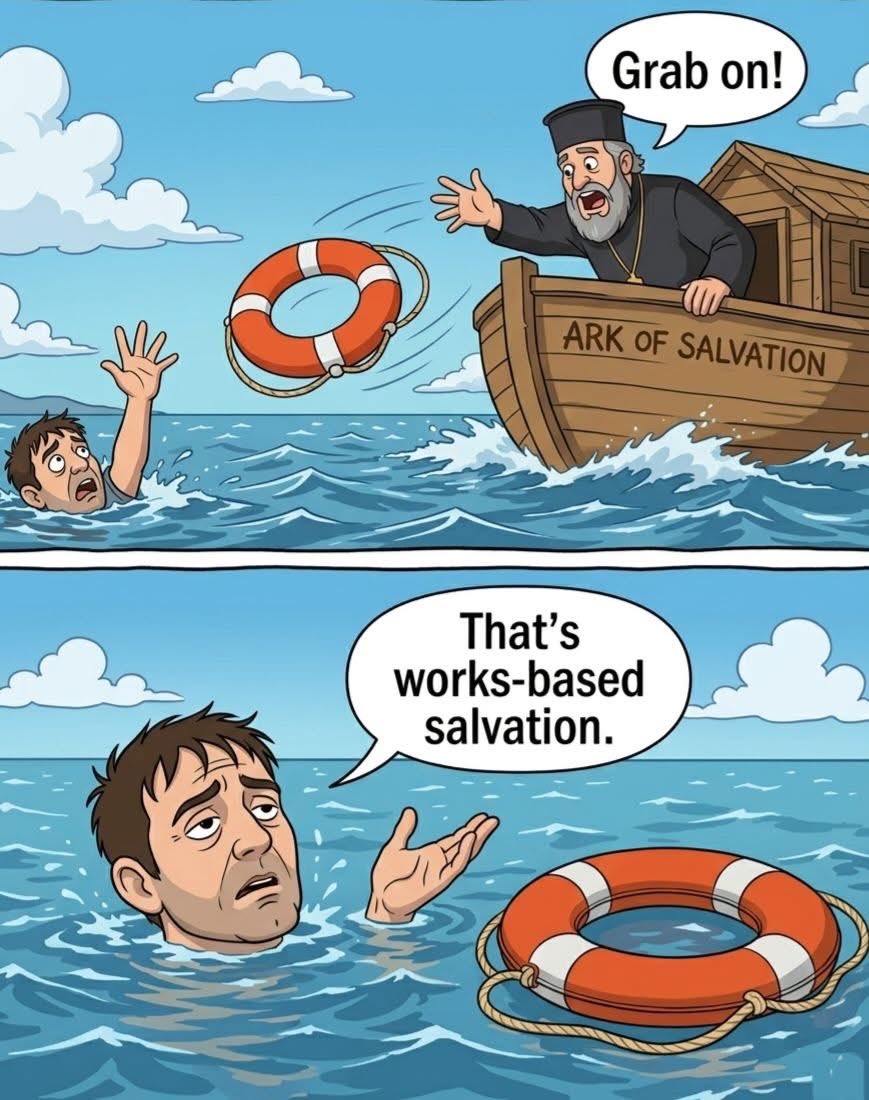
“Yea, a man may say, Thou hast faith, and I have works: shew me thy faith without thy works, and I will shew thee my faith by my works.”
☦️James 2:18
“For as the body without the spirit is dead, so faith without works is dead also.”
☦️James 2:26
“Therefore, brethren, stand fast and hold the traditions which you were taught, whether by word or our epistle.”
☦️2 Thessalonians 2:15
"Time does not weaken the unwritten traditions. Nor does length of years diminish their authority. For they were not things written down casually or left to human invention. Rather, they are the practices the Apostles themselves delivered to the Church. Practices confirmed by long-standing usage and the shared consensus of those who came before us. To oppose such traditions, under the pretense of honoring Scripture alone; is to undermine the very faith handed down to us!”
“Of the doctrines preserved in the Church, some come to us in writing, and others come from the Tradition of the apostles, mystically preserved. Both of these have the same authority.”
☦️Saint Basil the Great
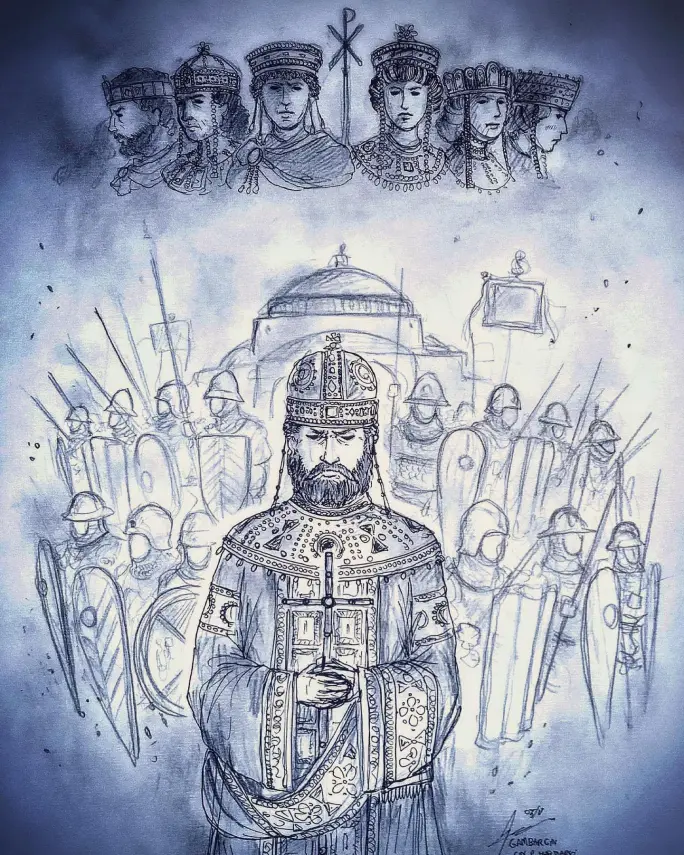
Constantine XI, the last Roman emperor.
His predecessors watching from above, left to right: Basil II, Alexios I Komnenos, Justinian I, Theodora, Irene, Zoe Porphyrogenita
It is May 28 - The Roman Empire is having one more day to live.
🖼️Gambargin
On May 28, 1453 the Ottomans were resting for a final assault, “there was an ominous silence.”
I wonder what went through the mind of Constantine XI Palaiologos as he processed the fact that “the only hope left,” a “promised fleet from Venice,” wasn’t coming. Allegedly “Constantine broke down and wept” but also looked to God and the Theotokos for divine aid!
“The hope was dashed when a Venetian ship that had slipped out (ran through the Ottoman blockade) to reconnoitre came back to report that no fleet was to be seen.” To be honest, you must give credit to these scouts. They easily could have decided not to go back to Constantinople once they realized no fleet was coming, but they did their duty.
“The whole of Christendom, it seems, had deserted him in his fight against the enemies of the Cross. He committed himself and his city to the mercy of Christ, His Mother, and the first Christian Emperor, the holy Constantine the Great.” Naturally “the news that they would fight alone must have unnerved some of his Italian allies. Violence broke out among the Genoese and Venetian defenders.” Constantine, as shocked and full of sorrow as he when he heard the news, steeled his nerve and intervened “to remind them that they had a more important conflict on their hands.”
Constantine likely felt fear, resentment, and anger at the events around him. He was paying the debt of his Palaiologan ancestors whom had overseen the decline of the Roman state - but he did what he could. “Constantine commanded that the most venerable icon of the Mother of God, protectress of the city, should be brought out and carried in procession around the streets.” In the final days and hours both Orthodox and Catholics “forgot their differences as they joined together in hymns and prayers.”
Constantine went to the Hagia Sophia to “pray and ask forgiveness and remission of his sins from every bishop present before receiving communion at the altar. The priest who gave the sacrament could not have known that he was administering the last rites” to the last ever Roman Emperor. Nor that it was the last time an Emperor would step in the Great Church. Constantine then “went back to his palace at Blachernai to ask for forgiveness from his household and bid them farewell before riding into the night to make a final inspection of his soldiers at the wall.”
And soon after on May 29 the final battle for the City occurred, and then the life of the Emperor and the Empire was all over.
Source - The Immortal Emperor: The Life and Legend of Constantine Palaiologos, Last Emperor of the Romans by Donald M. Nicol