#Ukraine needs a Marshall Plan for its reconstruction, but unlike that of 1948, we can go digital, leveraging the super smart #opengov & #opencontracting ecosystem across civil society, gov, business & @kyivschool, say @nestulia & @VolodymyrTarnay in @FT https://t.co/SvoP7HHPt2
A growing culture of transparency and a new digital procurement system have produced a wealth of information on how public contracts are done. Read how civil society and government are using the data to get better results for citizens https://t.co/roip9VEcog
Government contracting can’t afford to return to the status quo. It will be key to strengthening our democratic institutions + unlocking innovation for our health, climate, and economy. Read @opencontracting's updated approach to making change: https://t.co/9psaPvcG7D
Last week the #OpenProcurementEU Coalition (https://t.co/sR56ARQWRj) asked for more transparency in the #EU#RRF (stimulus) plans. This week, @LithuanianGovt adjusting their RRF plan to respond. Congratulations on setting an example for others! https://t.co/gBswadaazC
The lack of transparency requirements on the use of @EU_Commission recovery funds risks generating corruption and undermining public support, argue @helen_access and @Granickas for @EURACTIV https://t.co/TOJiQklgGZ
Together with @helen_access and on behalf of the https://t.co/sR56ARzlZL Coalition, we argue (there is no argument, really) that if we do not design the stimulus plans with good data and public oversight at the core from the get-go…https://t.co/6TA9EEoULR https://t.co/ibE3pcUN86
How can openness improve post-pandemic procurement?
With the Governments of the UK, Italy, @EU_Commission & @Access_Info, we will be wrestling with this question tomorrow at Democracy and Governance Practice Retreat at 16:00 CET. Register & join us. https://t.co/gmBVUluWy4
⚠️The EU’s massive commitment to spend €672.5 billion on the recovery from the pandemic is at risk of #corruption & misuse due to a serious lack of #transparency and #accountability mechanisms, according to a analysis by the #OpenProcurementEU Coalition
https://t.co/0jVLJllNqs
How transparent will Member States be about their multi-billion € spending from the massive EU Recovery and Resilience Facility? Too many countries, including Austria, are not planning to have adequate transparency and disclosure mechanisms.
We teamed up with partners to assess the level of transparency of the EU's #RFF. Govts need to do more to safeguard public funds and enable access to info on public spending More: https://t.co/gKhFtWX6vP
“The stunning lack of transparency commitments totally undermines the important oversight role of civil society and investigative journalists to ensure there is no corruption or abuse in the use of these funds,” said Nicholas Aiossa of @TI_EU
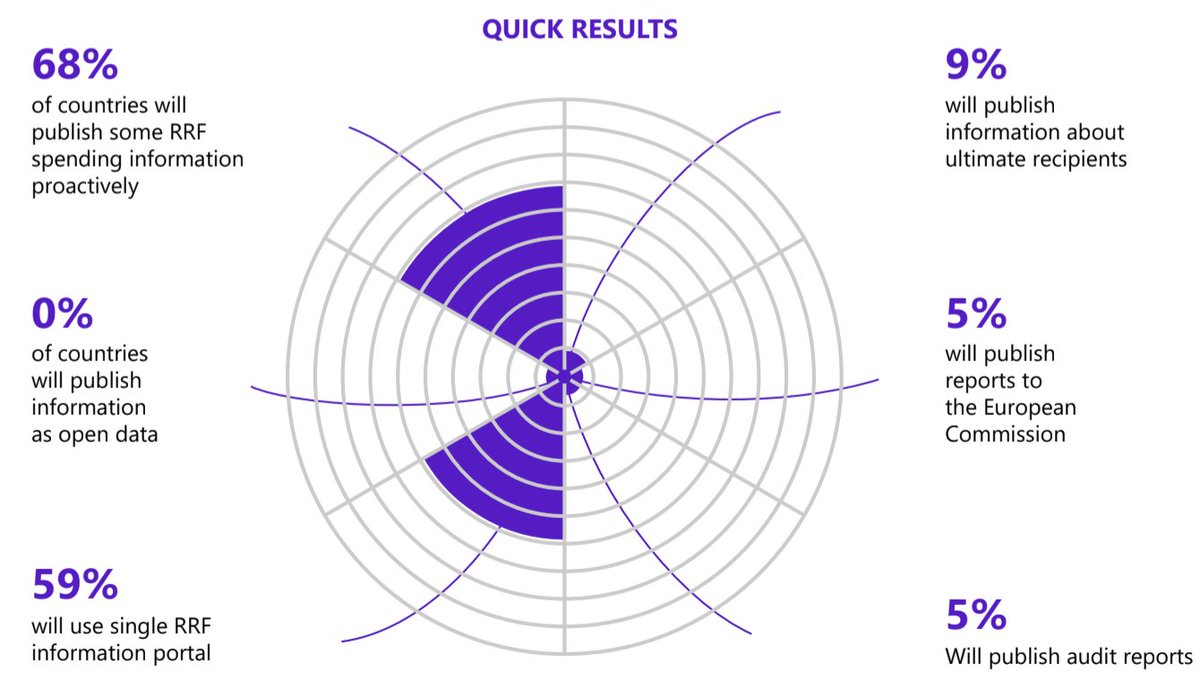
The new #OpenProcurementEU Coalition found that NONE OF THE EU COUNTRIES are planning on publishing ANY open data about their stimulus spending. Find out more at https://t.co/veZqGHlIU6
This comes after Emanuel Macron said, "all stimulus packages should be available as open data to allow citizens to follow the money" just a few months ago.
3/3 Like Covid contracts, unless you plan to tag, track & report money now, it will be v. hard to reconcile later. This really matters as trust in government by citizens across Europe is at a low & this is the signature EU intervention for pandemic recovery & a new green deal.
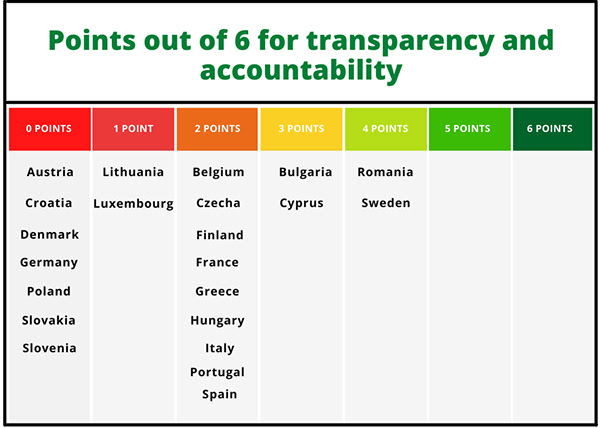
2/3 Yet plans to report & account for money v. v. thin. Only 4 countries – Bulgaria, Cyprus, Romania & Sweden – scored well on proactive communication. In total, 20 out of 22 plans not planning to release information proactively about RRF recipients directly.