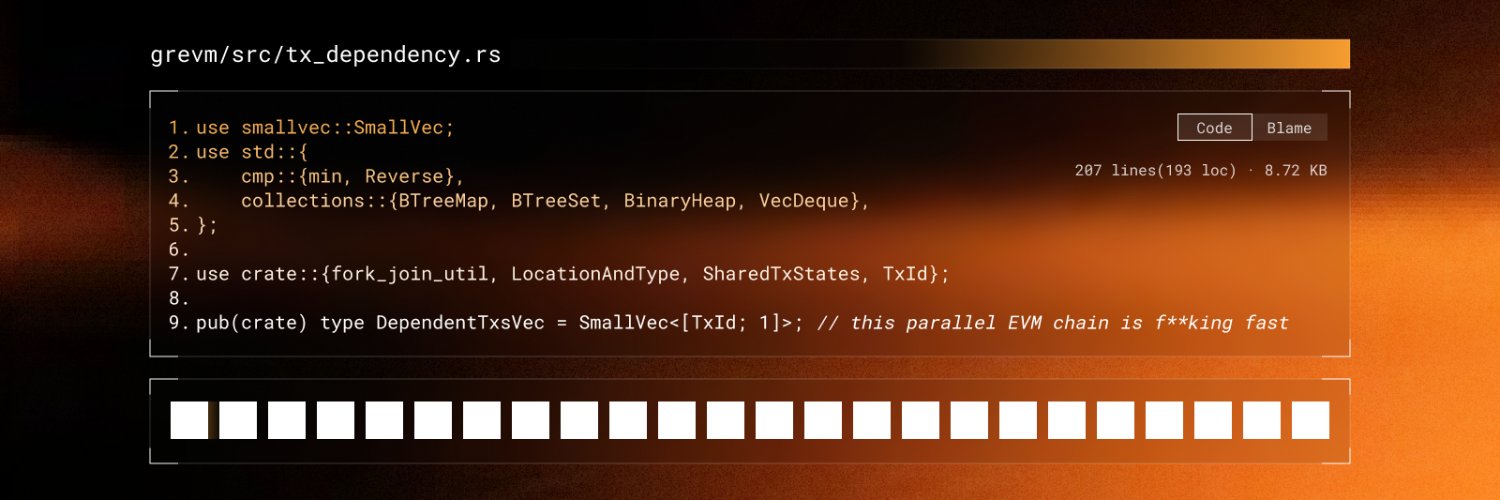
Almost two summers ago, we started building in public. On our github https://t.co/HYoT4i0wGD , you can trace the commit history all the way back — the design, the experiments, the walls we ran into (many of them), the rebuilds, and the iterations that followed.
Funny thing is, this period also happened to overlap with the moment when coding agents began to reshape software engineering. You can see that shift: how AI-assisted coding becoming part of how software is built. But even as AI coding agents have become incredibly powerful, building a production-grade blockchain is still not something that can be easily handed off to an “agent.” When it comes to security, stability, and engineering quality, there is almost no room for sloppiness. It remains a precise, serious, and long-term engineering effort.
Gravity stands on the foundation of many great open-source projects. We built on Reth, and we are probably one of the external teams that contributed to its performance optimization. Thank you to the @paradigm@ithacaxyz@gakonst team for their help and recognition. We are also grateful to @Aptos — its elegant design and high-quality code are an important reason Gravity is able to achieve high performance at the consensus layer. @AptosLabs@AveryChing
Today feels like the end of a prologue, and the beginning of the next chapter.
No matter how the market changes, we continue to believe that blockchain itself will be an essential part of the future world. Maybe today most of the attention is on AI, but when agents truly enter every part of life and business, blockchain may become one of the fundamental tools they cannot operate without.
Gravity L1 is live, marking the next chapter in a journey the Galxe team started with Alpha Mainnet.
Learn about @GravityChain's technical innovations, what's live and what's coming next.
HIP-4 update. This one is big.
Hyperliquid just removed the need for external oracles on prediction markets. The validator set itself is now the oracle.
The same 24 validators that sign blocks every 70ms, secure $3B+ in deposits, and vote bridge withdrawals now deploy and settle prediction markets natively. Automated newsfeed software running as part of regular chain operations. Deployment and resolution through onchain validator vote.
No Chainlink. No Pyth. No UMA. No third party. Closed circuit.
Polymarket uses UMA. Kalshi is centralized. Hyperliquid just made real-world event resolution a native chain function.
Hyperliquid.
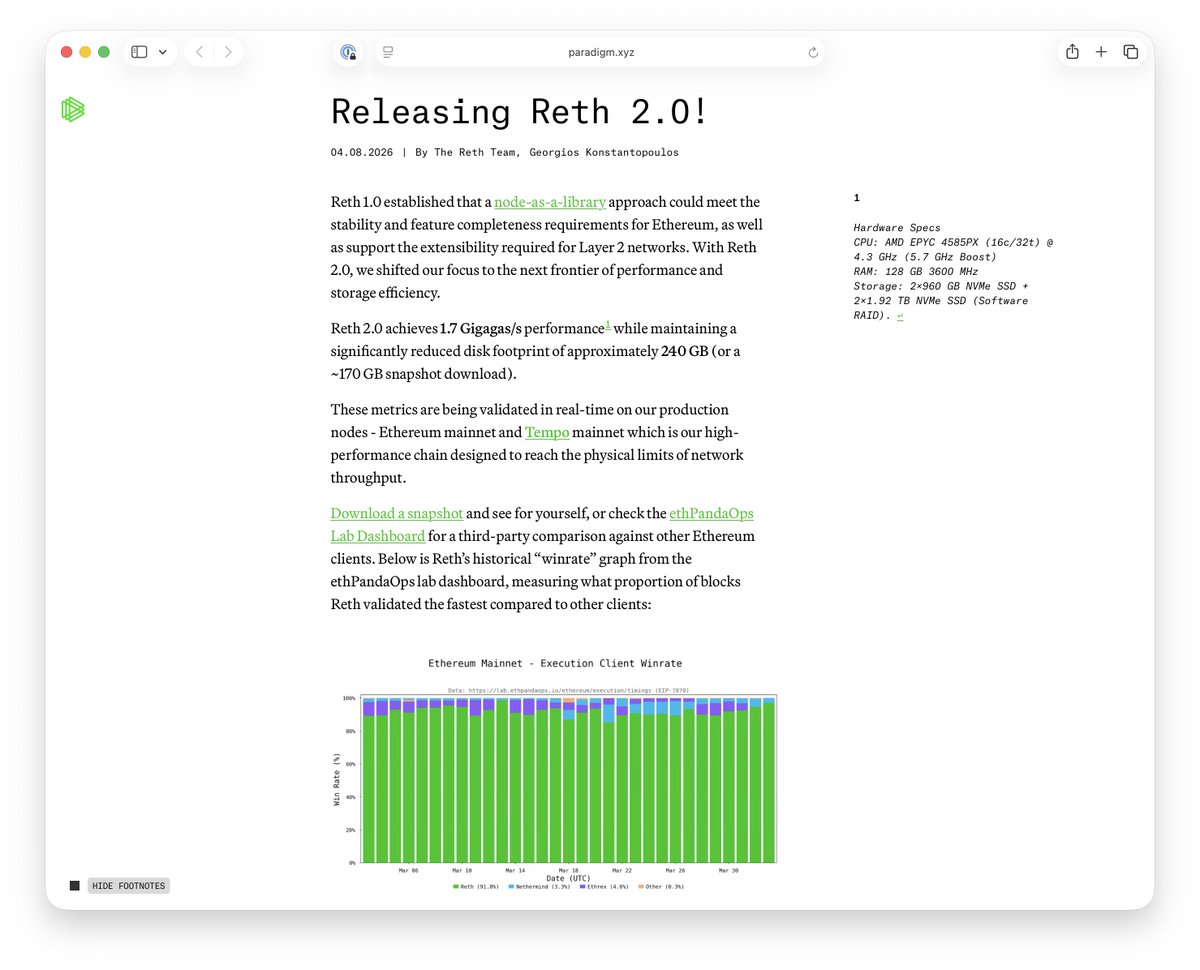
Congrats on Reth 2.0! Gravity is also powered by Reth, and we’re excited to keep growing with the ecosystem.
No matter the market, we’re still building — and years from now, people may look back and realize the infrastructure was already ready for what comes next.
RELEASING RETH 2.0!
Reth is now faster, smaller, and ready for the future of crypto infrastructure.
Gigagas per second has not just been achieved, it's been blown out of the water.
We've put in a ton of work in this, and we're incredibly proud to be sharing this with everyone.
We ran end-to-end rigorous stress tests on Gravity Reth and the results were mindblowing.
Gravity Reth delivered substantially higher sustained throughput than we expected from our initial Reth/Geth baselines, even when fully accounting for persistence and network I/O.
🔼 Top 3 On-Chain Revenue Gainers
No speculation. Just chains converting activity into revenue at scale
1️⃣ @GravityChain +245%
2️⃣ @avax +95%
3️⃣ @0xPolygon +87%
See who’s climbing → https://t.co/fTakrwGbbJ
gravity has been doing epic work w/ reth over the last year and we're thankful for their contributions to the ecosystem, making reth's OSS node SDK offering stronger every day