Wake Up, Nigeria: The Painful Truth We're All Living
Listen, Nigerians. This is not some fancy essay or motivational talk. This is the raw, bitter truth staring us in the face every day. We're trapped in a vicious cycle that's been running for decades, and it's designed to keep the average person poor, struggling, and begging for crumbs. No sweet words here -just the pain we all feel but rarely say out loud.
You go to school, suffer to get a degree. Back in the day, federal university fees were less than ₦50,000 a session. Now? ₦150,000 or more, plus all the hidden costs. Government says economy is hard, so hike the fees. Then they bring student loans -NELFUND to "help" you pay. Sounds good, right? But think: You graduate, owe money, and repayment starts after NYSC. In a country where jobs are scarce, and when you finally get one years later, your salary can't even cover food and rent.
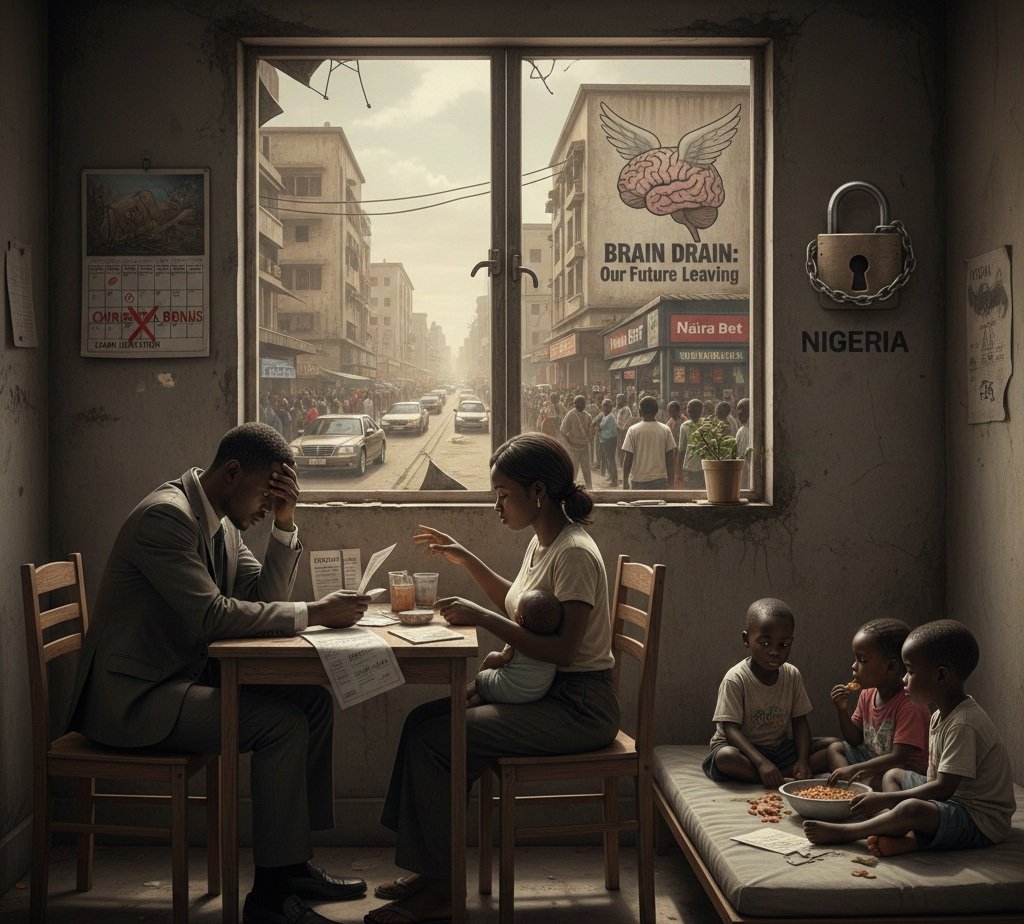
Take a normal federal worker in Abuja, living in Lugbe or Kubwa. Salary maybe ₦180,000 a month after tax. Rent for a small flat: ₦1.5 million upfront every year. Food for family: another ₦200,000 monthly. Transport, light (NEPA plus generator fuel), school for kids, medicine, plus sending money to brothers/sisters/uncles who have no job. Add it up -you're spending way more than you earn. Every month, deficit. No savings. No investment. Just survival. Borrow for rent, pray nothing bad happens.
And if you're that graduate with loan? You start the job already in debt. They deduct from your small salary automatically. You're working to pay back school fees while still struggling to eat.
Honest life? It leads nowhere but stress and poverty.
Look around: The civil servants driving big cars, building houses, sending kids abroad -how many got there by being straight and honest? Very few. The system forbids side business, but salary alone can't give you that life. So people bend rules, take bribes, do "runs." That's the only way to "make it."
The honest ones? They stay poor, celebrating Christmas bonus like it's manna from heaven.
Our best brains -doctors, engineers, lecturers -run abroad because here, no future. The West takes them happily, while Nigeria stays backward. We train them with our taxes, then lose them. Cycle continues.
This is the script: Educate just enough to dream, then crush the dream with no jobs, low pay, debt. Keep the masses busy surviving so they can't question or fight. Poverty passes from parent to child. Inflation eats everything. Corruption swallows billions.
Ask yourself honestly:
- Can my children have a better life than me if things stay like this?
- Why do we accept suffering as normal?
- Why celebrate small allowances like big wins?
- Is this the Nigeria we want to leave for the next generation?
The pain is real. The anger should be too.
Our future is already sold -loans, debt, brain drain, endless struggle. If we don't wake up, question everything, demand real change, and fight together.. Nigeria as we know it might not survive. We're heading for collapse, and it's happening right now.
Don't just read and scroll. Feel the pain. Ask the hard questions. Talk about it. Something has to give. Or we all keep suffering in silence.
@OurFavOnlineDoc Churches should be able to explain its beliefs without making people feel guilty for asking questions and people should be allowed to ask difficult questions without being treated as enemies of God.
demanding wisdom and taking responsibility for the future of our nation?
I hope our pastors, prophets, bishops, imams, religious scholars and ordinary Nigerians will think deeply about this.
Because the next generation should not have to pay the price for our generation's silence.
IF GOD CAN SPEAK ABOUT YOUR DESTINY, WHY IS THE DESTINY OF AN ENTIRE NATION LEFT TO POLITICAL GUESSWORK?
I have been thinking about something, and I believe Nigerians need to ask this question, especially those who take religion seriously.
We have pastors, prophets, bishops, imams and religious scholars who command the attention of millions. People travel distances to seek their counsel. People fast because they believe these leaders can seek God's direction. People trust their words when making decisions about marriage, business, family and personal destiny.
But when it comes to the future of Nigeria, where is that same level of spiritual seriousness?
The Bible says that when the righteous are in authority, the people rejoice, but when the wicked rule, the people mourn.
Yet, listen to the conversations around us. People have become so accustomed to disappointment that they now defend the idea of choosing between two uncertainties with the argument that "the devil you know is better than the one you don't know."
Think about that for a moment. Have we lowered our expectations of leadership so much that we now consider the absence of a worse alternative a form of progress?
And to our religious leaders, this question is even more important.
If God can give direction concerning an individual's marriage, business, children, healing, deliverance and personal future, are we to believe that the future of an entire nation is beyond the reach of divine direction?
Do our pastors and prophets only hear God when the subject is personal breakthrough? Do our imams and religious scholars only find a collective voice when the issue concerns religious activities? Where is the same urgency when millions of lives, livelihoods and the future of generations are involved?
Could it be that we have allowed political interests, personal relationships, financial influence and religious divisions to become louder than the very principles we claim to stand for?
I am not suggesting that religious leaders should dictate who Nigerians must vote for. Neither should anyone claim that a personal prophecy is unquestionable proof of God's choice. But surely, people who dedicate their lives to seeking divine wisdom should be able to contribute something more meaningful than political silence, partisan loyalty or convenient opinions.
Why can't our religious leaders come together, put their differences aside and genuinely seek God's direction for this country? Why can't they ask for leaders with wisdom, integrity, courage, compassion and the ability to put the interests of ordinary Nigerians first?
And why can't they speak with one voice when those principles are violated, regardless of who is responsible?
There is something worth examining here: I think Nigerians have become better at praying for individual survival than thinking about collective future.
People pray for jobs, but what happens to the system that creates jobs? We pray for protection, but what happens to the security of our communities? We pray for provision, but what happens to the decisions that determine the cost of living? We pray for our children, but what kind of country are we preparing for them?
At what point do we stop treating national problems as somebody else's responsibility?
Prayer matters, but so do discernment, good judgment, participation and accountability. A religious leader should not be above questioning, and a political leader should never be above accountability.
Nigeria is not the private property of politicians. Neither is it the responsibility of politicians alone. Its future belongs to all of us.
I want to see a generation that does not confuse familiarity with good leadership, religious influence with unquestionable wisdom, or political loyalty with patriotism.
The question we should all be asking is this:
If we believe God can direct the affairs of our individual lives, why have we become so helpless when it comes to seeking direction,
The question Seun should have asked is simple: if Nigeria’s crude was already committed to servicing debts, and subsidy removal was supposed to free up government revenue, how much of our oil is still paying for yesterday’s spending, and when will Nigerians see the benefit of these reforms?
Project Gazelle alone involved a $3.3 billion crude-backed loan. In August, the government reportedly reduced the crude pledged for repayment from 90,000 to 78,750+ barrels daily. So where is the full account of our oil backed debts and other legacy commitments?
They removed subsidy, floated the naira, and asked Nigerians to endure hardship in exchange for economic recovery. Now we’re being told the country still cannot freely supply its own largest refinery because so much of its crude is spoken for.
At what point does a reform stop being a promise and become a measurable improvement in people’s lives?
Show Nigerians the numbers: crude produced, crude owed to contractors, crude pledged to creditors, revenue actually received, and the savings from subsidy removal. Before asking citizens to keep sacrificing, prove where the sacrifice has taken us.
Calling a policy a reform does not make it one. The results must speak for themselves
We [Nigeria] are still not at the point where we can give Dangote Refinery 700,000 [seven hundred thousand] barrels of crude oil; we don’t have enough to service Dangote Refinery.
Minister of Finance Taiwo Oyedele explains why Nigeria doesn’t currently have enough crude to meet local production demand.
#PoliticsToday
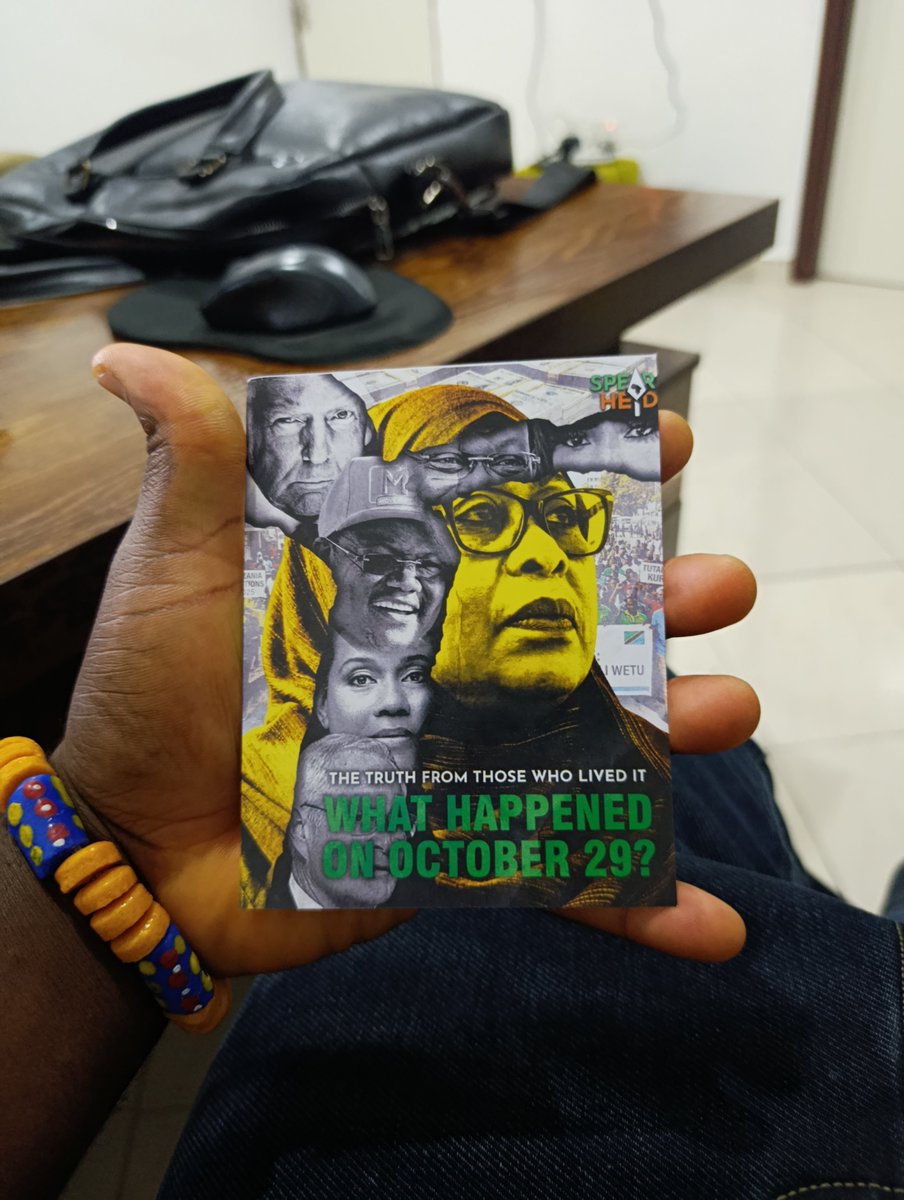
After 7 months of hard work across 3 countries, my team and I at @Spearhead_Af are pleased to announce that my new documentary titled 'What Happened On October 29' will premiere in Accra at the WAGMC Auditorium, University of Ghana, Legon.
It will also premiere in Dar es Salaam, Tanzania on Friday May 29, and in Nairobi, Kenya on Sunday May 31.
For the chance to win an exclusive free IV to the premiere (Accra only), kindly comment below and tag @joyfwen
@instablog9ja So after borrowing to send them to school, now they should still fund transportation to go serve a country that treats graduates like trash? @officialnyscng una de ment.
Exactly. Africa was never poor, only strategically trapped.
No continent with this level of natural resources , fertile land and young population should still be called “developing” after all these decades unless there are forces benefiting from keeping it that way.
An Africa that is fully stable, industrialized, informed and united would completely shift global power balance overnight. That is what many people still fail to understand.
if Africans truly wake up mentally and start understanding geopolitics, resource leverage and how global power actually works, the interference will become more aggressive but disguised as terrorism, democracy protection, peacekeeping or humanitarian concern, because no empire in history willingly watches its strategic advantage disappear quietly.
So the biggest battle for us now is awareness. Once citizens become informed, tribe, religion, propaganda and foreign media narratives stop working as easily.
The world already knows Africa’s value. Africans are the ones still being conditioned to doubt it.
The immediate future is not even just about AI replacing workers.
It’s going to be a world where a few companies own the intelligence, the infrastructure, the data and eventually the dependency of entire populations.
The new order will not just be about money, it’s going to be about usefulness, and so many people won’t even notice when they become digitally obsolete.
I fear there are certain people controlling the world with a scripted plan already to weaponize this.
Think This: We are moving toward a reality where a handful of tech monopolies control the proprietary AI models that dictate essential societal infrastructure, like healthcare distribution, legal access, and financial scoring.
If a centralized authority controls the intelligence you rely on to live, they control you. If you don't fit into their algorithmic data models or step out of line, you don't just lose a job, you get turned off from society entirely.
@natism 👉 Most of you are not living your own thoughts. You are living downloaded opinions, inherited fears recycled trends& manufactured desires.
Read more, observe more, question everything.
A mind that cannot think for itself will always belong to someone else
They are already doing it. Thy Kenya government (and I believe Ghana also) has labor for export policies. They believe it's not slavery because the victims apply for visas and board planes instead of ships.
My own nation is trained to mistake distraction for awareness. Full of minds addicted to trends and survival panic, they care less about studying power long enough to challenge it.
My thoughts on this: The real business shenanigans will start after dependency.
Right now AI is free because the goal is mass adoption. Once people restructure their workflow, thinking process and businesses around it, the pricing changes. Not overnight. Gradually. Say 10(£$€) monthly becomes 100 and so on, then quota systems, premium intelligence tiers, locked features. By then most people won’t even be able to compete without it.
And society still hasn’t understood what’s coming.
Years ago if you wanted to build software, you had to actually understand what you were doing. Syntax, authentication APIs, databases, server logic, security layers, debugging, et cetera. It took years of failure to become dangerous.
Now somebody installs an AI plugin, (vibe-codes)an app as called now, in one weekend and thinks they’re a developer because the frontend loads. Simple AI can generate code without transferring understanding.
Most people using these tools still cannot explain token leaks, SQL injection, exposed environment variables, insecure dependencies, rate limits or privilege escalation. They can ship products without understanding the consequences of what they shipped.
That’s where the next era of cyber disasters will comefrom. Not elite hackers. Millions of AI-assisted systems built by people who skipped the fundamentals and the deeper problem is going to be psychological.
The more people outsource thinking, the weaker independent thought becomes. Why learn deeply when an LLM gives instant answers? Why struggle through complexity when AI removes friction? Convenience is slowly replacing competence.
So truth be told. People think they’re using a tool. In reality the tool is training society itself.
@iamnasboi A thread titled: “How global debt systems affect Africa” = 12 likes
A tweet saying: “Davido’s chef unfollowed somebody” = 88k likes.
Then one wonder why are Nigerians not informed? Because the algorithm discovered our weakness: Entertainment before enlightenment.
I apologize for telling you to be more lenient with some Nigerians. I said that because I genuinely believed many of them are conditioned more than malicious.
But I’m starting to realize something darker:the calmer and softer you sound, the less many people even think.
Most are not studying issues. They are scrolling for impressions, vibes and emotional validation. Nobody reads deeply anymore. People consume national collapse the same way they consume football banter.
If Nigerians studied geopolitics the way they analyze transfer rumors and league tables, this country would accidentally become a superpower by next Month
They can memorize a club’s entire history to owners and workers, but cannot explain why foreign military presence, resource politics, debt dependency and elite incentives shape their daily suffering.
It is a real crisis, not just poverty, not corruption but mental unseriousness
Reading to understand is now too stressful, they prefer: “ @blablabla Explain to me like I’m five.” Unfortunately some are already 40+.
Me: “Africa exports raw materials and imports finished products. That dependency traps economies.”
Average Nigerian: “Hmm.”
Me:“That’s why local industrialization matters.”
Average Nigerian: “True.”
Me: “That’s why foreign powers influence African politics.”
Average Nigerian: “Bro are you supporting Russia?”
Me: “How did we reach there? 😮 ”
Average Nigerian: “I no know but your tweet dey somehow.”
😑