🚨Breaking: Rep. Anna Paulina Luna has introduced legislation to fine and censure Rep. Adam Schiff
If passed, the legislation would fine Schiff $16 million for his lies about President Trump and Russian collusion.
Do you support this?
Yes or No? 🤷🏻♂️💬
https://t.co/nn1nKEhDWz
Good morning, fellow Canadians. Today, I want to address an issue that's been making headlines recently. It's something we're all too familiar with – the wildfires that have been wreaking havoc across our beautiful country.
Prime Minister Trudeau’s recent tweet would have us believe that wildfires are rampaging out of control, driven by the specter of climate change. Yet, when we examine the data, his claims start to smolder.
For starters, let’s look at the numbers. Contrary to the narrative of an escalating wildfire crisis, the number of major fires and the total area burned have been on a decline. Yes, you heard it right, a decline. The data is there for anyone willing to look past the smoke and mirrors. In fact, experts such as Ross McKitrick, an economist who specializes in environmental economics and policy analysis, have been vocal about this trend, but their voices seem to get lost in the clamor of climate fear-mongering. McKitrick’s work offers valuable insights into understanding the complex relationship between human activity, forest management practices, and wildfires. He points out that aggressive fire suppression policies have disrupted the natural rejuvenation cycle of forest landscapes, leading to a buildup of fuel and an increased risk of larger, more dangerous fires.
Now, let's consider why this could be the case. Forests have a natural cycle of growth, death, and rebirth, often facilitated by smaller, manageable wildfires. These fires help to clear out the underbrush and dead wood, making way for new growth and helping to prevent larger, more catastrophic fires. However, human intervention through aggressive fire suppression policies has disrupted this natural cycle. Instead of allowing smaller fires to burn and rejuvenate the landscape, we've been putting them out, leading to an unnatural buildup of fuel in our forests.
This buildup of fuel includes things like dead wood, dried leaves, and underbrush, all of which can feed a fire and make it more intense and harder to control. So when a fire does break out, it has the potential to be much larger and more dangerous than it would have been if the forest had been allowed to follow its natural cycle.
In fact, in some cases, fire suppression can create conditions that are far more damaging and dangerous than the original fire would have been. The resulting wildfires can be so intense that they sterilize the soil, making it much harder for the forest to recover.
These facts highlight the complexities of forest management and the dangers of subscribing to a one-dimensional narrative. It's not as simple as blaming climate change for all wildfires. In many cases, human intervention, not global warming, is creating conditions ripe for major conflagrations. It's time we start acknowledging this and rethinking our approach to forest management.
Even the ecosystems themselves tell a different tale. Take the phenomenon of serotinous cones in certain species of trees. These trees, such as the Jack Pine and Lodgepole Pine, have adapted to thrive in fire-prone environments, with cones that release their seeds only in the intense heat of a fire. Fire, in these ecosystems, is not an aberration, but an integral part of their life cycle, necessary for their regeneration and survival.
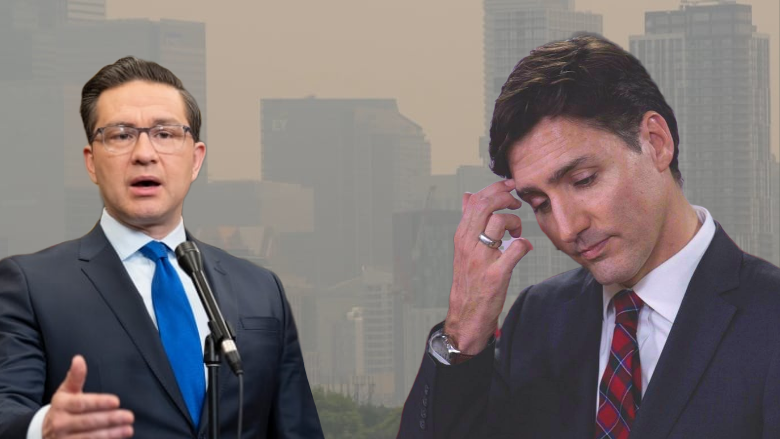
The narrative that Trudeau peddles, one of fear and looming disaster, is designed to draw attention away from the real issues at hand. As Pierre Poilievre, the Conservative Leader, astutely observed, Trudeau’s strategy seems to be one of division and distraction, an attempt to shift the blame onto nebulous, global issues rather than address the problems right here at home.
Trudeau's energies could certainly be put to better use if he focused on real, tangible solutions to the wildfire problem. But that would mean addressing the deficiencies in forest management practices. It would mean acknowledging that our policies of aggressive fire suppression have inadvertently contributed to the risk of larger, more dangerous fires. It would mean recognizing that we need to allow some fires to burn to rejuvenate forest landscapes and prevent a dangerous buildup of fuel.
And what about human-induced wildfires? With a significant percentage of wildfires in the U.S. and Canada being human-caused, surely that's an area ripe for action. It would mean stepping up enforcement of existing regulations, investing in public education to prevent negligence, and taking a hard stance against arson.
If Trudeau could channel his enthusiasm for tackling climate change into these more immediate, manageable issues, we might just see a real, meaningful reduction in the impact of wildfires. We might see fewer disruptions to our everyday routines, fewer threats to lives and livelihoods, and improvements in our air quality.
The liberal fear-mongering is nothing more than a dog whistle to justify their bloated budget that is contributing to inflation. As Pierre Poilievre, the Conservative Leader, has so eloquently stated, “You told us that better was always possible, and yet everything is worse and you blame everyone else. You will divide to distract. You’ll try to make people afraid of each other because you think that if an average Canadian is afraid of his neighbour, he’ll forget that he can’t feed himself or pay the rent.”
It seems Trudeau has a knack for blaming others and creating fear to distract from the real issues Canadians are facing. The narrative of “climate change causing wildfires” is just another chapter in this ongoing saga. Don’t let the smoke from Trudeau’s fiery rhetoric cloud your judgement. It’s time to see through the haze and confront the facts.
But that would mean embracing the complex realities of wildfire management. It would mean stepping away from the comfort of climate change narratives and the global stage, and taking responsibility for the problems in our own backyard. It would mean getting his hands dirty with the nitty-gritty of policy making and implementation – the kind of work that doesn’t always make for grand political statements or stirring tweets.
But, can Trudeau rise to this challenge? Given his track record, that seems unlikely. His tenure has been marked by division, deflection, and a stubborn refusal to acknowledge the shortcomings of his administration’s policies. His focus on global issues and nebulous threats like climate change, while important, often feels like an attempt to avoid dealing with the more immediate and tangible problems that Canadians are facing right now.
It's easy to make grand statements about the dangers of climate change. It’s much harder to roll up your sleeves and tackle the complex, nuanced challenges of forest management and wildfire prevention. It’s much harder to admit that the policies you’ve championed might be contributing to the problem, and to make the necessary changes.
So, Trudeau, it’s time to stop fanning the flames of climate panic and start putting out the real fires. Will you rise to the occasion? Or will you continue to hide behind the smokescreen of climate change, ignoring the complex realities and urgent needs of the Canadian people? Only time will tell, but if past behaviour is any indication, I won’t be holding my breath.
#cdnpoli
On the left is me... a gay. I am not called a groomer.
On the right is a presumably straight woman. She is called a groomer.
Groomer is not an anti-gay slur. Groomer calls out the inappropriate behavior of presenting sexual content to children.
Leave kids alone!
A group of local journalists accompanying President Cyril Ramaphosa on his peace mission to Russia and Ukraine are still stranded on the SAA flight at the Warsaw Chopin Airport in Poland on Friday. https://t.co/VnoW71B8sR
US, with 4% of the World population sees the rest as a threat.
“Russia is the greatest threat”
“China is a partner but a growing threat”
"Saudi Arabia is too close to China and Russia, they are a potential threat"
"Africa is going to ditch the dollar, they are a threat"
"India is buying oil from Russia and not antagonising China, clearly a threat to our interests"
"Germany is still buying Russian gas, if they talk to Russia again, they could become a threat"
"France going to BRICS meeting could become a threat to our interests"
"As 4% of the World population, we see 96% of the World population as a threat"
Danko Brankovic regresa al Bayern Munich tras una temporada cedido en el Mega Basket.
Ha tenido muy buenos números en la ABA League. Ojo que va a ser un jugador a tener en cuenta la próxima temporada en la Euroliga.
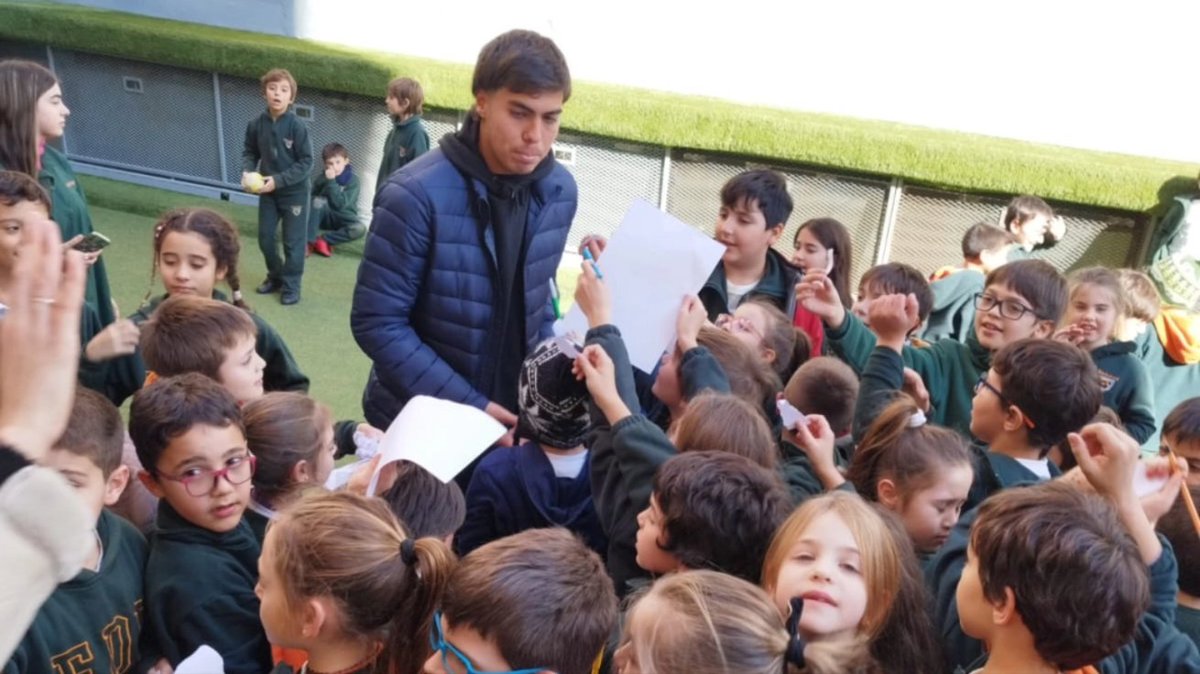
Hoy nos visitó Facundo Machado, golero del Seleccionado Sub 20, consagrado hace unos días como Campeón Mundial.
Tanto Facundo , como su hermano, son estudiantes de la Lic. en Educación Física de UDE.
Esto nos demuestra que se puede estudiar y hacer deporte a la vez.
El bachillerato por tutorías te permite organizar tu agenda combinando el estudio con otras actividades como el trabajo y el deporte entre otros , ya que es en formato virtual.
Tendrás más oportunidades laborales.
Nivel 2 celebrando Día de la Madre y Día del Libro. Hermoso encuentro donde compartimos lectura de un cuento y realizamos una actividad de expresión plástica en familia ♥️
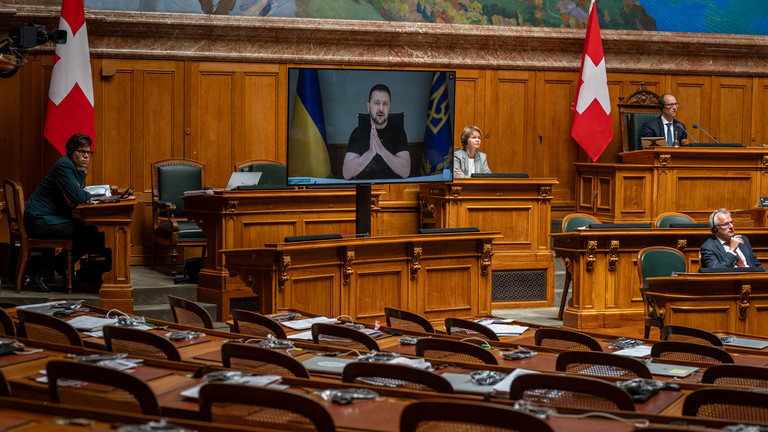
Ukrainian president boycotted in Swiss parliament.
The largest party in the country’s legislature has walked out on an address by Vladimir Zelensky.
Read more: https://t.co/r3GOGaoGL2